Loading...
Ernest J. King vs Uesugi Kenshin
Ernest J. King leads by 4.4 pts · 2 figures compared
…

Ernest J. King
General · Modern
69.6Total
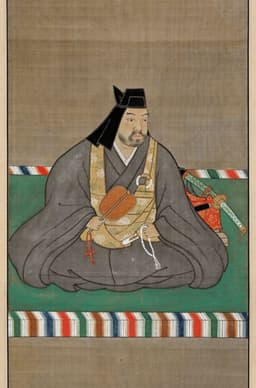
Uesugi Kenshin
General · Modern
65.2Total
Basic Information
Born
1878
1530
Died
1956
1578
Era
Modern
Modern
Nationality
United States
Japan
Occupation
General
General
Civilization
Western
Eastern
Score Comparison
Military (10%)
65.0
67.3
Political (20%)
70.3
70.0
Influence (20%)
65.0
58.3
Legacy (20%)
68.0
55.0
Leadership (15%)
78.0
85.0
Strategy (15%)
76.0
69.1
TOTAL
69.6
65.2
Ernest J. King — Complete Timeline
1941 AD
Appointment as Commander-in-Chief, US FleetPolitical Action◆ Major
King was appointed Commander-in-Chief of the US Fleet (COMINCH) in December 1941, following the attack on Pearl Harbor. He was given authority over all naval operations in the Atlantic and Pacific theaters.
World War IINaval CommandPearl Harbor
Impact: globalconstructive
1942 AD
Victory at the Battle of MidwayWar
Under King's strategic direction, the US Navy decisively defeated the Japanese fleet at the Battle of Midway. The victory turned the tide in the Pacific War, destroying four Japanese aircraft carriers and shifting the strategic initiative to the Allies.
World War IIPacific WarNaval Battle
Impact: globalconstructive
Appointment as Chief of Naval OperationsPolitical Action◆ Major
King was appointed Chief of Naval Operations (CNO) in March 1942, combining the roles of COMINCH and CNO. He became the single most powerful naval officer in US history, directing all aspects of the Navy's war effort.
World War IINaval CommandUnified Command
Impact: globalconstructive
1944 AD
Promotion to Fleet AdmiralPolitical Action◆ Major
King was promoted to the newly created rank of Fleet Admiral (five-star rank) in December 1944. He was one of only four US naval officers to hold this rank during World War II.
World War IIPromotionFive-Star Rank
Impact: nationalconstructive
Uesugi Kenshin — Complete Timeline
1548 AD
Adoption of the Name Uesugi and Inheritance of EchigoPolitical Action◆ Major
Nagao Kagetora (later Uesugi Kenshin) was adopted into the Uesugi clan and became the lord of Echigo Province. This adoption gave him the legitimacy to rule and the resources to become a major daimyo. He took the name Uesugi Kenshin and began his campaigns to expand his influence.
AdoptionSuccessionEchigo
Impact: regional
1560 AD
Invasion of Kanto RegionWar◆ Major
Uesugi Kenshin launched a major campaign into the Kanto region, aiming to challenge the Hojo clan's dominance. He captured several castles, including Odawara's outer defenses, but failed to take the main Hojo stronghold. This campaign demonstrated his ambition but also his limitations in sustained siege warfare.
InvasionKantoHojo Clan
Impact: regional
1561 AD
Battle of Kawanakajima (Fourth)War◆ Major
Uesugi Kenshin engaged Takeda Shingen in the fourth Battle of Kawanakajima, a fierce contest that ended inconclusively. Kenshin's forces reportedly broke through to Shingen's command post, with Kenshin allegedly attacking Shingen personally. The battle solidified Kenshin's reputation as a brilliant tactician.
BattleRivalrySengoku Period
Impact: regional
Siege of Odawara (1561)War
Uesugi Kenshin besieged Odawara Castle, the stronghold of the Hojo clan, for several weeks. Despite his efforts, the castle's defenses held, and he was forced to withdraw due to supply shortages and the approach of Takeda Shingen's forces. The siege was a strategic failure.
SiegeOdawaraHojo Clan
Impact: regional
Expert Analysis
Origins
Ernest J. King was born on November 23, 1878, in Lorain, Ohio, into a middle-class family. His father was a railroad worker. King entered the United States Naval Academy in 1897, graduating in 1901. He served in various ships and submarines, developing expertise in naval engineering and command.
Uesugi Kenshin was born as Nagao Kagetora on February 18, 1530, in Echigo Province (modern Niigata). He was the son of Nagao Tamekage, a warlord who died in battle when Kagetora was young. After a period of upheaval, Kagetora emerged as the head of the Nagao clan, later adopting the name Uesugi Kenshin after being adopted into the Uesugi clan.
Rise to Power
King's rise accelerated after World War I, where he served as assistant chief of staff to the commander of the Atlantic Fleet. He commanded submarines, surface ships, and later served as chief of the Bureau of Aeronautics, championing naval aviation. In December 1941, following Pearl Harbor, King was appointed Commander-in-Chief of the US Fleet (COMINCH). In March 1942, he also became Chief of Naval Operations (CNO), consolidating total authority over the US Navy.
Kenshin gained power after defeating his brother to secure control of Echigo in 1548. He expanded his influence through military campaigns and alliances. In 1553, he was adopted into the Uesugi clan, gaining legitimacy and the name Uesugi Kenshin. He became a major daimyo, rivaling Takeda Shingen and the Hojo clan.
Leadership & Governance
King was a demanding leader, known for his strict discipline and strategic vision. He centralized command, insisted on aggressive offensive action, and prioritized the Pacific theater. He clashed with Allied leaders but ensured the Navy maintained independence. His leadership score is 78.0, reflecting his effectiveness in wartime.
Kenshin governed Echigo with a focus on justice and stability. He was known for his piety and fairness, earning respect from his subjects. He led from the front in battles, embodying the samurai ideal. His leadership score is 85.0, the highest among all categories.
Triumph & Tragedy
King's greatest triumph was the victory at the Battle of Midway (June 1942), where his strategic direction and emphasis on intelligence helped turn the Pacific War. He also oversaw the island-hopping campaign that led to Japan's defeat. However, his failure to prevent the Pearl Harbor attack (though not directly his fault) and his abrasive personality caused friction with allies. His military score is 65.0.
Kenshin's greatest triumph was the fourth Battle of Kawanakajima (1561), where he famously engaged Takeda Shingen in personal combat. He also expanded his territory into Kanto. However, his siege of Odawara (1561) failed, and he never achieved dominance over Japan. His military score is 67.3, slightly higher than King's.
Character & Destiny
King was ruthless, tireless, and single-minded. His character enabled him to rebuild the Navy after Pearl Harbor and drive the war effort. But his arrogance created enemies. He died in 1956, having seen the Navy become the world's most powerful.
Kenshin was known as a righteous and merciful leader, but his reluctance to seize power in Kyoto limited his ambitions. He died in 1578, possibly from illness or assassination, without unifying Japan.
Legacy
King's legacy is the modern US Navy's structure and the victory in the Pacific. His emphasis on carrier aviation shaped naval warfare. He is remembered as one of the greatest naval administrators. Legacy score: 68.0.
Kenshin is remembered as a legendary warrior and a just ruler, but his impact on Japan's unification was limited. He is a folk hero in Japanese culture. Legacy score: 55.0.
Conclusion
King had a greater impact on world history. His strategic decisions directly contributed to the defeat of Japan and the rise of American naval supremacy. Kenshin's influence was regional and cultural. Despite Kenshin's higher leadership score (85.0 vs 78.0), King's total score (69.6 vs 65.2) reflects his broader impact. King's legacy reshaped global power; Kenshin's remains a symbol of feudal Japan.
Rankings
🥇
Ernest J. KingLeader
Mil: 65.0Pol: 70.3Inf: 65.0
69.6
🥈
Uesugi Kenshin
Mil: 67.3Pol: 70.0Inf: 58.3
65.2
+4.4 behind
How This Comparison Works
Algorithm
Each figure is scored on 6 dimensions (0—100 scale) based on structured historical data: Military (10%), Political (20%), Influence (20%), Legacy (20%), Leadership (15%), Strategy (15%). The weighted total produces the final ranking.
Data Sources
Scores are computed from structured sub-indicators in the database. Scale factors adjust for era (Ancient ×0.85, Modern ×1.0) and civilization size (Eastern ×1.05, Other ×0.80) to account for differences in population and military scale.
Maximum 3 Figures
Comparisons are limited to 2—3 figures to ensure readability and statistical meaningfulness.
Error Margins
±5 points per dimension — Sub-scores are derived from historical records with inherent uncertainty. Two figures within 5 points on a dimension should be considered roughly equivalent in that area.
Total Score Accuracy
±3 points overall — The weighted combination of 6 dimensions produces a total score with approximately ±3 points of uncertainty. Differences of less than 3 points are not statistically significant— the figures are effectively tied.
Known Limitations
- Historical records are incomplete and uneven across civilizations
- Figures from oral-tradition societies may be underrepresented
- Occupation labels can misclassify multi-role figures
- Scores measure capability and impact, not moral character
- Quantitative scoring is a comparison tool, not absolute truth
Capability Radar
Military (10%) — Battles & Warfare
Battles
85
75
Win Rate
90
70
Expansion
85
60
Political (20%) — Governance & Reform
Reform
80
60
Diplomacy
75
75
Economy
70
65
Influence (20%) — Cultural & Global Reach
Cultural
60
65
Global
80
45
Legacy (20%) — Historical Impact
Historical
80
70
Longevity
70
60
Leadership (15%) — Power & Stability
Tenure
70
70
Stability
85
70
Strategy (15%) — Tactics & Innovation
Strategy
95
80
Tactics
80
85
Reform
90
65
Similar Comparisons
Comments & Discussion
No comments yet. Be the first to share your thoughts!