Loading...
Roh Tae-woo vs Uesugi Kenshin
Uesugi Kenshin leads by 12.1 pts · 2 figures compared
…

Roh Tae-woo
General · Modern
53.1Total
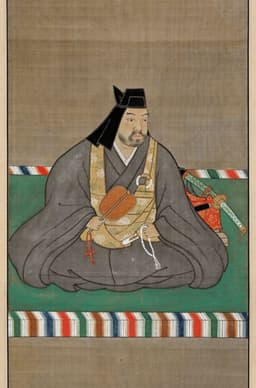
Uesugi Kenshin
General · Modern
65.2Total
Basic Information
Born
1932
1530
Died
—
1578
Era
Modern
Modern
Nationality
Korea
Japan
Occupation
General
General
Civilization
Eastern
Eastern
Score Comparison
Military (10%)
25.9
67.3
Political (20%)
60.0
70.0
Influence (20%)
60.0
58.3
Legacy (20%)
48.3
55.0
Leadership (15%)
72.0
85.0
Strategy (15%)
36.8
69.1
TOTAL
53.1
65.2
Roh Tae-woo — Complete Timeline
1980 AD
Role in 1980 Gwangju Uprising suppressionWar◆ Major
As a general, Roh Tae-woo was involved in the military's violent suppression of the Gwangju Uprising, a pro-democracy protest. The crackdown resulted in hundreds of civilian deaths and became a pivotal event in South Korea's democratization.
SuppressionHuman RightsSouth Korea
Impact: nationaldestructive
1987 AD
Election as President under democratic reformsPolitical Action
Roh Tae-woo won the first direct presidential election in 16 years, following the June Democracy Movement. His election marked a transition from military authoritarianism to civilian-led democracy, though he was a former general.
DemocratizationElectionSouth Korea
Impact: nationalconstructive
1988 AD
Nordpolitik policy announcementPolitical Action◆ Major
Roh announced the Nordpolitik policy, seeking to improve relations with communist countries including China, the Soviet Union, and North Korea. This led to the establishment of diplomatic ties with the USSR and China in 1990 and 1992.
Foreign PolicyDiplomacySouth Korea
Impact: regionalconstructive
Hosting of 1988 Summer OlympicsCultural◆ Major
Under Roh's presidency, Seoul successfully hosted the 1988 Summer Olympics, which boosted South Korea's international image and showcased its economic development. The event was a diplomatic success, drawing participation from many nations.
OlympicsInternationalSouth Korea
Impact: globalconstructive
Uesugi Kenshin — Complete Timeline
1548 AD
Adoption of the Name Uesugi and Inheritance of EchigoPolitical Action◆ Major
Nagao Kagetora (later Uesugi Kenshin) was adopted into the Uesugi clan and became the lord of Echigo Province. This adoption gave him the legitimacy to rule and the resources to become a major daimyo. He took the name Uesugi Kenshin and began his campaigns to expand his influence.
AdoptionSuccessionEchigo
Impact: regional
1560 AD
Invasion of Kanto RegionWar◆ Major
Uesugi Kenshin launched a major campaign into the Kanto region, aiming to challenge the Hojo clan's dominance. He captured several castles, including Odawara's outer defenses, but failed to take the main Hojo stronghold. This campaign demonstrated his ambition but also his limitations in sustained siege warfare.
InvasionKantoHojo Clan
Impact: regional
1561 AD
Battle of Kawanakajima (Fourth)War◆ Major
Uesugi Kenshin engaged Takeda Shingen in the fourth Battle of Kawanakajima, a fierce contest that ended inconclusively. Kenshin's forces reportedly broke through to Shingen's command post, with Kenshin allegedly attacking Shingen personally. The battle solidified Kenshin's reputation as a brilliant tactician.
BattleRivalrySengoku Period
Impact: regional
Siege of Odawara (1561)War
Uesugi Kenshin besieged Odawara Castle, the stronghold of the Hojo clan, for several weeks. Despite his efforts, the castle's defenses held, and he was forced to withdraw due to supply shortages and the approach of Takeda Shingen's forces. The siege was a strategic failure.
SiegeOdawaraHojo Clan
Impact: regional
Expert Analysis
Origins
Roh Tae-woo was born on December 4, 1932, in Daegu, Japanese Korea. His father was a local official, and his mother ran a small business. Roh attended the Korea Military Academy, graduating in 1954 as part of the 11th class. He later studied at the U.S. Army Infantry School. His early military career included service in the Korean War, though he saw limited combat. Roh's formative years were shaped by the authoritarian Park Chung-hee regime, under which he rose through the ranks.
Uesugi Kenshin was born Nagao Kagetora on February 18, 1530, in Echigo Province (modern Niigata). His father was Nagao Tamekage, a powerful warlord who died when Kenshin was young. After a period of clan infighting, Kenshin emerged as the head of the Nagao clan. He was adopted into the Uesugi family in 1551, gaining legitimacy and control of Echigo. Kenshin's upbringing was steeped in the chaos of the Sengoku period, and he became known for his martial prowess and strategic acumen.
Rise to Power
Roh Tae-woo's rise began as a key ally of Chun Doo-hwan, participating in the 1979 military coup after Park's assassination. He commanded the 9th Infantry Division during the 1980 Gwangju Uprising, where his troops suppressed protests violently, resulting in hundreds of deaths. This event cemented his power within the military regime. In 1987, following massive pro-democracy protests (the June Democracy Movement), Roh ran for president and won the first direct election in 16 years, with 36.6% of the vote. His election marked a transition from military rule to democracy, though his authoritarian past remained controversial.
Uesugi Kenshin's rise was marked by a struggle for control of Echigo. After his father's death, Kenshin fought his brother and other rivals, eventually securing the clan leadership in 1548. In 1551, he was adopted into the Uesugi family, becoming Uesugi Kenshin, and gained the backing of the shogunate. He expanded his influence through military campaigns, notably against the Takeda clan. His rivalry with Takeda Shingen defined much of his career, with the Battles of Kawanakajima (1553-1564) becoming legendary.
Leadership & Governance
Roh Tae-woo governed as a transitional figure. He pursued democratic reforms, including lifting bans on political activity and releasing political prisoners. His Nordpolitik policy normalized relations with the Soviet Union (1990) and China (1992). Domestically, he continued economic growth but faced criticism for corruption. His leadership style was cautious and consensus-seeking, avoiding the heavy-handedness of his predecessors. He scored 72.0 in leadership, reflecting his role in democratization, but only 25.9 in military, as his military achievements were limited.
Uesugi Kenshin ruled Echigo with a focus on stability and military strength. He implemented fair taxation and maintained a disciplined army. His leadership style was direct and warlike; he personally led troops into battle. He was known for his strategic brilliance, scoring 69.1 in strategy. He engaged in numerous campaigns against the Takeda and Hojo clans. His governance was typical of a Sengoku daimyo, balancing military expansion with domestic administration. He scored 85.0 in leadership, indicating his effectiveness in managing his domain.
Triumph & Tragedy
Roh Tae-woo's greatest triumph was overseeing a peaceful democratic transition and hosting the 1988 Summer Olympics, which boosted South Korea's global standing. His Nordpolitik policy opened diplomatic ties with communist nations, contributing to the end of the Cold War in East Asia. However, his tragic legacy is his involvement in the Gwangju Uprising suppression, which stained his reputation. In 1996, he was convicted for his role in the 1979 coup and the uprising, sentenced to 22 years in prison (later pardoned). His legacy is thus mixed: a democratizer with a dark past.
Uesugi Kenshin's triumphs include his military campaigns, especially the fourth Battle of Kawanakajima (1561), where he famously engaged Takeda Shingen in single combat. He captured several castles in the Kanto region, expanding his influence. His tragedy lies in his failure to achieve lasting dominance. He never conquered Kyoto or unified Japan, and his death in 1578 at age 48 (possibly from stroke or assassination) left his domain weakened. His rival Oda Nobunaga eventually surpassed him. Kenshin's legacy is one of a brilliant general who fell short of ultimate power.
Character & Destiny
Roh Tae-woo was pragmatic and adaptable, willing to embrace democracy when pressured. His character was shaped by his military background, but he showed flexibility in transitioning to civilian rule. However, his involvement in the Gwangju massacre revealed a willingness to use violence to maintain order. This duality defined his destiny: he became a symbol of democratic transition but also of past authoritarianism. His total score of 53.1 reflects this mixed record.
Uesugi Kenshin was renowned for his honor and martial skill, earning the nickname "Dragon of Echigo." He was a devout Buddhist who reportedly refrained from invading territories during harvests. His rivalry with Shingen was marked by mutual respect. His character—aggressive yet principled—led to his reputation as a noble warlord. However, his focus on personal combat and honor may have limited his strategic flexibility. His total score of 65.2 indicates a higher overall impact in his context.
Legacy
Roh Tae-woo's legacy is institutional: he laid the groundwork for South Korea's democracy and normalized relations with major communist powers. The 1988 Olympics showcased Korea's economic rise. However, his human rights abuses continue to be a stain. He is remembered as a transitional figure, not a transformative one. His scores: Influence 60.0, Legacy 48.3.
Uesugi Kenshin's legacy is legendary: he is a cultural icon in Japan, featured in novels, games, and anime. His military tactics are studied, and his rivalry with Shingen is famous. He influenced later samurai codes of honor. However, his direct political impact was limited, as he never achieved national unification. His scores: Influence 58.3, Legacy 55.0.
Conclusion
Uesugi Kenshin had a greater impact within his era and culture, scoring 65.2 total vs. Roh's 53.1. Kenshin's military and leadership scores (67.3 and 85.0) far exceed Roh's (25.9 and 72.0). While Roh's democratic transition was historically significant, it was partly forced by popular movements. Kenshin's legend endures, shaping Japanese identity. Roh's legacy is more ambiguous, tainted by authoritarian violence. Thus, Kenshin stands as the more influential figure in historical memory.
Rankings
🥇
Uesugi KenshinLeader
Mil: 67.3Pol: 70.0Inf: 58.3
65.2
🥈
Roh Tae-woo
Mil: 25.9Pol: 60.0Inf: 60.0
53.1
+12.1 behind
How This Comparison Works
Algorithm
Each figure is scored on 6 dimensions (0—100 scale) based on structured historical data: Military (10%), Political (20%), Influence (20%), Legacy (20%), Leadership (15%), Strategy (15%). The weighted total produces the final ranking.
Data Sources
Scores are computed from structured sub-indicators in the database. Scale factors adjust for era (Ancient ×0.85, Modern ×1.0) and civilization size (Eastern ×1.05, Other ×0.80) to account for differences in population and military scale.
Maximum 3 Figures
Comparisons are limited to 2—3 figures to ensure readability and statistical meaningfulness.
Error Margins
±5 points per dimension — Sub-scores are derived from historical records with inherent uncertainty. Two figures within 5 points on a dimension should be considered roughly equivalent in that area.
Total Score Accuracy
±3 points overall — The weighted combination of 6 dimensions produces a total score with approximately ±3 points of uncertainty. Differences of less than 3 points are not statistically significant— the figures are effectively tied.
Known Limitations
- Historical records are incomplete and uneven across civilizations
- Figures from oral-tradition societies may be underrepresented
- Occupation labels can misclassify multi-role figures
- Scores measure capability and impact, not moral character
- Quantitative scoring is a comparison tool, not absolute truth
Capability Radar
Military (10%) — Battles & Warfare
Battles
10
75
Win Rate
10
70
Expansion
10
60
Political (20%) — Governance & Reform
Reform
55
60
Diplomacy
65
75
Economy
60
65
Influence (20%) — Cultural & Global Reach
Cultural
30
65
Global
40
45
Legacy (20%) — Historical Impact
Historical
50
70
Longevity
30
60
Leadership (15%) — Power & Stability
Tenure
60
70
Stability
50
70
Strategy (15%) — Tactics & Innovation
Strategy
10
80
Tactics
10
85
Reform
10
65
Similar Comparisons
Comments & Discussion
No comments yet. Be the first to share your thoughts!