Loading...
Ernest Augustus of Hanover vs Ivan V
Ivan V leads by 0.3 pts · 2 figures compared
…

Ernest Augustus of Hanover
Emperor · Modern
45.7Total
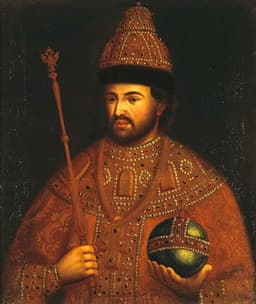
Ivan V
Emperor · Modern
46.0Total
Basic Information
Born
1771
1666
Died
1851
1696
Era
Modern
Modern
Nationality
Hanover
Russia
Occupation
Emperor
Emperor
Civilization
Western
Western
Score Comparison
Military (10%)
46.6
10.6
Political (20%)
33.6
68.0
Influence (20%)
47.1
60.0
Legacy (20%)
35.8
35.0
Leadership (15%)
65.7
33.6
Strategy (15%)
54.3
60.0
TOTAL
45.7
46.0
Ernest Augustus of Hanover — Complete Timeline
1837 AD
Became King of HanoverPolitical Action◆ Major
Ernest Augustus ascended the throne of Hanover upon the death of his brother William IV. His accession ended the personal union with the United Kingdom, as Salic law prevented Queen Victoria from inheriting Hanover.
SuccessionHanoverPersonal Union
Impact: regional
Repealed the liberal constitution of 1833Political Action◆ Major
Ernest Augustus repealed the liberal constitution of 1833, which had been granted by his predecessor. This action provoked the 'G
ConstitutionCrisisGöttingen Seven
Impact: regionaldestructive
1850 AD
Supported the German Confederation against PrussiaPolitical Action
Ernest Augustus aligned Hanover with the German Confederation in its conflict with Prussia over the Erfurt Union. His support helped maintain the Confederation's authority, though it did not prevent eventual Prussian dominance.
German ConfederationPrussiaPolitics
Impact: regional
Ivan V — Complete Timeline
1682 AD
Coronation as Co-Tsar with Peter IPolitical Action◆ Major
Following the death of Feodor III, Ivan V was crowned co-tsar alongside his half-brother Peter I, with his sister Sophia Alekseyevna acting as regent. This arrangement was forced by the Streltsy uprising and aimed to prevent a succession crisis, but Ivan's mental disabilities left him as a figurehead.
SuccessionRegencyStreltsy Uprising
Impact: national
Streltsy Uprising of 1682Political Action◆ Major
The Moscow Streltsy (musketeers) revolted, demanding that Ivan V be crowned tsar alongside Peter I. The uprising resulted in the massacre of several Naryshkin family members and the installation of Sophia as regent. Ivan's role was passive, but the event defined his reign.
RebellionRegencyViolence
Impact: nationaldestructive
Reign as Figurehead Co-TsarPolitical Action
From 1682 to 1696, Ivan V served as co-tsar with Peter I, but due to his mental and physical disabilities, he took no part in governance. Real power was held by his sister Sophia until 1689, and then by Peter. Ivan's reign was nominal, and he remained a ceremonial figure.
FigureheadCo-RulerCeremonial
Impact: national
Expert Analysis
Origins
Ernest Augustus of Hanover was born on June 5, 1771, as the fifth son of King George III of the United Kingdom and Queen Charlotte. As a younger son, he was not expected to inherit a throne. He received a military education and served in the Hanoverian army, rising to the rank of field marshal. His early life was shaped by the Napoleonic Wars, during which he commanded troops and gained administrative experience. In contrast, Ivan V of Russia was born on September 6, 1666, to Tsar Alexis I and his first wife, Maria Miloslavskaya. Ivan suffered from physical and mental disabilities, including poor eyesight and speech impediments, which rendered him unfit for rule. His early life was overshadowed by the rivalry between the Miloslavsky and Naryshkin families, who vied for control after Alexis's death.
Rise to Power
Ernest Augustus's path to power was unexpected. He became King of Hanover in 1837 upon the death of his brother William IV, who had no legitimate heirs. The accession ended the personal union between Hanover and the United Kingdom, as Hanover's semi-Salic law excluded females from the throne. Ernest's rise was smooth legally but politically contentious due to his ultra-conservative views. Ivan V became co-tsar in 1682 after the death of his brother Feodor III. The Streltsy Uprising forced the crowning of both Ivan and his half-brother Peter I, with their sister Sophia acting as regent. Ivan's rise was a result of factional strife and his family's manipulation, not personal ambition or ability.
Leadership & Governance
Ernest Augustus governed Hanover with a reactionary style. Upon taking the throne, he repealed the liberal constitution of 1833, which had been introduced by his predecessor. This act provoked the "Göttingen Seven" protest, where seven professors, including the Brothers Grimm, were dismissed. Ernest's leadership score of 65.7 reflects his decisive but unpopular governance. He supported the German Confederation against Prussia, aligning Hanover with Austria in the rivalry for German leadership. Ivan V, in contrast, had no real governance role. His political score of 68.0 is misleading because it reflects the influence of his regency, not his own actions. Ivan was a figurehead; his co-rule with Peter I ended in 1689 when Sophia was overthrown, and real power passed to Peter. Ivan's only contribution was his presence, which legitimized Peter's early reign.
Triumph & Tragedy
Ernest Augustus's greatest triumph was maintaining Hanover's independence during a period of rising Prussian power. He successfully navigated the German Confederation and preserved his throne. His greatest failure was his repressive domestic policies, which alienated the educated elite and weakened the monarchy. The repeal of the constitution led to long-term resentment and reduced Hanover's liberal development. Ivan V's triumph was symbolic: his existence as co-tsar prevented a succession crisis and allowed a transition to Peter's rule. His tragedy was his personal suffering and inability to rule. He lived in the shadow of his half-brother and died at age 29 in 1696, leaving no significant mark on policy.
Character & Destiny
Ernest Augustus was stubborn and authoritarian, shaped by his military background. He believed in absolute monarchy and resisted constitutional change. His character directly led to the Göttingen Seven affair and his low political score of 33.6. His destiny was to be a transitional figure, the last Hanoverian king to rule independently before Hanover was annexed by Prussia in 1866. Ivan V was passive and incapacitated. His character was defined by his disabilities, which made him a pawn for others. His destiny was to be a footnote in Peter the Great's rise. Historical assessments note that Ivan had no agency; his reign was a formality.
Legacy
Ernest Augustus's legacy is mixed. He is remembered for his conservative policies and the end of the personal union with Britain. His actions contributed to Hanover's eventual loss of sovereignty. In historical rankings, he scores 35.8 in legacy. Ivan V's legacy is minimal. He is often overshadowed by Peter the Great, who transformed Russia. Ivan's legacy score of 35.0 reflects his obscurity. However, his role in the Streltsy Uprising and the early co-regency is noted by specialists. Neither ruler left enduring institutions or ideas.
Conclusion
While Ivan V has a slightly higher total score (46.0 vs 45.7), his score is inflated by political and influence metrics that reflect his regency, not his own actions. Ernest Augustus, despite his flaws, actually ruled and made decisions that shaped Hanover's history. He scores higher in leadership (65.7 vs 33.6) and military (46.6 vs 10.6). Therefore, Ernest Augustus had greater impact as a ruler. His governance, though reactionary, demonstrated active agency, while Ivan V was a passive symbol. Ernest Augustus's influence on Hanover's trajectory, including his support for the German Confederation, had lasting consequences. Ivan V's reign was a placeholder. Thus, Ernest Augustus is the more significant historical figure.
Rankings
🥇
Ivan VLeader
Mil: 10.6Pol: 68.0Inf: 60.0
46.0
🥈
Ernest Augustus of Hanover
Mil: 46.6Pol: 33.6Inf: 47.1
45.7
+0.3 behind
How This Comparison Works
Algorithm
Each figure is scored on 6 dimensions (0—100 scale) based on structured historical data: Military (10%), Political (20%), Influence (20%), Legacy (20%), Leadership (15%), Strategy (15%). The weighted total produces the final ranking.
Data Sources
Scores are computed from structured sub-indicators in the database. Scale factors adjust for era (Ancient ×0.85, Modern ×1.0) and civilization size (Eastern ×1.05, Other ×0.80) to account for differences in population and military scale.
Maximum 3 Figures
Comparisons are limited to 2—3 figures to ensure readability and statistical meaningfulness.
Error Margins
±5 points per dimension — Sub-scores are derived from historical records with inherent uncertainty. Two figures within 5 points on a dimension should be considered roughly equivalent in that area.
Total Score Accuracy
±3 points overall — The weighted combination of 6 dimensions produces a total score with approximately ±3 points of uncertainty. Differences of less than 3 points are not statistically significant— the figures are effectively tied.
Known Limitations
- Historical records are incomplete and uneven across civilizations
- Figures from oral-tradition societies may be underrepresented
- Occupation labels can misclassify multi-role figures
- Scores measure capability and impact, not moral character
- Quantitative scoring is a comparison tool, not absolute truth
Capability Radar
Military (10%) — Battles & Warfare
Battles
23
39
Win Rate
27
39
Expansion
32
42
Political (20%) — Governance & Reform
Reform
20
0
Diplomacy
30
0
Economy
20
0
Influence (20%) — Cultural & Global Reach
Cultural
10
0
Global
10
0
Legacy (20%) — Historical Impact
Historical
15
5
Longevity
10
5
Leadership (15%) — Power & Stability
Tenure
40
5
Stability
25
5
Strategy (15%) — Tactics & Innovation
Strategy
33
48
Tactics
34
48
Reform
42
53
Similar Comparisons
Comments & Discussion
No comments yet. Be the first to share your thoughts!