Loading...
Eric of Pomerania vs Suleiman the Magnificent
Suleiman the Magnificent leads by 30.0 pts · 2 figures compared
…
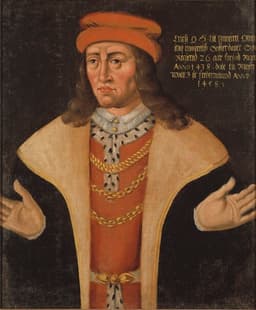
Eric of Pomerania
Emperor · Medieval
43.2Total
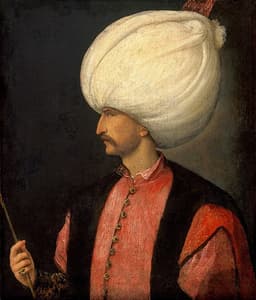
Suleiman the Magnificent
Emperor · Medieval
73.2Total
Basic Information
Born
1381
1494
Died
1459
1566
Era
Medieval
Medieval
Nationality
Denmark
Ottoman Empire
Occupation
Emperor
Emperor
Civilization
Western
Middle Eastern
Score Comparison
Military (10%)
50.0
85.0
Political (20%)
35.1
78.0
Influence (20%)
49.4
72.0
Legacy (20%)
39.2
68.0
Leadership (15%)
48.4
72.0
Strategy (15%)
35.7
72.0
TOTAL
43.2
73.2
Eric of Pomerania — Complete Timeline
1397 AD
Crowned King of the Kalmar UnionPolitical Action◆ Major
Eric of Pomerania was crowned King of Denmark, Norway, and Sweden at the Kalmar Union meeting in 1397, under the regency of Margaret I. His coronation formalized the union of the three Scandinavian kingdoms, though Margaret retained real power until her death.
CoronationKalmar UnionScandinavia
Impact: regionalconstructive
1412 AD
Became sole ruler after Margaret I's deathPolitical Action◆ Major
After Margaret I's death, Eric of Pomerania became the sole ruler of the Kalmar Union. He attempted to centralize power and assert royal authority, but his policies often clashed with the nobility, leading to growing tensions within the union.
SuccessionKalmar UnionRule
Impact: regional
1426 AD
Fought the Dano-Hanseatic WarWar◆ Major
Eric of Pomerania engaged in a war with the Hanseatic League, a powerful trading confederation. The conflict, which lasted until 1435, resulted in Danish defeats and economic disruption, weakening the Kalmar Union's control over Baltic trade.
WarHanseatic LeagueTrade Conflict
Impact: regionaldestructive
1429 AD
Imposed the Sound DuesReform◆ Major
Eric of Pomerania introduced the Sound Dues, a toll on all ships passing through the
TaxTradeBaltic
Impact: regional
1439 AD
Deposed by the Danish and Swedish nobilityPolitical Action◆ Major
Eric of Pomerania was deposed as king of Denmark and Sweden by the nobility, who were dissatisfied with his rule and his handling of the union. He was forced into exile on the island of Gotland, and the Kalmar Union effectively collapsed.
DepositionKalmar UnionExile
Impact: regionaldestructive
Suleiman the Magnificent — Complete Timeline
1522 AD
Siege of RhodesWar◆ Major
Suleiman personally led a massive Ottoman campaign against the Knights Hospitaller on Rhodes. After a six-month siege, the knights surrendered and were allowed to leave. This victory secured Ottoman control over the eastern Mediterranean.
SiegeMediterraneanKnights Hospitaller
Impact: regional
1526 AD
Battle of MohácsWar
Suleiman's Ottoman army defeated the Hungarian forces of King Louis II at Moh
BattleHungaryOttoman expansion
Impact: regional
1529 AD
Siege of ViennaWar◆ Major
Suleiman besieged Vienna, the Habsburg capital, with a large army. The siege failed due to supply issues, disease, and strong defenses. This defeat halted Ottoman expansion into central Europe and marked the empire's furthest advance westward.
SiegeViennaDefeat
Impact: regional
1530 AD
Codification of Ottoman lawReform◆ Major
Suleiman oversaw the compilation and standardization of Ottoman legal codes, known as Kanun. These laws regulated criminal justice, land tenure, and taxation, creating a unified legal system that balanced sharia with secular law. He earned the title 'Kanuni' (the Lawgiver).
Legal reformKanunOttoman Empire
Impact: nationalconstructive
1536 AD
Execution of Ibrahim PashaPolitical Action◆ Major
Suleiman ordered the execution of his grand vizier and close friend Ibrahim Pasha, who had served for 13 years. The reasons remain debated, but likely involved Ibrahim's growing power and conflicts with Suleiman's wife, Hurrem Sultan. This event demonstrated the absolute power of the sultan.
ExecutionCourt politicsPower
Impact: nationaltragic
Expert Analysis
Origins
Eric of Pomerania was born in 1382 in Pomerania, a region on the Baltic coast. He was the grandson of King Valdemar IV of Denmark through his mother. His early life was shaped by his great-aunt, Queen Margaret I of Denmark, who adopted him and groomed him as her successor. He was raised in the Danish court and received education in governance and statecraft. In contrast, Suleiman the Magnificent was born in 1494 in Trabzon, Ottoman Empire, as the son of Sultan Selim I. He was trained in administration and military command from a young age, serving as governor of several provinces. His education included Islamic law, literature, and military strategy, preparing him for the sultanate.
Rise to Power
Eric's rise was orchestrated by Margaret I. In 1397, at the age of 15, he was crowned King of Denmark, Norway, and Sweden at the Kalmar Union meeting, though Margaret held effective power until her death in 1412. After Margaret's death, Eric became the sole ruler of the union. His ascension was smooth due to Margaret's groundwork, but he faced challenges in asserting authority over the fractious nobility. Suleiman's rise was sudden: after the death of his father Selim I in 1520, he ascended the throne without opposition. He inherited a stable empire and a powerful military. His first major act was to launch campaigns in Europe, beginning with the conquest of Belgrade in 1521.
Leadership & Governance
Eric's leadership style was autocratic but ineffective. He attempted to centralize power and reduce the influence of the nobility and the Hanseatic League. He imposed the Sound Dues in 1429, a toll on ships passing through the Øresund strait, which provided revenue but alienated trading partners. His governance was marked by conflict: he fought the Dano-Hanseatic War (1426-1435), which drained resources and ended in a treaty that weakened royal control. In contrast, Suleiman was a decisive and effective leader. He centralized authority through the codification of Ottoman law (Kanun), which standardized legal practices across the empire. He also reformed the bureaucracy and military, creating a loyal corps of Janissaries. His governance promoted stability and prosperity, earning him the title 'the Magnificent' in the West and 'the Lawgiver' in the East.
Triumph & Tragedy
Eric's greatest success was the establishment of the Sound Dues, which became a lasting source of income for Denmark. However, his reign was marked by failure: his inability to manage the Kalmar Union led to rebellions in Sweden and his deposition in 1439. He fled to Gotland and later lived in Pomerania, a ruler without a throne. His total score of 43.2 reflects his limited achievements. Suleiman's triumphs include the Battle of Mohács in 1526, which annihilated the Hungarian kingdom and expanded Ottoman control into Central Europe. He also captured Rhodes in 1522 after a six-month siege. However, his Siege of Vienna in 1529 failed due to supply issues and disease, marking the farthest Ottoman advance into Europe. His execution of Grand Vizier Ibrahim Pasha in 1536 remains a controversial act that some see as a tragic flaw. His total score of 73.2 underscores his effectiveness.
Character & Destiny
Eric was described as stubborn and lacking in diplomatic skill. His attempt to centralize power without adequate support led to his downfall. He scored 35.1 in political acumen, indicating poor judgment in managing alliances. His character—inflexible and confrontational—alienated both nobles and commoners. Suleiman, by contrast, was strategic and patient. He scored 72.0 in strategy and 72.0 in leadership. He balanced military expansion with legal reforms. His decision to execute Ibrahim Pasha, however, shows a ruthless streak. Historians debate whether this was a calculated move or a personal weakness. Overall, Suleiman's character aligned with his destiny: he led the Ottoman Empire to its zenith.
Legacy
Eric's legacy is limited: the Sound Dues persisted for centuries, but his vision of a united Scandinavia failed. The Kalmar Union dissolved after his deposition, and his score of 39.2 in legacy reflects his minor impact. Suleiman's legacy is vast: he codified laws that shaped Ottoman society for centuries, expanded the empire to its greatest territorial extent, and patronized architecture like the Suleymaniye Mosque. His influence on legal systems and military strategy endured. His legacy score of 68.0 reflects his lasting imprint.
Conclusion
Suleiman the Magnificent had a far greater impact than Eric of Pomerania. Suleiman's total score of 73.2 versus Eric's 43.2 reflects his superior military, political, and strategic achievements. While Eric's Sound Dues had economic significance, his reign ended in failure and the collapse of a union. Suleiman expanded an empire, reformed its laws, and left a cultural legacy. The data supports that Suleiman is the more consequential ruler.
Rankings
🥇
Suleiman the MagnificentLeader
Mil: 85.0Pol: 78.0Inf: 72.0
73.2
🥈
Eric of Pomerania
Mil: 50.0Pol: 35.1Inf: 49.4
43.2
+30.0 behind
How This Comparison Works
Algorithm
Each figure is scored on 6 dimensions (0—100 scale) based on structured historical data: Military (10%), Political (20%), Influence (20%), Legacy (20%), Leadership (15%), Strategy (15%). The weighted total produces the final ranking.
Data Sources
Scores are computed from structured sub-indicators in the database. Scale factors adjust for era (Ancient ×0.85, Modern ×1.0) and civilization size (Eastern ×1.05, Other ×0.80) to account for differences in population and military scale.
Maximum 3 Figures
Comparisons are limited to 2—3 figures to ensure readability and statistical meaningfulness.
Error Margins
±5 points per dimension — Sub-scores are derived from historical records with inherent uncertainty. Two figures within 5 points on a dimension should be considered roughly equivalent in that area.
Total Score Accuracy
±3 points overall — The weighted combination of 6 dimensions produces a total score with approximately ±3 points of uncertainty. Differences of less than 3 points are not statistically significant— the figures are effectively tied.
Known Limitations
- Historical records are incomplete and uneven across civilizations
- Figures from oral-tradition societies may be underrepresented
- Occupation labels can misclassify multi-role figures
- Scores measure capability and impact, not moral character
- Quantitative scoring is a comparison tool, not absolute truth
Capability Radar
Military (10%) — Battles & Warfare
Battles
20
95
Win Rate
25
90
Expansion
15
95
Political (20%) — Governance & Reform
Reform
30
90
Diplomacy
35
88
Economy
25
85
Influence (20%) — Cultural & Global Reach
Cultural
20
90
Global
15
88
Legacy (20%) — Historical Impact
Historical
25
92
Longevity
20
85
Leadership (15%) — Power & Stability
Tenure
40
95
Stability
20
85
Strategy (15%) — Tactics & Innovation
Strategy
20
92
Tactics
15
85
Reform
10
80
Similar Comparisons
Comments & Discussion
No comments yet. Be the first to share your thoughts!