Loading...
Enriquillo vs Li Zicheng
Li Zicheng leads by 0.2 pts · 2 figures compared
…
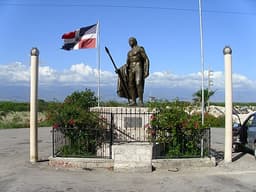
Enriquillo
Revolutionary · Medieval
43.3Total
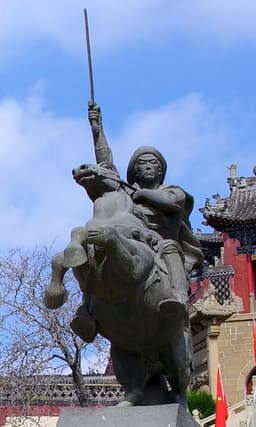
Li Zicheng
Revolutionary · Modern
43.5Total
Basic Information
Born
1498
1606
Died
1535
1645
Era
Medieval
Modern
Nationality
Taino
China
Occupation
Revolutionary
Revolutionary
Civilization
Other
Eastern
Score Comparison
Military (10%)
50.0
50.0
Political (20%)
29.3
27.9
Influence (20%)
47.9
52.5
Legacy (20%)
41.7
44.2
Leadership (15%)
47.3
39.0
Strategy (15%)
43.7
43.3
TOTAL
43.3
43.5
Enriquillo — Complete Timeline
1519 AD
Led Taino Rebellion on HispaniolaWar◆ Major
Enriquillo organized and led a rebellion of Taino people against Spanish colonial rule in the Bahoruco Mountains of Hispaniola. The rebellion lasted 14 years, with Enriquillo using guerrilla tactics to resist Spanish attempts to suppress the uprising.
Taino RebellionGuerrilla WarfareResistance
Impact: regional
1533 AD
Negotiated Peace Treaty with SpanishPolitical Action
After 14 years of rebellion, Enriquillo negotiated a peace treaty with Spanish authorities. The treaty granted the Taino rebels land and freedom from forced labor, though it required them to settle in a designated area. This was a rare negotiated settlement in the Spanish colonies.
TreatyDiplomacyTaino Rights
Impact: regionalconstructive
Received Royal Pardon from Spanish CrownPolitical Action◆ Major
As part of the peace agreement, Enriquillo received a royal pardon from the Spanish crown. He was granted the title of 'Don' and allowed to govern his community, though under Spanish oversight. This marked the end of his armed resistance.
PardonSpanish CrownTaino Leadership
Impact: regional
Li Zicheng — Complete Timeline
1644 AD
Captured Beijing and Ended the Ming DynastyWar
Li Zicheng led his rebel army to capture Beijing. The Chongzhen Emperor committed suicide, ending the Ming dynasty. Li Zicheng proclaimed the Shun dynasty and briefly ruled from the Forbidden City before being defeated by Qing forces.
Ming-Qing TransitionRebellionBeijing
Impact: globaldestructive
Defeated at the Battle of Shanhai PassWar◆ Major
Li Zicheng's army was defeated by the combined forces of Wu Sangui and the Manchus at the Battle of Shanhai Pass. The defeat forced him to abandon Beijing and retreat westward, effectively ending his control over northern China.
Ming-Qing TransitionBattleDefeat
Impact: globaltragic
Proclaimed the Shun DynastyPolitical Action◆ Major
After capturing Beijing, Li Zicheng formally proclaimed the establishment of the Shun dynasty in Xi'an. He adopted the title of emperor and began implementing his own administrative policies, though his rule was short-lived.
Shun DynastyProclamationRebellion
Impact: nationalconstructive
1645 AD
Killed in Jiugong MountainWar◆ Major
Li Zicheng was killed by a local militia while fleeing through Jiugong Mountain in Hubei province. His death marked the end of the Shun dynasty and the collapse of his rebellion, though some accounts claim he survived and became a monk.
Shun DynastyDeathRebellion
Impact: nationaltragic
Expert Analysis
Li Zicheng vs Enriquillo
### The Rebel and the Cacique
In the spring of 1644, a former postal worker named Li Zicheng rode into Beijing at the head of a vast army of starving peasants. The last Ming emperor had hanged himself on a hill behind the Forbidden City. The capital lay open, and China’s oldest dynasty had fallen in a single season. Just over a century earlier and an ocean away, another rebel—a Taino chief named Enriquillo—had led his people into the impenetrable forests of Hispaniola, not to topple an empire but to carve out a sliver of survival. One man seized a throne and lost it in weeks; the other never sought a crown, yet won a peace that endured for years. Both were revolutionaries. Why did their paths diverge so sharply?
### Origins
Li Zicheng was born in 1606 in Shaanxi province, a region ravaged by drought, famine, and government corruption. His family were poor farmers, and a catastrophic crop failure forced him into a life of banditry. The Ming dynasty was collapsing under its own weight—taxes were crushing, the bureaucracy was paralyzed, and a little ice age had turned harvests to dust. Li was not a scholar or a general; he was a man shaped by desperation, who learned to fight because there was no other way to eat.
Enriquillo was born around 1498, a member of the Taino aristocracy on the island of Hispaniola. His name meant “lord of the house,” and he was raised in a Spanish mission, educated in Catholic doctrine, and taught to read and write in Spanish. He was baptized as Enrique, a Christian name. His people had been decimated by disease, enslavement, and forced labor in the gold mines. Where Li was forged in the anarchy of a dying state, Enriquillo was shaped by the systematic cruelty of a colonial machine. One was a rebel of hunger; the other, a rebel of humiliation.
### Rise to Power
Li Zicheng’s rise was meteoric. He joined a rebel group in the 1630s, and by 1643 he had unified several peasant armies under his banner. His strategy was simple: march on the capital, seize the center, and claim the Mandate of Heaven. In April 1644, he did exactly that. Beijing fell without a prolonged siege—the city’s defenses crumbled from within, and the emperor’s suicide left no one to lead a counterattack. Li proclaimed the Shun dynasty in Xi’an, adopting the title of king. He was at the apex of power, yet his rule was already hollow.
Enriquillo’s rise was slower and more deliberate. In 1519, after suffering personal abuse at the hands of a Spanish encomendero, he fled into the Bahoruco Mountains with a small band of followers. For fourteen years, he waged a guerrilla war—ambushing patrols, raiding plantations, and disappearing into the jungle. He never sought to capture a capital or topple the Spanish crown. His goal was survival, not conquest. His power came not from a single dramatic victory but from the slow, grinding endurance of a people who refused to vanish.
### Leadership & Governance
Li Zicheng’s leadership was that of a military chieftain, not a statesman. He had no administrative experience, no bureaucratic network, and no plan for governing a vast empire. His army, once inside Beijing, looted and tortured former Ming officials for their wealth. He alienated the scholar-official class, whose cooperation was essential for stable rule. His military tactics were effective in the field—he had defeated Ming armies repeatedly—but his political acumen was disastrous. He offered Wu Sangui, the Ming general guarding the Great Wall, a bribe to switch sides. When Wu hesitated, Li mishandled the negotiation, pushing the general into an alliance with the Manchus. It was a fatal miscalculation.
Enriquillo, by contrast, was a master of political negotiation. He understood that the Spanish could not be defeated in open battle, but they could be worn down. He used the mountains as a fortress and the forest as a shield. He also knew when to talk. In 1533, after years of stalemate, he opened negotiations with the Spanish authorities. He demanded land, autonomy, and an end to forced labor for his people. The Spanish, exhausted by the cost of the rebellion, agreed. Enriquillo received a royal pardon and the title of “Don.” He did not destroy the colonial system, but he carved out a space within it where his people could survive.
### Triumph & Tragedy
Li Zicheng’s greatest triumph—the capture of Beijing—was also the prelude to his tragedy. Within weeks, the combined forces of Wu Sangui and the Manchu prince Dorgon crushed his army at the Battle of Shanhai Pass in May 1644. Li fled west, his rebellion unraveling as quickly as it had risen. In 1645, while trying to regroup in Hubei province, he was killed by a local militia—not by a grand army, but by a handful of farmers defending their village. The man who had ended a dynasty died in obscurity, his body lost to history.
Enriquillo’s triumph was quieter but more lasting. The peace treaty of 1533 granted the Taino a reservation in the Bahoruco Mountains, where they could live under their own laws. He died in 1535, likely of natural causes, still free. His tragedy was that the peace did not outlast him by much—disease and assimilation slowly erased the Taino as a distinct people. But he had given them fourteen years of resistance and a moment of dignity.
### Character & Destiny
Li Zicheng was a man of immense ambition and little patience. He trusted his sword more than his mind. His personality—brash, impulsive, and suspicious of elites—drove him to seize power before he was ready to wield it. He saw the throne as a prize, not a responsibility. Destiny, in his case, was a trap: the Ming dynasty was so rotten that any rebel could knock it down, but no rebel could hold it together without the skills Li lacked.
Enriquollo was cautious, calculating, and deeply aware of his limits. He did not dream of empire; he dreamed of a home. His character—patient, diplomatic, and rooted in his people’s survival—allowed him to turn a hopeless rebellion into a negotiated peace. Destiny gave him an impossible foe, but he refused to fight on the enemy’s terms.
### Legacy
Li Zicheng is remembered in China as a tragic figure—a peasant hero who overthrew a corrupt dynasty but could not build a new one. His name appears in textbooks as a warning: revolution without governance is chaos. The Manchus, who swept in after his fall, ruled for nearly three centuries, and Li became a symbol of what could have been.
Enriquillo is a symbol of indigenous resistance across the Caribbean and Latin America. His name adorns streets, schools, and even a species of iguana. He is celebrated as a freedom fighter who stood against the tide of colonialism. His legacy is not one of conquest but of resilience—a reminder that even in the face of annihilation, a people can choose to fight.
### Conclusion
Standing in the shadow of history, these two rebels offer a stark contrast. Li Zicheng reached for the sun and burned; Enriquillo kept his eyes on the ground and survived. One wanted to change the world in a season; the other wanted to save his world for a generation. Their stories remind us that the outcome of a rebellion depends not just on courage or numbers, but on knowing what you are fighting for—and what you are willing to accept. Li’s ambition was his downfall; Enriquillo’s humility was his salvation. In the end, the man who captured an empire died a forgotten fugitive, while the man who never left the mountains became immortal.
Rankings
🥇
Li ZichengLeader
Mil: 50.0Pol: 27.9Inf: 52.5
43.5
🥈
Enriquillo
Mil: 50.0Pol: 29.3Inf: 47.9
43.3
+0.2 behind
How This Comparison Works
Algorithm
Each figure is scored on 6 dimensions (0—100 scale) based on structured historical data: Military (10%), Political (20%), Influence (20%), Legacy (20%), Leadership (15%), Strategy (15%). The weighted total produces the final ranking.
Data Sources
Scores are computed from structured sub-indicators in the database. Scale factors adjust for era (Ancient ×0.85, Modern ×1.0) and civilization size (Eastern ×1.05, Other ×0.80) to account for differences in population and military scale.
Maximum 3 Figures
Comparisons are limited to 2—3 figures to ensure readability and statistical meaningfulness.
Error Margins
±5 points per dimension — Sub-scores are derived from historical records with inherent uncertainty. Two figures within 5 points on a dimension should be considered roughly equivalent in that area.
Total Score Accuracy
±3 points overall — The weighted combination of 6 dimensions produces a total score with approximately ±3 points of uncertainty. Differences of less than 3 points are not statistically significant— the figures are effectively tied.
Known Limitations
- Historical records are incomplete and uneven across civilizations
- Figures from oral-tradition societies may be underrepresented
- Occupation labels can misclassify multi-role figures
- Scores measure capability and impact, not moral character
- Quantitative scoring is a comparison tool, not absolute truth
Capability Radar
Military (10%) — Battles & Warfare
Battles
25
55
Win Rate
30
60
Expansion
10
65
Political (20%) — Governance & Reform
Reform
15
15
Diplomacy
30
20
Economy
10
10
Influence (20%) — Cultural & Global Reach
Cultural
35
40
Global
20
35
Legacy (20%) — Historical Impact
Historical
40
55
Longevity
30
30
Leadership (15%) — Power & Stability
Tenure
40
20
Stability
25
5
Strategy (15%) — Tactics & Innovation
Strategy
40
55
Tactics
35
50
Reform
10
30
Similar Comparisons
Comments & Discussion
CACIQUE OF DESPAIR6/16/2026
Li Zicheng’s “Shun dynasty” lasted about 42 days—that’s shorter than a Kardashian marriage. Meanwhile, Enriquillo’s 14-year guerrilla campaign forced the Spanish crown to sign a real treaty in 1533. One guy couldn’t manage logistics from a palace; the other ran a jungle state with zero inflation. Let’s be honest: starving peasants don’t make a government, but a cacique with European legal training? That’s how you negotiate.
粮草即正义6/16/2026
李自成进北京才四十天就被吴三桂和多尔衮联手教做人,纯粹是因为他根本不懂什么叫“政权建设”。反观恩里基约,人家在伊斯帕尼奥拉岛深山里玩了十四年游击战,最后西班牙人还得乖乖签条约。没有后勤的农民军就是烟花,好看但散得快。
HISTORY'S DEADPOOL6/16/2026
Here’s the raw numbers: Li Zicheng commanded over 200,000 troops at his peak, yet folded when a smaller Qing force showed up. Enriquillo? Maybe 1,000 Taino warriors max, but he forced the Spanish to negotiate. It’s not about numbers; it’s about strategic patience. Li burned his supply lines by sacking Beijing immediately. Enriquillo starved his enemy by controlling the forests. One was a manager who broke the company; the other was a startup founder who scaled smart.
旧大陆的赌徒6/16/2026
李自成完全是被“天命”冲昏了头,打北京前连个稳固根据地都没建好,这就是典型的“流寇思维”。恩里基约呢?人家是大航海时代的谈判大师,知道自己打不赢正面战争,就用山地丛林拖死殖民者。一个是短跑选手,一个是马拉松冠军。造反不是勇气问题,是智商问题。