Loading...
Francisco Sagasti vs Willy Brandt
Willy Brandt leads by 21.9 pts · 2 figures compared
…

Francisco Sagasti
Politician · Modern
40.1Total
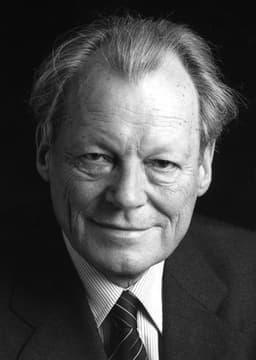
Willy Brandt
Politician · Modern
62.0Total
Basic Information
Born
1944
1913
Died
—
1992
Era
Modern
Modern
Nationality
Peru
Germany
Occupation
Politician
Politician
Civilization
Western
Western
Score Comparison
Military (10%)
49.6
48.6
Political (20%)
30.8
62.7
Influence (20%)
46.3
72.0
Legacy (20%)
35.8
55.0
Leadership (15%)
38.1
78.0
Strategy (15%)
42.7
43.2
TOTAL
40.1
62.0
Francisco Sagasti — Complete Timeline
2020 AD
Appointed Interim President of PeruPolitical Action◆ Major
After the removal of Mart
InterimTransitionPandemic
Impact: nationalconstructive
Managed the COVID-19 pandemic responsePolitical Action◆ Major
Sagasti's government focused on managing the COVID-19 pandemic, including vaccine procurement and distribution. He also oversaw the economic recovery and maintained political stability during a period of high uncertainty.
PandemicHealthCrisis Management
Impact: nationalconstructive
2021 AD
Oversaw the 2021 general electionsPolitical Action◆ Major
Sagasti's interim government successfully organized and oversaw the 2021 general elections, which were won by Pedro Castillo. The elections were seen as free and fair, marking a peaceful transfer of power.
ElectionDemocracyTransition
Impact: nationalconstructive
Willy Brandt — Complete Timeline
1969 AD
Became Chancellor of West GermanyPolitical Action◆ Major
Brandt was elected chancellor after the Social Democratic Party (SPD) formed a coalition with the Free Democratic Party (FDP). His government marked the first time the SPD led the government since the 1930s, signaling a shift in West German politics.
ElectionSPDCoalition
Impact: nationalconstructive
1970 AD
Initiated Ostpolitik (Eastern Policy)Political Action
Brandt pursued a policy of d
Cold WarDétenteEastern Europe
Impact: globalconstructive
Signed the Moscow Treaty with the Soviet UnionPolitical Action◆ Major
Brandt signed the Treaty of Moscow, in which West Germany and the Soviet Union recognized the inviolability of post-World War II borders, including the Oder-Neisse line. This normalized relations and opened the way for further Ostpolitik agreements.
OstpolitikSoviet UnionBorders
Impact: regionalconstructive
Knelt at the Warsaw Ghetto MemorialCultural◆ Major
During a visit to Poland, Brandt spontaneously knelt before the monument to the Warsaw Ghetto Uprising. This gesture of humility and remorse for Nazi crimes was widely seen as a powerful act of reconciliation and was praised internationally.
ReconciliationHolocaustSymbolism
Impact: globalprogressive
1974 AD
Resigned as Chancellor after a spy scandalPolitical Action◆ Major
Brandt resigned after it was revealed that one of his close aides, G
ScandalResignationSpy
Impact: nationaltragic
Expert Analysis
Origins
Francisco Sagasti, born in 1944 in Lima, Peru, grew up in a middle-class family and pursued engineering at the National University of Engineering, later earning a PhD in operations research from the University of Pennsylvania. His early career focused on science policy and strategic planning, working for the World Bank and as a professor, which shaped his technocratic approach.
Willy Brandt, born Herbert Ernst Karl Frahm in 1913 in Lübeck, Germany, came from a working-class background. He was raised by his mother and grandfather, and his political awakening came early: he joined the Social Democratic Party (SPD) in 1930 and fled Nazi persecution to Norway in 1933, adopting the pseudonym Willy Brandt. His exile years in Scandinavia deepened his commitment to democracy and internationalism.
Rise to Power
Sagasti's rise was unconventional. He entered politics relatively late, serving as a congressman from 2020 after a career in academia and international organizations. His ascent to the presidency came suddenly on November 17, 2020, when he was appointed interim president after a political crisis that saw three presidents in a week. He scored 42.7 in strategy, reflecting his ability to navigate chaos.
Brandt's path was more gradual. After returning to Germany in 1945, he worked as a journalist and became mayor of West Berlin from 1957 to 1966, gaining prominence during the Berlin Wall crisis. He became chancellor in 1969 after the SPD formed a coalition with the Free Democratic Party. His political score of 62.7 underscores his strategic alliance-building.
Leadership & Governance
Sagasti led a caretaker government from November 2020 to July 2021, focusing on managing the COVID-19 pandemic. He prioritized vaccine procurement, securing doses via COVAX and bilateral deals, and oversaw the rollout to 15% of the population by end of his term. He also organized the 2021 general elections, ensuring a peaceful transition despite polarization. His leadership score of 38.1 reflects the constraints of a short, crisis-driven tenure.
Brandt, by contrast, pursued a transformative agenda. His Ostpolitik redefined West Germany's relations with Eastern Europe: he signed the Moscow Treaty (1970) recognizing post-WWII borders, the Warsaw Treaty (1970) normalizing relations with Poland, and the Basic Treaty (1972) with East Germany. Domestically, he expanded social welfare, increasing pensions and health benefits. His leadership score of 78.0 reflects his bold, reconciliatory approach.
Triumph & Tragedy
Sagasti's greatest success was overseeing a credible election amid a pandemic, with voter turnout over 70%. However, his failure was the limited vaccine rollout—Peru had one of the highest COVID-19 death rates per capita, partly due to delayed procurement and distribution. His influence score of 46.3 reflects this mixed outcome.
Brandt's iconic triumph was his spontaneous kneeling at the Warsaw Ghetto Memorial in 1970, a gesture that symbolized German contrition and earned him global respect. His Ostpolitik won him the Nobel Peace Prize in 1971. Yet his tragedy came in 1974 when his close aide Günter Guillaume was exposed as an East German spy, forcing Brandt's resignation and casting a shadow over his legacy. His military score of 48.6 reflects his anti-militarist stance.
Character & Destiny
Sagasti was a technocrat, calm and analytical, but his lack of political experience made him reactive rather than proactive. His strategy score of 42.7 suggests he managed crises but did not shape them. Destiny placed him in a transitional role, where his impact was necessarily limited.
Brandt was a charismatic visionary, driven by moral conviction and a sense of historical responsibility. His willingness to take risks—such as recognizing East Germany—alienated conservatives but changed the course of German diplomacy. His character ultimately led to both his greatest success (Ostpolitik) and his downfall (the spy scandal). His total score of 62.0 reflects a leader who shaped history despite personal flaws.
Legacy
Sagasti's legacy is modest: he stabilized Peru during a tumultuous period and ensured a democratic transition. However, his policies had little lasting impact; the country remained deeply divided. His legacy score of 35.8 is low.
Brandt's legacy is monumental. Ostpolitik laid the groundwork for German reunification in 1990 and helped end the Cold War. His social reforms modernized West Germany, and his moral example influenced global politics. His influence score of 72.0 and legacy score of 55.0 reflect his enduring impact.
Conclusion
Willy Brandt had a far greater impact than Francisco Sagasti. Brandt's total score of 62.0 versus Sagasti's 40.1 reflects a leader who reshaped international relations and domestic policy, while Sagasti managed a brief crisis. Brandt's Ostpolitik changed the course of European history, whereas Sagasti's interim presidency, though competent, left no lasting structural changes. The clear position is that Brandt's leadership, strategy, and moral authority place him in a different league. Sagasti's role was necessary but not transformative.
Rankings
🥇
Willy BrandtLeader
Mil: 48.6Pol: 62.7Inf: 72.0
62.0
🥈
Francisco Sagasti
Mil: 49.6Pol: 30.8Inf: 46.3
40.1
+21.9 behind
How This Comparison Works
Algorithm
Each figure is scored on 6 dimensions (0—100 scale) based on structured historical data: Military (10%), Political (20%), Influence (20%), Legacy (20%), Leadership (15%), Strategy (15%). The weighted total produces the final ranking.
Data Sources
Scores are computed from structured sub-indicators in the database. Scale factors adjust for era (Ancient ×0.85, Modern ×1.0) and civilization size (Eastern ×1.05, Other ×0.80) to account for differences in population and military scale.
Maximum 3 Figures
Comparisons are limited to 2—3 figures to ensure readability and statistical meaningfulness.
Error Margins
±5 points per dimension — Sub-scores are derived from historical records with inherent uncertainty. Two figures within 5 points on a dimension should be considered roughly equivalent in that area.
Total Score Accuracy
±3 points overall — The weighted combination of 6 dimensions produces a total score with approximately ±3 points of uncertainty. Differences of less than 3 points are not statistically significant— the figures are effectively tied.
Known Limitations
- Historical records are incomplete and uneven across civilizations
- Figures from oral-tradition societies may be underrepresented
- Occupation labels can misclassify multi-role figures
- Scores measure capability and impact, not moral character
- Quantitative scoring is a comparison tool, not absolute truth
Capability Radar
Military (10%) — Battles & Warfare
Battles
31
27
Win Rate
32
34
Expansion
34
36
Political (20%) — Governance & Reform
Reform
20
80
Diplomacy
25
90
Economy
15
65
Influence (20%) — Cultural & Global Reach
Cultural
5
55
Global
10
70
Legacy (20%) — Historical Impact
Historical
10
75
Longevity
5
60
Leadership (15%) — Power & Stability
Tenure
15
70
Stability
10
70
Strategy (15%) — Tactics & Innovation
Strategy
39
40
Tactics
43
43
Reform
42
42
Similar Comparisons
Comments & Discussion
No comments yet. Be the first to share your thoughts!