Loading...
This comparison has not been analyzed yet.
One-time AI generation (~1 minute). Scores and timeline are already available below.
Emperor Yuryaku vs Khosrow I
Khosrow I leads by 29.4 pts · 2 figures compared
…
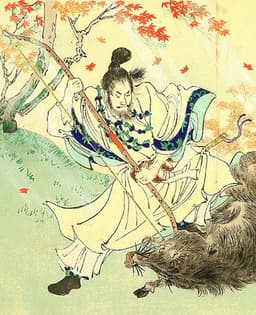
Emperor Yuryaku
Emperor · Ancient
42.1Total

Khosrow I
Emperor · Ancient
71.5Total
Basic Information
Born
418
-501
Died
479
—
Era
Ancient
Ancient
Nationality
Japan
Sassanid Empire
Occupation
Emperor
Emperor
Civilization
Eastern
Middle Eastern
Score Comparison
Military (10%)
20.0
72.0
Political (20%)
35.1
72.0
Influence (20%)
44.0
65.0
Legacy (20%)
38.3
72.0
Leadership (15%)
65.0
80.0
Strategy (15%)
45.0
72.0
TOTAL
42.1
71.5
Emperor Yuryaku — Complete Timeline
460 AD
Unified the Yamato StatePolitical Action◆ Major
Emperor Yuryaku is credited with unifying the Yamato state through military campaigns and political maneuvering. He suppressed rival clans and expanded imperial control over central Japan, laying the groundwork for a more centralized government.
UnificationCentralizationYamato Period
Impact: nationalconstructive
465 AD
Brutal Suppression of OppositionPolitical Action◆ Major
Emperor Yuryaku was known for his brutal methods, including the execution of rivals and the suppression of dissent. His reign is recorded as having involved numerous purges and violent acts, which consolidated his power but also created fear and resentment.
PurgeViolenceAuthoritarianism
Impact: nationaldestructive
470 AD
Expanded Yamato TerritoryWar
Emperor Yuryaku led military campaigns to expand Yamato territory into the Kanto region and beyond. These conquests brought new lands and resources under imperial control, strengthening the economic and military power of the Yamato court.
Territorial ExpansionMilitary CampaignYamato
Impact: national
478 AD
Established Diplomatic Relations with ChinaPolitical Action◆ Major
Emperor Yuryaku sent an embassy to the Liu Song dynasty in China, requesting recognition and trade. This diplomatic mission is recorded in Chinese historical texts, marking one of the earliest documented interactions between Japan and a Chinese dynasty.
DiplomacyChinaTrade
Impact: regionalconstructive
Khosrow I — Complete Timeline
531 AD
Reign of Khosrow I (Anushirvan)Political Action◆ Major
Khosrow I ascended the throne after the death of his father Kavad I. His reign, lasting until 579, is considered the golden age of the Sassanid Empire, marked by administrative reforms, military expansion, and cultural flourishing.
ReignGolden AgeSassanid Empire
Impact: globalconstructive
540 AD
War with the Byzantine Empire (540-562)War◆ Major
Khosrow I invaded Byzantine Syria, sacking Antioch and other cities. The war continued for over two decades, ending with the Peace of 562, which required the Byzantines to pay annual tribute to Persia and recognized Sassanid control over Lazica.
Roman-Persian WarsByzantineSassanid Empire
Impact: regional
Administrative and Tax ReformsReform◆ Major
Khosrow I implemented a comprehensive reform of the tax system, replacing arbitrary levies with a fixed land tax and a poll tax. He also reorganized the bureaucracy and military, strengthening central control and increasing state revenue.
Tax ReformAdministrationSassanid Empire
Impact: nationalconstructive
550 AD
Patronage of Philosophy and ScienceCultural◆ Major
Khosrow I welcomed Greek philosophers and scholars fleeing the closure of the Academy of Athens. He sponsored translations of Greek and Indian works into Middle Persian, fostering a cultural renaissance that influenced later Islamic civilization.
PatronageTranslationSassanid Empire
Impact: globalconstructive
560 AD
Construction of the Great Wall of GorganOther
Khosrow I ordered the construction of the Great Wall of Gorgan, a massive defensive barrier in northeastern Persia. The wall, stretching over 195 km, protected the empire from nomadic incursions and demonstrated Sassanid engineering capabilities.
FortificationEngineeringSassanid Empire
Impact: regionalconstructive
This comparison has not been analyzed yet.
One-time AI generation (~1 minute). Scores and timeline are already available below.
Rankings
🥇
Khosrow ILeader
Mil: 72.0Pol: 72.0Inf: 65.0
71.5
🥈
Emperor Yuryaku
Mil: 20.0Pol: 35.1Inf: 44.0
42.1
+29.4 behind
How This Comparison Works
Algorithm
Each figure is scored on 6 dimensions (0—100 scale) based on structured historical data: Military (10%), Political (20%), Influence (20%), Legacy (20%), Leadership (15%), Strategy (15%). The weighted total produces the final ranking.
Data Sources
Scores are computed from structured sub-indicators in the database. Scale factors adjust for era (Ancient ×0.85, Modern ×1.0) and civilization size (Eastern ×1.05, Other ×0.80) to account for differences in population and military scale.
Maximum 3 Figures
Comparisons are limited to 2—3 figures to ensure readability and statistical meaningfulness.
Error Margins
±5 points per dimension — Sub-scores are derived from historical records with inherent uncertainty. Two figures within 5 points on a dimension should be considered roughly equivalent in that area.
Total Score Accuracy
±3 points overall — The weighted combination of 6 dimensions produces a total score with approximately ±3 points of uncertainty. Differences of less than 3 points are not statistically significant— the figures are effectively tied.
Known Limitations
- Historical records are incomplete and uneven across civilizations
- Figures from oral-tradition societies may be underrepresented
- Occupation labels can misclassify multi-role figures
- Scores measure capability and impact, not moral character
- Quantitative scoring is a comparison tool, not absolute truth
Capability Radar
Military (10%) — Battles & Warfare
Battles
35
85
Win Rate
40
80
Expansion
40
75
Political (20%) — Governance & Reform
Reform
30
95
Diplomacy
25
85
Economy
20
95
Influence (20%) — Cultural & Global Reach
Cultural
20
85
Global
10
70
Legacy (20%) — Historical Impact
Historical
30
80
Longevity
20
70
Leadership (15%) — Power & Stability
Tenure
55
90
Stability
25
85
Strategy (15%) — Tactics & Innovation
Strategy
35
85
Tactics
30
80
Reform
20
90
Similar Comparisons
Comments & Discussion
No comments yet. Be the first to share your thoughts!