Loading...
This comparison has not been analyzed yet.
One-time AI generation (~1 minute). Scores and timeline are already available below.
Emperor Yuryaku vs Geunchogo of Baekje
Geunchogo of Baekje leads by 15.6 pts · 2 figures compared
…
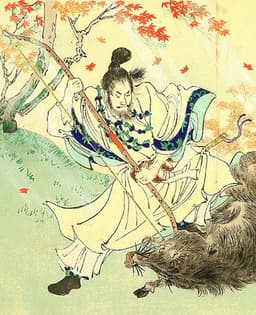
Emperor Yuryaku
Emperor · Ancient
42.1Total

Geunchogo of Baekje
Emperor · Ancient
57.7Total
Basic Information
Born
418
324
Died
479
375
Era
Ancient
Ancient
Nationality
Japan
Korea
Occupation
Emperor
Emperor
Civilization
Eastern
Eastern
Score Comparison
Military (10%)
20.0
63.3
Political (20%)
35.1
68.0
Influence (20%)
44.0
54.9
Legacy (20%)
38.3
46.7
Leadership (15%)
65.0
72.0
Strategy (15%)
45.0
50.0
TOTAL
42.1
57.7
Emperor Yuryaku — Complete Timeline
460 AD
Unified the Yamato StatePolitical Action◆ Major
Emperor Yuryaku is credited with unifying the Yamato state through military campaigns and political maneuvering. He suppressed rival clans and expanded imperial control over central Japan, laying the groundwork for a more centralized government.
UnificationCentralizationYamato Period
Impact: nationalconstructive
465 AD
Brutal Suppression of OppositionPolitical Action◆ Major
Emperor Yuryaku was known for his brutal methods, including the execution of rivals and the suppression of dissent. His reign is recorded as having involved numerous purges and violent acts, which consolidated his power but also created fear and resentment.
PurgeViolenceAuthoritarianism
Impact: nationaldestructive
470 AD
Expanded Yamato TerritoryWar
Emperor Yuryaku led military campaigns to expand Yamato territory into the Kanto region and beyond. These conquests brought new lands and resources under imperial control, strengthening the economic and military power of the Yamato court.
Territorial ExpansionMilitary CampaignYamato
Impact: national
478 AD
Established Diplomatic Relations with ChinaPolitical Action◆ Major
Emperor Yuryaku sent an embassy to the Liu Song dynasty in China, requesting recognition and trade. This diplomatic mission is recorded in Chinese historical texts, marking one of the earliest documented interactions between Japan and a Chinese dynasty.
DiplomacyChinaTrade
Impact: regionalconstructive
Geunchogo of Baekje — Complete Timeline
346 AD
Expanded Baekje to Its PeakWar
Geunchogo of Baekje launched military campaigns that expanded the kingdom to its greatest territorial extent. He conquered parts of southern Korea and controlled key trade routes, making Baekje a regional power.
Territorial ExpansionBaekjeWar
Impact: regionalconstructive
360 AD
Patronized Chinese LearningCultural
Geunchogo invited Chinese scholars to Baekje and promoted the study of Confucian classics. He established schools that taught Chinese literature and philosophy, fostering intellectual development.
EducationConfucianismCultural Exchange
Impact: regionalconstructive
367 AD
Established Diplomatic Relations with JapanPolitical Action◆ Major
Geunchogo sent diplomatic missions to the Yamato court in Japan, establishing formal relations. This led to cultural and technological exchanges, including the introduction of Chinese writing to Japan via Baekje.
DiplomacyJapanCultural Exchange
Impact: regionalconstructive
371 AD
Defeated Goguryeo in BattleWar◆ Major
Geunchogo led a successful campaign against Goguryeo, capturing the fortress of Pyongyang and killing King Gogukwon. This victory temporarily weakened Goguryeo and enhanced Baekje's prestige.
WarGoguryeoBaekje
Impact: regional
This comparison has not been analyzed yet.
One-time AI generation (~1 minute). Scores and timeline are already available below.
Rankings
🥇
Geunchogo of BaekjeLeader
Mil: 63.3Pol: 68.0Inf: 54.9
57.7
🥈
Emperor Yuryaku
Mil: 20.0Pol: 35.1Inf: 44.0
42.1
+15.6 behind
How This Comparison Works
Algorithm
Each figure is scored on 6 dimensions (0—100 scale) based on structured historical data: Military (10%), Political (20%), Influence (20%), Legacy (20%), Leadership (15%), Strategy (15%). The weighted total produces the final ranking.
Data Sources
Scores are computed from structured sub-indicators in the database. Scale factors adjust for era (Ancient ×0.85, Modern ×1.0) and civilization size (Eastern ×1.05, Other ×0.80) to account for differences in population and military scale.
Maximum 3 Figures
Comparisons are limited to 2—3 figures to ensure readability and statistical meaningfulness.
Error Margins
±5 points per dimension — Sub-scores are derived from historical records with inherent uncertainty. Two figures within 5 points on a dimension should be considered roughly equivalent in that area.
Total Score Accuracy
±3 points overall — The weighted combination of 6 dimensions produces a total score with approximately ±3 points of uncertainty. Differences of less than 3 points are not statistically significant— the figures are effectively tied.
Known Limitations
- Historical records are incomplete and uneven across civilizations
- Figures from oral-tradition societies may be underrepresented
- Occupation labels can misclassify multi-role figures
- Scores measure capability and impact, not moral character
- Quantitative scoring is a comparison tool, not absolute truth
Capability Radar
Military (10%) — Battles & Warfare
Battles
35
60
Win Rate
40
65
Expansion
40
65
Political (20%) — Governance & Reform
Reform
30
55
Diplomacy
25
60
Economy
20
55
Influence (20%) — Cultural & Global Reach
Cultural
20
50
Global
10
40
Legacy (20%) — Historical Impact
Historical
30
55
Longevity
20
45
Leadership (15%) — Power & Stability
Tenure
55
70
Stability
25
60
Strategy (15%) — Tactics & Innovation
Strategy
35
60
Tactics
30
55
Reform
20
50
Similar Comparisons
Comments & Discussion
No comments yet. Be the first to share your thoughts!