Loading...
Khosrow I vs Orodes II of Parthia
Khosrow I leads by 11.9 pts · 2 figures compared
…

Khosrow I
Emperor · Ancient
71.5Total
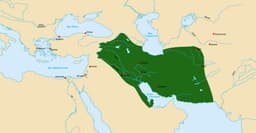
Orodes II of Parthia
Emperor · Ancient
59.6Total
Basic Information
Born
-501
-70
Died
—
-38
Era
Ancient
Ancient
Nationality
Sassanid Empire
Parthian Empire
Occupation
Emperor
Emperor
Civilization
Middle Eastern
Middle Eastern
Score Comparison
Military (10%)
72.0
78.0
Political (20%)
72.0
53.8
Influence (20%)
65.0
58.0
Legacy (20%)
72.0
50.0
Leadership (15%)
80.0
66.0
Strategy (15%)
72.0
68.1
TOTAL
71.5
59.6
Khosrow I — Complete Timeline
531 AD
Reign of Khosrow I (Anushirvan)Political Action◆ Major
Khosrow I ascended the throne after the death of his father Kavad I. His reign, lasting until 579, is considered the golden age of the Sassanid Empire, marked by administrative reforms, military expansion, and cultural flourishing.
ReignGolden AgeSassanid Empire
Impact: globalconstructive
540 AD
War with the Byzantine Empire (540-562)War◆ Major
Khosrow I invaded Byzantine Syria, sacking Antioch and other cities. The war continued for over two decades, ending with the Peace of 562, which required the Byzantines to pay annual tribute to Persia and recognized Sassanid control over Lazica.
Roman-Persian WarsByzantineSassanid Empire
Impact: regional
Administrative and Tax ReformsReform◆ Major
Khosrow I implemented a comprehensive reform of the tax system, replacing arbitrary levies with a fixed land tax and a poll tax. He also reorganized the bureaucracy and military, strengthening central control and increasing state revenue.
Tax ReformAdministrationSassanid Empire
Impact: nationalconstructive
550 AD
Patronage of Philosophy and ScienceCultural◆ Major
Khosrow I welcomed Greek philosophers and scholars fleeing the closure of the Academy of Athens. He sponsored translations of Greek and Indian works into Middle Persian, fostering a cultural renaissance that influenced later Islamic civilization.
PatronageTranslationSassanid Empire
Impact: globalconstructive
560 AD
Construction of the Great Wall of GorganOther
Khosrow I ordered the construction of the Great Wall of Gorgan, a massive defensive barrier in northeastern Persia. The wall, stretching over 195 km, protected the empire from nomadic incursions and demonstrated Sassanid engineering capabilities.
FortificationEngineeringSassanid Empire
Impact: regionalconstructive
Orodes II of Parthia — Complete Timeline
54 BC
Murder of Mithridates IIIPolitical Action
Orodes II ordered the murder of his brother Mithridates III, who had contested the throne. This act consolidated Orodes' power but deepened the dynastic strife within the Arsacid family.
FratricideDynastic StruggleConsolidation
Impact: nationaldestructive
53 BC
Battle of CarrhaeWar
Orodes II's general Surena defeated the Roman army under Marcus Licinius Crassus at Carrhae. Crassus was killed, and the Parthians captured the Roman legionary standards, marking one of Rome's worst military disasters.
Roman-Parthian WarsMajor VictoryCrassus
Impact: global
52 BC
Execution of SurenaPolitical Action◆ Major
Orodes II executed his general Surena shortly after the victory at Carrhae, fearing his growing popularity and power. This act eliminated a key military leader and weakened Parthia's military capacity.
ExecutionPolitical PurgeSurena
Impact: nationaldestructive
51 BC
Invasion of ArmeniaWar
Orodes II invaded Armenia to install his son Pacorus I on the Armenian throne. This campaign expanded Parthian influence into the Caucasus but also provoked Roman retaliation.
Armenian CampaignExpansionPacorus I
Impact: regional
38 BC
Death of Pacorus I and Orodes' GriefWar◆ Major
Orodes II's son and heir Pacorus I was killed in battle against Roman forces at Gindarus. Orodes, devastated by the loss, abdicated the throne in favor of his son Phraates IV and died shortly after.
Battle DeathSuccession CrisisAbdication
Impact: nationaltragic
Expert Analysis
Origins
Khosrow I, born in 501 AD, was the son of Kavad I, the Sassanid king who had faced internal rebellion and war with the Byzantines. His early life was shaped by the Mazdakite religious and social movement, which his father initially supported but later suppressed. Khosrow was educated in Zoroastrian traditions and military arts, and he participated in his father's campaigns. His background was one of court intrigue and reformist zeal.
Orodes II of Parthia, born around 95 BC, was the son of Phraates III. The Parthian Empire was a feudal monarchy, with powerful noble families. Orodes' early life is less documented, but he likely grew up in the royal court, learning the skills of horsemanship and archery. He ascended the throne after murdering his brother Mithridates III, a common path in Parthian politics.
Rise to Power
Khosrow I ascended to the Sassanid throne in 531 AD after his father Kavad I's death. Kavad had designated Khosrow as his successor, but the transition was smooth due to Khosrow's involvement in administration. He quickly consolidated power by executing potential rivals, including his uncle. His rise was marked by stability and a focus on reform.
Orodes II seized power in 57 BC by ordering the murder of his brother Mithridates III, who had been installed by the Parthian nobility. This fratricidal act was typical of Parthian succession struggles. Orodes then faced a Roman invasion under Marcus Licinius Crassus in 54 BC. He delegated military command to his general Surena, who achieved a stunning victory at Carrhae in 53 BC, killing Crassus. This triumph solidified Orodes' rule.
Leadership & Governance
Khosrow I's leadership style was centralized and reformist. He overhauled the tax system, replacing arbitrary levies with a fixed land tax and a poll tax, which increased revenue and reduced corruption. He reorganized the army into a more professional force, with cavalry (savaran) and infantry (paighan) divisions. He also built the Great Wall of Gorgan, a 195 km defensive barrier, and promoted trade along the Silk Road. His patronage of philosophy and science attracted scholars from across the world, making Ctesiphon a center of learning.
Orodes II ruled as a traditional Parthian king, relying on the support of noble families and military commanders. His governance was less systematic; he delegated authority to generals like Surena. After Carrhae, he executed Surena out of jealousy, weakening his military leadership. He also engaged in dynastic struggles, including the invasion of Armenia to install his son Pacorus. His leadership score of 66.0 reflects his reliance on military prowess but lack of administrative reform.
Triumph & Tragedy
Khosrow I's greatest triumph was the Golden Age of the Sassanid Empire. His tax reforms stabilized the economy, and his military campaigns secured the empire's borders. He defeated the Hephthalites in the east and forced the Byzantines to pay tribute after the Peace of 562. His patronage led to the translation of Greek works, including Aristotle and Plato, into Persian. However, his long war with Byzantium drained resources, and his suppression of Mazdakism was brutal. His total score of 71.5 reflects balanced achievements.
Orodes II's triumph was the Battle of Carrhae, where his general Surena annihilated a Roman army of 40,000, killing Crassus. This was one of Rome's worst defeats. However, his tragedy was the execution of Surena, which eliminated his best general. He also lost his son Pacorus in battle in 38 BC, leading him to abdicate and die soon after. His legacy was marred by internal strife and short-lived gains.
Character & Destiny
Khosrow I was known as Anushirvan (the Immortal Soul) for his wisdom and justice. He was a methodical reformer, deliberate in decision-making. His character shaped a stable, progressive reign. Historians like Procopius praised his fairness, though his wars caused suffering. His leadership score of 80.0 is the highest among his metrics.
Orodes II was ambitious and ruthless, as seen in his fratricide and execution of Surena. He was a capable strategist but lacked the vision to consolidate victories. His character led to internal divisions and a decline after Carrhae. His political score of 53.8 reflects poor governance.
Legacy
Khosrow I's legacy is the Sassanid Golden Age. His reforms influenced later Islamic administrations, and his patronage of learning preserved Greek philosophy. The Great Wall of Gorgan stands as a testament to his defensive strategy. He is remembered as a model of just kingship in Persian tradition.
Orodes II is remembered mainly for Carrhae, a symbol of Parthian military power. However, his legacy is overshadowed by his internal failures and the subsequent decline of Parthia. His influence score of 58.0 is lower than Khosrow's 65.0.
Conclusion
Khosrow I had a greater impact than Orodes II, with a total score of 71.5 vs 59.6. While Orodes achieved a spectacular military victory, Khosrow's comprehensive reforms created a lasting golden age that shaped Persian civilization for centuries. Orodes' victories were ephemeral, undermined by his own actions. Khosrow's systematic governance and cultural patronage produced enduring change, making him the more influential ruler.
Rankings
🥇
Khosrow ILeader
Mil: 72.0Pol: 72.0Inf: 65.0
71.5
🥈
Orodes II of Parthia
Mil: 78.0Pol: 53.8Inf: 58.0
59.6
+11.9 behind
How This Comparison Works
Algorithm
Each figure is scored on 6 dimensions (0—100 scale) based on structured historical data: Military (10%), Political (20%), Influence (20%), Legacy (20%), Leadership (15%), Strategy (15%). The weighted total produces the final ranking.
Data Sources
Scores are computed from structured sub-indicators in the database. Scale factors adjust for era (Ancient ×0.85, Modern ×1.0) and civilization size (Eastern ×1.05, Other ×0.80) to account for differences in population and military scale.
Maximum 3 Figures
Comparisons are limited to 2—3 figures to ensure readability and statistical meaningfulness.
Error Margins
±5 points per dimension — Sub-scores are derived from historical records with inherent uncertainty. Two figures within 5 points on a dimension should be considered roughly equivalent in that area.
Total Score Accuracy
±3 points overall — The weighted combination of 6 dimensions produces a total score with approximately ±3 points of uncertainty. Differences of less than 3 points are not statistically significant— the figures are effectively tied.
Known Limitations
- Historical records are incomplete and uneven across civilizations
- Figures from oral-tradition societies may be underrepresented
- Occupation labels can misclassify multi-role figures
- Scores measure capability and impact, not moral character
- Quantitative scoring is a comparison tool, not absolute truth
Capability Radar
Military (10%) — Battles & Warfare
Battles
85
75
Win Rate
80
80
Expansion
75
70
Political (20%) — Governance & Reform
Reform
95
55
Diplomacy
85
75
Economy
95
60
Influence (20%) — Cultural & Global Reach
Cultural
85
50
Global
70
60
Legacy (20%) — Historical Impact
Historical
80
65
Longevity
70
55
Leadership (15%) — Power & Stability
Tenure
90
70
Stability
85
65
Strategy (15%) — Tactics & Innovation
Strategy
85
80
Tactics
80
85
Reform
90
60
Similar Comparisons
Comments & Discussion
No comments yet. Be the first to share your thoughts!