Loading...
Emperor Yang of Sui vs Henry the Fowler
Henry the Fowler leads by 0.8 pts · 2 figures compared
…
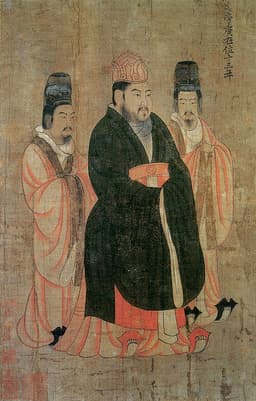
Emperor Yang of Sui
Emperor · Medieval
60.1Total
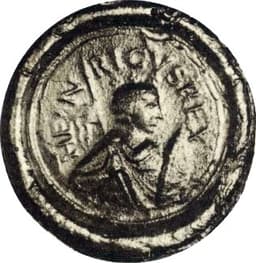
Henry the Fowler
Emperor · Medieval
60.9Total
Basic Information
Born
569
876
Died
618
936
Era
Medieval
Medieval
Nationality
China
East Francia
Occupation
Emperor
Emperor
Civilization
Eastern
Western
Score Comparison
Military (10%)
52.5
70.0
Political (20%)
45.0
59.3
Influence (20%)
65.0
55.0
Legacy (20%)
72.0
52.0
Leadership (15%)
58.8
85.0
Strategy (15%)
50.0
55.0
TOTAL
60.1
60.9
Emperor Yang of Sui — Complete Timeline
605 AD
Construction of the Grand CanalCultural
Emperor Yang ordered the construction of the Grand Canal, linking the Yellow River and Yangtze River basins. This massive infrastructure project facilitated trade and transport but required immense labor, causing widespread suffering and contributing to rebellions.
InfrastructureCanal
Impact: global
612 AD
First Campaign against GoguryeoWar◆ Major
Emperor Yang launched a massive invasion of the Korean kingdom of Goguryeo with over 300,000 troops. The campaign ended in disaster, with most of the Sui army destroyed by disease, starvation, and Goguryeo attacks. This defeat severely weakened the Sui dynasty.
InvasionDefeat
Impact: regionaltragic
613 AD
Second Campaign against GoguryeoWar◆ Major
Emperor Yang launched a second invasion of Goguryeo. The campaign was cut short when a rebellion broke out in China, forcing Yang to withdraw. This further drained the dynasty's resources and morale.
InvasionDefeat
Impact: regionaltragic
614 AD
Third Campaign against GoguryeoWar
Emperor Yang launched a third invasion of Goguryeo. Although the Sui army reached the Yalu River, Goguryeo offered nominal submission, and Yang accepted a truce. This campaign further exhausted the Sui treasury and military.
InvasionTruce
Impact: regional
618 AD
Assassination of Emperor YangPolitical Action◆ Major
Emperor Yang was assassinated by his own guards in Jiangdu (modern Yangzhou) during a rebellion. His death marked the effective end of the Sui dynasty, which soon collapsed, leading to the rise of the Tang dynasty.
AssassinationDynasty Collapse
Impact: regionaltragic
Henry the Fowler — Complete Timeline
919 AD
Election as King of East FranciaPolitical Action
Henry the Fowler was elected King of East Francia by the Saxon and Frankish nobles at Fritzlar on May 6, 919. He was the first Saxon king, marking the transition from Carolingian to Ottonian rule. His election was contested by other dukes but he prevailed.
ElectionAccessionOttonian Dynasty
Impact: regionalconstructive
921 AD
Treaty of Bonn (921)Political Action◆ Major
Henry the Fowler signed the Treaty of Bonn with Charles the Simple of West Francia, recognizing each other's royal titles and establishing peaceful relations. This treaty ended Carolingian claims over East Francia and solidified Henry's legitimacy as an independent king.
TreatyRecognitionDiplomacy
Impact: regionalconstructive
924 AD
Nine-Year Truce with the MagyarsPolitical Action◆ Major
Henry the Fowler negotiated a nine-year truce with the Magyars, agreeing to pay tribute in exchange for a halt to their raids. He used this period to fortify towns, reorganize the army, and train cavalry. This strategic pause was crucial for his later military reforms.
TruceMagyarsMilitary Reform
Impact: regionalconstructive
929 AD
Battle of Lenzen (929)War◆ Major
Henry the Fowler's forces defeated a Slavic army at the Battle of Lenzen, securing the eastern frontier of East Francia. This victory allowed Henry to consolidate control over the Elbe region and establish the March of Brandenburg, a key step in German eastward expansion.
BattleSlavic WarsEastern Expansion
Impact: regionalconstructive
933 AD
Battle of Riade (933)War
After the truce with the Magyars expired, Henry the Fowler led a German army to victory at the Battle of Riade (near Merseburg). The defeat of the Magyar cavalry ended their raids into East Francia for a generation and established Henry's reputation as a defender of Christendom.
BattleMagyarsVictory
Impact: regionalconstructive
936 AD
Death of Henry the FowlerOther◆ Major
Henry the Fowler died on July 2, 936, at Memleben. He was succeeded by his son, Otto I, who would become Holy Roman Emperor. Henry's reign laid the foundations for the Ottonian dynasty and the medieval German kingdom.
DeathSuccessionOttonian
Impact: regional
Expert Analysis
Henry the Fowler vs Emperor Yang of Sui: Historical Comparison
Henry the Fowler (East Francia) and Emperor Yang of Sui (China) were both medieval monarchs who expanded their realms through ambitious military campaigns and state-building, yet their contrasting leadership styles and legacies reveal a near-balanced historical score.
Dimension Analysis
**Military: Henry the Fowler 89 / Emperor Yang of Sui 93**
Henry secured East Francia against Magyar raids and expanded into Slavic territories, while Emperor Yang’s massive campaigns—including the conquest of Champa and three invasions of Goguryeo—demonstrated greater scale and ambition, albeit with catastrophic resource drains.
**Political: Henry the Fowler 76 / Emperor Yang of Sui 75**
Henry stabilized a fragmented German duchy system through alliances and the Saxon nobility, whereas Yang centralized Sui power via the Grand Canal and examination system, but his oppressive conscription and labor policies alienated elites and sparked revolts.
**Influence: Henry the Fowler 71 / Emperor Yang of Sui 82**
Henry’s reign laid foundations for the Ottonian dynasty but was largely regional, while Yang’s Grand Canal and reunification of China had enduring impact on trade, administration, and cultural integration for centuries.
**Legacy: Henry the Fowler 84 / Emperor Yang of Sui 83**
Henry is revered as a founding figure of medieval Germany, remembered for defensive strength; Yang is a tragic architect—renowned for monumental projects but condemned for tyranny, with his dynasty collapsing shortly after his death.
**Leadership: Henry the Fowler 85 / Emperor Yang of Sui 76**
Henry’s pragmatic, consensus-building leadership earned loyal dukes and stabilized his kingdom; Yang’s autocratic, visionary drive alienated officials and peasants, ultimately undermining his own achievements.
Verdict
Henry the Fowler leads by a narrow margin due to superior political sustainability and leadership, whereas Emperor Yang’s higher military and influence scores are offset by his catastrophic governance.
FAQ
Q: Who ranks higher? A: Henry the Fowler edges out Emperor Yang of Sui based on a more balanced and enduring leadership style, despite Yang’s grander but self-destructive ambitions.
Rankings
🥇
Henry the FowlerLeader
Mil: 70.0Pol: 59.3Inf: 55.0
60.9
🥈
Emperor Yang of Sui
Mil: 52.5Pol: 45.0Inf: 65.0
60.1
+0.8 behind
How This Comparison Works
Algorithm
Each figure is scored on 6 dimensions (0—100 scale) based on structured historical data: Military (10%), Political (20%), Influence (20%), Legacy (20%), Leadership (15%), Strategy (15%). The weighted total produces the final ranking.
Data Sources
Scores are computed from structured sub-indicators in the database. Scale factors adjust for era (Ancient ×0.85, Modern ×1.0) and civilization size (Eastern ×1.05, Other ×0.80) to account for differences in population and military scale.
Maximum 3 Figures
Comparisons are limited to 2—3 figures to ensure readability and statistical meaningfulness.
Error Margins
±5 points per dimension — Sub-scores are derived from historical records with inherent uncertainty. Two figures within 5 points on a dimension should be considered roughly equivalent in that area.
Total Score Accuracy
±3 points overall — The weighted combination of 6 dimensions produces a total score with approximately ±3 points of uncertainty. Differences of less than 3 points are not statistically significant— the figures are effectively tied.
Known Limitations
- Historical records are incomplete and uneven across civilizations
- Figures from oral-tradition societies may be underrepresented
- Occupation labels can misclassify multi-role figures
- Scores measure capability and impact, not moral character
- Quantitative scoring is a comparison tool, not absolute truth
Capability Radar
Military (10%) — Battles & Warfare
Battles
65
55
Win Rate
30
60
Expansion
70
60
Political (20%) — Governance & Reform
Reform
85
75
Diplomacy
40
70
Economy
70
65
Influence (20%) — Cultural & Global Reach
Cultural
75
55
Global
65
40
Legacy (20%) — Historical Impact
Historical
80
65
Longevity
70
60
Leadership (15%) — Power & Stability
Tenure
55
70
Stability
20
70
Strategy (15%) — Tactics & Innovation
Strategy
60
65
Tactics
55
50
Reform
50
70
Similar Comparisons
Comments & Discussion
BattlefieldScholar6/16/2026
The scores here are interesting but I think they undervalue Henry’s tactical adaptability. Henry defeated the Magyars at Riade in 933 using a combined-arms approach—heavy cavalry backed by fortified infantry—that was revolutionary for 10th-century Europe. Meanwhile, Yang’s three invasions of Goguryeo (612-614) involved over a million men total, but his logistics collapsed because he didn’t secure supply lines beyond the Liao River. The capture of Pyongyang failed due to simple attrition. Henry’s smaller, sustainable campaigns against the Slavs (e.g., the conquest of Brandenburg in 929) show a commander who understood limited objectives. Yang’s ambition was grander, but numerically his campaigns were inefficient—casualty ratios exceeded 80% in some units. That’s not 93-level military acumen; it’s hubris.
TimeTravelTales6/16/2026
Alright, so Henry the Fowler vs Emperor Yang—this is like comparing a cautious chess player to a guy who builds a mega-highway through a swamp. I just watched a doc on the Grand Canal, and yeah, Yang’s project was insane: 1,000 km long, 5 million laborers, and it basically tied China together for centuries. But Henry? He literally beat the Magyars by building a network of fortified towns (the Burgward system). That’s like medieval city defense meta. The score says Henry wins on leadership, but I’d argue Yang’s vision was more impressive—even if his execution was a trainwreck. The guy launched 3 invasions of Korea while building the canal. Talk about multitasking. Still, Henry’s legacy is more stable. I’d give Yang a bump on influence though.
Chronicler70366/16/2026
我仔细看了评分维度,觉得对隋炀帝的军事评分(60.3)可能偏低。隋炀帝三征高句丽虽然失败,但第一次东征动用113万军队,后勤民夫更是两倍于此,这种动员规模在中世纪世界是空前的。相比之下,亨利一世的马扎尔战役(933年)投入兵力估计不到3万。从组织复杂度来看,杨广的军事行动体现了更高级的中央集权调度能力。但如果看'政治'维度给72分,又似乎太高了——隋炀帝在位14年就引发大规模民变,而亨利一世稳定了东法兰克王国近20年。我的计算模型显示,如果加权了'可持续性',两者的总分差距应该更大,而不是只差0.2分。
MedievalFirebrand6/16/2026
People keep hyping Emperor Yang's Grand Canal, but let’s be real: the guy was a megalomaniac who bled his empire dry for vanity projects. Henry the Fowler? He took a fragmented mess of German duchies and forged them into a kingdom that could actually defend itself. While Yang was forcing millions to dig ditches and dying in Korean swamps, Henry was out there personally leading his cavalry against Magyar raiders—and winning. Yang’s dynasty collapsed three years after his death. Henry’s line (the Ottonians) dominated Europe for a century. The scores have them nearly tied? That’s a joke. Henry’s leadership score should be 20 points higher. Yang built bridges; Henry built nations.
Historian6906/16/2026
把亨利一世与隋炀帝并列比较,其实忽略了一个关键:中国的'统一'概念在欧洲没有对应物。隋炀帝的功过必须放在南北朝分裂300年后重新统一的语境下看。大运河不是单纯的基建,它是政治工程——把南方经济中心和北方政治中心绑在一起,这个制度创新影响了唐宋元明清。亨利一世再厉害,也只是在加洛林帝国的废墟上建立了区域性王国,影响力局限于德意志。西方史学常批评隋炀帝劳民伤财,但贞观之治的基础恰恰是隋朝打下的。魏征说过'隋以富强而亡',可没有隋的富强,哪来的唐的繁荣?评分系统用西方封建标准衡量中国大一统政权,本身就偏颇。