Loading...
Emperor Xian of Han vs Leo I the Thracian
Leo I the Thracian leads by 7.1 pts · 2 figures compared
…
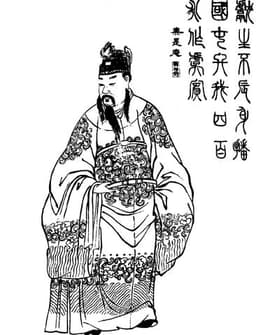
Emperor Xian of Han
Emperor · Ancient
41.3Total

Leo I the Thracian
Emperor · Ancient
48.4Total
Basic Information
Born
181
401
Died
234
474
Era
Ancient
Ancient
Nationality
China
Byzantine Empire
Occupation
Emperor
Emperor
Civilization
Eastern
Western
Score Comparison
Military (10%)
21.4
45.0
Political (20%)
39.4
43.7
Influence (20%)
42.4
49.4
Legacy (20%)
37.5
40.8
Leadership (15%)
48.4
65.0
Strategy (15%)
60.0
50.0
TOTAL
41.3
48.4
Emperor Xian of Han — Complete Timeline
196 AD
Appointment of Cao Cao as ChancellorPolitical Action◆ Major
Emperor Xian, fleeing from warlords, was taken under Cao Cao's protection. Cao Cao had the emperor appoint him Chancellor and granted him control over the imperial court. This gave Cao Cao political legitimacy to issue decrees in the emperor's name, centralizing power under his control.
Political ManeuverCao CaoHan Court
Impact: national
200 AD
Decree Ordering the Killing of Dong ChengPolitical Action◆ Major
Emperor Xian issued a secret decree to Dong Cheng and others to assassinate Cao Cao. The plot was discovered, and Cao Cao executed Dong Cheng and his co-conspirators, including Emperor Xian's consort. This event deepened the emperor's powerlessness and Cao Cao's control.
PlotExecutionCao Cao
Impact: nationaltragic
214 AD
Forced Execution of Empress FuPolitical Action◆ Major
Cao Cao forced Emperor Xian to depose and execute Empress Fu Shou after her involvement in a plot against Cao Cao was revealed. The emperor was powerless to stop it, and Cao Cao installed his own daughter as empress. This further demonstrated Cao Cao's dominance over the throne.
ExecutionPalace IntrigueCao Cao
Impact: nationaltragic
220 AD
Abdication to Cao PiPolitical Action
Emperor Xian, under pressure from Cao Pi, formally abdicated the throne, ending the 400-year Han dynasty. He issued an edict claiming the Mandate of Heaven had passed to Cao Pi, who then founded the Cao Wei dynasty. This event marked the beginning of the Three Kingdoms period.
AbdicationHan Dynasty EndThree Kingdoms
Impact: nationaltragic
Leo I the Thracian — Complete Timeline
457 AD
Crowned by the Patriarch of ConstantinoplePolitical Action
Leo I was crowned Eastern Roman Emperor by Patriarch Anatolius of Constantinople. This was the first time a Byzantine emperor was crowned by a patriarch, establishing a precedent for the role of the Church in imperial coronations and strengthening the bond between church and state.
CoronationChurch-State RelationsPrecedent
Impact: globalconstructive
468 AD
Launched the disastrous expedition against the VandalsWar
Leo I, in cooperation with the Western Emperor Anthemius, launched a massive naval expedition against the Vandal Kingdom. The campaign ended in a catastrophic defeat at the Battle of Cape Bon, costing the empire immense resources and weakening its military position.
Vandal WarMilitary CampaignNaval Battle
Impact: regionaldestructive
471 AD
Assassinated the Alan general AsparPolitical Action◆ Major
Leo I ordered the assassination of the powerful Alan magister militum Aspar and his son, who had dominated the Eastern court for decades. This act ended the Germanic influence over the Eastern Roman army and solidified Leo's authority, but also led to a brief civil war.
AssassinationPower StruggleCivil War
Impact: nationaldestructive
Expert Analysis
Origins
Emperor Xian of Han (born 181 CE, personal name Liu Xie) was the last emperor of the Han dynasty. He was the son of Emperor Ling and was raised in the imperial palace, but his early life was marked by the eunuch-dominated court and the Yellow Turban Rebellion (184 CE). His education was typical of a prince, but he had little practical experience in governance. In contrast, Leo I the Thracian (born c. 401 CE) was of Thracian origin, likely from a military background. He rose through the ranks of the Byzantine army, serving under the powerful Alan general Aspar. Leo's early life is obscure, but he was a soldier before becoming emperor.
Rise to Power
Emperor Xian ascended the throne in 189 CE at age eight, after his half-brother Liu Bian was deposed by the warlord Dong Zhuo. For most of his reign, Xian was a puppet of various warlords. In 196 CE, he was taken under the protection of Cao Cao, who had him appoint Cao Cao as Chancellor. This gave Cao Cao legitimacy to control the imperial court. Xian's power was purely ceremonial. Leo I was elected emperor by the Byzantine Senate in 457 CE after the death of Emperor Marcian. He was crowned by Patriarch Anatolius, the first such coronation by a church leader. Leo initially relied on Aspar, but soon sought to assert independence.
Leadership & Governance
Emperor Xian had no real leadership role; his governance was symbolic. He issued decrees dictated by Cao Cao, such as the order to execute Dong Cheng and Empress Fu for plotting against Cao Cao. Xian's leadership score is 48.4, reflecting his limited agency. Leo I, with a leadership score of 65.0, actively sought to reduce barbarian influence. He promoted Isaurian soldiers, led by Zeno, to counterbalance the Alan and Gothic factions. He also reformed finances and supported the Chalcedonian Christian doctrine. However, his expedition against the Vandals in 468 CE was a disaster, costing 60,000 soldiers and 900 ships.
Triumph & Tragedy
Xian's greatest triumph was surviving as emperor for 31 years despite being a pawn. His tragedy was his powerlessness, culminating in his forced abdication in 220 CE to Cao Pi, ending the Han dynasty. He was spared and given a marquisate, living until 234 CE. Leo I's triumph was breaking the stranglehold of Aspar by having him assassinated in 471 CE, restoring imperial authority. His tragedy was the catastrophic Vandal expedition, which drained the treasury and left the empire vulnerable. Leo's military score of 45.0 reflects this mixed record, while Xian's military score of 21.4 shows his lack of control.
Character & Destiny
Xian was described as a gentle and cautious man, but his character made him a passive ruler. He attempted plots against Cao Cao but lacked the ruthlessness to succeed. His destiny was to be the last Han emperor. Leo I was determined and ambitious, but his overreach in the Vandal campaign showed poor strategic judgment (strategy score 50.0). His assassination of Aspar was bold but created new power vacuums. Xian's political score of 39.4 and Leo's of 43.7 reflect their differing capacities to navigate court politics.
Legacy
Emperor Xian's legacy is as the tragic last emperor of a great dynasty. His abdication marked the beginning of the Three Kingdoms period, a transformative era in Chinese history. His influence score of 42.4 and legacy score of 37.5 reflect his symbolic importance. Leo I's legacy includes the precedent of patriarchal coronation and the reduction of Germanic military dominance. He also strengthened the Eastern Empire's finances, but the Vandal failure weakened it. His legacy score of 40.8 and influence of 49.4 are slightly higher than Xian's.
Conclusion
Leo I the Thracian had greater impact than Emperor Xian of Han. Despite the disastrous Vandal expedition, Leo actively shaped the Byzantine Empire by asserting imperial authority and reforming the military. His total score of 48.4 surpasses Xian's 41.3. Xian was a figurehead who presided over the Han dynasty's collapse, but his personal influence was minimal. Leo's actions had lasting consequences for the Eastern Roman Empire, while Xian was a passive witness to history. Therefore, Leo I's greater agency and reforms give him the edge.
Rankings
🥇
Leo I the ThracianLeader
Mil: 45.0Pol: 43.7Inf: 49.4
48.4
🥈
Emperor Xian of Han
Mil: 21.4Pol: 39.4Inf: 42.4
41.3
+7.1 behind
How This Comparison Works
Algorithm
Each figure is scored on 6 dimensions (0—100 scale) based on structured historical data: Military (10%), Political (20%), Influence (20%), Legacy (20%), Leadership (15%), Strategy (15%). The weighted total produces the final ranking.
Data Sources
Scores are computed from structured sub-indicators in the database. Scale factors adjust for era (Ancient ×0.85, Modern ×1.0) and civilization size (Eastern ×1.05, Other ×0.80) to account for differences in population and military scale.
Maximum 3 Figures
Comparisons are limited to 2—3 figures to ensure readability and statistical meaningfulness.
Error Margins
±5 points per dimension — Sub-scores are derived from historical records with inherent uncertainty. Two figures within 5 points on a dimension should be considered roughly equivalent in that area.
Total Score Accuracy
±3 points overall — The weighted combination of 6 dimensions produces a total score with approximately ±3 points of uncertainty. Differences of less than 3 points are not statistically significant— the figures are effectively tied.
Known Limitations
- Historical records are incomplete and uneven across civilizations
- Figures from oral-tradition societies may be underrepresented
- Occupation labels can misclassify multi-role figures
- Scores measure capability and impact, not moral character
- Quantitative scoring is a comparison tool, not absolute truth
Capability Radar
Military (10%) — Battles & Warfare
Battles
33
30
Win Rate
37
30
Expansion
36
15
Political (20%) — Governance & Reform
Reform
0
40
Diplomacy
5
45
Economy
0
35
Influence (20%) — Cultural & Global Reach
Cultural
5
30
Global
5
25
Legacy (20%) — Historical Impact
Historical
20
35
Longevity
15
30
Leadership (15%) — Power & Stability
Tenure
10
60
Stability
0
40
Strategy (15%) — Tactics & Innovation
Strategy
42
25
Tactics
45
25
Reform
50
20
Similar Comparisons
Comments & Discussion
No comments yet. Be the first to share your thoughts!