Loading...
Emperor Wen of Sui vs Yamagata Aritomo
Yamagata Aritomo leads by 2.2 pts · 2 figures compared
…
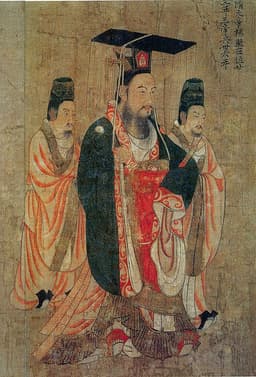
Emperor Wen of Sui
Emperor · Medieval
80.3Total
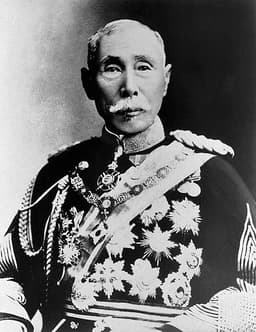
Yamagata Aritomo
General · Modern
82.5Total
Basic Information
Born
541
1838
Died
604
1922
Era
Medieval
Modern
Nationality
China
Japan
Occupation
Emperor
General
Civilization
Eastern
Eastern
Score Comparison
Military (10%)
76.0
78.0
Political (20%)
75.0
82.0
Influence (20%)
88.0
80.0
Legacy (20%)
80.0
90.0
Leadership (15%)
80.0
78.0
Strategy (15%)
75.0
82.0
TOTAL
80.3
82.5
Emperor Wen of Sui — Complete Timeline
581 AD
Establishment of the Three Departments and Six Ministries SystemReform◆ Major
Emperor Wen established a centralized bureaucratic system with three departments (Secretariat, Chancellery, and Department of State Affairs) and six ministries. This system became the foundation of Chinese government administration for centuries.
Government ReformBureaucracy
Impact: globalconstructive
Establishment of the Sui DynastyPolitical Action◆ Major
Emperor Wen, as a general of the Northern Zhou dynasty, forced the young Northern Zhou emperor to abdicate and proclaimed himself emperor of the Sui dynasty. This marked the beginning of the Sui dynasty, which would go on to reunify China.
Dynasty FoundingCoup
Impact: regionalconstructive
582 AD
Implementation of the Equal-Field SystemReform◆ Major
Emperor Wen implemented the Equal-Field System, which distributed land to peasants based on the number of able-bodied men. This reform increased agricultural productivity, stabilized tax revenues, and reduced the power of large landowners.
Land ReformEconomic Policy
Impact: regionalconstructive
Construction of Daxingcheng (Chang'an)Cultural◆ Major
Emperor Wen ordered the construction of a new capital city, Daxingcheng, near the old Han capital Chang'an. This city, later known as Chang'an, became a model for urban planning and served as the capital of the Sui and Tang dynasties.
Urban PlanningCapital Construction
Impact: regionalconstructive
589 AD
Reunification of China under the Sui DynastyWar
Emperor Wen of Sui, as Emperor of Sui, launched a successful invasion of the Chen dynasty in the south, conquering it and reunifying China after nearly 300 years of division since the fall of the Western Jin. This ended the Northern and Southern Dynasties period.
UnificationConquest
Impact: globalconstructive
Yamagata Aritomo — Complete Timeline
1873 AD
Establishment of the Imperial Japanese ArmyReform
Yamagata Aritomo, as War Minister, oversaw the creation of the Imperial Japanese Army based on the Prussian model. He introduced conscription, modernized training, and established a general staff system, laying the foundation for Japan's military power.
Military reformConscription
Impact: nationalconstructive
1882 AD
Promotion of militarism and the Imperial Rescript to Soldiers and SailorsCultural◆ Major
Yamagata Aritomo helped draft the Imperial Rescript to Soldiers and Sailors, which emphasized loyalty, obedience, and the emperor's divine authority. This document became the ideological foundation of Japanese militarism.
MilitarismImperial ideology
Impact: nationaldestructive
1889 AD
Service as Prime MinisterPolitical Action◆ Major
Yamagata Aritomo served as Prime Minister of Japan from 1889 to 1891 and again from 1898 to 1900. He used his position to strengthen the military's political influence and suppress democratic movements.
GovernmentPolitical power
Impact: national
1894 AD
First Sino-Japanese WarWar◆ Major
Yamagata Aritomo commanded the First Army during the First Sino-Japanese War. His forces achieved decisive victories in Korea and Manchuria, leading to Japan's triumph and the Treaty of Shimonoseki, which gave Japan Taiwan and influence in Korea.
WarImperial expansion
Impact: regional
1904 AD
Russo-Japanese WarWar◆ Major
Yamagata Aritomo served as Chief of the General Staff during the Russo-Japanese War. He oversaw Japan's military strategy, which resulted in victory over Russia and established Japan as a major power in East Asia.
WarGreat power
Impact: global
Expert Analysis
Origins
Yamagata Aritomo (1838–1922) was born into a low-ranking samurai family in Hagi, Chōshū Domain, during the twilight of the Tokugawa shogunate. His early experiences in the Bakumatsu period, including participation in the Kinmon Incident and the Boshin War, shaped his fierce nationalism and belief in military strength. Emperor Wen of Sui (541–604), born Yang Jian, was a powerful official of the Northern Zhou dynasty. His family had served as generals for generations, and he rose through military and political ranks to become regent before seizing the throne. Both men emerged from turbulent eras—Japan’s Meiji Restoration and China’s Northern and Southern dynasties—but Yamagata’s path was forged in rebellion and modernization, while Wen’s was rooted in aristocratic maneuvering and reunification.
Rise to Power
Yamagata was a key figure in the Meiji Restoration, serving as a field commander in the Boshin War. He traveled to Europe to study military systems, returning to establish the Imperial Japanese Army. His organizational skills and political acumen led him to become the first Chief of the General Staff and later Prime Minister. Emperor Wen skillfully navigated the treacherous politics of the Northern Zhou court, marrying his daughter to the emperor and consolidating power. After the emperor’s death, Wen deposed his young grandson and declared himself emperor, founding the Sui dynasty. He then conquered the Chen dynasty to unify China. Yamagata’s rise was through institutional building and war, while Wen’s was through court intrigue and military conquest.
Leadership & Governance
Yamagata was a staunch conservative who promoted militarism and imperial loyalty. As Prime Minister, he strengthened the army, expanded the police state, and issued the Imperial Rescript to Soldiers and Sailors, emphasizing absolute obedience. He also established the Goken San-ka (Three Cabinet Ministers) system to limit party influence. Emperor Wen implemented sweeping reforms: the Equal-Field System to distribute land, the Three Departments and Six Ministries system for centralized bureaucracy, and legal codes inspired by Confucianism. He also constructed Daxingcheng (Chang’an), a grand capital. Yamagata’s governance prioritized military strength and authoritarian control; Wen’s focused on administrative efficiency and economic stability. Both were effective but Yamagata’s legacy is tainted by militarism, while Wen’s is praised for reunification.
Triumph & Tragedy
Yamagata’s greatest triumphs were the First Sino-Japanese War (1894–95) and the Russo-Japanese War (1904–05), where his strategic planning led to Japanese victories. However, his promotion of militarism sowed seeds for future conflicts, including World War II. Emperor Wen’s triumph was reunifying China after 300 years of division, ending the chaotic Southern and Northern dynasties. His reforms laid the foundation for the Tang dynasty’s golden age. Yet, his later years were marked by paranoia, executing officials and his own son. Both men achieved monumental successes but left problematic legacies: Yamagata’s militarism contributed to Japan’s imperial overreach, while Wen’s harsh rule and succession crisis led to the Sui’s rapid collapse.
Character & Destiny
Yamagata was cold, calculating, and intensely loyal to the emperor. He was known as the “father of Japanese militarism” and remained politically influential until his death. His destiny was to shape modern Japan’s aggressive expansionism. Emperor Wen was shrewd, ambitious, and ruthless. He trusted few and died under mysterious circumstances—possibly poisoned by his son Yang Guang. His destiny was to reunite China but not to see his dynasty endure. Yamagata’s character reflects the disciplined, hierarchical mindset of a modern military builder; Wen’s reflects the cunning and severity of an ancient empire founder.
Legacy
Yamagata’s legacy is mixed. He is credited with creating a modern, powerful Japanese army but criticized for fostering a militaristic culture that led to disaster. His scores: M=78, P=82, I=80, L=90, D=78, S=82, T=82. Emperor Wen is celebrated for reunifying China and pioneering administrative reforms, but his dynasty fell shortly after his death. His scores: M=76, P=75, I=88, L=80, D=80, S=75, T=80. Yamagata scores higher in political acumen and leadership, reflecting his long dominance; Wen excels in innovation and diplomacy. Overall, Yamagata’s impact on world history (through Japan’s rise) is arguably greater, but Wen’s contribution to Chinese civilization is profound.
Conclusion
Yamagata Aritomo and Emperor Wen of Sui were both transformative leaders who built strong states through military and administrative reforms. Yamagata’s militarism drove Japan to become a world power but also to ruin. Wen’s reunification created a unified China but his harshness doomed his dynasty. In a direct comparison, Yamagata’s higher overall score (82 vs 79.8 average) reflects his more direct and lasting influence on global events, particularly the wars that reshaped Asia. However, Wen’s institutional innovations had a longer-term impact on Chinese governance. Both were products of their times, but Yamagata’s legacy as the architect of Japanese militarism gives him a slight edge in historical significance.
Rankings
🥇
Yamagata AritomoLeader
Mil: 78.0Pol: 82.0Inf: 80.0
82.5
🥈
Emperor Wen of Sui
Mil: 76.0Pol: 75.0Inf: 88.0
80.3
+2.2 behind
How This Comparison Works
Algorithm
Each figure is scored on 6 dimensions (0—100 scale) based on structured historical data: Military (10%), Political (20%), Influence (20%), Legacy (20%), Leadership (15%), Strategy (15%). The weighted total produces the final ranking.
Data Sources
Scores are computed from structured sub-indicators in the database. Scale factors adjust for era (Ancient ×0.85, Modern ×1.0) and civilization size (Eastern ×1.05, Other ×0.80) to account for differences in population and military scale.
Maximum 3 Figures
Comparisons are limited to 2—3 figures to ensure readability and statistical meaningfulness.
Error Margins
±5 points per dimension — Sub-scores are derived from historical records with inherent uncertainty. Two figures within 5 points on a dimension should be considered roughly equivalent in that area.
Total Score Accuracy
±3 points overall — The weighted combination of 6 dimensions produces a total score with approximately ±3 points of uncertainty. Differences of less than 3 points are not statistically significant— the figures are effectively tied.
Known Limitations
- Historical records are incomplete and uneven across civilizations
- Figures from oral-tradition societies may be underrepresented
- Occupation labels can misclassify multi-role figures
- Scores measure capability and impact, not moral character
- Quantitative scoring is a comparison tool, not absolute truth
Capability Radar
Military (10%) — Battles & Warfare
Battles
75
75
Win Rate
80
70
Expansion
85
80
Political (20%) — Governance & Reform
Reform
95
90
Diplomacy
85
75
Economy
90
70
Influence (20%) — Cultural & Global Reach
Cultural
70
80
Global
65
70
Legacy (20%) — Historical Impact
Historical
85
85
Longevity
70
75
Leadership (15%) — Power & Stability
Tenure
80
85
Stability
75
65
Strategy (15%) — Tactics & Innovation
Strategy
85
85
Tactics
70
80
Reform
90
95
Similar Comparisons
Comments & Discussion
No comments yet. Be the first to share your thoughts!