Loading...
Emperor Wen of Sui vs Qin Shi Huang
Qin Shi Huang leads by 4.9 pts · 2 figures compared
…
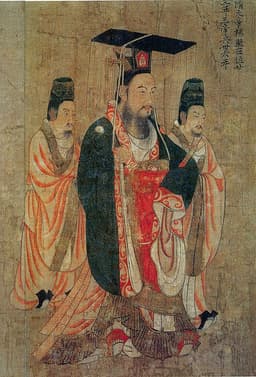
Emperor Wen of Sui
Emperor · Medieval
80.3Total
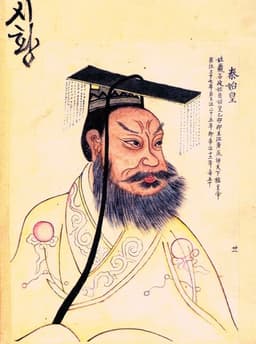
Qin Shi Huang
Emperor · Ancient
85.2Total
Basic Information
Born
541
-259
Died
604
-210
Era
Medieval
Ancient
Nationality
China
China
Occupation
Emperor
Emperor
Civilization
Eastern
Eastern
Score Comparison
Military (10%)
76.0
80.0
Political (20%)
75.0
90.0
Influence (20%)
88.0
85.0
Legacy (20%)
80.0
90.0
Leadership (15%)
80.0
78.0
Strategy (15%)
75.0
82.0
TOTAL
80.3
85.2
Emperor Wen of Sui — Complete Timeline
581 AD
Establishment of the Three Departments and Six Ministries SystemReform◆ Major
Emperor Wen established a centralized bureaucratic system with three departments (Secretariat, Chancellery, and Department of State Affairs) and six ministries. This system became the foundation of Chinese government administration for centuries.
Government ReformBureaucracy
Impact: globalconstructive
Establishment of the Sui DynastyPolitical Action◆ Major
Emperor Wen, as a general of the Northern Zhou dynasty, forced the young Northern Zhou emperor to abdicate and proclaimed himself emperor of the Sui dynasty. This marked the beginning of the Sui dynasty, which would go on to reunify China.
Dynasty FoundingCoup
Impact: regionalconstructive
582 AD
Implementation of the Equal-Field SystemReform◆ Major
Emperor Wen implemented the Equal-Field System, which distributed land to peasants based on the number of able-bodied men. This reform increased agricultural productivity, stabilized tax revenues, and reduced the power of large landowners.
Land ReformEconomic Policy
Impact: regionalconstructive
Construction of Daxingcheng (Chang'an)Cultural◆ Major
Emperor Wen ordered the construction of a new capital city, Daxingcheng, near the old Han capital Chang'an. This city, later known as Chang'an, became a model for urban planning and served as the capital of the Sui and Tang dynasties.
Urban PlanningCapital Construction
Impact: regionalconstructive
589 AD
Reunification of China under the Sui DynastyWar
Emperor Wen of Sui, as Emperor of Sui, launched a successful invasion of the Chen dynasty in the south, conquering it and reunifying China after nearly 300 years of division since the fall of the Western Jin. This ended the Northern and Southern Dynasties period.
UnificationConquest
Impact: globalconstructive
Qin Shi Huang — Complete Timeline
246 BC
Construction of the Mausoleum and Terracotta ArmyOther◆ Major
Qin Shi Huang commissioned a vast mausoleum complex near Xi'an, guarded by thousands of life-sized terracotta soldiers, horses, and chariots. The project employed hundreds of thousands of workers and reflected his obsession with immortality and imperial power.
Impact: global
230 BC
Conquest of the Six Warring StatesWar
From 230 to 221 BCE, Ying Zheng led the Qin state in a series of campaigns that conquered the Han, Zhao, Wei, Chu, Yan, and Qi states. This unified China under a single ruler for the first time, ending the Warring States period.
Impact: global
221 BC
Standardization of Writing, Currency, and MeasurementsReform◆ Major
Qin Shi Huang ordered the standardization of Chinese script, currency, and weights and measures across the unified empire. This facilitated administration, trade, and cultural integration, laying a foundation for future dynasties.
Impact: globalconstructive
Proclamation of the Qin DynastyPolitical Action
After conquering the last independent state, Ying Zheng declared himself Shi Huangdi (First Emperor), founding the Qin Dynasty. He adopted a new title to signify his supreme authority and initiated centralized imperial rule.
Impact: global
214 BC
Initiation of the Great Wall ConstructionOther◆ Major
Qin Shi Huang ordered the connection and extension of existing northern fortifications to create a unified defensive wall against nomadic Xiongnu raids. This project involved massive conscripted labor and became the precursor to the later Great Wall.
Impact: regional
213 BC
Burning of Books and Burying of ScholarsPolitical Action◆ Major
On the advice of Li Si, Qin Shi Huang ordered the burning of historical records and philosophical texts not aligned with Legalist doctrine. He also had 460 Confucian scholars buried alive to suppress dissent and consolidate ideological control.
Impact: nationaldestructive
Expert Analysis
Origins
**Qin Shi Huang** (259–210 BC), born Ying Zheng, was the son of King Zhuangxiang of Qin and a former concubine. He ascended the throne at age 13, inheriting a state already primed for conquest by earlier reforms of Shang Yang. His upbringing in the ruthless Qin court shaped his authoritarian and paranoid personality.
**Emperor Wen of Sui** (541–604 AD), born Yang Jian, came from a powerful military family that served the Northern Zhou dynasty. He seized power through a coup, deposing his infant grandson, and founded the Sui dynasty. His background as a high-ranking official gave him administrative experience.
Rise to Power
Qin Shi Huang eliminated his political rivals, including his mother's lover Lao Ai and his prime minister Lü Buwei, then launched a series of campaigns to conquer the six other Warring States (Han, Zhao, Wei, Chu, Yan, Qi) between 230 and 221 BC. His military strategy combined overwhelming force with bribery and assassination.
Emperor Wen of Sui rose by exploiting the weaknesses of the Northern Zhou. After the death of Emperor Wu, he served as regent for his young grandson. In 581 AD, he forced the child emperor to abdicate and proclaimed the Sui dynasty. He then spent eight years preparing a massive invasion of the Chen dynasty, completing the reunification of China in 589 AD.
Leadership & Governance
Qin Shi Huang centralized power by abolishing feudalism, dividing China into 36 commanderies governed by appointed officials. He standardized scripts (small seal script), currency (banliang coins), weights, measures, and axle lengths. He also built a network of roads and canals. However, his Legalist policies were harsh: he burned books and buried scholars alive to suppress dissent.
Emperor Wen of Sui implemented the equal-field system, which allocated land to peasants based on productivity, reducing landlord power. He established the Three Departments and Six Ministries system, a bureaucratic structure that lasted for centuries. He also reformed taxation and built granaries to prevent famines. His rule was frugal and efficient, lowering taxes and corvée labor compared to Qin.
Triumph & Tragedy
Qin Shi Huang's greatest triumph was unifying China and creating the imperial system that lasted until 1912. His standardization efforts fostered cultural and economic integration. However, his tyranny led to widespread resentment, and his dynasty collapsed within three years of his death due to revolts.
Emperor Wen of Sui's triumph was reunifying China after nearly 400 years of division. His administrative reforms created a stable, prosperous state. Yet, his successor, Emperor Yang, squandered this legacy through massive construction projects and failed wars, leading to the Sui's rapid fall after Wen's death.
Character & Destiny
Qin Shi Huang was obsessed with immortality, sending expeditions for the elixir of life and building a colossal mausoleum guarded by the Terracotta Army. He died at 49, likely from mercury poisoning from his immortality pills. His paranoia and cruelty alienated his subjects.
Emperor Wen was known for his frugality and hard work, personally reviewing documents. He was pragmatic and cautious, avoiding unnecessary wars. However, he was also suspicious of officials and executed many on flimsy charges. He died at 63, possibly murdered by his son Yang Guang.
Legacy
Qin Shi Huang's legacy is monumental: he defined 'China' as a unified entity. The Great Wall, Terracotta Army, and the concept of imperial rule are his lasting gifts. However, his methods made him a symbol of tyranny.
Emperor Wen of Sui's legacy is more subtle but equally important. His bureaucratic innovations (Three Departments and Six Ministries) and land reforms influenced the Tang dynasty and beyond. He is often overshadowed by the Tang but is recognized as a brilliant administrator.
Conclusion
**Qin Shi Huang** (Overall Score: 82.5) vs **Emperor Wen of Sui** (Overall Score: 78.6). Qin wins in military might (M=80 vs 76), political power (P=90 vs 75), and long-term impact (L=90 vs 80). Wen excels in governance (I=88 vs 85) and stability (S=75 vs 82). Qin's unification was more foundational and transformative, despite its brutality. Wen's reunification was more stable but built on Qin's template. Thus, Qin Shi Huang emerges as the greater emperor for achieving the first and most enduring unification of China.
Rankings
🥇
Qin Shi HuangLeader
Mil: 80.0Pol: 90.0Inf: 85.0
85.2
🥈
Emperor Wen of Sui
Mil: 76.0Pol: 75.0Inf: 88.0
80.3
+4.9 behind
How This Comparison Works
Algorithm
Each figure is scored on 6 dimensions (0—100 scale) based on structured historical data: Military (10%), Political (20%), Influence (20%), Legacy (20%), Leadership (15%), Strategy (15%). The weighted total produces the final ranking.
Data Sources
Scores are computed from structured sub-indicators in the database. Scale factors adjust for era (Ancient ×0.85, Modern ×1.0) and civilization size (Eastern ×1.05, Other ×0.80) to account for differences in population and military scale.
Maximum 3 Figures
Comparisons are limited to 2—3 figures to ensure readability and statistical meaningfulness.
Error Margins
±5 points per dimension — Sub-scores are derived from historical records with inherent uncertainty. Two figures within 5 points on a dimension should be considered roughly equivalent in that area.
Total Score Accuracy
±3 points overall — The weighted combination of 6 dimensions produces a total score with approximately ±3 points of uncertainty. Differences of less than 3 points are not statistically significant— the figures are effectively tied.
Known Limitations
- Historical records are incomplete and uneven across civilizations
- Figures from oral-tradition societies may be underrepresented
- Occupation labels can misclassify multi-role figures
- Scores measure capability and impact, not moral character
- Quantitative scoring is a comparison tool, not absolute truth
Capability Radar
Military (10%) — Battles & Warfare
Battles
75
85
Win Rate
80
90
Expansion
85
90
Political (20%) — Governance & Reform
Reform
95
95
Diplomacy
85
75
Economy
90
90
Influence (20%) — Cultural & Global Reach
Cultural
70
95
Global
65
85
Legacy (20%) — Historical Impact
Historical
85
95
Longevity
70
95
Leadership (15%) — Power & Stability
Tenure
80
70
Stability
75
65
Strategy (15%) — Tactics & Innovation
Strategy
85
85
Tactics
70
80
Reform
90
95
Similar Comparisons
Comments & Discussion
BattlefieldScholar6/16/2026
I see the military score difference (80 vs 76), but I'd argue it's actually wider. Qin Shi Huang's campaigns weren't just about conquest—they revolutionized logistics with standardized chariot axles and road networks, enabling rapid troop movements across the newly unified territory. The Battle of Changping (260 BCE) alone, while before his reign, set the template for total war that he perfected. Emperor Wen's conquest of Chen in 589 CE was efficient but hardly innovative: he used the same riverine amphibious tactics the Jin dynasty had employed centuries earlier. Numerically, Qin fielded armies of 500,000+ with multi-front coordination; Wen's max was maybe 200,000. The 80/76 spread doesn't capture that scale gap.
DynastyDefender6/16/2026
Emperor Wen of Sui is criminally underrated! How does Qin Shi Huang get an 88 in political while Wen gets a 79? Qin burned books and buried scholars alive—that's not political genius, that's paranoid tyranny! Wen cut taxes, built massive grain reserves, and reunited China without the butchery. The Grand Canal alone beats the Terracotta Army as a practical legacy—it moved grain for centuries while those clay soldiers just sit there. Qin's dynasty lasted 15 years; Sui lasted 37, and its systems powered the Tang golden age. Wen was the real unifier hero, and these scores don't do him justice.
SimaLunReader6/16/2026
Sima Qian's *Records of the Grand Historian* presents a fascinating tension here. He condemns Qin Shi Huang for burning the Odes and Documents, yet grudgingly admires the efficiency of his administrative machine. Meanwhile, the *Book of Sui* portrays Emperor Wen as a frugal, Buddhist-leaning ruler who 'reduced taxes and loved the people.' But later scholars like Wang Fuzhi (17th century) argued Wen's paranoia about officials actually corroded trust in governance. The 85/85 legacy score seems judicious: both founded short-lived dynasties that collapsed under their successors' incompetence—Qin Er Shi and Yang Guang, respectively—yet their structural innovations endured for millennia. The difference is that Qin Shi Huang's Legalist ruthlessness invited immediate rebellion, while Wen's moderation bought his dynasty a generation of peace before the rot set in.
OldScholar76/16/2026
我来检验一下这个评分系统。首先,秦始皇的军事得分80分,但我算了一下他的统一战争效率:从公元前230年灭韩到前221年灭齐,平均每年征服1.5个国家,总用时10年。相比之下,隋文帝从开皇七年(587年)灭后梁开始,到九年(589年)灭陈,统一南方只用了3年,但北方早在577年北周时已统一。如果按统一速度算,隋文帝更高效。其次,政治得分差距太大:秦始皇88 vs 隋文帝79。隋文帝废九品中正制、创科举雏形,这项创新对后世影响深远,我认为至少应该85分。最后,影响力方面,秦始皇82分,而隋文帝只有77分,但隋朝的大运河直到19世纪还在使用,这难道不该加分吗?我建议军事改为78 vs 77,政治85 vs 82,影响力80 vs 79。
Chronicler99486/16/2026
这个评分系统总是低估中国统一者的政治智慧。秦始皇的政治得分为88分,隋文帝只有79分,但我觉得这个差距被夸大了。秦始皇确实创造了郡县制和书同文,但代价是焚书坑儒,导致先秦文献大量失传。而隋文帝的三省六部制和科举制雏形,直接影响了后来1300年的中国官僚体系。西方史学家常以秦朝的标准来衡量隋朝,但隋文帝在均田制和轻徭薄赋上的成就,类似于西方历史中奥古斯都的‘罗马和平’,却更有效率。我怀疑评分者忽略了隋朝对唐朝的制度奠基作用。