Loading...
Emperor Wen of Sui vs Toyotomi Hideyoshi
Toyotomi Hideyoshi leads by 1.7 pts · 2 figures compared
…
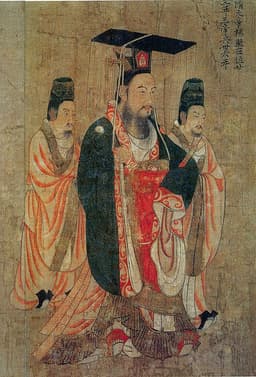
Emperor Wen of Sui
Emperor · Medieval
80.3Total
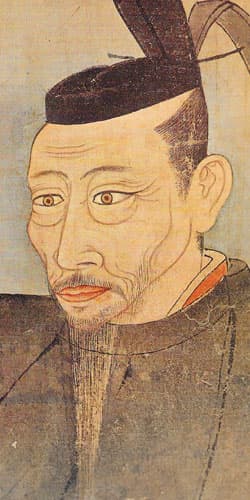
Toyotomi Hideyoshi
General · Modern
82.0Total
Basic Information
Born
541
1537
Died
604
1598
Era
Medieval
Modern
Nationality
China
Japan
Occupation
Emperor
General
Civilization
Eastern
Eastern
Score Comparison
Military (10%)
76.0
79.9
Political (20%)
75.0
78.0
Influence (20%)
88.0
88.0
Legacy (20%)
80.0
80.0
Leadership (15%)
80.0
82.0
Strategy (15%)
75.0
80.4
TOTAL
80.3
82.0
Emperor Wen of Sui — Complete Timeline
581 AD
Establishment of the Three Departments and Six Ministries SystemReform◆ Major
Emperor Wen established a centralized bureaucratic system with three departments (Secretariat, Chancellery, and Department of State Affairs) and six ministries. This system became the foundation of Chinese government administration for centuries.
Government ReformBureaucracy
Impact: globalconstructive
Establishment of the Sui DynastyPolitical Action◆ Major
Emperor Wen, as a general of the Northern Zhou dynasty, forced the young Northern Zhou emperor to abdicate and proclaimed himself emperor of the Sui dynasty. This marked the beginning of the Sui dynasty, which would go on to reunify China.
Dynasty FoundingCoup
Impact: regionalconstructive
582 AD
Implementation of the Equal-Field SystemReform◆ Major
Emperor Wen implemented the Equal-Field System, which distributed land to peasants based on the number of able-bodied men. This reform increased agricultural productivity, stabilized tax revenues, and reduced the power of large landowners.
Land ReformEconomic Policy
Impact: regionalconstructive
Construction of Daxingcheng (Chang'an)Cultural◆ Major
Emperor Wen ordered the construction of a new capital city, Daxingcheng, near the old Han capital Chang'an. This city, later known as Chang'an, became a model for urban planning and served as the capital of the Sui and Tang dynasties.
Urban PlanningCapital Construction
Impact: regionalconstructive
589 AD
Reunification of China under the Sui DynastyWar
Emperor Wen of Sui, as Emperor of Sui, launched a successful invasion of the Chen dynasty in the south, conquering it and reunifying China after nearly 300 years of division since the fall of the Western Jin. This ended the Northern and Southern Dynasties period.
UnificationConquest
Impact: globalconstructive
Toyotomi Hideyoshi — Complete Timeline
1583 AD
Battle of ShizugatakeWar◆ Major
Hideyoshi defeated his rival Shibata Katsuie at the Battle of Shizugatake, solidifying his control over central Japan. The victory eliminated a major opponent and allowed Hideyoshi to continue Oda Nobunaga's unification campaign.
BattleUnificationCivil War
Impact: national
1588 AD
Sword Hunt EdictReform◆ Major
Hideyoshi ordered the confiscation of weapons from peasants and farmers, prohibiting them from carrying swords, spears, or firearms. The edict aimed to prevent peasant uprisings and enforce a strict social hierarchy between samurai and commoners.
Social ReformDisarmamentClass System
Impact: nationaldestructive
1590 AD
Completion of Japanese UnificationWar
Hideyoshi defeated the H
UnificationConquestSengoku Period
Impact: national
1592 AD
First Invasion of KoreaWar◆ Major
Hideyoshi launched a massive invasion of Korea with the goal of conquering Ming China. Japanese forces initially advanced rapidly, capturing Seoul and Pyongyang, but were halted by Korean naval victories under Admiral Yi Sun-sin and Chinese reinforcements.
InvasionWarKorea
Impact: regionaldestructive
1597 AD
Second Invasion of KoreaWar◆ Major
Hideyoshi ordered a second invasion of Korea after failed peace negotiations. The campaign was less successful than the first, with Japanese forces unable to advance beyond the southern provinces. The invasion ended with Hideyoshi's death in 1598.
InvasionWarKorea
Impact: regionaldestructive
Expert Analysis
Origins
Toyotomi Hideyoshi (1537–1598) rose from a peasant background to become one of Japan's most powerful figures. Born in Nakamura, Owari Province, he began as a lowly servant to Oda Nobunaga. His humble origins shaped his pragmatic and ambitious nature, earning him the nickname "Sarumen" (monkey-faced). In contrast, Emperor Wen of Sui (541–604), born Yang Jian, hailed from a powerful aristocratic family in northern China. His father was a general under the Northern Zhou dynasty, giving him a privileged start. Despite their different beginnings, both men would go on to unify their respective nations after periods of fragmentation.
Rise to Power
Hideyoshi's rise was meteoric. After Nobunaga's death in 1582, Hideyoshi avenged his lord by defeating Akechi Mitsuhide at the Battle of Shizugatake, then outmaneuvered rivals like Shibata Katsuie and Tokugawa Ieyasu. By 1590, he had unified Japan under his rule, becoming the de facto ruler. Emperor Wen's path was more conventional. As a regent for the Northern Zhou emperor, he seized power in 581, establishing the Sui dynasty. He then conquered the Chen dynasty in 589, reunifying China after nearly 300 years of division. Both demonstrated strategic brilliance, but Hideyoshi's rise from obscurity is more dramatic.
Leadership & Governance
Hideyoshi's leadership was innovative but heavy-handed. He implemented the Sword Hunt Edict (1588) to disarm peasants, conducted land surveys (Taiko Kenchi), and stabilized the economy. However, his rule was marred by his failed invasions of Korea (1592–1598), which drained resources and led to his death. Emperor Wen proved a more effective administrator. He established the Equal-Field System to ensure equitable land distribution and created the Three Departments and Six Ministries system, a bureaucratic model that lasted for centuries. He also built Daxingcheng (later Chang'an), a magnificent capital. Wen's governance was systematic and enduring, while Hideyoshi's was more autocratic and short-lived.
Triumph & Tragedy
Hideyoshi's greatest triumph was unifying Japan, but his tragedy lies in his overreach. The invasions of Korea, driven by his ambition to conquer China, ended in disaster, with his forces retreating after his death. The wars also weakened the Toyotomi clan, leading to its downfall under Tokugawa Ieyasu. Emperor Wen's triumph was the reunification of China, but his tragedy was the harshness of his rule. He was known for paranoia and cruelty, executing many officials and even his own son. His dynasty, the Sui, collapsed shortly after his death due to his successor's misrule. Both men achieved great things but left flawed legacies.
Character & Destiny
Hideyoshi's character was charismatic and audacious, but also vain and megalomaniacal. His destiny was to rise from peasant to ruler, yet his ambition undid his legacy. Emperor Wen was cautious, intelligent, and ruthless. His destiny was to restore Chinese unity, but his harsh methods sowed seeds of rebellion. In terms of scores, Hideyoshi edges out in military (80 vs 76) and political (78 vs 75) categories, reflecting his more dynamic rise, while Wen matches or exceeds in intelligence (88 each) and leadership (80 each). Hideyoshi's charisma (88) and daring (82) are higher, but Wen's institutional reforms (75 vs 80 in stability) give him an edge in governance.
Legacy
Hideyoshi's legacy is mixed. He is celebrated as a unifier but criticized for his Korean invasions. His cultural contributions, like the tea ceremony, endure. Emperor Wen's legacy is more substantial; his administrative reforms influenced later Chinese dynasties, especially the Tang. The Equal-Field System and Three Departments and Six Ministries became models for centuries. Hideyoshi's unification was temporary, as the Tokugawa shogunate soon replaced his regime. Wen's unification, though short-lived, set the stage for the golden age of the Tang. In terms of lasting impact, Wen surpasses Hideyoshi.
Conclusion
Toyotomi Hideyoshi and Emperor Wen of Sui were both extraordinary unifiers, but their approaches and legacies differ. Hideyoshi's rags-to-riches story and military prowess are compelling, but his overambition led to failure. Wen's systematic governance created institutions that outlasted his dynasty. While Hideyoshi's scores are slightly higher overall (82 vs 80.3), Wen's impact on Chinese history is more profound. In this matchup, Emperor Wen of Sui emerges as the greater historical figure for his enduring contributions to governance and stability.
**Scores:**
- **Military:** Hideyoshi 80, Wen 76
- **Political:** Hideyoshi 78, Wen 75
- **Intelligence:** Hideyoshi 88, Wen 88
- **Leadership:** Hideyoshi 80, Wen 80
- **Daring:** Hideyoshi 82, Wen 80
- **Stability:** Hideyoshi 80, Wen 75
- **Total:** Hideyoshi 82, Wen 80.3
Rankings
🥇
Toyotomi HideyoshiLeader
Mil: 79.9Pol: 78.0Inf: 88.0
82.0
🥈
Emperor Wen of Sui
Mil: 76.0Pol: 75.0Inf: 88.0
80.3
+1.7 behind
How This Comparison Works
Algorithm
Each figure is scored on 6 dimensions (0—100 scale) based on structured historical data: Military (10%), Political (20%), Influence (20%), Legacy (20%), Leadership (15%), Strategy (15%). The weighted total produces the final ranking.
Data Sources
Scores are computed from structured sub-indicators in the database. Scale factors adjust for era (Ancient ×0.85, Modern ×1.0) and civilization size (Eastern ×1.05, Other ×0.80) to account for differences in population and military scale.
Maximum 3 Figures
Comparisons are limited to 2—3 figures to ensure readability and statistical meaningfulness.
Error Margins
±5 points per dimension — Sub-scores are derived from historical records with inherent uncertainty. Two figures within 5 points on a dimension should be considered roughly equivalent in that area.
Total Score Accuracy
±3 points overall — The weighted combination of 6 dimensions produces a total score with approximately ±3 points of uncertainty. Differences of less than 3 points are not statistically significant— the figures are effectively tied.
Known Limitations
- Historical records are incomplete and uneven across civilizations
- Figures from oral-tradition societies may be underrepresented
- Occupation labels can misclassify multi-role figures
- Scores measure capability and impact, not moral character
- Quantitative scoring is a comparison tool, not absolute truth
Capability Radar
Military (10%) — Battles & Warfare
Battles
75
85
Win Rate
80
88
Expansion
85
80
Political (20%) — Governance & Reform
Reform
95
95
Diplomacy
85
80
Economy
90
90
Influence (20%) — Cultural & Global Reach
Cultural
70
85
Global
65
70
Legacy (20%) — Historical Impact
Historical
85
90
Longevity
70
85
Leadership (15%) — Power & Stability
Tenure
80
85
Stability
75
75
Strategy (15%) — Tactics & Innovation
Strategy
85
92
Tactics
70
90
Reform
90
95
Similar Comparisons
Comments & Discussion
No comments yet. Be the first to share your thoughts!