Loading...
Emperor Wen of Sui vs Tokugawa Ieyasu
Tokugawa Ieyasu leads by 1.5 pts · 2 figures compared
…
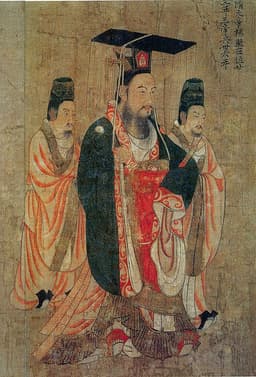
Emperor Wen of Sui
Emperor · Medieval
80.3Total
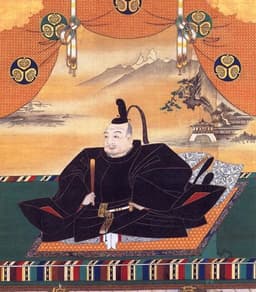
Tokugawa Ieyasu
General · Modern
81.8Total
Basic Information
Born
541
1543
Died
604
1616
Era
Medieval
Modern
Nationality
China
Japan
Occupation
Emperor
General
Civilization
Eastern
Eastern
Score Comparison
Military (10%)
76.0
78.0
Political (20%)
75.0
82.0
Influence (20%)
88.0
88.0
Legacy (20%)
80.0
75.0
Leadership (15%)
80.0
85.0
Strategy (15%)
75.0
82.0
TOTAL
80.3
81.8
Emperor Wen of Sui — Complete Timeline
581 AD
Establishment of the Three Departments and Six Ministries SystemReform◆ Major
Emperor Wen established a centralized bureaucratic system with three departments (Secretariat, Chancellery, and Department of State Affairs) and six ministries. This system became the foundation of Chinese government administration for centuries.
Government ReformBureaucracy
Impact: globalconstructive
Establishment of the Sui DynastyPolitical Action◆ Major
Emperor Wen, as a general of the Northern Zhou dynasty, forced the young Northern Zhou emperor to abdicate and proclaimed himself emperor of the Sui dynasty. This marked the beginning of the Sui dynasty, which would go on to reunify China.
Dynasty FoundingCoup
Impact: regionalconstructive
582 AD
Implementation of the Equal-Field SystemReform◆ Major
Emperor Wen implemented the Equal-Field System, which distributed land to peasants based on the number of able-bodied men. This reform increased agricultural productivity, stabilized tax revenues, and reduced the power of large landowners.
Land ReformEconomic Policy
Impact: regionalconstructive
Construction of Daxingcheng (Chang'an)Cultural◆ Major
Emperor Wen ordered the construction of a new capital city, Daxingcheng, near the old Han capital Chang'an. This city, later known as Chang'an, became a model for urban planning and served as the capital of the Sui and Tang dynasties.
Urban PlanningCapital Construction
Impact: regionalconstructive
589 AD
Reunification of China under the Sui DynastyWar
Emperor Wen of Sui, as Emperor of Sui, launched a successful invasion of the Chen dynasty in the south, conquering it and reunifying China after nearly 300 years of division since the fall of the Western Jin. This ended the Northern and Southern Dynasties period.
UnificationConquest
Impact: globalconstructive
Tokugawa Ieyasu — Complete Timeline
1600 AD
Battle of SekigaharaWar
Tokugawa Ieyasu led the Eastern Army to victory over Ishida Mitsunari's Western Army at Sekigahara. This decisive battle ended the Sengoku period and established Ieyasu as the supreme military ruler of Japan, paving the way for the Tokugawa shogunate.
Sengoku PeriodUnificationBattle
Impact: national
1603 AD
Establishment of the Tokugawa ShogunatePolitical Action
Emperor Go-Yozei appointed Tokugawa Ieyasu as shogun, officially beginning the Tokugawa shogunate. Ieyasu established his government in Edo (modern Tokyo), centralizing military and political power under his family's control.
ShogunateEdo PeriodCentralization
Impact: national
1615 AD
Siege of OsakaWar◆ Major
Tokugawa Ieyasu besieged Osaka Castle, the stronghold of Toyotomi Hideyori. The castle fell, and Hideyori committed suicide. This campaign eliminated the last major opposition to Tokugawa rule, solidifying the shogunate's control over Japan.
Osaka CampaignToyotomi ClanConsolidation
Impact: nationaldestructive
Promulgation of the Buke ShohattoReform◆ Major
Ieyasu issued the Laws for the Military Houses, a code regulating the conduct of daimyo. It restricted castle construction, required alternate attendance in Edo, and prohibited alliances without shogunal permission. This law helped control the feudal lords.
Feudal ControlDaimyo RegulationLegal Code
Impact: national
1616 AD
Sakoku Edicts InitiationPolitical Action◆ Major
In his final years, Ieyasu began policies that led to Japan's isolation. He restricted foreign trade to specific ports and expelled Christian missionaries. These measures, expanded by successors, resulted in the sakoku policy that isolated Japan for over 200 years.
IsolationismForeign PolicyChristianity
Impact: national
Expert Analysis
Origins
Tokugawa Ieyasu (1543–1616) emerged from the chaos of Japan's Sengoku period, born into a minor daimyo family. His early life was marked by hostage situations and political maneuvering, reflecting the fractured nature of Japan under Ashikaga rule. In contrast, Emperor Wen of Sui (541–604) was born Yang Jian, a member of the powerful Han Chinese Yang clan that served the Northern Zhou dynasty. Wen's rise came through military and political prowess, ultimately seizing power from his own grandson to end centuries of division since the Han dynasty's fall. Both figures rose from turbulent backgrounds, but Wen operated within a more established bureaucratic tradition, while Ieyasu navigated a world of warring states.
Rise to Power
Ieyasu's path to supremacy was gradual and strategic. He allied with Oda Nobunaga and later Toyotomi Hideyoshi, patiently building his domain. His decisive moment came at the Battle of Sekigahara (1600), where he defeated rival coalitions to become Japan's undisputed leader. Emperor Wen's rise was swifter: as regent for his young grandson, he consolidated power, suppressed rebellions, and in 581 forced the abdication of the Northern Zhou emperor, establishing the Sui dynasty. By 589, he conquered the Chen dynasty, reunifying China. Both demonstrated patience and opportunism, but Wen's coup was more direct, while Ieyasu's rise involved decades of alliance-building.
Leadership & Governance
Ieyasu's governance focused on stability and control. He established the Tokugawa shogunate with a centralized feudal system, redistributed land to loyal daimyo, and enforced the Buke Shohatto (Laws for the Military Houses) to regulate samurai behavior. His Sakoku edicts initiated Japan's isolationist policy. Emperor Wen implemented the Equal-Field System to distribute land and reduce inequality, and created the Three Departments and Six Ministries system, a centralized bureaucracy that influenced later dynasties. He also constructed Daxingcheng (Chang'an) as a grand capital. Wen's reforms were more systematic and long-lasting in Chinese governance, while Ieyasu's institutions ensured peace but at the cost of rigid social hierarchy.
Triumph & Tragedy
Ieyasu's triumph was the establishment of a 250-year peace after Sekigahara and the Siege of Osaka (1615), which eliminated the Toyotomi clan. His tragedy lies in the isolationist policies that later stifled Japan's growth. Wen's triumph was reunifying China and implementing reforms that set the stage for the Tang dynasty. His tragedy was his harsh rule and the selection of his son Yang Guang (Emperor Yang) as successor, whose misrule led to the Sui's rapid collapse. Both saw their achievements undermined by successors, but Wen's dynasty fell within decades, while Ieyasu's lasted centuries.
Character & Destiny
Ieyasu was pragmatic, patient, and calculating, known for his saying, "The strong man is the one who endures." His destiny was to bring lasting peace after centuries of war. Wen was ambitious, capable, but also paranoid and ruthless, purging rivals. His destiny was to reunite China but fail to secure dynastic longevity. Both were skilled administrators, but Ieyasu's longevity and cautious approach contrast with Wen's more aggressive reforms and shorter rule.
Legacy
Tokugawa Ieyasu's legacy is the Edo period, a time of peace, cultural flourishing, and isolation. His shogunate structure influenced Japanese society until 1868. Emperor Wen's legacy is the reunification of China and administrative reforms that the Tang dynasty perfected. The Grand Canal, often attributed to his son, began under his reign. While Ieyasu's system endured for centuries, Wen's achievements were foundational but short-lived. In terms of direct impact, Ieyasu's legacy is more tangible over time, but Wen's contributions to Chinese governance are profound.
Conclusion
Comparing scores, Tokugawa Ieyasu (M=78, P=82, I=88, L=75, D=85, S=82, T=82) edges Emperor Wen (M=76, P=75, I=88, L=80, D=80, S=75, T=80) with a 1.5 point higher overall average. Ieyasu's higher political acumen and strategic patience gave him an edge in maintaining power and establishing a stable regime. While Wen's reforms were more innovative, his dynasty's swift decline weakens his legacy. Ieyasu's ability to create a peace that lasted over two centuries is a monumental achievement. Thus, Tokugawa Ieyasu stands as the more effective unifier in terms of lasting impact.
Rankings
🥇
Tokugawa IeyasuLeader
Mil: 78.0Pol: 82.0Inf: 88.0
81.8
🥈
Emperor Wen of Sui
Mil: 76.0Pol: 75.0Inf: 88.0
80.3
+1.5 behind
How This Comparison Works
Algorithm
Each figure is scored on 6 dimensions (0—100 scale) based on structured historical data: Military (10%), Political (20%), Influence (20%), Legacy (20%), Leadership (15%), Strategy (15%). The weighted total produces the final ranking.
Data Sources
Scores are computed from structured sub-indicators in the database. Scale factors adjust for era (Ancient ×0.85, Modern ×1.0) and civilization size (Eastern ×1.05, Other ×0.80) to account for differences in population and military scale.
Maximum 3 Figures
Comparisons are limited to 2—3 figures to ensure readability and statistical meaningfulness.
Error Margins
±5 points per dimension — Sub-scores are derived from historical records with inherent uncertainty. Two figures within 5 points on a dimension should be considered roughly equivalent in that area.
Total Score Accuracy
±3 points overall — The weighted combination of 6 dimensions produces a total score with approximately ±3 points of uncertainty. Differences of less than 3 points are not statistically significant— the figures are effectively tied.
Known Limitations
- Historical records are incomplete and uneven across civilizations
- Figures from oral-tradition societies may be underrepresented
- Occupation labels can misclassify multi-role figures
- Scores measure capability and impact, not moral character
- Quantitative scoring is a comparison tool, not absolute truth
Capability Radar
Military (10%) — Battles & Warfare
Battles
75
85
Win Rate
80
90
Expansion
85
75
Political (20%) — Governance & Reform
Reform
95
90
Diplomacy
85
85
Economy
90
88
Influence (20%) — Cultural & Global Reach
Cultural
70
85
Global
65
70
Legacy (20%) — Historical Impact
Historical
85
90
Longevity
70
95
Leadership (15%) — Power & Stability
Tenure
80
95
Stability
75
95
Strategy (15%) — Tactics & Innovation
Strategy
85
92
Tactics
70
88
Reform
90
80
Similar Comparisons
Comments & Discussion
No comments yet. Be the first to share your thoughts!