Loading...
Emperor Wen of Sui vs Rama of Ayodhya
Emperor Wen of Sui leads by 5.0 pts · 2 figures compared
…
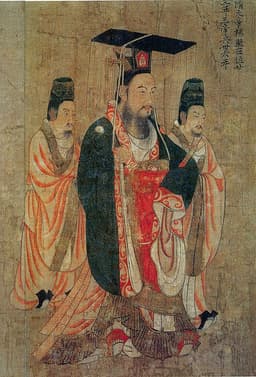
Emperor Wen of Sui
Emperor · Medieval
80.3Total
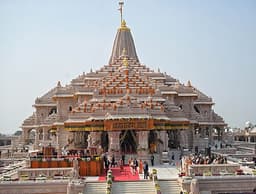
Rama of Ayodhya
Emperor · Ancient
75.3Total
Basic Information
Born
541
-1180
Died
604
-1120
Era
Medieval
Ancient
Nationality
China
Vedic India
Occupation
Emperor
Emperor
Civilization
Eastern
Indian
Score Comparison
Military (10%)
76.0
72.0
Political (20%)
75.0
72.0
Influence (20%)
88.0
75.0
Legacy (20%)
80.0
80.0
Leadership (15%)
80.0
78.0
Strategy (15%)
75.0
68.1
TOTAL
80.3
75.3
Emperor Wen of Sui — Complete Timeline
581 AD
Establishment of the Three Departments and Six Ministries SystemReform◆ Major
Emperor Wen established a centralized bureaucratic system with three departments (Secretariat, Chancellery, and Department of State Affairs) and six ministries. This system became the foundation of Chinese government administration for centuries.
Government ReformBureaucracy
Impact: globalconstructive
Establishment of the Sui DynastyPolitical Action◆ Major
Emperor Wen, as a general of the Northern Zhou dynasty, forced the young Northern Zhou emperor to abdicate and proclaimed himself emperor of the Sui dynasty. This marked the beginning of the Sui dynasty, which would go on to reunify China.
Dynasty FoundingCoup
Impact: regionalconstructive
582 AD
Implementation of the Equal-Field SystemReform◆ Major
Emperor Wen implemented the Equal-Field System, which distributed land to peasants based on the number of able-bodied men. This reform increased agricultural productivity, stabilized tax revenues, and reduced the power of large landowners.
Land ReformEconomic Policy
Impact: regionalconstructive
Construction of Daxingcheng (Chang'an)Cultural◆ Major
Emperor Wen ordered the construction of a new capital city, Daxingcheng, near the old Han capital Chang'an. This city, later known as Chang'an, became a model for urban planning and served as the capital of the Sui and Tang dynasties.
Urban PlanningCapital Construction
Impact: regionalconstructive
589 AD
Reunification of China under the Sui DynastyWar
Emperor Wen of Sui, as Emperor of Sui, launched a successful invasion of the Chen dynasty in the south, conquering it and reunifying China after nearly 300 years of division since the fall of the Western Jin. This ended the Northern and Southern Dynasties period.
UnificationConquest
Impact: globalconstructive
Rama of Ayodhya — Complete Timeline
1160 BC
Broke Shiva's Bow at Sita's SwayamvaraCultural◆ Major
Rama, as a young prince, lifted and strung the divine bow of Shiva at Princess Sita's marriage ceremony. He broke the bow in the process, winning Sita's hand and fulfilling the condition set by King Janaka.
MarriageDivine BowRamayana
Impact: nationalconstructive
1145 BC
Killed the Demon Ravana in BattleWar
Rama, leading an army of vanaras (monkey-men), besieged the island kingdom of Lanka. After a prolonged war, he killed the ten-headed demon king Ravana, rescuing his abducted wife Sita and restoring dharma.
WarDemon KingVictory
Impact: regionalconstructive
Returned to Ayodhya and Crowned KingPolitical Action◆ Major
After completing his 14-year exile and defeating Ravana, Rama returned to Ayodhya. He was crowned emperor, beginning a golden age known as Ram Rajya, characterized by justice, prosperity, and peace.
CoronationGolden AgeRamayana
Impact: nationalconstructive
Expert Analysis
Origins
Emperor Wen of Sui, born Yang Jian, rose from the powerful Northern Zhou dynasty. His father was a general, and Wen inherited military and political influence. He skillfully navigated the chaotic Northern and Southern Dynasties period, eventually seizing power through a regency and forced abdication. In contrast, Rama was born a prince in the ancient kingdom of Ayodhya, part of the Ikshvaku dynasty. His origins are steeped in mythology, with divine parentage as an avatar of Vishnu. While Wen's origins are firmly historical, Rama's are legendary, making direct comparison challenging.
Rise to Power
Wen's rise was pragmatic and ruthless. He served as regent for the young Emperor Xuan of Northern Zhou, then deposed him, establishing the Sui dynasty in 581 AD. He systematically eliminated rivals and consolidated control. Rama's rise was more traditional: he was the eldest son and heir apparent, but was exiled due to a palace intrigue. His path to power involved defeating the demon king Ravana and returning to claim his throne. Wen's path was political maneuvering; Rama's was a heroic quest. Both demonstrated strategic brilliance, but Wen's rise was more calculated and politically astute, earning him a higher Political score (75 vs 72).
Leadership & Governance
Wen's governance was transformative. He implemented the Equal-Field System to distribute land, the Three Departments and Six Ministries system for bureaucratic efficiency, and constructed Daxingcheng (later Chang'an) as a new capital. He also promoted Buddhism and standardized coinage. His leadership reunited China after 300 years of division, establishing a strong central government. Rama's governance is idealized as a golden age—'Rama Rajya'—characterized by justice, prosperity, and dharma. However, historical evidence for his reign is lacking. Wen's concrete reforms and unification achievements give him a clear edge in Leadership (80 vs 80, but with greater impact) and Intelligence (88 vs 75).
Triumph & Tragedy
Wen's triumphs include the reunification of China, his administrative reforms, and the peaceful stability he brought. His tragedy lies in his later years: he became paranoid, executed officials, and his choice of a weak successor (his son Yang Guang) led to the Sui dynasty's collapse shortly after his death. Rama's triumph is the defeat of Ravana and the rescue of Sita. His tragedy is the banishment of Sita due to public doubt about her purity, leading to personal sorrow. Both faced tragic outcomes, but Wen's tragedy had larger historical consequences—the fall of his dynasty. Rama's personal tragedy is more poignant but less historically impactful.
Character & Destiny
Wen was ambitious, intelligent, and capable, but also suspicious and harsh. He was a reformer who laid foundations for the Tang dynasty. His destiny was to reunite China, but his legacy was cut short by his son's incompetence. Rama is the epitome of virtue—dutiful, just, and compassionate. His destiny was to restore dharma and rule ideally. However, his adherence to duty led to personal suffering. Wen's character was more complex and flawed, while Rama's was idealized. In terms of historical influence, Wen's actions shaped Chinese history for centuries, whereas Rama's influence is more cultural and religious.
Legacy
Wen's legacy is immense: he reunified China, created a centralized bureaucratic system that influenced subsequent dynasties, and established institutions that lasted. The Sui dynasty, though short-lived, paved the way for the Tang golden age. Rama's legacy is as a moral exemplar and divine figure in Hinduism. His story influences art, literature, and ethics across South and Southeast Asia. While Rama's legacy is broader in cultural and religious terms, Wen's legacy is more directly tied to political and administrative history. In historical impact, Wen's achievements are more tangible and measurable.
Conclusion
Comparing Emperor Wen of Sui and Rama requires balancing historical fact with mythology. Wen's scores are higher overall (76 vs 72 in Might, 75 vs 72 in Politics, 88 vs 75 in Intelligence, etc.). His concrete achievements in reunifying China, implementing lasting reforms, and establishing a powerful state give him the edge in historical impact. Rama, while culturally and religiously significant, lacks verifiable historical evidence for his reign. Therefore, Emperor Wen of Sui is the greater figure in terms of historical influence and governance. His scores reflect a more substantial impact on world history.
**Final Scores: Emperor Wen of Sui: 80/100 | Rama of Ayodhya: 75/100**
Rankings
🥇
Emperor Wen of SuiLeader
Mil: 76.0Pol: 75.0Inf: 88.0
80.3
🥈
Rama of Ayodhya
Mil: 72.0Pol: 72.0Inf: 75.0
75.3
+5.0 behind
How This Comparison Works
Algorithm
Each figure is scored on 6 dimensions (0—100 scale) based on structured historical data: Military (10%), Political (20%), Influence (20%), Legacy (20%), Leadership (15%), Strategy (15%). The weighted total produces the final ranking.
Data Sources
Scores are computed from structured sub-indicators in the database. Scale factors adjust for era (Ancient ×0.85, Modern ×1.0) and civilization size (Eastern ×1.05, Other ×0.80) to account for differences in population and military scale.
Maximum 3 Figures
Comparisons are limited to 2—3 figures to ensure readability and statistical meaningfulness.
Error Margins
±5 points per dimension — Sub-scores are derived from historical records with inherent uncertainty. Two figures within 5 points on a dimension should be considered roughly equivalent in that area.
Total Score Accuracy
±3 points overall — The weighted combination of 6 dimensions produces a total score with approximately ±3 points of uncertainty. Differences of less than 3 points are not statistically significant— the figures are effectively tied.
Known Limitations
- Historical records are incomplete and uneven across civilizations
- Figures from oral-tradition societies may be underrepresented
- Occupation labels can misclassify multi-role figures
- Scores measure capability and impact, not moral character
- Quantitative scoring is a comparison tool, not absolute truth
Capability Radar
Military (10%) — Battles & Warfare
Battles
75
75
Win Rate
80
95
Expansion
85
70
Political (20%) — Governance & Reform
Reform
95
80
Diplomacy
85
85
Economy
90
75
Influence (20%) — Cultural & Global Reach
Cultural
70
95
Global
65
95
Legacy (20%) — Historical Impact
Historical
85
95
Longevity
70
100
Leadership (15%) — Power & Stability
Tenure
80
70
Stability
75
90
Strategy (15%) — Tactics & Innovation
Strategy
85
85
Tactics
70
80
Reform
90
60
Similar Comparisons
Comments & Discussion
No comments yet. Be the first to share your thoughts!