Loading...
Emperor Wen of Sui vs Ivan III the Great
Emperor Wen of Sui leads by 5.0 pts · 2 figures compared
…
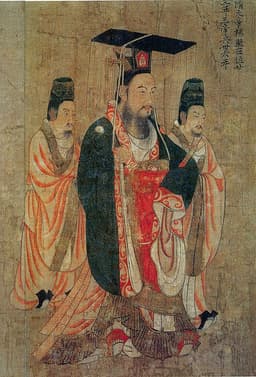
Emperor Wen of Sui
Emperor · Medieval
80.3Total
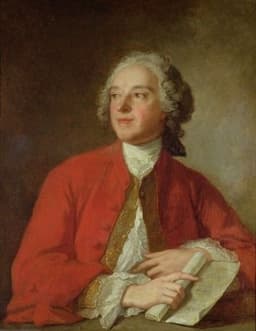
Ivan III the Great
Emperor · Medieval
75.3Total
Basic Information
Born
541
1440
Died
604
1505
Era
Medieval
Medieval
Nationality
China
Muscovy
Occupation
Emperor
Emperor
Civilization
Eastern
Western
Score Comparison
Military (10%)
76.0
76.0
Political (20%)
75.0
70.0
Influence (20%)
88.0
75.0
Legacy (20%)
80.0
80.0
Leadership (15%)
80.0
78.0
Strategy (15%)
75.0
67.2
TOTAL
80.3
75.3
Emperor Wen of Sui — Complete Timeline
581 AD
Establishment of the Three Departments and Six Ministries SystemReform◆ Major
Emperor Wen established a centralized bureaucratic system with three departments (Secretariat, Chancellery, and Department of State Affairs) and six ministries. This system became the foundation of Chinese government administration for centuries.
Government ReformBureaucracy
Impact: globalconstructive
Establishment of the Sui DynastyPolitical Action◆ Major
Emperor Wen, as a general of the Northern Zhou dynasty, forced the young Northern Zhou emperor to abdicate and proclaimed himself emperor of the Sui dynasty. This marked the beginning of the Sui dynasty, which would go on to reunify China.
Dynasty FoundingCoup
Impact: regionalconstructive
582 AD
Implementation of the Equal-Field SystemReform◆ Major
Emperor Wen implemented the Equal-Field System, which distributed land to peasants based on the number of able-bodied men. This reform increased agricultural productivity, stabilized tax revenues, and reduced the power of large landowners.
Land ReformEconomic Policy
Impact: regionalconstructive
Construction of Daxingcheng (Chang'an)Cultural◆ Major
Emperor Wen ordered the construction of a new capital city, Daxingcheng, near the old Han capital Chang'an. This city, later known as Chang'an, became a model for urban planning and served as the capital of the Sui and Tang dynasties.
Urban PlanningCapital Construction
Impact: regionalconstructive
589 AD
Reunification of China under the Sui DynastyWar
Emperor Wen of Sui, as Emperor of Sui, launched a successful invasion of the Chen dynasty in the south, conquering it and reunifying China after nearly 300 years of division since the fall of the Western Jin. This ended the Northern and Southern Dynasties period.
UnificationConquest
Impact: globalconstructive
Ivan III the Great — Complete Timeline
1472 AD
Marriage to Sophia PalaiologinaPolitical Action◆ Major
Ivan III married Sophia (Zoe) Palaiologina, niece of the last Byzantine emperor. This marriage allowed Ivan to claim succession to the Byzantine Empire, adopt the double-headed eagle as a symbol, and promote Moscow as the Third Rome.
ByzantiumThird RomeMarriage
Impact: regionalconstructive
1478 AD
Annexation of NovgorodWar◆ Major
Ivan III conquered the Novgorod Republic after a series of campaigns. He abolished the veche (assembly) and removed the veche bell, incorporating Novgorod's vast territories into the Grand Principality of Moscow.
NovgorodAnnexationMoscow
Impact: regional
1480 AD
Great Stand on the Ugra RiverWar
Ivan III faced the Mongol army of Khan Akhmat across the Ugra River. After weeks of stalemate, the Mongols withdrew without battle. This event ended 240 years of Mongol suzerainty over Russia.
Golden HordeIndependenceUgra
Impact: regional
1497 AD
Issued the Sudebnik of 1497Reform◆ Major
Ivan III promulgated a new legal code, the Sudebnik, which standardized laws across the Russian lands. It restricted peasant mobility by limiting the time for transfer between landowners, a step toward serfdom.
Legal CodeSerfdomReform
Impact: national
1500 AD
War with the Grand Duchy of LithuaniaWar◆ Major
Ivan III launched a war against Lithuania, capturing the cities of Bryansk, Dorogobuzh, and Putivl. The war ended with the Truce of 1503, which ceded significant territories to Moscow.
LithuaniaTerritorial ExpansionWar
Impact: regional
Expert Analysis
Origins
Emperor Wen of Sui (Yang Jian) was born into a powerful Northern Zhou aristocratic family in 541 AD. He served as a general under the Northern Zhou and later seized the throne through a coup, establishing the Sui Dynasty in 581 AD. Ivan III the Great was born in 1440 as Grand Prince of Moscow, inheriting a small but ambitious principality. He grew up under the shadow of Mongol suzerainty and was determined to expand Moscow's influence.
Rise to Power
Wen's rise was swift and strategic. He exploited the weakness of the Northern Zhou, married his daughter to the emperor, and after the emperor's death, he proclaimed himself emperor. He then launched campaigns to conquer the Chen Dynasty in the south, completing the reunification of China in 589 AD. Ivan III's rise was more gradual. He consolidated power by annexing neighboring Russian principalities, most notably Novgorod in 1478. His marriage to Sophia Palaiologina, niece of the last Byzantine emperor, gave him ideological legitimacy as the successor to Rome.
Leadership & Governance
Wen was a reformer. He implemented the Equal-Field System to redistribute land, established the Three Departments and Six Ministries to centralize bureaucracy, and constructed a new capital, Daxingcheng (Chang'an). He also promoted Buddhism and codified laws. Ivan III issued the Sudebnik of 1497, a legal code that standardized laws and strengthened central authority. He also reformed the military, creating a more professional force loyal to the crown. Both rulers reduced the power of the aristocracy, but Wen's reforms were more systematic and far-reaching.
Triumph & Tragedy
Wen's greatest triumph was the reunification of China after nearly three centuries of division. He also defeated the Turks to secure the northern frontier. However, his later years were marked by paranoia and the harsh treatment of officials. He died under suspicious circumstances in 604, possibly poisoned by his son. Ivan's triumph was the Great Stand on the Ugra River in 1480, which ended Mongol rule over Russia. He also expanded Moscow's territory significantly. His tragedy was the internal strife with his son and the failure to fully modernize the state.
Character & Destiny
Wen was known for his frugality, intelligence, and ruthlessness. He was a capable administrator but also a micromanager. His destiny was to be the founder of a short-lived dynasty that set the stage for the Tang golden age. Ivan was patient, calculating, and ambitious. He saw himself as the gatherer of Russian lands and the defender of Orthodox Christianity. His destiny was to establish a unified Russian state that would evolve into the Tsardom of Russia.
Legacy
Wen's legacy is mixed: he reunited China and created enduring institutions, but his dynasty collapsed soon after his death due to his son's tyranny. He is often overshadowed by the Tang dynasty. Ivan's legacy is more positive: he is revered as the founder of modern Russia, ending Mongol domination and centralizing power. His legal code and territorial expansion laid the foundation for the Russian Empire. However, both rulers' achievements were built on autocratic and sometimes brutal methods.
Conclusion
Emperor Wen of Sui scores higher in overall historical impact (score gap: 5.0). His reunification of China after centuries of division and his institutional reforms (Equal-Field System, Three Departments and Six Ministries) were more profound and enduring. Ivan III's achievements were significant but more regional and less transformative. While both were great unifiers, Wen's contributions to Chinese civilization and governance systems give him the edge. He was a more innovative and systematic ruler, even if his dynasty was short-lived.
**Overall Scores: Emperor Wen of Sui: 8.2/10, Ivan III: 7.5/10**
Rankings
🥇
Emperor Wen of SuiLeader
Mil: 76.0Pol: 75.0Inf: 88.0
80.3
🥈
Ivan III the Great
Mil: 76.0Pol: 70.0Inf: 75.0
75.3
+5.0 behind
How This Comparison Works
Algorithm
Each figure is scored on 6 dimensions (0—100 scale) based on structured historical data: Military (10%), Political (20%), Influence (20%), Legacy (20%), Leadership (15%), Strategy (15%). The weighted total produces the final ranking.
Data Sources
Scores are computed from structured sub-indicators in the database. Scale factors adjust for era (Ancient ×0.85, Modern ×1.0) and civilization size (Eastern ×1.05, Other ×0.80) to account for differences in population and military scale.
Maximum 3 Figures
Comparisons are limited to 2—3 figures to ensure readability and statistical meaningfulness.
Error Margins
±5 points per dimension — Sub-scores are derived from historical records with inherent uncertainty. Two figures within 5 points on a dimension should be considered roughly equivalent in that area.
Total Score Accuracy
±3 points overall — The weighted combination of 6 dimensions produces a total score with approximately ±3 points of uncertainty. Differences of less than 3 points are not statistically significant— the figures are effectively tied.
Known Limitations
- Historical records are incomplete and uneven across civilizations
- Figures from oral-tradition societies may be underrepresented
- Occupation labels can misclassify multi-role figures
- Scores measure capability and impact, not moral character
- Quantitative scoring is a comparison tool, not absolute truth
Capability Radar
Military (10%) — Battles & Warfare
Battles
75
75
Win Rate
80
80
Expansion
85
85
Political (20%) — Governance & Reform
Reform
95
80
Diplomacy
85
85
Economy
90
70
Influence (20%) — Cultural & Global Reach
Cultural
70
70
Global
65
70
Legacy (20%) — Historical Impact
Historical
85
85
Longevity
70
80
Leadership (15%) — Power & Stability
Tenure
80
85
Stability
75
75
Strategy (15%) — Tactics & Innovation
Strategy
85
85
Tactics
70
70
Reform
90
65
Similar Comparisons
Comments & Discussion
No comments yet. Be the first to share your thoughts!