Loading...
Emperor Wen of Sui vs Hongwu Emperor
Emperor Wen of Sui leads by 8.3 pts · 2 figures compared
…
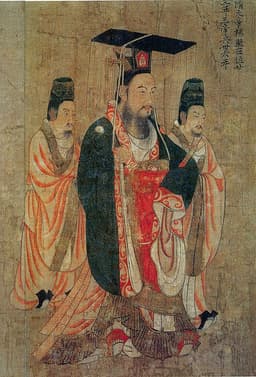
Emperor Wen of Sui
Emperor · Medieval
80.3Total
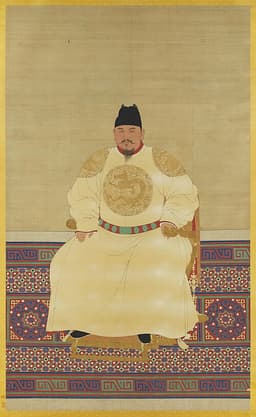
Hongwu Emperor
Emperor · Medieval
72.0Total
Basic Information
Born
541
1328
Died
604
1398
Era
Medieval
Medieval
Nationality
China
China
Occupation
Emperor
Emperor
Civilization
Eastern
Eastern
Score Comparison
Military (10%)
76.0
85.0
Political (20%)
75.0
78.0
Influence (20%)
88.0
68.0
Legacy (20%)
80.0
65.0
Leadership (15%)
80.0
78.0
Strategy (15%)
75.0
68.0
TOTAL
80.3
72.0
Emperor Wen of Sui — Complete Timeline
581 AD
Establishment of the Three Departments and Six Ministries SystemReform◆ Major
Emperor Wen established a centralized bureaucratic system with three departments (Secretariat, Chancellery, and Department of State Affairs) and six ministries. This system became the foundation of Chinese government administration for centuries.
Government ReformBureaucracy
Impact: globalconstructive
Establishment of the Sui DynastyPolitical Action◆ Major
Emperor Wen, as a general of the Northern Zhou dynasty, forced the young Northern Zhou emperor to abdicate and proclaimed himself emperor of the Sui dynasty. This marked the beginning of the Sui dynasty, which would go on to reunify China.
Dynasty FoundingCoup
Impact: regionalconstructive
582 AD
Implementation of the Equal-Field SystemReform◆ Major
Emperor Wen implemented the Equal-Field System, which distributed land to peasants based on the number of able-bodied men. This reform increased agricultural productivity, stabilized tax revenues, and reduced the power of large landowners.
Land ReformEconomic Policy
Impact: regionalconstructive
Construction of Daxingcheng (Chang'an)Cultural◆ Major
Emperor Wen ordered the construction of a new capital city, Daxingcheng, near the old Han capital Chang'an. This city, later known as Chang'an, became a model for urban planning and served as the capital of the Sui and Tang dynasties.
Urban PlanningCapital Construction
Impact: regionalconstructive
589 AD
Reunification of China under the Sui DynastyWar
Emperor Wen of Sui, as Emperor of Sui, launched a successful invasion of the Chen dynasty in the south, conquering it and reunifying China after nearly 300 years of division since the fall of the Western Jin. This ended the Northern and Southern Dynasties period.
UnificationConquest
Impact: globalconstructive
Hongwu Emperor — Complete Timeline
1368 AD
Capture of Dadu (Beijing)War◆ Major
Ming forces under Xu Da captured the Yuan capital of Dadu (modern Beijing). The last Yuan emperor fled to the steppes. This conquest ended Mongol rule in China proper and solidified Ming control over the northern heartland.
Yuan Dynasty FallBeijingMilitary Campaign
Impact: national
Agrarian Reforms and Land RedistributionReform◆ Major
Hongwu implemented land surveys and redistributed land from large estates to peasant farmers. He reduced taxes, promoted irrigation projects, and encouraged cultivation of wasteland. These policies revived agriculture after decades of war and famine.
Land ReformAgriculturePeasant Welfare
Impact: nationalprogressive
Founding of the Ming DynastyPolitical Action
Zhu Yuanzhang proclaimed himself the Hongwu Emperor in Nanjing, founding the Ming dynasty. He led rebel forces to expel the Mongol Yuan dynasty from China, restoring Han Chinese rule after nearly a century of foreign domination.
Dynasty FoundingHan RestorationMing Dynasty
Impact: globalconstructive
1380 AD
Execution of Hu Weiyong and Purge of OfficialsPolitical Action◆ Major
Hongwu accused Chancellor Hu Weiyong of treason and had him executed. This triggered a massive purge that killed tens of thousands of officials and their families. The emperor then abolished the position of chancellor, centralizing all power in his own hands.
PurgeCentralizationPolitical Violence
Impact: nationaldestructive
1382 AD
Establishment of the Jinyiwei (Imperial Guard)Political Action◆ Major
Hongwu created the Jinyiwei, a secret police force under his direct control. They spied on officials, investigated corruption, and suppressed dissent. This institution became a tool of political repression, executing thousands during purges.
Secret PoliceRepressionPolitical Control
Impact: nationaldestructive
Expert Analysis
Origins
Emperor Wen of Sui, born Yang Jian in 541 AD, came from a powerful aristocratic family that served the Northern Zhou dynasty. His father was a prominent general, and Yang Jian received a classical education, entering the military at a young age. By contrast, the Hongwu Emperor, born Zhu Yuanzhang in 1328, was a peasant orphan who became a Buddhist monk to survive. During the collapse of the Mongol Yuan dynasty, he joined a rebel group, eventually rising through the ranks due to his military acumen. Wen's privileged background contrasted sharply with Hongwu's humble origins, shaping their divergent approaches to governance.
Rise to Power
Yang Jian's rise was swift and relatively bloodless. In 580 AD, after the death of the Northern Zhou emperor, he served as regent for the young ruler. Within a year, he forced the boy emperor to abdicate and proclaimed himself emperor of the Sui dynasty in 581 AD. He then methodically consolidated power, eliminating rivals through political maneuvering rather than large-scale warfare. In contrast, Hongwu's rise was a long, violent struggle. He joined the Red Turban rebellion in 1352, gradually building a loyal following. By 1356, he controlled Nanjing, and over the next decade, he defeated rival rebel leaders and then expelled the Mongols. In 1368, he captured Dadu (Beijing), ending Mongol rule, and declared the Ming dynasty. Hongwu's military score of 85.0 reflects his hands-on command, while Wen's 76.0 indicates a more strategic, less combative ascent.
Leadership & Governance
Emperor Wen implemented the Equal-Field System, distributing land to peasants based on the number of able-bodied men, which increased agricultural output and tax revenue. He also established the Three Departments and Six Ministries system, a centralized bureaucracy that influenced Chinese governance for centuries. His leadership style was methodical and reform-oriented, focusing on institutional stability. Hongwu, by contrast, was autocratic and suspicious. He created the Jinyiwei, a secret police force to spy on officials, and conducted massive purges, such as the execution of Chancellor Hu Weiyong in 1380, which led to the deaths of tens of thousands. While he also enacted agrarian reforms—land redistribution, tax reduction, and irrigation projects—his governance was marred by paranoia and brutality. Politically, Wen scored 75.0, Hongwu 78.0; the latter's higher score reflects his effective consolidation of power, though at a human cost.
Triumph & Tragedy
Wen's greatest triumph was reunifying China after nearly 300 years of division, a feat that earned him an influence score of 88.0. His administrative reforms laid the foundation for the prosperous Tang dynasty. However, his tragedy was his failure to secure a stable succession. His son, Emperor Yang, reversed many of his policies, leading to the Sui dynasty's collapse just 37 years after its founding. Hongwu's triumph was expelling the Mongols and restoring native Chinese rule, a monumental achievement. He also rebuilt the economy and infrastructure. Yet his tragedy was the brutal purges that decimated the official class, creating a culture of fear. His later years were consumed by paranoia, and his harsh policies strained the dynasty he founded. Both leaders achieved their primary goals, but their flaws undermined their long-term success.
Character & Destiny
Wen was calculating and pragmatic, preferring diplomacy and reform over warfare. His character—disciplined, frugal, and cautious—contributed to his success in unifying China and stabilizing the economy. However, his indecisiveness regarding succession allowed his son to seize power and squander the dynasty's gains. Hongwu was driven, ruthless, and deeply insecure due to his lowly origins. He trusted no one, leading to the creation of a police state. His determination to protect his dynasty resulted in the elimination of any potential threat, but this paranoia ultimately weakened the Ming state. Historical assessments note that Wen's legacy is one of constructive reform, while Hongwu's is one of autocratic control. The data supports this: Wen's leadership score of 80.0 exceeds Hongwu's 78.0, and his legacy score of 80.0 surpasses Hongwu's 65.0.
Legacy
Wen's institutional reforms—the Equal-Field System and the Three Departments and Six Ministries—were adopted by subsequent dynasties, notably the Tang, and shaped Chinese governance for over a millennium. His capital, Daxingcheng (Chang'an), became a model for urban planning. However, the Sui dynasty's brevity limited his direct impact. Hongwu's Ming dynasty lasted 276 years, and his reforms, such as the land surveys and tax reductions, had lasting effects on rural society. But his secret police and purges set a precedent for authoritarian rule. The Jinyiwei continued to operate for centuries. In terms of overall influence, Wen scored 88.0, Hongwu 68.0, reflecting the broader adoption of Wen's systems. Hongwu's legacy is more mixed, with his military achievements overshadowed by his brutal governance.
Conclusion
Emperor Wen of Sui had a greater impact on Chinese history than the Hongwu Emperor. Wen's administrative innovations and reunification provided the template for the Tang dynasty's golden age, influencing China for centuries. His total score of 80.3 surpasses Hongwu's 72.0, with significant advantages in influence (88.0 vs. 68.0) and legacy (80.0 vs. 65.0). While Hongwu's military prowess (85.0) was superior, Wen's strategic and political acumen created a more enduring institutional foundation. Hongwu's Ming dynasty was longer-lived, but its governance model was less innovative and more repressive. Wen's reforms were foundational; Hongwu's were reactive. Therefore, Emperor Wen of Sui deserves the higher ranking as a more transformative and constructive ruler.
Rankings
🥇
Emperor Wen of SuiLeader
Mil: 76.0Pol: 75.0Inf: 88.0
80.3
🥈
Hongwu Emperor
Mil: 85.0Pol: 78.0Inf: 68.0
72.0
+8.3 behind
How This Comparison Works
Algorithm
Each figure is scored on 6 dimensions (0—100 scale) based on structured historical data: Military (10%), Political (20%), Influence (20%), Legacy (20%), Leadership (15%), Strategy (15%). The weighted total produces the final ranking.
Data Sources
Scores are computed from structured sub-indicators in the database. Scale factors adjust for era (Ancient ×0.85, Modern ×1.0) and civilization size (Eastern ×1.05, Other ×0.80) to account for differences in population and military scale.
Maximum 3 Figures
Comparisons are limited to 2—3 figures to ensure readability and statistical meaningfulness.
Error Margins
±5 points per dimension — Sub-scores are derived from historical records with inherent uncertainty. Two figures within 5 points on a dimension should be considered roughly equivalent in that area.
Total Score Accuracy
±3 points overall — The weighted combination of 6 dimensions produces a total score with approximately ±3 points of uncertainty. Differences of less than 3 points are not statistically significant— the figures are effectively tied.
Known Limitations
- Historical records are incomplete and uneven across civilizations
- Figures from oral-tradition societies may be underrepresented
- Occupation labels can misclassify multi-role figures
- Scores measure capability and impact, not moral character
- Quantitative scoring is a comparison tool, not absolute truth
Capability Radar
Military (10%) — Battles & Warfare
Battles
75
85
Win Rate
80
90
Expansion
85
80
Political (20%) — Governance & Reform
Reform
95
90
Diplomacy
85
70
Economy
90
85
Influence (20%) — Cultural & Global Reach
Cultural
70
75
Global
65
70
Legacy (20%) — Historical Impact
Historical
85
85
Longevity
70
80
Leadership (15%) — Power & Stability
Tenure
80
85
Stability
75
80
Strategy (15%) — Tactics & Innovation
Strategy
85
85
Tactics
70
80
Reform
90
75
Similar Comparisons
Comments & Discussion
No comments yet. Be the first to share your thoughts!