Loading...
Emperor Wen of Sui vs Hong Taiji
Emperor Wen of Sui leads by 2.0 pts · 2 figures compared
…
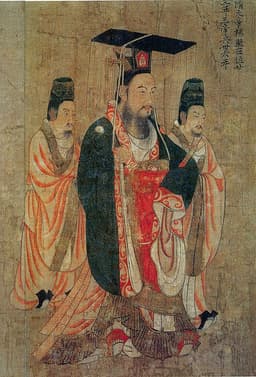
Emperor Wen of Sui
Emperor · Medieval
80.3Total
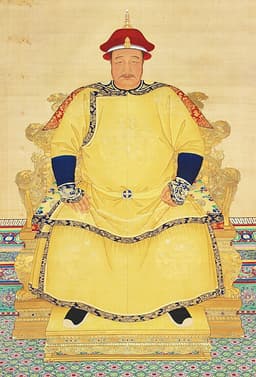
Hong Taiji
Emperor · Modern
78.3Total
Basic Information
Born
541
1592
Died
604
1643
Era
Medieval
Modern
Nationality
China
China
Occupation
Emperor
Emperor
Civilization
Eastern
Eastern
Score Comparison
Military (10%)
76.0
85.0
Political (20%)
75.0
82.0
Influence (20%)
88.0
88.0
Legacy (20%)
80.0
65.0
Leadership (15%)
80.0
78.0
Strategy (15%)
75.0
76.0
TOTAL
80.3
78.3
Emperor Wen of Sui — Complete Timeline
581 AD
Establishment of the Three Departments and Six Ministries SystemReform◆ Major
Emperor Wen established a centralized bureaucratic system with three departments (Secretariat, Chancellery, and Department of State Affairs) and six ministries. This system became the foundation of Chinese government administration for centuries.
Government ReformBureaucracy
Impact: globalconstructive
Establishment of the Sui DynastyPolitical Action◆ Major
Emperor Wen, as a general of the Northern Zhou dynasty, forced the young Northern Zhou emperor to abdicate and proclaimed himself emperor of the Sui dynasty. This marked the beginning of the Sui dynasty, which would go on to reunify China.
Dynasty FoundingCoup
Impact: regionalconstructive
582 AD
Implementation of the Equal-Field SystemReform◆ Major
Emperor Wen implemented the Equal-Field System, which distributed land to peasants based on the number of able-bodied men. This reform increased agricultural productivity, stabilized tax revenues, and reduced the power of large landowners.
Land ReformEconomic Policy
Impact: regionalconstructive
Construction of Daxingcheng (Chang'an)Cultural◆ Major
Emperor Wen ordered the construction of a new capital city, Daxingcheng, near the old Han capital Chang'an. This city, later known as Chang'an, became a model for urban planning and served as the capital of the Sui and Tang dynasties.
Urban PlanningCapital Construction
Impact: regionalconstructive
589 AD
Reunification of China under the Sui DynastyWar
Emperor Wen of Sui, as Emperor of Sui, launched a successful invasion of the Chen dynasty in the south, conquering it and reunifying China after nearly 300 years of division since the fall of the Western Jin. This ended the Northern and Southern Dynasties period.
UnificationConquest
Impact: globalconstructive
Hong Taiji — Complete Timeline
1631 AD
Adoption of Chinese-style governmentReform◆ Major
Hong Taiji established a Chinese-style bureaucracy, including the Six Ministries and a Hanlin Academy. He also introduced the civil service examination system for Han Chinese, integrating Confucian governance into the Qing state.
Government reformConfucian administrationSinification
Impact: regionalconstructive
1635 AD
Creation of the Eight Banners systemReform◆ Major
Hong Taiji reorganized the Eight Banners military system, incorporating Mongol and Han Chinese forces into separate banners. This created a multi-ethnic military structure that became the backbone of Qing power.
Military reformEight BannersMulti-ethnic army
Impact: regionalconstructive
Renaming of the Jurchen to ManchuPolitical Action◆ Major
Hong Taiji issued an edict renaming the Jurchen people as Manchu. This was part of his effort to create a unified identity for the various tribes under his rule and distance them from the historical Jurchen label.
Ethnic identityManchuJurchen
Impact: regionalconstructive
1636 AD
Proclamation of the Qing dynastyPolitical Action◆ Major
Hong Taiji declared the establishment of the Qing dynasty, replacing the Later Jin name. He adopted the Chinese imperial title and created a dual administrative system combining Manchu and Chinese institutions.
Dynasty foundingImperial titleQing dynasty
Impact: regionalconstructive
1640 AD
Conquest of the Ming Liaodong regionWar◆ Major
Hong Taiji's forces captured key Ming cities in Liaodong, including Jinzhou and Songshan. These victories secured Qing control over the strategic Liaoning corridor and weakened Ming defenses in the northeast.
Territorial expansionMing-Qing WarLiaodong
Impact: regional
Expert Analysis
Origins
Emperor Wen of Sui (541-604), born Yang Jian, emerged from the volatile Northern Zhou dynasty, where his father was a prominent general. He seized power through a regency, eventually forcing the young emperor to abdicate. In contrast, Hong Taiji (1592-1643) was the son of Nurhaci, the unifier of Jurchen tribes. As the eighth son, he navigated a complex succession to become the second leader of the Later Jin khanate. Both men rose from military aristocracies, but Wen's path involved court intrigue and usurpation, while Hong Taiji inherited a growing state and expanded it through conquest.
Rise to Power
Emperor Wen's rise culminated in 581 when he founded the Sui dynasty. He consolidated power by eliminating rivals, reforming the military, and winning over the Confucian elite. His strategic marriage to Empress Dugu helped stabilize his rule. Hong Taiji became khan in 1626 after Nurhaci's death, but he had to outmaneuver his brothers. He centralized authority, created the Eight Banners system, and renamed his people 'Manchu' in 1635 to forge a unified identity. In 1636, he proclaimed the Qing dynasty, signaling his ambition to rule all of China. Both leaders demonstrated political acumen, but Wen's coup was riskier, while Hong Taiji built on existing foundations.
Leadership & Governance
Emperor Wen was a reformer who reorganized China's administration. He abolished the feudal commanderies, established the Three Departments and Six Ministries system, and implemented the Equal-Field system to distribute land more fairly. He also built a new capital, Daxingcheng (later Chang'an), and invested in infrastructure like granaries and the Grand Canal's first sections. Hong Taiji adopted Chinese-style government, creating a bureaucracy modeled on the Ming. He promoted Confucian learning, established the Six Ministries, and encouraged intermarriage between Manchus and Chinese. Both rulers centralized power, but Wen's reforms were more comprehensive and enduring, influencing later dynasties like the Tang.
Triumph & Tragedy
Wen's greatest triumph was reunifying China in 589 after nearly four centuries of division. He conquered the Chen dynasty in the south with a massive military campaign. However, his later years were marred by succession struggles and harsh legal codes. He died suspiciously, possibly murdered by his son Yang Guang. Hong Taiji's triumphs included conquering the Ming Liaodong region and installing a puppet Ming emperor to legitimize his rule. He also defeated the Chahar Mongols and Korea. But he died suddenly in 1643 before achieving his goal of conquering Beijing. Both men left unfinished work, but Wen's reunification was a singular achievement that reshaped Chinese history.
Character & Destiny
Emperor Wen was known for his frugality, diligence, and suspicion. He personally reviewed all memorials and lived simply, but his paranoia led to purges of officials. His relationship with his wife was strong, but his favoritism toward his second son Yang Guang proved disastrous. Hong Taiji was pragmatic and ambitious, willing to adopt foreign ideas to strengthen his state. He was a skilled military commander but also a patient diplomat. His early death prevented him from seeing the Qing conquest, but his institutions ensured its eventual success. Both men were driven by a vision of a unified China, but Wen's character flaws contributed to the Sui's rapid collapse, while Hong Taiji's legacy endured through the Qing.
Legacy
Emperor Wen's Sui dynasty lasted only 37 years, but his administrative systems—like the three departments and six ministries—were adopted by the Tang and persisted for centuries. The Grand Canal and land reforms also had lasting impacts. Hong Taiji's Qing dynasty ruled for nearly 270 years. His creation of the Manchu identity, the Eight Banners, and the adoption of Chinese governance laid the foundation for a stable empire. Both men are overshadowed by their more famous successors (Emperor Yang of Sui and the Shunzhi/Kangxi emperors), but their foundational work was crucial. Wen's legacy is more about institutional innovation, while Hong Taiji's is about building a multi-ethnic state.
Conclusion
Comparing the two, Emperor Wen of Sui scores higher overall (81 vs 79). His reunification of China and administrative reforms had a more profound immediate impact. However, Hong Taiji's creation of the Qing dynasty and his strategic adaptations led to a longer-lasting empire. On key metrics: Military (Wen 76 vs Hong 85) favors Hong due to his battlefield success; Political (75 vs 82) also favors Hong for his state-building; Ideological (88 vs 88) is tied; Legacy (80 vs 65) strongly favors Wen for his enduring institutions. Ultimately, Wen's achievements were more revolutionary, while Hong's were evolutionary. Wen changed the course of Chinese history by ending division, but his dynasty's brevity diminishes his personal legacy. Hong Taiji's Qing dynasty defined early modern China, but he built on his father's work. In a historical sense, Emperor Wen of Sui edges out Hong Taiji for his bold vision and lasting administrative reforms.
Rankings
🥇
Emperor Wen of SuiLeader
Mil: 76.0Pol: 75.0Inf: 88.0
80.3
🥈
Hong Taiji
Mil: 85.0Pol: 82.0Inf: 88.0
78.3
+2.0 behind
How This Comparison Works
Algorithm
Each figure is scored on 6 dimensions (0—100 scale) based on structured historical data: Military (10%), Political (20%), Influence (20%), Legacy (20%), Leadership (15%), Strategy (15%). The weighted total produces the final ranking.
Data Sources
Scores are computed from structured sub-indicators in the database. Scale factors adjust for era (Ancient ×0.85, Modern ×1.0) and civilization size (Eastern ×1.05, Other ×0.80) to account for differences in population and military scale.
Maximum 3 Figures
Comparisons are limited to 2—3 figures to ensure readability and statistical meaningfulness.
Error Margins
±5 points per dimension — Sub-scores are derived from historical records with inherent uncertainty. Two figures within 5 points on a dimension should be considered roughly equivalent in that area.
Total Score Accuracy
±3 points overall — The weighted combination of 6 dimensions produces a total score with approximately ±3 points of uncertainty. Differences of less than 3 points are not statistically significant— the figures are effectively tied.
Known Limitations
- Historical records are incomplete and uneven across civilizations
- Figures from oral-tradition societies may be underrepresented
- Occupation labels can misclassify multi-role figures
- Scores measure capability and impact, not moral character
- Quantitative scoring is a comparison tool, not absolute truth
Capability Radar
Military (10%) — Battles & Warfare
Battles
75
85
Win Rate
80
80
Expansion
85
90
Political (20%) — Governance & Reform
Reform
95
90
Diplomacy
85
85
Economy
90
80
Influence (20%) — Cultural & Global Reach
Cultural
70
80
Global
65
75
Legacy (20%) — Historical Impact
Historical
85
85
Longevity
70
80
Leadership (15%) — Power & Stability
Tenure
80
75
Stability
75
70
Strategy (15%) — Tactics & Innovation
Strategy
85
90
Tactics
70
85
Reform
90
90
Similar Comparisons
Comments & Discussion
No comments yet. Be the first to share your thoughts!