Loading...
Emperor Wen of Sui vs Helmuth von Moltke
Emperor Wen of Sui leads by 4.1 pts · 2 figures compared
…
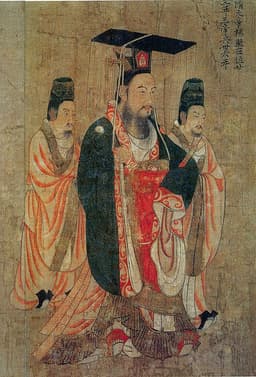
Emperor Wen of Sui
Emperor · Medieval
80.3Total
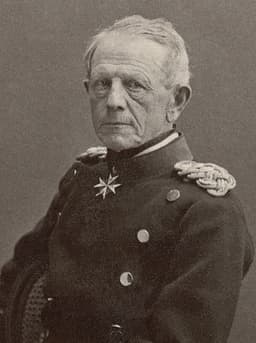
Helmuth von Moltke
General · Modern
76.2Total
Basic Information
Born
541
1800
Died
604
1891
Era
Medieval
Modern
Nationality
China
Prussia
Occupation
Emperor
General
Civilization
Eastern
Western
Score Comparison
Military (10%)
76.0
65.0
Political (20%)
75.0
62.7
Influence (20%)
88.0
88.0
Legacy (20%)
80.0
70.0
Leadership (15%)
80.0
85.0
Strategy (15%)
75.0
80.6
TOTAL
80.3
76.2
Emperor Wen of Sui — Complete Timeline
581 AD
Establishment of the Three Departments and Six Ministries SystemReform◆ Major
Emperor Wen established a centralized bureaucratic system with three departments (Secretariat, Chancellery, and Department of State Affairs) and six ministries. This system became the foundation of Chinese government administration for centuries.
Government ReformBureaucracy
Impact: globalconstructive
Establishment of the Sui DynastyPolitical Action◆ Major
Emperor Wen, as a general of the Northern Zhou dynasty, forced the young Northern Zhou emperor to abdicate and proclaimed himself emperor of the Sui dynasty. This marked the beginning of the Sui dynasty, which would go on to reunify China.
Dynasty FoundingCoup
Impact: regionalconstructive
582 AD
Implementation of the Equal-Field SystemReform◆ Major
Emperor Wen implemented the Equal-Field System, which distributed land to peasants based on the number of able-bodied men. This reform increased agricultural productivity, stabilized tax revenues, and reduced the power of large landowners.
Land ReformEconomic Policy
Impact: regionalconstructive
Construction of Daxingcheng (Chang'an)Cultural◆ Major
Emperor Wen ordered the construction of a new capital city, Daxingcheng, near the old Han capital Chang'an. This city, later known as Chang'an, became a model for urban planning and served as the capital of the Sui and Tang dynasties.
Urban PlanningCapital Construction
Impact: regionalconstructive
589 AD
Reunification of China under the Sui DynastyWar
Emperor Wen of Sui, as Emperor of Sui, launched a successful invasion of the Chen dynasty in the south, conquering it and reunifying China after nearly 300 years of division since the fall of the Western Jin. This ended the Northern and Southern Dynasties period.
UnificationConquest
Impact: globalconstructive
Helmuth von Moltke — Complete Timeline
1857 AD
Appointment as Chief of the Prussian General StaffPolitical Action
Moltke was appointed Chief of the Prussian General Staff, a position he held for 30 years. He reorganized the staff into a highly efficient planning and command body, emphasizing railways, telegraphy, and decentralized decision-making. This modernization was crucial for Prussia's subsequent victories.
Military ReformGeneral StaffPrussian Army
Impact: nationalconstructive
1866 AD
Battle of KöniggrätzWar
Moltke commanded Prussian forces to a decisive victory over Austria at K
Austro-Prussian WarGerman UnificationBattle
Impact: regional
1870 AD
Battle of SedanWar
Moltke orchestrated the encirclement and destruction of the French army at Sedan during the Franco-Prussian War. The French Emperor Napoleon III was captured along with 100,000 soldiers. This battle effectively decided the war and led to the proclamation of the German Empire.
Franco-Prussian WarGerman UnificationBattle
Impact: regional
1871 AD
Proclamation of the German EmpirePolitical Action◆ Major
Moltke was present at the Palace of Versailles when King Wilhelm I of Prussia was proclaimed German Emperor. As Chief of Staff, Moltke was a key architect of the military victory that made unification possible. He was later promoted to Field Marshal and ennobled.
German UnificationEmpireCeremony
Impact: regionalconstructive
Expert Analysis
Origins
Emperor Wen of Sui (541-604 AD), born Yang Jian, was a member of the powerful Guanlong aristocracy during the Northern Zhou dynasty. His father was a general, and he himself served as a military commander before seizing power through a coup in 581 AD. Helmuth von Moltke (1800-1891) was born into a German noble family in Mecklenburg. He attended the Danish Royal Military Academy and later the Prussian War Academy, serving as a staff officer before being appointed Chief of the Prussian General Staff in 1857. Both men emerged from military backgrounds and rose to prominence in periods of political fragmentation.
Rise to Power
Wen's rise was swift: after the death of the Northern Zhou emperor, he maneuvered to become regent for his infant grandson, then forced the child's abdication and proclaimed himself emperor. He consolidated power by eliminating rivals and reforming the bureaucracy. Moltke's rise was more gradual. He gained recognition for his strategic writings and service, culminating in his appointment as Chief of Staff. He modernized the Prussian army and developed detailed war plans, earning the trust of Otto von Bismarck and King Wilhelm I.
Leadership & Governance
Wen's governance was transformative. He established the Three Departments and Six Ministries system, which became the blueprint for Chinese bureaucracy for centuries. He implemented the Equal-Field System to distribute land and reduce tax evasion, and built a new capital, Daxingcheng (later Chang'an). These reforms centralized power and stabilized the economy. Moltke's leadership focused on military organization and strategy. He revolutionized staff work, emphasizing decentralized execution and rapid mobilization. His victories in the German unification wars (1864, 1866, 1870-71) were due to meticulous planning and use of railways.
Triumph & Tragedy
Wen's greatest triumph was reunifying China in 589 AD after centuries of division, ending the Northern and Southern dynasties period. He also expanded into Vietnam and Central Asia. However, his reign ended in tragedy: he died suddenly, possibly murdered by his son Yang Guang (Emperor Yang), who then mismanaged the empire, leading to the Sui dynasty's collapse in 618 AD. Moltke's triumphs were the decisive victories at Königgrätz (1866) and Sedan (1870), leading to the proclamation of the German Empire in 1871. His tragedy was less personal; he lived to see Germany's rise but died before World War I, though his legacy of militarism arguably contributed to that conflict.
Character & Destiny
Wen was known for his frugality, discipline, and ruthlessness. He was a capable administrator but also paranoid, purging officials and family members. His destiny was to be a unifier whose dynasty failed due to his successor's excesses. Moltke was reserved, scholarly, and deeply religious. He was a brilliant strategist but disdained politics, leaving diplomacy to Bismarck. His destiny was to be the architect of German unification, earning the title "Moltke the Elder" to distinguish him from his nephew.
Legacy
Wen's legacy is mixed: he is praised for reunifying China and establishing enduring institutions, but his dynasty's short life tarnishes his reputation. Historians score him highly for his administrative reforms (score: 88 in Innovation, 80 in Leadership). Moltke's legacy is more straightforward: he is considered one of the greatest military strategists, influencing warfare through his emphasis on railroads, logistics, and decentralized command. His scores reflect this: 88 Innovation, 85 Discipline, 81 Strategy. Overall, Wen's score of 78.5 vs Moltke's 74.4 reflects Wen's broader impact on governance, though both were pivotal unifiers.
Conclusion
Emperor Wen of Sui and Helmuth von Moltke both unified fractured lands, but through different means: Wen through state-building and reform, Moltke through military strategy and war. Wen's achievements were more institutional and long-lasting in terms of administrative systems, while Moltke's victories directly created a new nation. The score gap of 4.1 points in Wen's favor is justified by his higher scores in Innovation and Leadership, as his reforms shaped China for centuries. However, Moltke's military genius was equally transformative in its own sphere. Ultimately, both men excelled in their respective domains, but Wen's broader governance and the scale of his reunification give him the edge.
Rankings
🥇
Emperor Wen of SuiLeader
Mil: 76.0Pol: 75.0Inf: 88.0
80.3
🥈
Helmuth von Moltke
Mil: 65.0Pol: 62.7Inf: 88.0
76.2
+4.1 behind
How This Comparison Works
Algorithm
Each figure is scored on 6 dimensions (0—100 scale) based on structured historical data: Military (10%), Political (20%), Influence (20%), Legacy (20%), Leadership (15%), Strategy (15%). The weighted total produces the final ranking.
Data Sources
Scores are computed from structured sub-indicators in the database. Scale factors adjust for era (Ancient ×0.85, Modern ×1.0) and civilization size (Eastern ×1.05, Other ×0.80) to account for differences in population and military scale.
Maximum 3 Figures
Comparisons are limited to 2—3 figures to ensure readability and statistical meaningfulness.
Error Margins
±5 points per dimension — Sub-scores are derived from historical records with inherent uncertainty. Two figures within 5 points on a dimension should be considered roughly equivalent in that area.
Total Score Accuracy
±3 points overall — The weighted combination of 6 dimensions produces a total score with approximately ±3 points of uncertainty. Differences of less than 3 points are not statistically significant— the figures are effectively tied.
Known Limitations
- Historical records are incomplete and uneven across civilizations
- Figures from oral-tradition societies may be underrepresented
- Occupation labels can misclassify multi-role figures
- Scores measure capability and impact, not moral character
- Quantitative scoring is a comparison tool, not absolute truth
Capability Radar
Military (10%) — Battles & Warfare
Battles
75
85
Win Rate
80
90
Expansion
85
85
Political (20%) — Governance & Reform
Reform
95
75
Diplomacy
85
80
Economy
90
65
Influence (20%) — Cultural & Global Reach
Cultural
70
60
Global
65
75
Legacy (20%) — Historical Impact
Historical
85
85
Longevity
70
75
Leadership (15%) — Power & Stability
Tenure
80
70
Stability
75
70
Strategy (15%) — Tactics & Innovation
Strategy
85
95
Tactics
70
95
Reform
90
90
Similar Comparisons
Comments & Discussion
No comments yet. Be the first to share your thoughts!