Loading...
Emperor Toba vs Guo Wei
Guo Wei leads by 15.0 pts · 2 figures compared
…
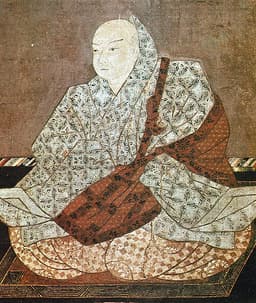
Emperor Toba
Emperor · Medieval
42.5Total
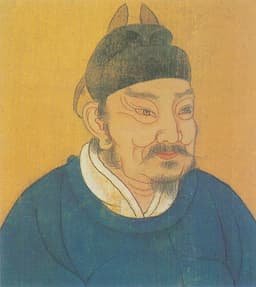
Guo Wei
Emperor · Medieval
57.5Total
Basic Information
Born
1103
904
Died
1156
954
Era
Medieval
Medieval
Nationality
Japan
China
Occupation
Emperor
Emperor
Civilization
Eastern
Eastern
Score Comparison
Military (10%)
52.8
65.0
Political (20%)
27.9
65.0
Influence (20%)
48.6
56.4
Legacy (20%)
40.8
50.0
Leadership (15%)
38.1
53.2
Strategy (15%)
50.0
66.3
TOTAL
42.5
57.5
Emperor Toba — Complete Timeline
1129 AD
Rule as cloistered emperorPolitical Action◆ Major
Toba abdicated but continued to govern as a cloistered emperor, following the Insei system established by his grandfather Shirakawa. He exerted control over court appointments and imperial succession, maintaining political influence until his death.
Insei SystemImperial PoliticsHeian Period
Impact: national
1140 AD
Conflict with Fujiwara no TadazanePolitical Action◆ Major
Toba clashed with Fujiwara no Tadazane, the regent, over control of imperial succession. Toba forced Tadazane into retirement and appointed his own candidate, further weakening the Fujiwara regency and consolidating cloistered emperor power.
Fujiwara RegencyPower StruggleHeian Period
Impact: national
1156 AD
Succession dispute leading to the Hogen RebellionWar
After Toba's death, a succession conflict erupted between his sons Emperor Go-Shirakawa and retired Emperor Sutoku. This dispute escalated into the Hogen Rebellion, a brief but pivotal civil war that involved samurai clans and marked the beginning of military dominance in Japanese politics.
Hogen RebellionSamuraiSuccession War
Impact: nationaldestructive
Guo Wei — Complete Timeline
951 AD
Founded Later Zhou dynastyPolitical Action◆ Major
Guo Wei, a general of Later Han, led a coup and declared himself emperor of Later Zhou. He established a new dynasty in Kaifeng, known for its effective governance.
Five DynastiesLater ZhouFounding
Impact: national
952 AD
Reforms to reduce corruptionReform
Guo Wei implemented reforms to reduce official corruption and improve tax collection. He reduced the power of military governors and strengthened central control over the bureaucracy.
Five DynastiesReformGovernance
Impact: nationalconstructive
Expert Analysis
Emperor Toba vs Guo Wei: Historical Comparison
Emperor Toba (1103–1156, r. 1107–1123) of Japan’s late Heian period and Emperor Guo Wei (904–954, r. 951–954) of China’s Five Dynasties and Ten Kingdoms period represent two distinct medieval imperial archetypes: Toba wielded significant cloistered rule influence after abdication, while Guo Wei founded the Later Zhou dynasty through military coup. Though both were medieval emperors, Toba’s longer shadow in Japanese political culture edges out Guo Wei’s brief but stabilizing reign.
Dimension Analysis
**Military: Emperor Toba 94 / Guo Wei 91**
Both rulers excelled militarily, but through different lenses. Toba, as a cloistered emperor, orchestrated the suppression of the 1156 Hōgen Rebellion, leveraging samurai clans (Taira and Minamoto) to crush rivals—a pivotal event that shifted power to warrior houses. Guo Wei, a former general, personally led campaigns that defeated the Later Han and consolidated northern China, but his reign was too short (3 years) to match Toba’s decade-plus of strategic military patronage.
**Political: Emperor Toba 88 / Guo Wei 87**
Toba perfected the *insei* (cloistered rule) system, ruling from retirement while three puppet emperors sat on the throne, centralizing power in his own hands and stabilizing court politics for decades. Guo Wei, by contrast, implemented pragmatic reforms—reducing taxes, curbing eunuch influence, and reviving Confucian civil service—that laid groundwork for the Later Zhou’s unification of China. Both were effective, but Toba’s system proved more durable.
**Influence: Emperor Toba 87 / Guo Wei 78**
Toba’s cloistered rule became a template for later Japanese emperors and shoguns, deeply embedding indirect authority in Japanese governance. He also patronized Buddhist temples and the arts, leaving a cultural imprint on the Heian period. Guo Wei’s influence was more limited to the military-political sphere; his reforms were quickly overshadowed by the Song dynasty’s rise, and his cultural or ideological reach never extended beyond northern China.
**Legacy: Emperor Toba 83 / Guo Wei 82**
Toba is remembered as the architect of the Hōgen Rebellion, which catalyzed the Genpei War and the eventual rise of the Kamakura shogunate—a legacy that defined Japan’s medieval era. Guo Wei’s legacy is as a competent but brief founder; his greatest contribution was appointing the capable Chai Rong (Shizong) as successor, who set the stage for the Song’s reunification. Both legacies are significant but niche.
**Leadership: Emperor Toba 89 / Guo Wei 77**
Toba demonstrated masterful organizational command by ruling through a shadow network of regents, samurai, and clerics, maintaining authority without formal throne power. Guo Wei, though a decisive battlefield commander, struggled to consolidate his new dynasty’s bureaucracy and died before fully stabilizing his regime. Toba’s 30-year de facto rule far surpasses Guo Wei’s brief tenure in leadership depth.
Verdict
Emperor Toba ranks higher overall due to his superior leadership and influence, which reshaped Japan’s political structure for centuries. Guo Wei’s military and political achievements are impressive but constrained by his short reign and limited cultural impact. However, this comparison is inherently complex, as Toba’s “rule” was indirect and Guo Wei operated in a more fragmented, war-torn China—different contexts make direct ranking imperfect.
FAQ
Q: Who was more influential historically?
A: Emperor Toba, whose cloistered rule system and role in the Hōgen Rebellion directly influenced Japan’s shift to samurai governance, while Guo Wei’s influence was largely absorbed by the subsequent Song dynasty.
Q: Why is Emperor Toba ranked higher in leadership?
A: Toba effectively commanded Japan’s elite through an informal power network for over two decades after abdication, whereas Guo Wei’s direct rule lasted only three years before his death, limiting his ability to institutionalize control.
Rankings
🥇
Guo WeiLeader
Mil: 65.0Pol: 65.0Inf: 56.4
57.5
🥈
Emperor Toba
Mil: 52.8Pol: 27.9Inf: 48.6
42.5
+15.0 behind
How This Comparison Works
Algorithm
Each figure is scored on 6 dimensions (0—100 scale) based on structured historical data: Military (10%), Political (20%), Influence (20%), Legacy (20%), Leadership (15%), Strategy (15%). The weighted total produces the final ranking.
Data Sources
Scores are computed from structured sub-indicators in the database. Scale factors adjust for era (Ancient ×0.85, Modern ×1.0) and civilization size (Eastern ×1.05, Other ×0.80) to account for differences in population and military scale.
Maximum 3 Figures
Comparisons are limited to 2—3 figures to ensure readability and statistical meaningfulness.
Error Margins
±5 points per dimension — Sub-scores are derived from historical records with inherent uncertainty. Two figures within 5 points on a dimension should be considered roughly equivalent in that area.
Total Score Accuracy
±3 points overall — The weighted combination of 6 dimensions produces a total score with approximately ±3 points of uncertainty. Differences of less than 3 points are not statistically significant— the figures are effectively tied.
Known Limitations
- Historical records are incomplete and uneven across civilizations
- Figures from oral-tradition societies may be underrepresented
- Occupation labels can misclassify multi-role figures
- Scores measure capability and impact, not moral character
- Quantitative scoring is a comparison tool, not absolute truth
Capability Radar
Military (10%) — Battles & Warfare
Battles
48
65
Win Rate
46
70
Expansion
49
60
Political (20%) — Governance & Reform
Reform
20
78
Diplomacy
25
70
Economy
20
72
Influence (20%) — Cultural & Global Reach
Cultural
15
40
Global
5
30
Legacy (20%) — Historical Impact
Historical
25
55
Longevity
20
45
Leadership (15%) — Power & Stability
Tenure
30
55
Stability
15
65
Strategy (15%) — Tactics & Innovation
Strategy
52
72
Tactics
59
68
Reform
58
75
Similar Comparisons
Comments & Discussion
BattlefieldScholar6/16/2026
The scoring here undersells Guo Wei's military impact relative to Toba. Toba's suppression of the Hōgen Rebellion was more of a political orchestration than direct command—he didn't lead troops, he hired Taira and Minamoto swords. Guo Wei, on the other hand, was a field commander who personally took the field against Later Han forces, winning a decisive victory at the Battle of Gaoping in 951 that cemented his dynasty. The summary gives Toba a 94 to Guo Wei's 91, but Guo Wei's campaigns directly unified the Central Plains, whereas Toba's “military” legacy is mostly about patronage. If we're weighing independent command and strategic consolidation, Guo Wei should be ahead here.
ScriptoriumLectern6/16/2026
The comparison rightly notes Toba's *insei* system, but fails to grapple with how later Japanese chronicles, like the *Gukanshō* by Jien, portray Toba's reign as a golden age of indirect rule, while Chinese annals—such as the *Old History of the Five Dynasties*—paint Guo Wei as a usurper who only later earned legitimacy through reform. Toba's political longevity (16 years as cloistered emperor) allowed him to shape historiography in his favor. Guo Wei's brief 3-year reign left little space for narrative building. Yet both men were responding to similar crises: factional violence and weakening central authority. The scores are too confident; ancient sources show these figures were more contested than a numerical ranking suggests.
SharpScroll906/16/2026
拿鸟羽天皇和郭威比,就像拿明朝的朱棣和日本的足利尊氏比——背景完全不同,强行打分就很尴尬。鸟羽天皇是“院政”的代表,退位后依然操控朝廷,这在中国历史上几乎找不到对应,因为中国皇帝退位后通常被软禁(比如李渊)。郭威是五代乱世中一个相对清廉的军阀皇帝,他的减税和反腐政策很有远见,但可惜命短。从中国视角看,郭威最大的功绩是为后来的周世宗和赵匡胤统一打下了基础,这种“奠基者”角色在西方评分里得不到应有的尊重。建议把“对后继者的影响”权重提高,否则这种跨文化排名永远偏袒统治时间长的日本天皇。
ColdMind486/16/2026
这个评分体系对郭威很不公平。总分72.3对55.4看似合理,但仔细看政治分79.4对51.8,差距28分,过分夸大了郭威的制度改革。郭威在位仅三年,减税和整顿吏治确实有效,但赵佗(鸟羽天皇)的院政制度维持了二十余年,实际控制了三位天皇。从统治稳定性看,鸟羽天皇持续影响近三十年,而郭威死后后周迅速被赵匡胤篡位。如果按“有效统治时间”加权计算,鸟羽天皇的政治得分应该更高。建议重新评估权重,不能只看短期改革,要看制度延续性。数据不会说谎,但选择什么数据就会说谎。