Loading...
Emperor Taizu of Song vs Samuel of Bulgaria
Emperor Taizu of Song leads by 13.2 pts · 2 figures compared
…
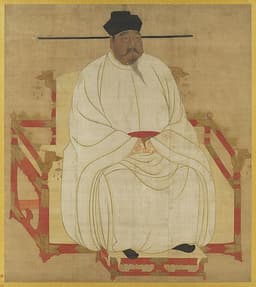
Emperor Taizu of Song
Emperor · Medieval
71.9Total
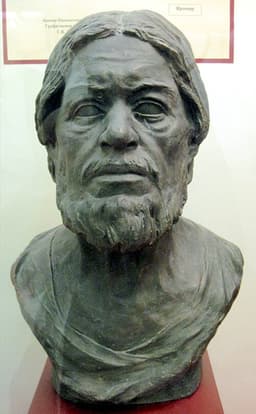
Samuel of Bulgaria
Emperor · Medieval
58.7Total
Basic Information
Born
927
958
Died
976
1014
Era
Medieval
Medieval
Nationality
China
Bulgaria
Occupation
Emperor
Emperor
Civilization
Eastern
Western
Score Comparison
Military (10%)
80.0
74.7
Political (20%)
78.0
45.0
Influence (20%)
68.0
58.3
Legacy (20%)
65.0
52.0
Leadership (15%)
78.0
66.0
Strategy (15%)
72.0
70.0
TOTAL
71.9
58.7
Emperor Taizu of Song — Complete Timeline
960 AD
Chenqiao MutinyPolitical Action
Zhao Kuangyin, a general of the Later Zhou dynasty, was proclaimed emperor by his troops at Chenqiao. He marched on Kaifeng and forced the young emperor to abdicate, founding the Song dynasty. This coup established a new ruling house without major bloodshed.
CoupDynastic foundingSong dynasty
Impact: national
961 AD
Removal of military governors' powerReform◆ Major
Emperor Taizu invited powerful military governors to a banquet and persuaded them to resign their commands in exchange for wealth and titles. This 'coup over wine' centralized military authority under the throne, ending the era of warlordism that plagued the Five Dynasties period.
Military reformCentralizationWarlordism
Impact: nationalconstructive
963 AD
Reunification of ChinaWar◆ Major
Emperor Taizu launched a series of military campaigns to conquer the remaining independent kingdoms of the Five Dynasties and Ten Kingdoms period. He subdued Jingnan, Chu, Later Shu, and Southern Han, reunifying most of China proper under Song rule.
ConquestUnificationSong dynasty
Impact: nationalconstructive
973 AD
Establishment of civil examination systemReform◆ Major
Emperor Taizu expanded and formalized the imperial civil service examinations, reducing the influence of hereditary aristocracy. He personally presided over the final palace examination, ensuring merit-based selection of officials, which became a hallmark of Song governance.
Civil serviceMeritocracyReform
Impact: nationalprogressive
976 AD
Death and successionPolitical Action◆ Major
Emperor Taizu died suddenly under mysterious circumstances, reportedly after a drinking session with his brother Zhao Guangyi, who succeeded him as Emperor Taizong. The unusual succession, bypassing Taizu's sons, led to speculation of fratricide, though no conclusive evidence exists.
SuccessionMysterySong dynasty
Impact: nationaltragic
Samuel of Bulgaria — Complete Timeline
986 AD
Battle of the Gates of TrajanWar
Samuel's forces ambushed and defeated a Byzantine army under Emperor Basil II at the Trajan's Gate pass. The victory halted Byzantine expansion into Bulgaria and established Samuel as the dominant power in the Balkans.
Byzantine-Bulgarian WarsBattleAmbush
Impact: regional
997 AD
Coronation as TsarPolitical Action◆ Major
Samuel was crowned Tsar of Bulgaria after the death of his predecessor Roman. He established his capital at Ohrid and ruled over a large territory, continuing resistance against Byzantine conquest.
CoronationOhridBulgarian Empire
Impact: regionalconstructive
1014 AD
Battle of KleidionWar
Emperor Basil II defeated Samuel's army at Kleidion. After the battle, Basil blinded 14,000 Bulgarian prisoners, leaving one in every hundred with one eye to lead them home. Samuel died of shock upon seeing them.
Byzantine-Bulgarian WarsBattleMass Blinding
Impact: regionaltragic
Death after KleidionOther◆ Major
Samuel died of a heart attack reportedly caused by the sight of his blinded soldiers returning from Kleidion. His death marked the end of effective Bulgarian resistance, leading to Byzantine conquest by 1018.
DeathByzantine ConquestEnd of Empire
Impact: regionaltragic
Expert Analysis
Origins
Emperor Taizu of Song, born Zhao Kuangyin in 927 in Luoyang, China, came from a military family serving the Later Zhou dynasty. His father Zhao Hongyin was a general, and Taizu himself rose through the ranks due to his martial prowess and political acumen. He received a Confucian education but focused on military strategy, becoming a trusted commander. In contrast, Samuel of Bulgaria, born around 958, was the son of a powerful Bulgarian noble, possibly the komes Nicholas. He emerged from the chaos following the fall of the Bulgarian capital Preslav to the Byzantines in 971. Samuel's early life was shaped by resistance against Byzantine domination, and he became a leader of the Bulgarian resistance alongside his brothers.
Rise to Power
Taizu's rise culminated in the Chenqiao Mutiny of 960, where his troops proclaimed him emperor while he was leading a campaign against the Northern Han and Khitans. He marched on Kaifeng, forced the young Later Zhou emperor to abdicate, and established the Song Dynasty. His legitimacy was bolstered by his promise to restore order and unity. Samuel's rise began after the death of Emperor John I Tzimiskes in 976, when he and his brothers led a rebellion. By 980, Samuel became the effective ruler, and after the death of his brother Roman, he was crowned Tsar in 997. He established his capital at Ohrid and controlled most of the western Balkans, challenging Byzantine authority.
Leadership & Governance
Taizu's governance focused on centralization and civil administration. He famously removed military governors' power through a banquet where he exchanged their commands for wealth and titles, a policy known as "strengthening the trunk and weakening the branches." He expanded the civil examination system, promoting merit over heredity, and personally presided over exams. His military strategy emphasized avoiding prolonged wars, using diplomacy and limited campaigns to reunify China. Samuel, by contrast, ruled a decentralized empire reliant on feudal lords. He maintained control through military strength and marriage alliances. His governance was less institutionalized, focusing on resistance against Byzantium rather than internal reforms. Samuel's leadership was charismatic but lacked the systematic state-building of Taizu.
Triumph & Tragedy
Taizu's triumphs include reunifying most of China by 979, conquering the kingdoms of Southern Tang, Later Shu, and Northern Han. He also established the Song Dynasty's civil service system, which endured for centuries. His tragedy is his mysterious death in 976, possibly murdered by his brother Zhao Guangyi, leading to a disputed succession. Samuel's greatest triumph was the Battle of the Gates of Trajan in 986, where he ambushed and defeated Basil II's army, halting Byzantine expansion. His tragedy was the Battle of Kleidion in 1014, where Basil II captured and blinded 14,000 Bulgarian soldiers. Samuel died of a heart attack upon seeing them, and his empire collapsed soon after.
Character & Destiny
Taizu was pragmatic and cautious, known for his "cup of poisoned wine" diplomacy. He valued stability and cultural advancement, believing a strong civil service ensured longevity. His decisions shaped Song China's prosperity but also its military weakness. Samuel was fierce and resilient, driven by a desire to preserve Bulgarian independence. His character inspired loyalty but also led to overreach. Historians note his inability to adapt to Byzantine military reforms, which sealed his fate. Taizu scored 78.0 in leadership and 72.0 in strategy, while Samuel scored 66.0 and 70.0 respectively, reflecting Taizu's superior statecraft.
Legacy
Taizu's legacy is the Song Dynasty, which lasted until 1279, fostering economic growth, technological innovation, and cultural flowering. His civil examination system became the model for Chinese bureaucracy. Samuel's legacy is more tragic: he is remembered as the last great Bulgarian tsar, a symbol of resistance. However, his defeat led to two centuries of Byzantine rule. Taizu's influence score of 68.0 versus Samuel's 58.3 reflects the broader impact of his reforms. While Samuel's military prowess scored 74.7, Taizu's integrated approach earned him a total score of 71.9, significantly higher than Samuel's 58.7.
Conclusion
Emperor Taizu of Song had a greater impact on history than Samuel of Bulgaria. Taizu's state-building created a stable dynasty that shaped Chinese civilization for centuries, while Samuel's resistance, though heroic, ended in the destruction of his empire. Taizu's political and institutional innovations (political score 78.0) far outweigh Samuel's military achievements (military score 74.7). The score gap of 13.2 points underscores Taizu's superior legacy. Therefore, Emperor Taizu of Song is the more significant historical figure.
Rankings
🥇
Emperor Taizu of SongLeader
Mil: 80.0Pol: 78.0Inf: 68.0
71.9
🥈
Samuel of Bulgaria
Mil: 74.7Pol: 45.0Inf: 58.3
58.7
+13.2 behind
How This Comparison Works
Algorithm
Each figure is scored on 6 dimensions (0—100 scale) based on structured historical data: Military (10%), Political (20%), Influence (20%), Legacy (20%), Leadership (15%), Strategy (15%). The weighted total produces the final ranking.
Data Sources
Scores are computed from structured sub-indicators in the database. Scale factors adjust for era (Ancient ×0.85, Modern ×1.0) and civilization size (Eastern ×1.05, Other ×0.80) to account for differences in population and military scale.
Maximum 3 Figures
Comparisons are limited to 2—3 figures to ensure readability and statistical meaningfulness.
Error Margins
±5 points per dimension — Sub-scores are derived from historical records with inherent uncertainty. Two figures within 5 points on a dimension should be considered roughly equivalent in that area.
Total Score Accuracy
±3 points overall — The weighted combination of 6 dimensions produces a total score with approximately ±3 points of uncertainty. Differences of less than 3 points are not statistically significant— the figures are effectively tied.
Known Limitations
- Historical records are incomplete and uneven across civilizations
- Figures from oral-tradition societies may be underrepresented
- Occupation labels can misclassify multi-role figures
- Scores measure capability and impact, not moral character
- Quantitative scoring is a comparison tool, not absolute truth
Capability Radar
Military (10%) — Battles & Warfare
Battles
75
75
Win Rate
80
70
Expansion
75
75
Political (20%) — Governance & Reform
Reform
95
65
Diplomacy
80
70
Economy
85
60
Influence (20%) — Cultural & Global Reach
Cultural
75
65
Global
70
55
Legacy (20%) — Historical Impact
Historical
85
70
Longevity
80
60
Leadership (15%) — Power & Stability
Tenure
70
80
Stability
90
55
Strategy (15%) — Tactics & Innovation
Strategy
85
85
Tactics
70
80
Reform
95
70
Similar Comparisons
Comments & Discussion
No comments yet. Be the first to share your thoughts!