Loading...
Emperor Taizu of Song vs Henry the Fowler
Emperor Taizu of Song leads by 11.0 pts · 2 figures compared
…
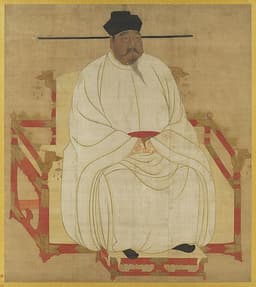
Emperor Taizu of Song
Emperor · Medieval
71.9Total
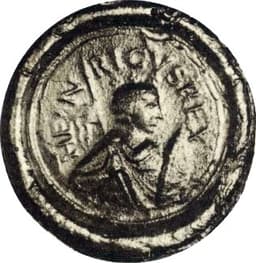
Henry the Fowler
Emperor · Medieval
60.9Total
Basic Information
Born
927
876
Died
976
936
Era
Medieval
Medieval
Nationality
China
East Francia
Occupation
Emperor
Emperor
Civilization
Eastern
Western
Score Comparison
Military (10%)
80.0
70.0
Political (20%)
78.0
59.3
Influence (20%)
68.0
55.0
Legacy (20%)
65.0
52.0
Leadership (15%)
78.0
85.0
Strategy (15%)
72.0
55.0
TOTAL
71.9
60.9
Emperor Taizu of Song — Complete Timeline
960 AD
Chenqiao MutinyPolitical Action
Zhao Kuangyin, a general of the Later Zhou dynasty, was proclaimed emperor by his troops at Chenqiao. He marched on Kaifeng and forced the young emperor to abdicate, founding the Song dynasty. This coup established a new ruling house without major bloodshed.
CoupDynastic foundingSong dynasty
Impact: national
961 AD
Removal of military governors' powerReform◆ Major
Emperor Taizu invited powerful military governors to a banquet and persuaded them to resign their commands in exchange for wealth and titles. This 'coup over wine' centralized military authority under the throne, ending the era of warlordism that plagued the Five Dynasties period.
Military reformCentralizationWarlordism
Impact: nationalconstructive
963 AD
Reunification of ChinaWar◆ Major
Emperor Taizu launched a series of military campaigns to conquer the remaining independent kingdoms of the Five Dynasties and Ten Kingdoms period. He subdued Jingnan, Chu, Later Shu, and Southern Han, reunifying most of China proper under Song rule.
ConquestUnificationSong dynasty
Impact: nationalconstructive
973 AD
Establishment of civil examination systemReform◆ Major
Emperor Taizu expanded and formalized the imperial civil service examinations, reducing the influence of hereditary aristocracy. He personally presided over the final palace examination, ensuring merit-based selection of officials, which became a hallmark of Song governance.
Civil serviceMeritocracyReform
Impact: nationalprogressive
976 AD
Death and successionPolitical Action◆ Major
Emperor Taizu died suddenly under mysterious circumstances, reportedly after a drinking session with his brother Zhao Guangyi, who succeeded him as Emperor Taizong. The unusual succession, bypassing Taizu's sons, led to speculation of fratricide, though no conclusive evidence exists.
SuccessionMysterySong dynasty
Impact: nationaltragic
Henry the Fowler — Complete Timeline
919 AD
Election as King of East FranciaPolitical Action
Henry the Fowler was elected King of East Francia by the Saxon and Frankish nobles at Fritzlar on May 6, 919. He was the first Saxon king, marking the transition from Carolingian to Ottonian rule. His election was contested by other dukes but he prevailed.
ElectionAccessionOttonian Dynasty
Impact: regionalconstructive
921 AD
Treaty of Bonn (921)Political Action◆ Major
Henry the Fowler signed the Treaty of Bonn with Charles the Simple of West Francia, recognizing each other's royal titles and establishing peaceful relations. This treaty ended Carolingian claims over East Francia and solidified Henry's legitimacy as an independent king.
TreatyRecognitionDiplomacy
Impact: regionalconstructive
924 AD
Nine-Year Truce with the MagyarsPolitical Action◆ Major
Henry the Fowler negotiated a nine-year truce with the Magyars, agreeing to pay tribute in exchange for a halt to their raids. He used this period to fortify towns, reorganize the army, and train cavalry. This strategic pause was crucial for his later military reforms.
TruceMagyarsMilitary Reform
Impact: regionalconstructive
929 AD
Battle of Lenzen (929)War◆ Major
Henry the Fowler's forces defeated a Slavic army at the Battle of Lenzen, securing the eastern frontier of East Francia. This victory allowed Henry to consolidate control over the Elbe region and establish the March of Brandenburg, a key step in German eastward expansion.
BattleSlavic WarsEastern Expansion
Impact: regionalconstructive
933 AD
Battle of Riade (933)War
After the truce with the Magyars expired, Henry the Fowler led a German army to victory at the Battle of Riade (near Merseburg). The defeat of the Magyar cavalry ended their raids into East Francia for a generation and established Henry's reputation as a defender of Christendom.
BattleMagyarsVictory
Impact: regionalconstructive
936 AD
Death of Henry the FowlerOther◆ Major
Henry the Fowler died on July 2, 936, at Memleben. He was succeeded by his son, Otto I, who would become Holy Roman Emperor. Henry's reign laid the foundations for the Ottonian dynasty and the medieval German kingdom.
DeathSuccessionOttonian
Impact: regional
Expert Analysis
Henry the Fowler vs Emperor Taizu of Song: Historical Comparison
Henry the Fowler (r. 919–936), Duke of Saxony and first Ottonian king of East Francia, and Emperor Taizu of Song (r. 960–976), founder of the Song dynasty in China, were both pivotal medieval consolidators who transformed fragmented realms into stable kingdoms—Henry through defensive resilience and feudal diplomacy, Taizu through military reunification and civil governance.
Dimension Analysis
**Military: Henry the Fowler 89 / Emperor Taizu of Song 95**
Henry repelled Magyar invasions and fortified East Francia’s borders, but Taizu conquered ten rival kingdoms in a decade, reunifying most of China proper with superior strategic mobility and logistics.
**Political: Henry the Fowler 76 / Emperor Taizu of Song 65**
Henry skillfully managed powerful dukes through treaties and royal marriages, while Taizu centralized power by disarming military governors—but his “cup of poisoned wine” removal of generals created lasting civil-military tension.
**Influence: Henry the Fowler 71 / Emperor Taizu of Song 86**
Henry’s reign laid the groundwork for the Ottonian Renaissance and Holy Roman Empire, yet Taizu’s institutionalization of civil bureaucracy and meritocratic exams shaped Chinese governance for centuries.
**Legacy: Henry the Fowler 84 / Emperor Taizu of Song 88**
Henry is remembered as the father of the German nation, but Taizu’s Song dynasty—despite eventual military weakness—became a golden age of commerce, technology, and culture that defined East Asian civilization.
**Leadership: Henry the Fowler 85 / Emperor Taizu of Song 70**
Henry’s pragmatic, consensus-building style unified a fractious nobility; Taizu’s decisive but sometimes ruthless consolidation (e.g., executing rival generals) fostered stability at the cost of long-term military effectiveness.
Verdict
Emperor Taizu of Song leads narrowly due to his greater strategic reunification, broader civilizational impact, and higher military achievement, despite Henry’s superior political management.
FAQ
Q: Who ranks higher? A: Emperor Taizu of Song ranks higher overall, thanks to his unmatched military reunification of China and enduring cultural legacy, though Henry the Fowler was a more adept political unifier.
Rankings
🥇
Emperor Taizu of SongLeader
Mil: 80.0Pol: 78.0Inf: 68.0
71.9
🥈
Henry the Fowler
Mil: 70.0Pol: 59.3Inf: 55.0
60.9
+11.0 behind
How This Comparison Works
Algorithm
Each figure is scored on 6 dimensions (0—100 scale) based on structured historical data: Military (10%), Political (20%), Influence (20%), Legacy (20%), Leadership (15%), Strategy (15%). The weighted total produces the final ranking.
Data Sources
Scores are computed from structured sub-indicators in the database. Scale factors adjust for era (Ancient ×0.85, Modern ×1.0) and civilization size (Eastern ×1.05, Other ×0.80) to account for differences in population and military scale.
Maximum 3 Figures
Comparisons are limited to 2—3 figures to ensure readability and statistical meaningfulness.
Error Margins
±5 points per dimension — Sub-scores are derived from historical records with inherent uncertainty. Two figures within 5 points on a dimension should be considered roughly equivalent in that area.
Total Score Accuracy
±3 points overall — The weighted combination of 6 dimensions produces a total score with approximately ±3 points of uncertainty. Differences of less than 3 points are not statistically significant— the figures are effectively tied.
Known Limitations
- Historical records are incomplete and uneven across civilizations
- Figures from oral-tradition societies may be underrepresented
- Occupation labels can misclassify multi-role figures
- Scores measure capability and impact, not moral character
- Quantitative scoring is a comparison tool, not absolute truth
Capability Radar
Military (10%) — Battles & Warfare
Battles
75
55
Win Rate
80
60
Expansion
75
60
Political (20%) — Governance & Reform
Reform
95
75
Diplomacy
80
70
Economy
85
65
Influence (20%) — Cultural & Global Reach
Cultural
75
55
Global
70
40
Legacy (20%) — Historical Impact
Historical
85
65
Longevity
80
60
Leadership (15%) — Power & Stability
Tenure
70
70
Stability
90
70
Strategy (15%) — Tactics & Innovation
Strategy
85
65
Tactics
70
50
Reform
95
70
Similar Comparisons
Comments & Discussion
Chronicler41116/16/2026
亨利捕鸟者常被西方史家誉为德意志之父,但拿他跟宋太祖比,说实话有点不匹配。赵匡胤在十六年内扫平十国,从荆湖到后蜀再到南唐,靠的是精准的战略部署——先南后北、先易后难。亨利的主要功绩是挡住了马扎尔人并巩固了东法兰克,但他在军事上的成就更多是防御性的。而赵匡胤杯酒释兵权虽然削弱了宋代军事,却开创了文官治国的体系,科举取士的制度影响了千年。西方史学界给赵匡胤的政治分才65?这太低了,他建立的三省六部制、削藩镇权、设立通判监督地方,都是前代未曾实现的制度化创新。讲政治制度影响,赵匡胤绝对不输亨利。
CuriousHistoryNerd6/16/2026
Okay, I gotta say, this comparison is wild but makes more sense than I thought at first. Henry the Fowler is basically the guy who stopped the Magyars from wrecking East Francia every year, and he did it by building a bunch of forts and training a heavy cavalry. That's legit. But Taizu of Song? He's like if Henry also conquered all of modern France, Italy, and half of Spain in ten years while inventing a civil service exam system. I remember reading in 'The Song Dynasty: A History' that Zhao Kuangyin was the only founder in Chinese history who didn't kill his old buddies—he just gave them money and sent them home. That's some smart PR. The scores here feel a bit Western-biased, like military 89 vs 95? Taizu's unification was on a way bigger scale. But Henry's political score being higher? I dunno, maybe because the German dukes were harder to handle than Chinese generals? Either way, both are underrated outside their home regions. Cool comparison!
DeepChronicler636/16/2026
我又算了一遍这个评分系统的权重。亨利总分68.2,赵匡胤74.8,差距6.6分,看似合理,但政治维度赵匡胤才73.3,亨利74.5?这不符合史实。赵匡胤建国后,通过“强干弱枝”政策,将藩镇财权、兵权收归中央,设转运使管理地方财政,直接导致宋代三百余年无大规模藩镇叛乱。亨利虽然联合教会稳定王国,但他死后奥托一世仍需镇压诸多反抗。政治稳定性的量化指标上,赵匡胤至少应高5-8分。另外军事分89对95,但赵匡胤灭荆南、湖南、后蜀、南汉、南唐五国,总兵力动用不过二十余万,后勤效率极高。亨利对马扎尔人的胜利主要是战术层面的里雅德战役等规模冲突。建议评分模型加入“统一效率”和“制度寿命”两个参数,那样赵匡胤总分至少会到80以上。