Loading...
This comparison has not been analyzed yet.
One-time AI generation (~1 minute). Scores and timeline are already available below.
Emperor Taizu of Song vs Hasan-i Sabbah
Emperor Taizu of Song leads by 10.0 pts · 2 figures compared
…
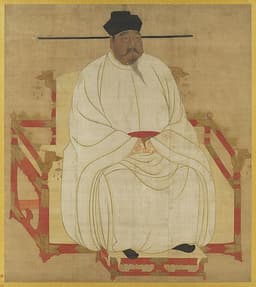
Emperor Taizu of Song
Emperor · Medieval
71.9Total
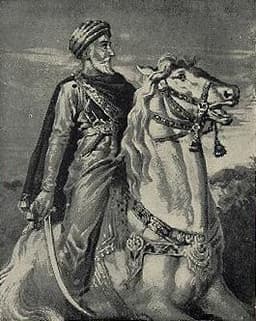
Hasan-i Sabbah
Emperor · Medieval
61.9Total
Basic Information
Born
927
1050
Died
976
1124
Era
Medieval
Medieval
Nationality
China
Nizari Ismaili
Occupation
Emperor
Emperor
Civilization
Eastern
Middle Eastern
Score Comparison
Military (10%)
80.0
50.0
Political (20%)
78.0
53.8
Influence (20%)
68.0
65.0
Legacy (20%)
65.0
65.0
Leadership (15%)
78.0
61.1
Strategy (15%)
72.0
72.0
TOTAL
71.9
61.9
Emperor Taizu of Song — Complete Timeline
960 AD
Chenqiao MutinyPolitical Action
Zhao Kuangyin, a general of the Later Zhou dynasty, was proclaimed emperor by his troops at Chenqiao. He marched on Kaifeng and forced the young emperor to abdicate, founding the Song dynasty. This coup established a new ruling house without major bloodshed.
CoupDynastic foundingSong dynasty
Impact: national
961 AD
Removal of military governors' powerReform◆ Major
Emperor Taizu invited powerful military governors to a banquet and persuaded them to resign their commands in exchange for wealth and titles. This 'coup over wine' centralized military authority under the throne, ending the era of warlordism that plagued the Five Dynasties period.
Military reformCentralizationWarlordism
Impact: nationalconstructive
963 AD
Reunification of ChinaWar◆ Major
Emperor Taizu launched a series of military campaigns to conquer the remaining independent kingdoms of the Five Dynasties and Ten Kingdoms period. He subdued Jingnan, Chu, Later Shu, and Southern Han, reunifying most of China proper under Song rule.
ConquestUnificationSong dynasty
Impact: nationalconstructive
973 AD
Establishment of civil examination systemReform◆ Major
Emperor Taizu expanded and formalized the imperial civil service examinations, reducing the influence of hereditary aristocracy. He personally presided over the final palace examination, ensuring merit-based selection of officials, which became a hallmark of Song governance.
Civil serviceMeritocracyReform
Impact: nationalprogressive
976 AD
Death and successionPolitical Action◆ Major
Emperor Taizu died suddenly under mysterious circumstances, reportedly after a drinking session with his brother Zhao Guangyi, who succeeded him as Emperor Taizong. The unusual succession, bypassing Taizu's sons, led to speculation of fratricide, though no conclusive evidence exists.
SuccessionMysterySong dynasty
Impact: nationaltragic
Hasan-i Sabbah — Complete Timeline
1090 AD
Capture of Alamut FortressWar
Hasan-i Sabbah and his followers seized the Alamut fortress in the Alborz mountains of northern Iran. This became the headquarters of the Nizari Ismaili state and the base from which he led a decentralized resistance against the Seljuk Empire.
Nizari Ismaili StateFortress CaptureSeljuk Conflict
Impact: regional
Establishment of the Nizari Ismaili StatePolitical Action◆ Major
Following the capture of Alamut, Hasan-i Sabbah established a network of mountain fortresses in Persia and Syria, creating a Nizari Ismaili state. This state operated as a decentralized theocracy, using strategic assassinations to counter Seljuk power.
Nizari Ismaili StatePolitical FoundationSeljuk Conflict
Impact: regional
1092 AD
Assassination of Nizam al-MulkPolitical Action◆ Major
The Seljuk vizier Nizam al-Mulk was assassinated by a Nizari Ismaili agent near Nahavand. This event demonstrated the reach of Hasan-i Sabbah's network and destabilized the Seljuk administration, contributing to the decline of Seljuk central authority.
AssassinationSeljuk EmpireNizari Ismaili
Impact: regionaldestructive
1094 AD
Reform of Nizari Ismaili DoctrineCultural◆ Major
After the death of the Fatimid caliph al-Mustansir, Hasan-i Sabbah supported the succession of Nizar over al-Mustali, leading to a schism. He established the Nizari Ismaili doctrine, emphasizing the authority of the imam and the use of taqiyya (dissimulation) for survival.
Nizari IsmailiDoctrinal SchismFatimid Caliphate
Impact: regional
1124 AD
Death of Hasan-i SabbahOther◆ Major
Hasan-i Sabbah died at Alamut, having led the Nizari Ismaili state for 34 years. He was succeeded by Kiya Buzurg Ummid. His legacy includes the creation of a resilient state that survived for over a century and the development of the Assassin legend.
Nizari Ismaili StateDeathLegacy
Impact: regional
This comparison has not been analyzed yet.
One-time AI generation (~1 minute). Scores and timeline are already available below.
Rankings
🥇
Emperor Taizu of SongLeader
Mil: 80.0Pol: 78.0Inf: 68.0
71.9
🥈
Hasan-i Sabbah
Mil: 50.0Pol: 53.8Inf: 65.0
61.9
+10.0 behind
How This Comparison Works
Algorithm
Each figure is scored on 6 dimensions (0—100 scale) based on structured historical data: Military (10%), Political (20%), Influence (20%), Legacy (20%), Leadership (15%), Strategy (15%). The weighted total produces the final ranking.
Data Sources
Scores are computed from structured sub-indicators in the database. Scale factors adjust for era (Ancient ×0.85, Modern ×1.0) and civilization size (Eastern ×1.05, Other ×0.80) to account for differences in population and military scale.
Maximum 3 Figures
Comparisons are limited to 2—3 figures to ensure readability and statistical meaningfulness.
Error Margins
±5 points per dimension — Sub-scores are derived from historical records with inherent uncertainty. Two figures within 5 points on a dimension should be considered roughly equivalent in that area.
Total Score Accuracy
±3 points overall — The weighted combination of 6 dimensions produces a total score with approximately ±3 points of uncertainty. Differences of less than 3 points are not statistically significant— the figures are effectively tied.
Known Limitations
- Historical records are incomplete and uneven across civilizations
- Figures from oral-tradition societies may be underrepresented
- Occupation labels can misclassify multi-role figures
- Scores measure capability and impact, not moral character
- Quantitative scoring is a comparison tool, not absolute truth
Capability Radar
Military (10%) — Battles & Warfare
Battles
75
15
Win Rate
80
20
Expansion
75
10
Political (20%) — Governance & Reform
Reform
95
70
Diplomacy
80
75
Economy
85
30
Influence (20%) — Cultural & Global Reach
Cultural
75
75
Global
70
70
Legacy (20%) — Historical Impact
Historical
85
80
Longevity
80
85
Leadership (15%) — Power & Stability
Tenure
70
40
Stability
90
25
Strategy (15%) — Tactics & Innovation
Strategy
85
80
Tactics
70
85
Reform
95
90
Similar Comparisons
Comments & Discussion
No comments yet. Be the first to share your thoughts!