Loading...
Emperor Taizu of Song vs Gyeongjong of Goryeo
Emperor Taizu of Song leads by 24.8 pts · 2 figures compared
…
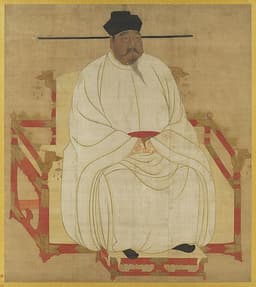
Emperor Taizu of Song
Emperor · Medieval
71.9Total
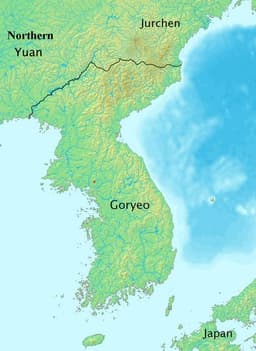
Gyeongjong of Goryeo
Emperor · Medieval
47.1Total
Basic Information
Born
927
955
Died
976
981
Era
Medieval
Medieval
Nationality
China
Korea
Occupation
Emperor
Emperor
Civilization
Eastern
Eastern
Score Comparison
Military (10%)
80.0
20.0
Political (20%)
78.0
53.8
Influence (20%)
68.0
53.3
Legacy (20%)
65.0
47.5
Leadership (15%)
78.0
48.8
Strategy (15%)
72.0
45.0
TOTAL
71.9
47.1
Emperor Taizu of Song — Complete Timeline
960 AD
Chenqiao MutinyPolitical Action
Zhao Kuangyin, a general of the Later Zhou dynasty, was proclaimed emperor by his troops at Chenqiao. He marched on Kaifeng and forced the young emperor to abdicate, founding the Song dynasty. This coup established a new ruling house without major bloodshed.
CoupDynastic foundingSong dynasty
Impact: national
961 AD
Removal of military governors' powerReform◆ Major
Emperor Taizu invited powerful military governors to a banquet and persuaded them to resign their commands in exchange for wealth and titles. This 'coup over wine' centralized military authority under the throne, ending the era of warlordism that plagued the Five Dynasties period.
Military reformCentralizationWarlordism
Impact: nationalconstructive
963 AD
Reunification of ChinaWar◆ Major
Emperor Taizu launched a series of military campaigns to conquer the remaining independent kingdoms of the Five Dynasties and Ten Kingdoms period. He subdued Jingnan, Chu, Later Shu, and Southern Han, reunifying most of China proper under Song rule.
ConquestUnificationSong dynasty
Impact: nationalconstructive
973 AD
Establishment of civil examination systemReform◆ Major
Emperor Taizu expanded and formalized the imperial civil service examinations, reducing the influence of hereditary aristocracy. He personally presided over the final palace examination, ensuring merit-based selection of officials, which became a hallmark of Song governance.
Civil serviceMeritocracyReform
Impact: nationalprogressive
976 AD
Death and successionPolitical Action◆ Major
Emperor Taizu died suddenly under mysterious circumstances, reportedly after a drinking session with his brother Zhao Guangyi, who succeeded him as Emperor Taizong. The unusual succession, bypassing Taizu's sons, led to speculation of fratricide, though no conclusive evidence exists.
SuccessionMysterySong dynasty
Impact: nationaltragic
Gyeongjong of Goryeo — Complete Timeline
976 AD
Institution of the Jeonsigwa Land SystemReform◆ Major
King Gyeongjong established the jeonsigwa, a land distribution system that allocated state-owned farmland to government officials based on their rank. This reform aimed to secure royal revenue and control over land, while providing a stable income for the bureaucracy.
Impact: nationalconstructive
Expert Analysis
Gyeongjong of Goryeo vs Emperor Taizu of Song
### The Emperor and the King: Two Paths to Order in a Fractured Age
On a cold February night in 960, a Chinese general named Zhao Kuangyin woke to find a yellow imperial robe draped over his shoulders, thrust upon him by his own mutinous army. He had no choice but to accept the mandate of heaven. Fifteen years later and a thousand miles away, in the Korean kingdom of Goryeo, a young king named Gyeongjong inherited a throne already secured by his father. One seized power through a coup; the other was born to it. Yet both faced the same fundamental question: how to build a stable state in a world of warlords and crumbling dynasties. Their answers—one sweeping and violent, the other quiet and administrative—would shape the destiny of East Asia for centuries.
### Origins
Zhao Kuangyin was born in 927, the son of a mid-ranking military officer in the chaotic Five Dynasties period. China had splintered into a dozen warring kingdoms, where generals became emperors overnight and were murdered just as quickly. Zhao grew up in barracks, learning to fight before he could read. He was a practical man, shrewd and physically imposing, with a reputation for keeping his word even among enemies. His world taught him that power was a blade—easily drawn, easily broken.
Gyeongjong of Goryeo, born in 955, was a prince of a dynasty that had already unified the Korean Peninsula. His father, King Gwangjong, had purged the aristocracy and centralized authority with terrifying efficiency. Gyeongjong grew up in the shadow of a father who executed rivals without hesitation. He learned not the art of war but the art of survival—how to navigate a court where a wrong word meant death. Where Zhao saw chaos as the natural state of things, Gyeongjong saw order as a fragile glass that had to be handled with care.
### Rise to Power
Zhao’s path to power was a masterpiece of timing. In 960, as a general of the Later Zhou dynasty, he was sent north to repel a combined Liao and Northern Han invasion. His troops, who had seen emperors come and go, decided they preferred their commander to any distant boy-king. At Chenqiao, they draped the yellow robe over him. Zhao did not resist—he had seen what happened to generals who refused their soldiers. But he made his men swear to spare the capital’s civilians and the existing royal family. It was a promise he kept, a rare act of restraint in an age of butchery.
Gyeongjong became king in 975 at the age of twenty, after his father died suddenly. There was no mutiny, no bloodshed—only the quiet transfer of power in a court that had been thoroughly purged. But the throne was not a gift. Gyeongjong inherited a kingdom that was stable on the surface but seething beneath. The old aristocratic families, humiliated by his father, waited for any sign of weakness. The young king had to rule without the prestige of conquest or the fear his father commanded.
### Leadership & Governance
Emperor Taizu’s defining act came in 961, at a famous banquet. He invited the most powerful military governors to his palace, drank with them until late, and then spoke plainly. He told them that he could not sleep at night, fearing their troops might one day proclaim them emperor. The generals, understanding the implicit threat, resigned their commands in exchange for wealth and titles. Zhao then dismantled the regional armies, placed the best troops under central control, and made the military answerable to civilian officials. It was a bloodless revolution that ended a century of warlordism.
In 973, he expanded the civil service examinations, opening government positions to talented commoners. This was not mere idealism—he needed loyal bureaucrats who owed everything to the throne, not to aristocratic clans. His reunification campaigns, launched in 963, were methodical rather than brilliant, slowly absorbing one southern kingdom after another. By the time of his death in 976, he had reunited most of China proper.
Gyeongjong’s approach was quieter but no less significant. In 976, he instituted the *jeonsigwa* land system, which allocated state-owned farmland based on official rank. This was a brilliant administrative move: it tied the aristocracy’s wealth directly to their service to the crown, making rebellion economically irrational. Unlike Zhao, who broke the military’s power with a banquet, Gyeongjong used paper and ink. He did not need to threaten—he simply made loyalty profitable.
### Triumph & Tragedy
Zhao’s greatest triumph was not a battle but a transformation. He took a China drowning in blood and made it safe for scholars. The Song Dynasty he founded would become an age of poetry, painting, and commerce. Yet his tragedy came in 976, when he died suddenly after drinking with his brother Zhao Guangyi. The circumstances remain mysterious—was it murder? The official record is suspiciously vague. The man who had unified China could not control his own succession. His brother took the throne, and rumors of fratricide have never died.
Gyeongjong’s triumph was the *jeonsigwa* itself, a system that stabilized Goryeo’s finances for generations. But his tragedy was his own obscurity. He reigned only six years, dying in 981 at age twenty-six. He left no great battles, no dramatic reforms—only a quiet administrative legacy that historians would later call “the foundation of Goryeo’s stability.” He was a caretaker king in an age that remembered conquerors.
### Character & Destiny
Zhao Kuangyin was a man of the sword who came to distrust the sword. His military score of 66.5 reflects a competent but not brilliant commander; his true genius was political (73.3) and strategic (73.2). He understood that the greatest threat to his dynasty was not foreign enemies but his own generals. So he traded conquest for stability, glory for longevity. His leadership score of 86.9 captures this—he was a ruler who knew when not to fight.
Gyeongjong, with a political score of 60.5 and a strategy score of only 30.0, was not a visionary. He was a consolidator, a man who finished what his father started. His low military score (55.1) is telling—he never led an army. But his legacy score of 64.4, though modest, masks a deeper truth: the *jeonsigwa* system outlasted his dynasty, influencing Korean land policy for centuries. He built not for glory but for permanence.
### Legacy
Emperor Taizu of Song is remembered as one of China’s greatest founding emperors. His decision to elevate civil over military power shaped Chinese governance for a millennium. The Song Dynasty, though militarily weak, became a golden age of culture and technology. His legacy score of 75.1 reflects this—he is a figure of enduring importance, studied by every Chinese leader who faces the problem of military power.
Gyeongjong of Goryeo is largely forgotten outside of Korea. His legacy score of 64.4 is modest, and his name appears in history books mostly as a footnote to his father’s reign. Yet his land system was the bedrock of Goryeo’s stability. He proved that a king need not conquer to rule—sometimes, the most powerful weapon is a well-written law.
### Conclusion
Standing at the crossroads of the tenth century, these two rulers answered the same question in opposite ways. Zhao Kuangyin seized power with a sword and then laid it down, building a dynasty on the bones of warlords. Gyeongjong inherited a throne already forged in blood and used ink to hold it together. One changed the course of China; the other steadied the course of Korea. Neither was perfect—Zhao’s death remains a mystery, and Gyeongjong’s reign was too short for true greatness. But together, they remind us that history is not only made by conquerors. Sometimes, it is made by the quiet men who know when to stop fighting and start building.
Rankings
🥇
Emperor Taizu of SongLeader
Mil: 80.0Pol: 78.0Inf: 68.0
71.9
🥈
Gyeongjong of Goryeo
Mil: 20.0Pol: 53.8Inf: 53.3
47.1
+24.8 behind
How This Comparison Works
Algorithm
Each figure is scored on 6 dimensions (0—100 scale) based on structured historical data: Military (10%), Political (20%), Influence (20%), Legacy (20%), Leadership (15%), Strategy (15%). The weighted total produces the final ranking.
Data Sources
Scores are computed from structured sub-indicators in the database. Scale factors adjust for era (Ancient ×0.85, Modern ×1.0) and civilization size (Eastern ×1.05, Other ×0.80) to account for differences in population and military scale.
Maximum 3 Figures
Comparisons are limited to 2—3 figures to ensure readability and statistical meaningfulness.
Error Margins
±5 points per dimension — Sub-scores are derived from historical records with inherent uncertainty. Two figures within 5 points on a dimension should be considered roughly equivalent in that area.
Total Score Accuracy
±3 points overall — The weighted combination of 6 dimensions produces a total score with approximately ±3 points of uncertainty. Differences of less than 3 points are not statistically significant— the figures are effectively tied.
Known Limitations
- Historical records are incomplete and uneven across civilizations
- Figures from oral-tradition societies may be underrepresented
- Occupation labels can misclassify multi-role figures
- Scores measure capability and impact, not moral character
- Quantitative scoring is a comparison tool, not absolute truth
Capability Radar
Military (10%) — Battles & Warfare
Battles
75
5
Win Rate
80
5
Expansion
75
5
Political (20%) — Governance & Reform
Reform
95
70
Diplomacy
80
40
Economy
85
65
Influence (20%) — Cultural & Global Reach
Cultural
75
30
Global
70
20
Legacy (20%) — Historical Impact
Historical
85
45
Longevity
80
40
Leadership (15%) — Power & Stability
Tenure
70
55
Stability
90
50
Strategy (15%) — Tactics & Innovation
Strategy
85
5
Tactics
70
5
Reform
95
5
Similar Comparisons
Comments & Discussion
No comments yet. Be the first to share your thoughts!