Loading...
Emperor Taiwu of Northern Wei vs Tai Wu of Shang
Emperor Taiwu of Northern Wei leads by 6.0 pts · 2 figures compared
…

Emperor Taiwu of Northern Wei
Emperor · Ancient
64.5Total
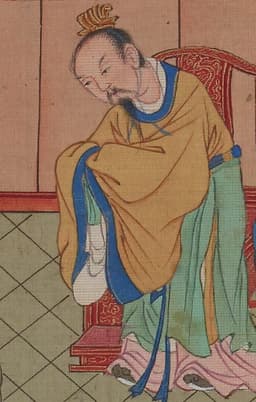
Tai Wu of Shang
Emperor · Ancient
58.5Total
Basic Information
Born
408
-1480
Died
452
-1400
Era
Ancient
Ancient
Nationality
China
Shang China
Occupation
Emperor
Emperor
Civilization
Eastern
Eastern
Score Comparison
Military (10%)
80.0
55.0
Political (20%)
72.0
68.0
Influence (20%)
56.7
54.1
Legacy (20%)
52.0
49.2
Leadership (15%)
78.0
80.0
Strategy (15%)
68.0
50.0
TOTAL
64.5
58.5
Emperor Taiwu of Northern Wei — Complete Timeline
431 AD
Conquest of XiaWar◆ Major
Taiwu's forces conquered the Xia state, a Xiongnu-led kingdom in the Ordos region. This victory eliminated a major rival and secured Northern Wei's western frontier.
ConquestExpansion
Impact: regionalconstructive
436 AD
Conquest of Northern YanWar◆ Major
Taiwu's army conquered the Northern Yan state in Liaoning, extending Northern Wei's control into the northeast. This further consolidated his unification of the north.
ConquestExpansion
Impact: regionalconstructive
439 AD
Unification of Northern ChinaWar
Emperor Taiwu of Northern Wei conquered the Northern Liang state, completing the unification of northern China under the Northern Wei dynasty. This ended the Sixteen Kingdoms period and established Northern Wei as the dominant power in the north.
UnificationConquest
Impact: regionalconstructive
446 AD
Suppression of BuddhismPolitical Action◆ Major
Emperor Taiwu issued an edict suppressing Buddhism, ordering the destruction of monasteries, scriptures, and images. This was part of his promotion of Daoism and consolidation of state control, and it severely weakened Buddhism in northern China for a time.
Religious PersecutionReform
Impact: regionaldestructive
452 AD
Assassination of Emperor TaiwuPolitical Action◆ Major
Emperor Taiwu was assassinated by the eunuch Zong Ai, who then placed Taiwu's son on the throne. This event caused a brief succession crisis and highlighted the power struggles within the Northern Wei court.
AssassinationSuccession Crisis
Impact: nationaltragic
Tai Wu of Shang — Complete Timeline
1460 BC
Appointment of Wu Xian as MinisterPolitical Action◆ Major
Tai Wu appointed the virtuous minister Wu Xian, who helped restore moral governance. This appointment is credited with reviving the dynasty's fortunes after a period of decline, emphasizing meritocratic appointments.
Ministerial AppointmentMoral Revival
Impact: regionalconstructive
1450 BC
Moral Revival and Ritual RectificationReform◆ Major
Under Tai Wu's direction, the Shang court reinstituted proper ancestral rituals and moral codes. This reform reversed perceived decadence, restored divine favor, and led to a period of prosperity and stability lasting decades.
Moral ReformRitualProsperity
Impact: regionalconstructive
1400 BC
Long Reign of 75 YearsPolitical Action
Tai Wu reigned for approximately 75 years, the longest of any Shang king. This extended period of stable rule allowed for the consolidation of Shang institutions and the peaceful transmission of power to his successors.
Long ReignStability
Impact: regionalconstructive
Expert Analysis
Origins
Emperor Taiwu of Northern Wei was born in 408 CE as Tuoba Tao, a member of the Tuoba clan of the Xianbei people. He became the third emperor of the Northern Wei dynasty at age 15 in 423 CE. His father, Emperor Mingyuan, died early, leaving him to rule under a regency initially. The Tuoba clan had established the Northern Wei in 386 CE, unifying nomadic tribes and adopting Chinese administrative practices.
Tai Wu of Shang, also known as Wu Ding's predecessor, lived much earlier, around the 13th century BCE. He was a king of the Shang dynasty, which ruled over the Yellow River valley. Details of his early life are sparse, but he ascended the throne in a period of perceived moral decline. His reign is recorded in oracle bones and later historical texts like the "Records of the Grand Historian." He inherited a kingdom that had been weakened by decadence and neglect of ancestral rites.
Rise to Power
Emperor Taiwu's rise was marked by early challenges. In 424 CE, the Rouran Khaganate attacked, but Taiwu personally led a counterattack, demonstrating his military prowess. In 426 CE, he launched a campaign against the Xia state, capturing its capital Tongwan in 427 CE. By 431 CE, he had conquered Xia, eliminating a major rival. He continued expanding, annexing Northern Yan in 436 CE and Northern Liang in 439 CE, completing the unification of northern China. His military campaigns were characterized by swift cavalry maneuvers and strategic sieges.
Tai Wu of Shang's rise was less dramatic. He became king during a time of dynastic stagnation. He is best known for appointing the virtuous minister Wu Xian, who helped restore moral order. This decision was pivotal: Wu Xian reformed rituals and reestablished ancestral worship, which Tai Wu supported. The king's long reign of 75 years allowed these reforms to take root. Unlike Taiwu's conquests, Tai Wu's power grew through cultural and religious authority.
Leadership & Governance
Emperor Taiwu governed with a focus on military consolidation and centralization. He adopted Chinese bureaucratic methods, appointing Han Chinese officials to administer conquered territories. He also promoted Daoism over Buddhism, issuing an edict in 446 CE to suppress Buddhism, destroying monasteries and scriptures. This was partly to assert Xianbei identity and reduce foreign influence. His leadership style was autocratic and martial, with a heavy reliance on his personal command in battles. He scored 78.0 in leadership, reflecting his ability to inspire troops but also his harshness.
Tai Wu of Shang governed through moral revival and ritual rectification. He emphasized proper ancestral rites and moral codes, reversing what was seen as a decline in virtue. His political score of 68.0 reflects his effectiveness in restoring stability without military expansion. He appointed Wu Xian, who is credited with reviving the dynasty's fortunes. His leadership score of 80.0 indicates high approval from historians for his ethical governance. However, his military score of 55.0 shows he was not a conqueror.
Triumph & Tragedy
Emperor Taiwu's greatest triumph was the unification of northern China by 439 CE, ending the Sixteen Kingdoms period. He also successfully repelled the Rouran and expanded Wei's territory. However, his suppression of Buddhism was a major failure, causing cultural destruction and alienating many subjects. His assassination in 452 CE by the eunuch Zong Ai highlighted the instability of his autocratic rule. His total score of 64.5 reflects these mixed outcomes.
Tai Wu of Shang's triumph was his 75-year reign that restored moral order and strengthened the Shang dynasty's legitimacy. His appointment of Wu Xian is remembered as a wise administrative move. However, his reign lacked military conquests, and his influence was limited to cultural reforms. The Shang dynasty eventually declined after his death, partly because his successors could not maintain the moral revival. His total score of 58.5 indicates a less impactful but stable rule.
Character & Destiny
Emperor Taiwu was decisive and ruthless, traits that enabled his conquests but also led to his downfall. His suppression of Buddhism showed ideological rigidity. He was a hands-on commander, often leading from the front. His assassination by a eunuch he trusted demonstrates a failure in court politics.
Tai Wu of Shang was more contemplative and reform-minded. He prioritized moral authority over military expansion. His long reign suggests patience and consistency. However, his reliance on a single minister (Wu Xian) made the dynasty vulnerable after Wu Xian's death. Historians assess him as a stabilizer rather than a transformer.
Legacy
Emperor Taiwu's legacy is the unification of northern China, which set the stage for the Northern Wei's later sinicization and the Sui-Tang unification. His anti-Buddhist policies were reversed by successors, but they temporarily altered religious landscapes. He is remembered as a conqueror who expanded the Xianbei state.
Tai Wu of Shang's legacy is more ideological. He is credited with reviving the Shang dynasty's moral foundation, influencing later Confucian ideals of virtuous rule. His long reign is cited as a model of stability. However, his lack of military achievements limited his tangible impact.
Conclusion
Emperor Taiwu of Northern Wei had a greater impact on history than Tai Wu of Shang. His military conquests (score 80.0) unified a fractured region, directly influencing the political trajectory of China. Tai Wu's moral reforms were important but less transformative. Taiwu's total score of 64.5 versus 58.5 reflects his greater influence and lasting legacy. While Tai Wu provided stability, Taiwu shaped the geopolitical landscape. Therefore, Emperor Taiwu stands as the more significant figure in ancient Chinese history.
Rankings
🥇
Emperor Taiwu of Northern WeiLeader
Mil: 80.0Pol: 72.0Inf: 56.7
64.5
🥈
Tai Wu of Shang
Mil: 55.0Pol: 68.0Inf: 54.1
58.5
+6.0 behind
How This Comparison Works
Algorithm
Each figure is scored on 6 dimensions (0—100 scale) based on structured historical data: Military (10%), Political (20%), Influence (20%), Legacy (20%), Leadership (15%), Strategy (15%). The weighted total produces the final ranking.
Data Sources
Scores are computed from structured sub-indicators in the database. Scale factors adjust for era (Ancient ×0.85, Modern ×1.0) and civilization size (Eastern ×1.05, Other ×0.80) to account for differences in population and military scale.
Maximum 3 Figures
Comparisons are limited to 2—3 figures to ensure readability and statistical meaningfulness.
Error Margins
±5 points per dimension — Sub-scores are derived from historical records with inherent uncertainty. Two figures within 5 points on a dimension should be considered roughly equivalent in that area.
Total Score Accuracy
±3 points overall — The weighted combination of 6 dimensions produces a total score with approximately ±3 points of uncertainty. Differences of less than 3 points are not statistically significant— the figures are effectively tied.
Known Limitations
- Historical records are incomplete and uneven across civilizations
- Figures from oral-tradition societies may be underrepresented
- Occupation labels can misclassify multi-role figures
- Scores measure capability and impact, not moral character
- Quantitative scoring is a comparison tool, not absolute truth
Capability Radar
Military (10%) — Battles & Warfare
Battles
85
30
Win Rate
88
30
Expansion
90
20
Political (20%) — Governance & Reform
Reform
80
60
Diplomacy
75
50
Economy
70
50
Influence (20%) — Cultural & Global Reach
Cultural
65
55
Global
60
30
Legacy (20%) — Historical Impact
Historical
75
55
Longevity
70
60
Leadership (15%) — Power & Stability
Tenure
85
85
Stability
70
70
Strategy (15%) — Tactics & Innovation
Strategy
85
25
Tactics
80
25
Reform
75
20
Similar Comparisons
Comments & Discussion
No comments yet. Be the first to share your thoughts!