Loading...
Emperor Taiwu of Northern Wei vs Orodes II
Emperor Taiwu of Northern Wei leads by 6.2 pts · 2 figures compared
…

Emperor Taiwu of Northern Wei
Emperor · Ancient
64.5Total
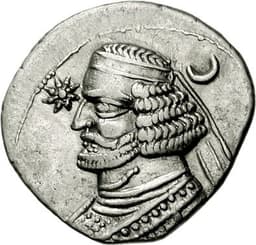
Orodes II
Emperor · Ancient
58.3Total
Basic Information
Born
408
-95
Died
452
-37
Era
Ancient
Ancient
Nationality
China
Parthian Empire
Occupation
Emperor
Emperor
Civilization
Eastern
Middle Eastern
Score Comparison
Military (10%)
80.0
70.0
Political (20%)
72.0
68.0
Influence (20%)
56.7
54.1
Legacy (20%)
52.0
45.8
Leadership (15%)
78.0
74.0
Strategy (15%)
68.0
50.0
TOTAL
64.5
58.3
Emperor Taiwu of Northern Wei — Complete Timeline
431 AD
Conquest of XiaWar◆ Major
Taiwu's forces conquered the Xia state, a Xiongnu-led kingdom in the Ordos region. This victory eliminated a major rival and secured Northern Wei's western frontier.
ConquestExpansion
Impact: regionalconstructive
436 AD
Conquest of Northern YanWar◆ Major
Taiwu's army conquered the Northern Yan state in Liaoning, extending Northern Wei's control into the northeast. This further consolidated his unification of the north.
ConquestExpansion
Impact: regionalconstructive
439 AD
Unification of Northern ChinaWar
Emperor Taiwu of Northern Wei conquered the Northern Liang state, completing the unification of northern China under the Northern Wei dynasty. This ended the Sixteen Kingdoms period and established Northern Wei as the dominant power in the north.
UnificationConquest
Impact: regionalconstructive
446 AD
Suppression of BuddhismPolitical Action◆ Major
Emperor Taiwu issued an edict suppressing Buddhism, ordering the destruction of monasteries, scriptures, and images. This was part of his promotion of Daoism and consolidation of state control, and it severely weakened Buddhism in northern China for a time.
Religious PersecutionReform
Impact: regionaldestructive
452 AD
Assassination of Emperor TaiwuPolitical Action◆ Major
Emperor Taiwu was assassinated by the eunuch Zong Ai, who then placed Taiwu's son on the throne. This event caused a brief succession crisis and highlighted the power struggles within the Northern Wei court.
AssassinationSuccession Crisis
Impact: nationaltragic
Orodes II — Complete Timeline
55 BC
Invasion of ArmeniaWar◆ Major
Orodes II invaded Armenia and installed his son Pacorus I as king, expanding Parthian influence into the Caucasus. This campaign brought Armenia into the Parthian orbit and set the stage for future conflicts with Rome over the region.
Armenian CampaignPacorusExpansion
Impact: regionalconstructive
53 BC
Battle of CarrhaeWar
Orodes II's general Surena annihilated a Roman army under Marcus Licinius Crassus at Carrhae in Mesopotamia. Crassus was killed, and the Parthians captured the legionary standards. This victory established Parthia as a major rival to Rome and avenged earlier Roman incursions.
Roman-Parthian WarsBattleCrassus
Impact: regionalconstructive
52 BC
Execution of SurenaPolitical Action◆ Major
Orodes II ordered the execution of his general Surena shortly after the victory at Carrhae, fearing his growing popularity and power. This act eliminated a capable commander and weakened Parthian military leadership.
Court IntrigueExecutionJealousy
Impact: nationaldestructive
Expert Analysis
Origins
Emperor Taiwu of Northern Wei was born in 408 CE as Tuoba Tao, the grandson of the founder of the Northern Wei dynasty. His early life was shaped by the turbulent politics of the Sixteen Kingdoms period, where his family, the Tuoba clan, had established a strong state in the steppe borderlands. He received military training from a young age and was exposed to the constant warfare that defined the era. In contrast, Orodes II was born around the 1st century BCE into the Arsacid dynasty of Parthia, a Hellenistic-influenced empire that controlled the Iranian plateau and Mesopotamia. His early life is less documented, but he likely received education in Persian and Greek traditions, preparing him for a role in the complex court politics of the Parthian Empire.
Rise to Power
Taiwu ascended the throne at age 16 in 423 CE after his father's death. He quickly demonstrated his military ambition by launching campaigns against the Rouran Khaganate to the north, securing his borders. His key turning point came in 426 CE when he defeated the Xia state, a Xiongnu-led kingdom, capturing its capital Tongwan. Over the next decade, he systematically conquered the Northern Liang in 439 CE, completing the unification of northern China. His rise was marked by aggressive expansion and consolidation. Orodes II became king of Parthia around 57 BCE, likely after a period of civil war. His major turning point was the Battle of Carrhae in 53 BCE, where his general Surena annihilated a Roman army under Crassus. However, Orodes II's rise was overshadowed by his dependence on Surena, whom he later executed out of fear.
Leadership & Governance
Taiwu's leadership was characterized by direct military command and centralization. He personally led campaigns, scoring 80.0 in military and 78.0 in leadership, and implemented policies to strengthen the state, including a census and tax reforms. He also promoted Taoism and suppressed Buddhism in 446 CE, destroying monasteries and scriptures, a move that reflected his desire to control religious institutions. In contrast, Orodes II's leadership was more indirect; his military score of 70.0 and leadership of 74.0 are partly due to the success of his general. He preferred to delegate military matters, as seen at Carrhae, but his political maneuvering included executing Surena to secure his own power. Orodes II also expanded Parthian influence into Armenia, installing his son as king.
Triumph & Tragedy
Taiwu's greatest triumph was the unification of northern China, which ended decades of fragmentation and laid the foundation for the Northern Wei's dominance. His conquests extended the dynasty's territory and population. However, his tragedy was his brutal suppression of Buddhism, which alienated many subjects and created internal strife. He was assassinated in 452 CE by the eunuch Zong Ai, a consequence of court intrigues. Orodes II's triumph was the victory at Carrhae, which humiliated Rome and secured Parthian prestige. His tragedy was the execution of Surena, which deprived him of his best commander and led to a decline in military effectiveness. He also faced challenges from internal rivals and eventually died in a power struggle.
Character & Destiny
Taiwu was determined and ruthless, with a clear vision of unification. His character led him to take decisive action, but his harsh policies and paranoia contributed to his assassination. Historical assessments note his efficiency but also his cruelty. Orodes II was more cautious and politically savvy, but his jealousy and insecurity led him to eliminate his greatest asset, Surena. This act reflects a tendency to prioritize personal power over state interests. His destiny was to be remembered as a king who won a great victory but failed to capitalize on it.
Legacy
Taiwu's legacy is significant: he unified northern China, and his policies influenced the Northern Wei's subsequent sinicization. His military campaigns set the stage for later dynasties. However, his suppression of Buddhism was reversed by his successors. His total score of 64.5 reflects a balanced impact. Orodes II's legacy is more limited: Carrhae is a famous Roman defeat, but his reign did not lead to lasting territorial gains or institutional reforms. His influence score of 54.1 and legacy of 45.8 indicate a more ephemeral impact.
Conclusion
Emperor Taiwu of Northern Wei had a greater impact than Orodes II. His unification of northern China was a transformative achievement that shaped the course of Chinese history, while Orodes II's victory at Carrhae was a single event that did not alter the balance of power. Taiwu's higher total score of 64.5 versus Orodes II's 58.3 reflects his broader and more enduring influence. Taiwu's military and leadership scores (80.0 and 78.0) surpass Orodes II's (70.0 and 74.0), and his legacy score is notably higher (52.0 vs 45.8). While Orodes II's victory was impressive, Taiwu's comprehensive consolidation of power and territory makes him the more consequential figure.
Rankings
🥇
Emperor Taiwu of Northern WeiLeader
Mil: 80.0Pol: 72.0Inf: 56.7
64.5
🥈
Orodes II
Mil: 70.0Pol: 68.0Inf: 54.1
58.3
+6.2 behind
How This Comparison Works
Algorithm
Each figure is scored on 6 dimensions (0—100 scale) based on structured historical data: Military (10%), Political (20%), Influence (20%), Legacy (20%), Leadership (15%), Strategy (15%). The weighted total produces the final ranking.
Data Sources
Scores are computed from structured sub-indicators in the database. Scale factors adjust for era (Ancient ×0.85, Modern ×1.0) and civilization size (Eastern ×1.05, Other ×0.80) to account for differences in population and military scale.
Maximum 3 Figures
Comparisons are limited to 2—3 figures to ensure readability and statistical meaningfulness.
Error Margins
±5 points per dimension — Sub-scores are derived from historical records with inherent uncertainty. Two figures within 5 points on a dimension should be considered roughly equivalent in that area.
Total Score Accuracy
±3 points overall — The weighted combination of 6 dimensions produces a total score with approximately ±3 points of uncertainty. Differences of less than 3 points are not statistically significant— the figures are effectively tied.
Known Limitations
- Historical records are incomplete and uneven across civilizations
- Figures from oral-tradition societies may be underrepresented
- Occupation labels can misclassify multi-role figures
- Scores measure capability and impact, not moral character
- Quantitative scoring is a comparison tool, not absolute truth
Capability Radar
Military (10%) — Battles & Warfare
Battles
85
55
Win Rate
88
70
Expansion
90
50
Political (20%) — Governance & Reform
Reform
80
45
Diplomacy
75
55
Economy
70
50
Influence (20%) — Cultural & Global Reach
Cultural
65
40
Global
60
45
Legacy (20%) — Historical Impact
Historical
75
55
Longevity
70
40
Leadership (15%) — Power & Stability
Tenure
85
65
Stability
70
40
Strategy (15%) — Tactics & Innovation
Strategy
85
65
Tactics
80
60
Reform
75
40
Similar Comparisons
Comments & Discussion
No comments yet. Be the first to share your thoughts!