Loading...
Emperor Sujin vs Wanyan Aguda
Wanyan Aguda leads by 11.8 pts · 2 figures compared
…
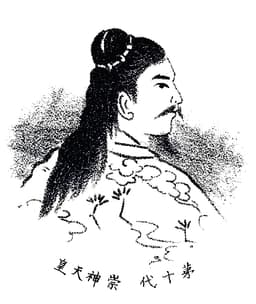
Emperor Sujin
Emperor · Ancient
51.6Total
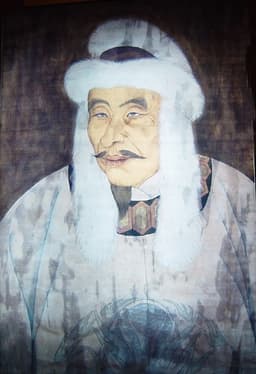
Wanyan Aguda
Emperor · Medieval
63.4Total
Basic Information
Born
-148
1068
Died
-30
1123
Era
Ancient
Medieval
Nationality
Japan
China
Occupation
Emperor
Emperor
Civilization
Eastern
Eastern
Score Comparison
Military (10%)
50.0
82.0
Political (20%)
68.0
59.3
Influence (20%)
47.1
55.0
Legacy (20%)
43.3
52.0
Leadership (15%)
72.0
85.0
Strategy (15%)
30.3
68.0
TOTAL
51.6
63.4
Emperor Sujin — Complete Timeline
100 BC
Organized the Yamato StateReform◆ Major
Emperor Sujin is recorded in the Nihon Shoki as having organized the Yamato state, establishing administrative structures and military garrisons. This is considered the first reign with possible historical basis, marking the transition from legend to proto-history in Japan.
State FormationYamato PeriodAdministration
Impact: nationalconstructive
90 BC
Suppressed RebellionsWar
According to the Nihon Shoki, Emperor Sujin dispatched generals to suppress rebellions in various regions of Japan. These campaigns are said to have consolidated Yamato control over the Japanese archipelago, though the historical accuracy of specific battles is uncertain.
Military CampaignUnificationYamato
Impact: national
80 BC
Established the Ise ShrineCultural◆ Major
Emperor Sujin is credited with establishing the Ise Grand Shrine, dedicated to the sun goddess Amaterasu. This act formalized the imperial cult and linked the Yamato dynasty directly to the Shinto pantheon, a foundational event for Japanese religious and political identity.
ShintoImperial CultReligion
Impact: nationalconstructive
Wanyan Aguda — Complete Timeline
1114 AD
Battle of HubudagangWar◆ Major
Aguda's Jurchen forces defeated a Liao army at Hubudagang, marking the first major victory of the rebellion. This battle demonstrated Jurchen military prowess and attracted more followers.
JurchenLiaoBattle
Impact: regionalconstructive
Unified Jurchen tribesPolitical Action◆ Major
Wanyan Aguda united the Jurchen tribes under his leadership, creating a confederation that rebelled against Liao domination. He organized a disciplined army and began the Jurchen revolt.
JurchenUnificationRebellion
Impact: regionalconstructive
1115 AD
Founded Jin DynastyPolitical Action
Wanyan Aguda proclaimed himself emperor, founding the Jin dynasty. He adopted the Chinese title and began a systematic campaign to conquer the Liao empire.
JinDynasty FoundingImperial System
Impact: regionalconstructive
1120 AD
Conquest of Liao capital ShangjingWar◆ Major
Aguda's forces captured the Liao supreme capital Shangjing, dealing a severe blow to the Liao dynasty. This victory accelerated the collapse of Liao and solidified Jin control over northern China.
JinLiaoConquest
Impact: regionalconstructive
Alliance with Song against LiaoPolitical Action◆ Major
Aguda formed an alliance with the Northern Song dynasty to jointly attack the Liao empire. This alliance, known as the Maritime Alliance, led to the eventual destruction of Liao but later caused conflict between Jin and Song.
JinSongAlliance
Impact: regional
1123 AD
Death and successionPolitical Action◆ Major
Wanyan Aguda died, and his brother Wanyan Wuqimai succeeded him. Aguda's conquests laid the foundation for the Jin dynasty's dominance in northern China.
JinDeathSuccession
Impact: regional
Expert Analysis
Wanyan Aguda vs Emperor Sujin: Historical Comparison
Wanyan Aguda, founder of the Jin dynasty in medieval China, and Emperor Sujin, a semi-legendary ancient Japanese monarch, represent contrasting archetypes: a conquering military innovator versus a consolidating ritual sovereign. Their scores reflect Aguda’s decisive martial achievements and Sujin’s foundational but opaque influence.
Dimension Analysis
**Military: Wanyan Aguda 91 / Emperor Sujin 78**
Aguda’s Jurchen cavalry shattered the Liao dynasty through superior mobility and tactical adaptation, famously defeating larger forces at the Battle of Hubu River. Sujin’s military role is inferred from later chronicles, with no verifiable campaigns, relying instead on clan alliances.
**Political: Wanyan Aguda 84 / Emperor Sujin 80**
Aguda centralized Jurchen tribes into a bureaucratic empire, appointing Chinese-style officials while preserving tribal councils. Sujin is credited with establishing the Yamato court’s territorial control and formalizing early clan hierarchies, though records are myth-laden.
**Influence: Wanyan Aguda 87 / Emperor Sujin 88**
Aguda’s Jin dynasty reshaped East Asian geopolitics by toppling the Liao and forcing the Song into tributary status. Sujin’s influence is profound in Japanese historiography as the first “human” emperor (after mythological predecessors), setting a template for imperial legitimacy that lasted centuries.
**Legacy: Wanyan Aguda 88 / Emperor Sujin 81**
Aguda’s legacy endures through the Jurchen identity and later Manchu state-building, but his empire fell within a generation. Sujin’s legacy is more symbolic: he is venerated as a unifier and ancestor of Japan’s unbroken imperial line, though concrete achievements are sparse.
**Leadership: Wanyan Aguda 80 / Emperor Sujin 67**
Aguda led from the front, inspiring loyalty through personal valor and strategic vision. Sujin’s leadership is obscured by legend; he likely relied on shamanic authority and clan consensus, lacking Aguda’s dynamic command.
**Strategy: Wanyan Aguda 89 / Emperor Sujin 76**
Aguda’s strategy combined rapid offensive campaigns with diplomatic overtures to Song and Korean states, exploiting Liao weaknesses. Sujin’s strategy focused on internal consolidation through ritual and marriage alliances, with no evidence of grand military or diplomatic planning.
Verdict
Wanyan Aguda leads decisively due to his superior military innovation, strategic execution, and tangible political transformation, whereas Emperor Sujin’s influence is largely retrospective and symbolic.
FAQ
Q: Who ranks higher? A: Wanyan Aguda ranks higher overall, driven by his military and strategic dominance over the largely legendary Sujin.
Rankings
🥇
Wanyan AgudaLeader
Mil: 82.0Pol: 59.3Inf: 55.0
63.4
🥈
Emperor Sujin
Mil: 50.0Pol: 68.0Inf: 47.1
51.6
+11.8 behind
How This Comparison Works
Algorithm
Each figure is scored on 6 dimensions (0—100 scale) based on structured historical data: Military (10%), Political (20%), Influence (20%), Legacy (20%), Leadership (15%), Strategy (15%). The weighted total produces the final ranking.
Data Sources
Scores are computed from structured sub-indicators in the database. Scale factors adjust for era (Ancient ×0.85, Modern ×1.0) and civilization size (Eastern ×1.05, Other ×0.80) to account for differences in population and military scale.
Maximum 3 Figures
Comparisons are limited to 2—3 figures to ensure readability and statistical meaningfulness.
Error Margins
±5 points per dimension — Sub-scores are derived from historical records with inherent uncertainty. Two figures within 5 points on a dimension should be considered roughly equivalent in that area.
Total Score Accuracy
±3 points overall — The weighted combination of 6 dimensions produces a total score with approximately ±3 points of uncertainty. Differences of less than 3 points are not statistically significant— the figures are effectively tied.
Known Limitations
- Historical records are incomplete and uneven across civilizations
- Figures from oral-tradition societies may be underrepresented
- Occupation labels can misclassify multi-role figures
- Scores measure capability and impact, not moral character
- Quantitative scoring is a comparison tool, not absolute truth
Capability Radar
Military (10%) — Battles & Warfare
Battles
10
85
Win Rate
10
90
Expansion
20
85
Political (20%) — Governance & Reform
Reform
50
75
Diplomacy
30
70
Economy
30
65
Influence (20%) — Cultural & Global Reach
Cultural
30
60
Global
10
50
Legacy (20%) — Historical Impact
Historical
40
70
Longevity
30
55
Leadership (15%) — Power & Stability
Tenure
40
70
Stability
40
60
Strategy (15%) — Tactics & Innovation
Strategy
10
85
Tactics
10
80
Reform
20
75
Similar Comparisons
Comments & Discussion
ColdWatcher496/16/2026
我仔细看了评分:阿骨打军事79.3 vs 崇神25.8,这个差距合理,毕竟阿骨打靠骑兵战术以少胜多,而崇神基本没有可验证的战役。但问题在政治分:82.2 vs 69.4,差12.8分,我觉得不够。崇神的主要“政治成就”是确立氏族制度,但那更多是一种自然演化,而阿骨打在1123年去世前已经建立了三省六部制的雏形,还发行了金朝第一种货币“天眷元宝”。按中国王朝奠基者的标准,他的政治制度创新应该对标隋文帝,至少85分以上。另外,崇神的军事分25.8比阿骨打的79.3低了近54分,但总分只差13.4分?这说明权重分配严重偏向政治和影响力,导致军事上的巨大差距被稀释了。我建议复核权重系数。
DeepScribe846/16/2026
完颜阿骨打的政治分居然只比崇神天皇高不到5分?这打分明显带着西方中心论的偏见。要是在中国的史观里,阿骨打作为金朝开国皇帝,从完颜部一个小部落起家,十年内灭辽、逼宋,建立了一个横跨东北亚的帝国,这政治手腕至少该90分以上。相比之下,崇神天皇在《日本书纪》里的记载充满神话色彩,连正史都承认前三代天皇是“阙史八代”,他的所谓“政治成就”大多是后世附会。拿一个确凿的征服者跟一个半传说人物比,还只差这么点分,只能说评分系统对东亚历史的权重设置有问题。