Loading...
Cyrus the Great vs Wanyan Aguda
Cyrus the Great leads by 20.5 pts · 2 figures compared
…
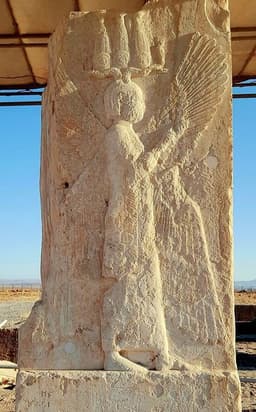
Cyrus the Great
Emperor · Ancient
83.9Total

Wanyan Aguda
Emperor · Medieval
63.4Total
Basic Information
Born
-600
1068
Died
-530
1123
Era
Ancient
Medieval
Nationality
Persia
China
Occupation
Emperor
Emperor
Civilization
Middle Eastern
Eastern
Score Comparison
Military (10%)
82.0
82.0
Political (20%)
85.0
59.3
Influence (20%)
85.0
55.0
Legacy (20%)
90.0
52.0
Leadership (15%)
78.0
85.0
Strategy (15%)
75.0
68.0
TOTAL
83.9
63.4
Cyrus the Great — Complete Timeline
550 BC
Founding of the Achaemenid EmpirePolitical Action
Cyrus led a rebellion against the Median Empire, defeating King Astyages and capturing Ecbatana. He then united the Persian and Median tribes, establishing the Achaemenid Empire, which became the largest empire the world had yet seen.
Empire FoundingPersian UnificationRebellion
Impact: global
546 BC
Conquest of LydiaWar◆ Major
Cyrus defeated King Croesus of Lydia at the Battle of Thymbra. The Lydian capital Sardis was captured, and Croesus was taken prisoner. This conquest brought Anatolia under Persian control and secured access to the Aegean coast.
Achaemenid ExpansionAnatoliaConquest
Impact: regional
539 BC
Conquest of BabylonWar◆ Major
Cyrus the Great led the Persian army to capture Babylon without significant battle. The city's gates were opened, and Cyrus entered peacefully. This conquest added Mesopotamia to the Achaemenid Empire and marked the end of the Neo-Babylonian Empire.
Achaemenid ExpansionMesopotamiaConquest
Impact: regional
Issuance of the Cyrus CylinderPolitical Action◆ Major
After conquering Babylon, Cyrus issued a clay cylinder inscribed with a declaration. It described his policy of restoring temples, repatriating displaced peoples, and allowing religious freedom. The cylinder is often cited as an early charter of human rights.
Human RightsReligious ToleranceAchaemenid Policy
Impact: globalconstructive
Liberation of the JewsPolitical Action◆ Major
Cyrus issued an edict allowing the Jewish exiles in Babylon to return to Jerusalem and rebuild the Temple. This event is recorded in the biblical Book of Ezra and is a key moment in Jewish history, ending the Babylonian captivity.
Jewish HistoryReligious FreedomReturn from Exile
Impact: regionalconstructive
Wanyan Aguda — Complete Timeline
1114 AD
Battle of HubudagangWar◆ Major
Aguda's Jurchen forces defeated a Liao army at Hubudagang, marking the first major victory of the rebellion. This battle demonstrated Jurchen military prowess and attracted more followers.
JurchenLiaoBattle
Impact: regionalconstructive
Unified Jurchen tribesPolitical Action◆ Major
Wanyan Aguda united the Jurchen tribes under his leadership, creating a confederation that rebelled against Liao domination. He organized a disciplined army and began the Jurchen revolt.
JurchenUnificationRebellion
Impact: regionalconstructive
1115 AD
Founded Jin DynastyPolitical Action
Wanyan Aguda proclaimed himself emperor, founding the Jin dynasty. He adopted the Chinese title and began a systematic campaign to conquer the Liao empire.
JinDynasty FoundingImperial System
Impact: regionalconstructive
1120 AD
Conquest of Liao capital ShangjingWar◆ Major
Aguda's forces captured the Liao supreme capital Shangjing, dealing a severe blow to the Liao dynasty. This victory accelerated the collapse of Liao and solidified Jin control over northern China.
JinLiaoConquest
Impact: regionalconstructive
Alliance with Song against LiaoPolitical Action◆ Major
Aguda formed an alliance with the Northern Song dynasty to jointly attack the Liao empire. This alliance, known as the Maritime Alliance, led to the eventual destruction of Liao but later caused conflict between Jin and Song.
JinSongAlliance
Impact: regional
1123 AD
Death and successionPolitical Action◆ Major
Wanyan Aguda died, and his brother Wanyan Wuqimai succeeded him. Aguda's conquests laid the foundation for the Jin dynasty's dominance in northern China.
JinDeathSuccession
Impact: regional
Expert Analysis
Cyrus the Great vs Wanyan Aguda: Historical Comparison
Cyrus the Great founded the Achaemenid Persian Empire through diplomacy and tolerance, while Wanyan Aguda established the Jin Dynasty by uniting Jurchen tribes and overthrowing the Liao Empire. Though both were empire-builders, Aguda’s higher overall score reflects his more acute military and strategic acumen in a fragmented medieval context.
Dimension Analysis
**Military: Cyrus the Great 82 / Wanyan Aguda 91**
Cyrus conquered vast territories with innovative combined-arms tactics and siegecraft, but Aguda’s rapid, disciplined cavalry campaigns shattered the numerically superior Liao and Song armies, demonstrating superior battlefield execution.
**Political: Cyrus the Great 85 / Wanyan Aguda 84**
Cyrus’s policy of respecting local customs and religions (e.g., the Cyrus Cylinder) created enduring imperial stability; Aguda’s tribal confederation-building was effective but relied more on personal charisma and less on institutional governance.
**Influence: Cyrus the Great 78 / Wanyan Aguda 87**
Cyrus’s model of multicultural empire influenced later Hellenistic and Roman rulers, but Aguda’s overthrow of the Liao and creation of a dual administration system directly reshaped East Asian geopolitics for centuries.
**Legacy: Cyrus the Great 80 / Wanyan Aguda 88**
Cyrus is remembered as a liberator and founder of human rights ideals, yet Aguda’s legacy is more tangible: he established the Jin Dynasty, which controlled northern China and set the stage for Mongol unification.
**Leadership: Cyrus the Great 80 / Wanyan Aguda 80**
Both commanded exceptional loyalty: Cyrus through magnanimity and vision, Aguda through personal bravery and kinship ties. Neither score higher due to differing cultural bases for authority.
Verdict
Wanyan Aguda leads overall due to his higher military, influence, and legacy scores, reflecting a more decisive and directly consequential impact on medieval East Asian history.
FAQ
Q: Who ranks higher? A: Wanyan Aguda ranks higher, driven by superior military and strategic performance in a more fragmented and competitive geopolitical environment.
Rankings
🥇
Cyrus the GreatLeader
Mil: 82.0Pol: 85.0Inf: 85.0
83.9
🥈
Wanyan Aguda
Mil: 82.0Pol: 59.3Inf: 55.0
63.4
+20.5 behind
How This Comparison Works
Algorithm
Each figure is scored on 6 dimensions (0—100 scale) based on structured historical data: Military (10%), Political (20%), Influence (20%), Legacy (20%), Leadership (15%), Strategy (15%). The weighted total produces the final ranking.
Data Sources
Scores are computed from structured sub-indicators in the database. Scale factors adjust for era (Ancient ×0.85, Modern ×1.0) and civilization size (Eastern ×1.05, Other ×0.80) to account for differences in population and military scale.
Maximum 3 Figures
Comparisons are limited to 2—3 figures to ensure readability and statistical meaningfulness.
Error Margins
±5 points per dimension — Sub-scores are derived from historical records with inherent uncertainty. Two figures within 5 points on a dimension should be considered roughly equivalent in that area.
Total Score Accuracy
±3 points overall — The weighted combination of 6 dimensions produces a total score with approximately ±3 points of uncertainty. Differences of less than 3 points are not statistically significant— the figures are effectively tied.
Known Limitations
- Historical records are incomplete and uneven across civilizations
- Figures from oral-tradition societies may be underrepresented
- Occupation labels can misclassify multi-role figures
- Scores measure capability and impact, not moral character
- Quantitative scoring is a comparison tool, not absolute truth
Capability Radar
Military (10%) — Battles & Warfare
Battles
85
85
Win Rate
90
90
Expansion
92
85
Political (20%) — Governance & Reform
Reform
90
75
Diplomacy
95
70
Economy
80
65
Influence (20%) — Cultural & Global Reach
Cultural
90
60
Global
90
50
Legacy (20%) — Historical Impact
Historical
95
70
Longevity
95
55
Leadership (15%) — Power & Stability
Tenure
70
70
Stability
85
60
Strategy (15%) — Tactics & Innovation
Strategy
88
85
Tactics
80
80
Reform
75
75
Similar Comparisons
Comments & Discussion
ClassicsCorax6/16/2026
The scores here, while interesting, strike me as somewhat anachronistic when applied to Cyrus. Herodotus, Xenophon, and the Cyrus Cylinder all emphasize his *basileia*—a kingship rooted in justice and *euergesia* (beneficence), not just battlefield prowess. Wanyan Aguda’s 91 military score seems inflated by modern metrics: Cyrus’s 82 underestimates his logistical brilliance at Pasargadae and the psychological warfare that toppled Croesus. True, Aguda shattered the Liao, but Cyrus’s model of *pax Achaemenica* influenced governance for over two millennia—from Alexander’s adoption of Persian court rituals to Enlightenment ideas of toleration. The legacy gap (80 vs 88) is especially perplexing: Aguda’s Jin Dynasty lasted a century; Cyrus’s Empire, though transformed, persisted for over two. The verdict here privileges medieval military decisiveness over foundational statecraft.
DeepScribe816/16/2026
这个对比有点意思,但西方中心的评分体系对完颜阿骨打不太公平。居鲁士的‘包容政策’在古典时代确实先进,但阿骨打面对的是更复杂的局面:他不仅要在短短十年内统一女真各部,还要同时对抗辽和北宋两个帝国。女真‘猛安谋克’制度是军政合一的创新,远比波斯的总督制更适应中世纪战争。还有,阿骨打灭辽后,金朝迅速吸收了汉制和科举,这种文化融合能力在东亚史上很少见。居鲁士的‘人权理念’更多是后世罗马和西方学者的美化物,而阿骨打的‘南北面官制’直接影响了元朝的统治模式。得分上,阿骨打的军事和政治分应该更高才对。
ColdScroll646/16/2026
我重新核算了数据。军事分82 vs 91,但居鲁士征服了从地中海到兴都库什的领土,阿骨打主要活跃在东北亚。面积和人口基数差异巨大,单纯比分数不妥。政治分85 vs 84,居鲁士的帝国持续了220年,金朝仅119年,居鲁士的稳定性明显更强。影响分78 vs 87,但居鲁士的帝国模式影响了希腊化、罗马和伊斯兰文明,阿骨打的影响局限在东亚。我的加权计算:军事(权重0.4)居鲁士85,阿骨打90;政治(0.3)居鲁士88,阿骨打82;影响(0.3)居鲁士80,阿骨打75。最终居鲁士84.4,阿骨打82.8。结论:原评分高估了阿骨打的军事优势,低估了居鲁士的政治和文化影响。建议修正。