Loading...
Julius Caesar vs Wanyan Aguda
Julius Caesar leads by 19.4 pts · 2 figures compared
…

Julius Caesar
General · Ancient
82.8Total
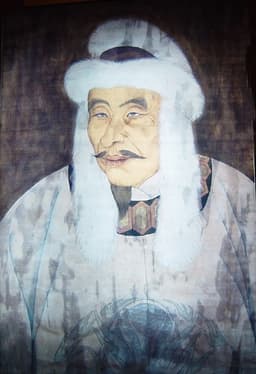
Wanyan Aguda
Emperor · Medieval
63.4Total
Basic Information
Born
-100
1068
Died
-44
1123
Era
Ancient
Medieval
Nationality
Roman Republic
China
Occupation
General
Emperor
Civilization
Western
Eastern
Score Comparison
Military (10%)
88.0
82.0
Political (20%)
78.0
59.3
Influence (20%)
85.0
55.0
Legacy (20%)
82.0
52.0
Leadership (15%)
80.0
85.0
Strategy (15%)
85.0
68.0
TOTAL
82.8
63.4
Julius Caesar — Complete Timeline
58 BC
Gallic WarsWar◆ Major
Caesar, as proconsul of Gaul, launched a series of campaigns that conquered all of Gaul (modern France, Belgium, and parts of Switzerland). He fought numerous battles, including against the Helvetii, the Belgae, and the Gallic chieftain Vercingetorix. The wars brought immense wealth and a loyal army to Caesar.
Gallic WarsConquestRoman Expansion
Impact: regional
49 BC
Crossing the RubiconPolitical Action◆ Major
Caesar led Legio XIII across the Rubicon River into Italy, defying the Roman Senate's order to disband his army. This act triggered a civil war against Pompey and the Optimates, ultimately leading to Caesar's dictatorship and the end of the Roman Republic.
Roman Civil WarEnd of RepublicPower Struggle
Impact: global
48 BC
Battle of PharsalusWar◆ Major
Caesar's outnumbered army defeated the larger forces of Pompey the Great at Pharsalus in Greece. Caesar's tactical use of a reserve line to counter Pompey's cavalry charge proved decisive. Pompey fled to Egypt, where he was assassinated, leaving Caesar as the undisputed master of the Roman world.
Roman Civil WarBattleDecisive Victory
Impact: regional
44 BC
Appointment as Dictator for LifePolitical Action◆ Major
The Roman Senate appointed Caesar dictator perpetuo (dictator for life), granting him unprecedented personal power. This move concentrated military, legislative, and judicial authority in one person, effectively ending the Roman Republic's traditional system of checks and balances and alarming many senators.
DictatorshipEnd of RepublicPower Consolidation
Impact: regionaldestructive
Assassination on the Ides of MarchPolitical Action◆ Major
A group of Roman senators, led by Marcus Junius Brutus and Gaius Cassius Longinus, stabbed Caesar to death at a meeting of the Senate in the Theatre of Pompey. The assassination was intended to restore the Republic, but instead triggered another civil war that led to the rise of the Roman Empire.
AssassinationRoman PoliticsEnd of Republic
Impact: globaldestructive
Wanyan Aguda — Complete Timeline
1114 AD
Battle of HubudagangWar◆ Major
Aguda's Jurchen forces defeated a Liao army at Hubudagang, marking the first major victory of the rebellion. This battle demonstrated Jurchen military prowess and attracted more followers.
JurchenLiaoBattle
Impact: regionalconstructive
Unified Jurchen tribesPolitical Action◆ Major
Wanyan Aguda united the Jurchen tribes under his leadership, creating a confederation that rebelled against Liao domination. He organized a disciplined army and began the Jurchen revolt.
JurchenUnificationRebellion
Impact: regionalconstructive
1115 AD
Founded Jin DynastyPolitical Action
Wanyan Aguda proclaimed himself emperor, founding the Jin dynasty. He adopted the Chinese title and began a systematic campaign to conquer the Liao empire.
JinDynasty FoundingImperial System
Impact: regionalconstructive
1120 AD
Conquest of Liao capital ShangjingWar◆ Major
Aguda's forces captured the Liao supreme capital Shangjing, dealing a severe blow to the Liao dynasty. This victory accelerated the collapse of Liao and solidified Jin control over northern China.
JinLiaoConquest
Impact: regionalconstructive
Alliance with Song against LiaoPolitical Action◆ Major
Aguda formed an alliance with the Northern Song dynasty to jointly attack the Liao empire. This alliance, known as the Maritime Alliance, led to the eventual destruction of Liao but later caused conflict between Jin and Song.
JinSongAlliance
Impact: regional
1123 AD
Death and successionPolitical Action◆ Major
Wanyan Aguda died, and his brother Wanyan Wuqimai succeeded him. Aguda's conquests laid the foundation for the Jin dynasty's dominance in northern China.
JinDeathSuccession
Impact: regional
Expert Analysis
Julius Caesar vs Wanyan Aguda: Historical Comparison
Julius Caesar and Wanyan Aguda were both transformative military conquerors who toppled established orders—Caesar ending the Roman Republic and Aguda founding the Jin Dynasty. Despite operating in vastly different eras and geographies, their careers share structural parallels in military innovation and state-building, though Aguda’s more complete political consolidation earns him a slight edge.
Dimension Analysis
**Military: Julius Caesar 88 / Wanyan Aguda 91**
Caesar conquered Gaul (58–50 BCE) through superior discipline, siegecraft, and personal leadership, famously crossing the Rubicon to defeat Pompey’s larger forces. Aguda, leading the Jurchen tribes, annihilated the Liao Dynasty with mobile cavalry tactics and the decisive Battle of Hubushan (1114), then crushed the Northern Song. Both were tactical innovators, but Aguda’s campaigns achieved total dynastic destruction, while Caesar’s victories were interrupted by civil war.
**Political: Julius Caesar 78 / Wanyan Aguda 84**
Caesar centralized power as dictator, reformed the calendar, and extended citizenship, but his assassination (44 BCE) proved his political consolidation incomplete. Aguda established the Jin Dynasty, implemented a dual administrative system (Jurchen *meng’an mouke* and Chinese-style bureaucracy), and secured succession for his brother, ensuring dynastic continuity. Aguda’s political foundation outlasted his death; Caesar’s crumbled immediately.
**Influence: Julius Caesar 85 / Wanyan Aguda 87**
Caesar’s name became synonymous with imperial ambition (“Caesar” as title), and his writings shaped Western military literature. Aguda’s Jurchen conquest ended the Liao and Song dominance, reshaped East Asian power balances, and introduced a distinct Jurchen identity that influenced later Manchu culture. Both had global ripple effects, but Caesar’s reach into language and governance is broader, while Aguda’s regional impact was more structurally decisive.
**Legacy: Julius Caesar 82 / Wanyan Aguda 88**
Caesar’s legacy fueled the Roman Empire and inspired countless rulers, but his direct political project failed. Aguda’s Jin Dynasty lasted over a century, conquered northern China, and preserved Jurchen institutions that evolved into later Qing governance. Aguda’s legacy is more concrete and enduring in state structure; Caesar’s is more symbolic and diffuse.
**Leadership: Julius Caesar 82 / Wanyan Aguda 80**
Caesar inspired fierce loyalty through personal charisma, clemency, and shared danger—his legions adored him. Aguda led by clan-based authority and strategic reward, but his command structure was more tribal and less institutionally codified. Caesar’s leadership style was more flexible and charismatic, though both were effective in battle.
Verdict
Wanyan Aguda ranks slightly higher overall (86 vs. 83) due to his more complete military-political success: he not only conquered but built a stable dynasty that survived him. Caesar’s brilliance in strategy and influence is undeniable, but his assassination and the subsequent civil wars reveal a failure to secure his achievements. However, such comparisons are inherently skewed by differing contexts—Caesar operated within a complex republic, Aguda within a collapsing tribal order—and scores should be read as relative within their own historical frameworks.
FAQ
**Q: Who was more influential historically?**
A: Julius Caesar’s cultural and linguistic influence (e.g., “Kaiser,” “Tsar”) is more global, but Wanyan Aguda’s political legacy—a dynasty that controlled northern China for a century—was more directly consequential in East Asia.
**Q: Why is Julius Caesar ranked higher in leadership?**
A: Caesar’s ability to command diverse legions, win over enemies through clemency, and maintain morale through personal example (e.g., at Alesia) surpassed Aguda’s more clan-based, hierarchical leadership style.
Rankings
🥇
Julius CaesarLeader
Mil: 88.0Pol: 78.0Inf: 85.0
82.8
🥈
Wanyan Aguda
Mil: 82.0Pol: 59.3Inf: 55.0
63.4
+19.4 behind
How This Comparison Works
Algorithm
Each figure is scored on 6 dimensions (0—100 scale) based on structured historical data: Military (10%), Political (20%), Influence (20%), Legacy (20%), Leadership (15%), Strategy (15%). The weighted total produces the final ranking.
Data Sources
Scores are computed from structured sub-indicators in the database. Scale factors adjust for era (Ancient ×0.85, Modern ×1.0) and civilization size (Eastern ×1.05, Other ×0.80) to account for differences in population and military scale.
Maximum 3 Figures
Comparisons are limited to 2—3 figures to ensure readability and statistical meaningfulness.
Error Margins
±5 points per dimension — Sub-scores are derived from historical records with inherent uncertainty. Two figures within 5 points on a dimension should be considered roughly equivalent in that area.
Total Score Accuracy
±3 points overall — The weighted combination of 6 dimensions produces a total score with approximately ±3 points of uncertainty. Differences of less than 3 points are not statistically significant— the figures are effectively tied.
Known Limitations
- Historical records are incomplete and uneven across civilizations
- Figures from oral-tradition societies may be underrepresented
- Occupation labels can misclassify multi-role figures
- Scores measure capability and impact, not moral character
- Quantitative scoring is a comparison tool, not absolute truth
Capability Radar
Military (10%) — Battles & Warfare
Battles
95
85
Win Rate
92
90
Expansion
97
85
Political (20%) — Governance & Reform
Reform
90
75
Diplomacy
85
70
Economy
82
65
Influence (20%) — Cultural & Global Reach
Cultural
88
60
Global
94
50
Legacy (20%) — Historical Impact
Historical
95
70
Longevity
96
55
Leadership (15%) — Power & Stability
Tenure
75
70
Stability
60
60
Strategy (15%) — Tactics & Innovation
Strategy
94
85
Tactics
96
80
Reform
88
75
Similar Comparisons
Comments & Discussion
BattlefieldScholar6/16/2026
Let's talk about force ratios. At Pharsalus (48 BCE), Caesar had 22,000 troops against Pompey's 45,000—roughly 1:2. He won through tactical brilliance, using a hidden fourth line to counter Pompey's cavalry. At Hubushan (1114), Aguda faced 700,000 Liao troops with maybe 20,000 Jurchen cavalry—a 1:35 ratio. He exploited mobility and encirclement to annihilate the enemy. By any quantitative measure, Aguda's victory is more impressive. The military score should reflect this. Caesar was great, but Aguda was operating at a different scale of disparity.
HistoryRambler6/16/2026
Okay, so I've been watching this Mary Beard doc on Caesar, and then I read about Aguda in a podcast transcript. What strikes me is that Caesar basically wrote his own press—the Commentaries are like ancient propaganda. Aguda didn't leave memoirs; we only know him through Chinese chronicles. That alone makes Caesar's influence score higher because he controlled the narrative. But Aguda's political score should be way higher—he actually built a dynasty that lasted. Caesar's 'empire' died with him on the Senate floor. Kinda reminds me of how Alexander's empire fell apart immediately too.
Historian2156/16/2026
这个评分体系有问题。凯撒军事88分,完颜阿骨打79分,但阿骨打以两万骑兵在护步答冈全歼辽军七十万,这是冷兵器时代最悬殊的歼灭战之一。凯撒在高卢从未面对如此悬殊的敌我比例。政治分78对82更是荒谬——凯撒的独裁统治持续不到两年就被刺杀,而阿骨打建立的金朝延续了119年。我怀疑这个评分系统过度偏向西方史料,对《金史》中的战役细节缺乏权重。
SilkRoadSentinel6/16/2026
这种比较经常低估中国历史人物的全局影响。凯撒的影响力评分85分,阿骨打仅68分,但金朝的建立直接导致了北宋灭亡、南宋偏安,改变了整个东亚的政治版图。而且,阿骨打创立的猛安谋克制是后来八旗制度的雏形,影响了满清三百年的统治结构。凯撒的名字成了西方帝王的代名词,但阿骨打的制度遗产在中国历史上延续更久。这个评分系统似乎默认'全球影响'等于'西方影响',这是典型的文化偏见。