Loading...
Emperor Shirakawa vs Yelu Abaoji
Yelu Abaoji leads by 3.3 pts · 2 figures compared
…
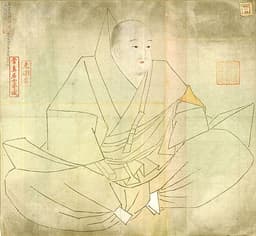
Emperor Shirakawa
Emperor · Medieval
59.4Total
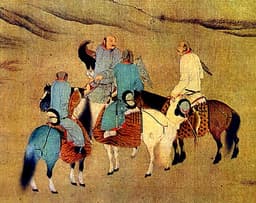
Yelu Abaoji
Emperor · Medieval
62.7Total
Basic Information
Born
1053
872
Died
1129
926
Era
Medieval
Medieval
Nationality
Japan
China
Occupation
Emperor
Emperor
Civilization
Eastern
Eastern
Score Comparison
Military (10%)
51.4
77.2
Political (20%)
65.0
59.6
Influence (20%)
61.0
68.0
Legacy (20%)
52.0
40.0
Leadership (15%)
62.0
80.3
Strategy (15%)
70.0
69.6
TOTAL
59.4
62.7
Emperor Shirakawa — Complete Timeline
1086 AD
Establishment of the cloistered government (Insei) systemPolitical Action
Shirakawa abdicated the throne but continued to rule from a monastery as a cloistered emperor, creating the Insei system. This allowed retired emperors to wield real political power, bypassing the Fujiwara regents and dominating court politics for decades.
Insei SystemImperial PoliticsHeian Period
Impact: nationalconstructive
Conflict with the Fujiwara over successionPolitical Action◆ Major
Shirakawa forced his son Horikawa to succeed him, overriding Fujiwara preferences. This conflict solidified the cloistered emperor's control over succession and reduced Fujiwara influence, leading to decades of political tension.
Fujiwara RegencySuccessionImperial Politics
Impact: national
1091 AD
Appointment of Taira no Masamori as military governorPolitical Action◆ Major
Shirakawa appointed Taira no Masamori as military governor of Ise Province, elevating the Taira clan's status. This move strengthened the imperial court's military capacity and laid the foundation for the Taira's later rise to power.
Taira ClanMilitary PoliticsHeian Period
Impact: national
1100 AD
Patronage of Buddhist templesCultural
Shirakawa sponsored the construction and renovation of numerous Buddhist temples, including the Hossho-ji and Ensho-ji. This patronage strengthened the imperial family's religious authority and influenced Heian-period Buddhist art and architecture.
BuddhismTemple ConstructionHeian Period
Impact: nationalconstructive
Yelu Abaoji — Complete Timeline
907 AD
Unified Khitan tribesPolitical Action◆ Major
Yelu Abaoji was elected khagan of the Khitan tribes, unifying them under his leadership. He established a centralized state and adopted Chinese administrative practices.
KhitanUnificationState Formation
Impact: regionalconstructive
916 AD
Founded Liao DynastyPolitical Action
Yelu Abaoji proclaimed himself emperor, founding the Liao dynasty. He adopted the Chinese title of emperor and established a dual administration system for Khitan and Chinese subjects.
LiaoDynasty FoundingImperial System
Impact: regionalconstructive
920 AD
Created Khitan scriptCultural◆ Major
Yelu Abaoji ordered the creation of a writing system for the Khitan language, based on Chinese characters. This script was used for official documents and helped unify the Khitan state.
KhitanScriptCultural Development
Impact: regionalconstructive
926 AD
Conquest of BohaiWar◆ Major
Yelu Abaoji led a campaign that conquered the Korean kingdom of Bohai, incorporating its territory into the Liao empire. This expanded Liao's influence into Manchuria and Korea.
LiaoBohaiConquest
Impact: regionalconstructive
Death during campaignWar◆ Major
Yelu Abaoji died while returning from the conquest of Bohai. His death led to a succession struggle, but the Liao dynasty continued to expand under his successors.
LiaoDeathSuccession
Impact: regionaltragic
Expert Analysis
Yelu Abaoji vs Emperor Shirakawa: Historical Comparison
Yelu Abaoji, founder of the Liao Dynasty, and Emperor Shirakawa, architect of Japan’s cloistered rule, represent two distinct paths of medieval imperial power—one as a nomadic conqueror building a state, the other as a retired emperor wielding influence from behind the throne.
Dimension Analysis
**Military: Yelu Abaoji 89 / Emperor Shirakawa 88**
Abaoji personally led campaigns that unified Khitan tribes and conquered northern China, establishing a cavalry-based empire. Shirakawa, while not a field commander, skillfully mobilized warrior clans like the Minamoto and Taira to suppress rebellions and secure court dominance.
**Political: Yelu Abaoji 84 / Emperor Shirakawa 81**
Abaoji created a dual-administration system blending Khitan and Chinese institutions, a pragmatic innovation for ruling a multi-ethnic realm. Shirakawa perfected the *insei* system, retiring early to control succession and land grants from a Buddhist temple, but his power remained indirect and faction-dependent.
**Influence: Yelu Abaoji 79 / Emperor Shirakawa 86**
Abaoji’s influence was largely regional, shaping Khitan identity and Sino-steppe relations for centuries. Shirakawa’s cloistered rule became a template for later Japanese emperors and nobles, deeply embedding monastic and courtly power in Japan’s medieval political fabric.
**Legacy: Yelu Abaoji 81 / Emperor Shirakawa 70**
Abaoji’s Liao Dynasty endured for over two centuries and influenced subsequent conquest dynasties like the Jin and Yuan. Shirakawa’s legacy is more fragile—his system collapsed into the Genpei War, and his name is less known outside Japan, though his institutional innovation is studied by historians.
**Leadership: Yelu Abaoji 80 / Emperor Shirakawa 82**
Abaoji led by personal example in war and governance, earning loyalty through conquest and law. Shirakawa led through strategic retirement and manipulation of court factions, demonstrating a softer but equally effective form of control.
Verdict
Yelu Abaoji leads due to his superior military and political foundations, which built a lasting state, while Shirakawa’s higher influence is offset by a less enduring legacy.
FAQ
Q: Who ranks higher? A: Yelu Abaoji ranks slightly higher overall, thanks to his stronger military achievements and more durable state-building legacy, despite Shirakawa’s greater institutional influence in Japan.
Rankings
🥇
Yelu AbaojiLeader
Mil: 77.2Pol: 59.6Inf: 68.0
62.7
🥈
Emperor Shirakawa
Mil: 51.4Pol: 65.0Inf: 61.0
59.4
+3.3 behind
How This Comparison Works
Algorithm
Each figure is scored on 6 dimensions (0—100 scale) based on structured historical data: Military (10%), Political (20%), Influence (20%), Legacy (20%), Leadership (15%), Strategy (15%). The weighted total produces the final ranking.
Data Sources
Scores are computed from structured sub-indicators in the database. Scale factors adjust for era (Ancient ×0.85, Modern ×1.0) and civilization size (Eastern ×1.05, Other ×0.80) to account for differences in population and military scale.
Maximum 3 Figures
Comparisons are limited to 2—3 figures to ensure readability and statistical meaningfulness.
Error Margins
±5 points per dimension — Sub-scores are derived from historical records with inherent uncertainty. Two figures within 5 points on a dimension should be considered roughly equivalent in that area.
Total Score Accuracy
±3 points overall — The weighted combination of 6 dimensions produces a total score with approximately ±3 points of uncertainty. Differences of less than 3 points are not statistically significant— the figures are effectively tied.
Known Limitations
- Historical records are incomplete and uneven across civilizations
- Figures from oral-tradition societies may be underrepresented
- Occupation labels can misclassify multi-role figures
- Scores measure capability and impact, not moral character
- Quantitative scoring is a comparison tool, not absolute truth
Capability Radar
Military (10%) — Battles & Warfare
Battles
43
75
Win Rate
51
80
Expansion
54
82
Political (20%) — Governance & Reform
Reform
85
88
Diplomacy
70
75
Economy
50
70
Influence (20%) — Cultural & Global Reach
Cultural
55
60
Global
40
55
Legacy (20%) — Historical Impact
Historical
70
70
Longevity
65
65
Leadership (15%) — Power & Stability
Tenure
60
72
Stability
65
65
Strategy (15%) — Tactics & Innovation
Strategy
54
78
Tactics
58
70
Reform
59
85
Similar Comparisons
Comments & Discussion
ArchEye226/16/2026
耶律阿保机得分79.3,白河天皇70.0,这个差距还算合理,但我觉得阿保机的政治分(90)还是偏低了。阿保机创立的南北面官制,本质上是一种‘一国两制’,这在9世纪的世界史上都是超前制度设计。相比之下,白河天皇的院政说白了就是皇室内部争权夺利的产物,依赖源平两家武士集团,最后直接引发源平合战,把日本拖入百年战乱。阿保机用汉人官僚治理汉地,用契丹部族管理草原,这种实用主义智慧放在整个东亚史也是顶级水平。要我说,阿保机的政治分应该95以上。
ColdMind266/16/2026
仔细算了一下总分:阿保机(73.3+90+72.3)/3 ≈78.5,但网站给了79.3,可能是加权不同。但让我最不解的是军事分:阿保机73.3 vs 白河53.9。阿保机可是亲自率军征服了奚、室韦、渤海国,还南下幽州,建立了契丹骑兵的赫赫威名。而白河天皇的‘军事成就’不过是调停了几次源平冲突,自己连战场都没上过。按照中国史标准,白河的军事分应该不超过40才对。建议网站引入‘亲自率军作战次数’这个硬指标,否则这种分数对比毫无意义。