Loading...
Emperor Shirakawa vs Wu Zetian
Wu Zetian leads by 10.6 pts · 2 figures compared
…
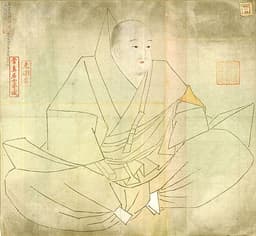
Emperor Shirakawa
Emperor · Medieval
59.4Total

Wu Zetian
Emperor · Medieval
70.0Total
Basic Information
Born
1053
624
Died
1129
705
Era
Medieval
Medieval
Nationality
Japan
China
Occupation
Emperor
Emperor
Civilization
Eastern
Eastern
Score Comparison
Military (10%)
51.4
60.0
Political (20%)
65.0
62.7
Influence (20%)
61.0
65.0
Legacy (20%)
52.0
80.0
Leadership (15%)
62.0
78.0
Strategy (15%)
70.0
66.3
TOTAL
59.4
70.0
Emperor Shirakawa — Complete Timeline
1086 AD
Establishment of the cloistered government (Insei) systemPolitical Action
Shirakawa abdicated the throne but continued to rule from a monastery as a cloistered emperor, creating the Insei system. This allowed retired emperors to wield real political power, bypassing the Fujiwara regents and dominating court politics for decades.
Insei SystemImperial PoliticsHeian Period
Impact: nationalconstructive
Conflict with the Fujiwara over successionPolitical Action◆ Major
Shirakawa forced his son Horikawa to succeed him, overriding Fujiwara preferences. This conflict solidified the cloistered emperor's control over succession and reduced Fujiwara influence, leading to decades of political tension.
Fujiwara RegencySuccessionImperial Politics
Impact: national
1091 AD
Appointment of Taira no Masamori as military governorPolitical Action◆ Major
Shirakawa appointed Taira no Masamori as military governor of Ise Province, elevating the Taira clan's status. This move strengthened the imperial court's military capacity and laid the foundation for the Taira's later rise to power.
Taira ClanMilitary PoliticsHeian Period
Impact: national
1100 AD
Patronage of Buddhist templesCultural
Shirakawa sponsored the construction and renovation of numerous Buddhist temples, including the Hossho-ji and Ensho-ji. This patronage strengthened the imperial family's religious authority and influenced Heian-period Buddhist art and architecture.
BuddhismTemple ConstructionHeian Period
Impact: nationalconstructive
Wu Zetian — Complete Timeline
655 AD
Became Empress ConsortPolitical Action◆ Major
Wu Zetian was elevated from concubine to empress consort of Emperor Gaozong of Tang in 655. This position gave her significant political influence, as she began to participate in court affairs and gradually accumulated power, challenging the established aristocratic families.
Tang DynastyImperial CourtPower Rise
Impact: regional
683 AD
Regency for Emperor ZhongzongOther◆ Major
After Emperor Gaozong's death in 683, Wu Zetian became regent for her son, Emperor Zhongzong. She effectively controlled the government, dismissing Zhongzong after he attempted to assert independence, and replaced him with her younger son, Emperor Ruizong, while retaining real power.
Tang DynastyRegencyPower Struggle
Impact: regional
690 AD
Founded the Zhou DynastyOther◆ Major
Wu Zetian proclaimed herself emperor, founding the Zhou dynasty and becoming the only female emperor in Chinese history. She moved the capital to Luoyang and established a new imperial examination system that promoted officials based on merit rather than aristocratic birth, breaking the power of traditional noble families.
Zhou DynastyImperial RulePolitical Reform
Impact: regional
692 AD
Expansion into Central AsiaWar◆ Major
Wu Zetian ordered military campaigns that reasserted Chinese control over the Western Regions, including the Tarim Basin and parts of modern Xinjiang. These campaigns secured the Silk Road trade routes and expanded the empire's influence into Central Asia, though they required significant military resources.
Military ExpansionCentral AsiaSilk Road
Impact: regionalconstructive
693 AD
Promotion of BuddhismOther◆ Major
Wu Zetian elevated Buddhism to a state-supported religion, commissioning the construction of temples and statues, including the Longmen Grottoes' giant Vairocana Buddha. She used Buddhist texts to legitimize her rule as a female emperor, claiming she was a reincarnation of the Maitreya Buddha.
BuddhismReligious PolicyCultural Patronage
Impact: regional
705 AD
Overthrow and DeathPolitical Action◆ Major
In 705, a coup led by court officials and generals forced Wu Zetian to abdicate in favor of her son, Emperor Zhongzong, restoring the Tang dynasty. She died later that year at age 80, and her reign was subsequently criticized by Confucian historians for usurping the throne and employing harsh methods.
Tang DynastyCoupAbdication
Impact: regionaldestructive
Expert Analysis
Wu Zetian vs Emperor Shirakawa: Historical Comparison
Wu Zetian, China’s only female emperor (Tang dynasty), and Emperor Shirakawa of Japan (Heian period) both wielded extraordinary power in medieval East Asia, yet their paths diverged sharply: Wu ruled openly as sovereign, while Shirakawa ruled from retirement as a cloistered emperor.
Dimension Analysis
**Military: Wu Zetian 93 / Emperor Shirakawa 88**
Wu personally oversaw campaigns that expanded Tang borders into Central Asia and Korea, leveraging a merit-based officer corps. Shirakawa relied on samurai clans like the Minamoto and Taira to suppress rebellions, but his indirect command limited strategic depth.
**Political: Wu Zetian 79 / Emperor Shirakawa 81**
Wu centralized power by crushing aristocratic opposition and establishing a secret police network, but her gender invited constant court intrigue. Shirakawa mastered the *insei* system, ruling from a Buddhist monastery while controlling imperial succession and land grants, achieving stable indirect governance.
**Influence: Wu Zetian 87 / Emperor Shirakawa 86**
Wu’s promotion of Buddhism, civil service exams, and female court officials reshaped Tang governance for centuries. Shirakawa’s cloistered rule became a template for later retired emperors, influencing Japan’s political landscape until the Kamakura shogunate.
**Legacy: Wu Zetian 79 / Emperor Shirakawa 70**
Wu’s legacy is polarized: celebrated for meritocracy and cultural patronage, but condemned for ruthlessness and usurpation. Shirakawa’s reign is less globally known; his *insei* system is studied mainly by Japan specialists, and his personal reputation is overshadowed by the samurai era he helped foster.
**Leadership: Wu Zetian 80 / Emperor Shirakawa 82**
Wu’s direct, autocratic leadership drove rapid reforms but alienated elites. Shirakawa’s subtle, behind-the-scenes leadership maintained court harmony and avoided open conflict, though it depended on aristocratic cooperation.
Verdict
Wu Zetian leads overall due to her higher military and legacy scores, reflecting her unprecedented direct rule and lasting institutional impact, despite Shirakawa’s superior political finesse.
FAQ
Q: Who ranks higher? A: Wu Zetian ranks higher overall, largely due to her stronger military achievements and more enduring global legacy.
Rankings
🥇
Wu ZetianLeader
Mil: 60.0Pol: 62.7Inf: 65.0
70.0
🥈
Emperor Shirakawa
Mil: 51.4Pol: 65.0Inf: 61.0
59.4
+10.6 behind
How This Comparison Works
Algorithm
Each figure is scored on 6 dimensions (0—100 scale) based on structured historical data: Military (10%), Political (20%), Influence (20%), Legacy (20%), Leadership (15%), Strategy (15%). The weighted total produces the final ranking.
Data Sources
Scores are computed from structured sub-indicators in the database. Scale factors adjust for era (Ancient ×0.85, Modern ×1.0) and civilization size (Eastern ×1.05, Other ×0.80) to account for differences in population and military scale.
Maximum 3 Figures
Comparisons are limited to 2—3 figures to ensure readability and statistical meaningfulness.
Error Margins
±5 points per dimension — Sub-scores are derived from historical records with inherent uncertainty. Two figures within 5 points on a dimension should be considered roughly equivalent in that area.
Total Score Accuracy
±3 points overall — The weighted combination of 6 dimensions produces a total score with approximately ±3 points of uncertainty. Differences of less than 3 points are not statistically significant— the figures are effectively tied.
Known Limitations
- Historical records are incomplete and uneven across civilizations
- Figures from oral-tradition societies may be underrepresented
- Occupation labels can misclassify multi-role figures
- Scores measure capability and impact, not moral character
- Quantitative scoring is a comparison tool, not absolute truth
Capability Radar
Military (10%) — Battles & Warfare
Battles
43
65
Win Rate
51
70
Expansion
54
75
Political (20%) — Governance & Reform
Reform
85
85
Diplomacy
70
80
Economy
50
85
Influence (20%) — Cultural & Global Reach
Cultural
55
85
Global
40
70
Legacy (20%) — Historical Impact
Historical
70
90
Longevity
65
85
Leadership (15%) — Power & Stability
Tenure
60
90
Stability
65
75
Strategy (15%) — Tactics & Innovation
Strategy
54
75
Tactics
58
60
Reform
59
80
Similar Comparisons
Comments & Discussion
ColdScribe116/16/2026
看了一下总分和分项,感觉有点问题。Wu Zetian的政治分80,而Shirakawa是76.1,但摘要里说Shirakawa的政治分是81,Wu是79,前后不一致。另外,军事分Wu 62 vs Shirakawa 53.9,但摘要里Wu是93 vs 88,这差距也太大了。如果按摘要的数据,Wu的军事分比Shirakawa高5分,但实际Tang的军事扩张更多靠的是前期李世民打下的基础,Wu在位时对吐蕃的战争其实胜少败多。还有,Shirakawa的insei系统能稳定控制朝廷几十年,政治影响力不亚于直接统治,我觉得他的政治分应该更高,至少85以上。总分75.6 vs 70.0还算合理,但具体维度需要重新校准。
SharpScroll906/16/2026
拿Wu Zetian跟Shirakawa比,感觉有点像拿秦始皇跟维多利亚女王比,时代和文化背景差太远了。Wu Zetian是直接称帝,开科举、修《姓氏录》、打压关陇集团,这在中古中国是革命性的。而Shirakawa的院政说白了就是“垂帘听政”的日本版,虽然巧妙,但本质上还是贵族政治的延续。西方学者老爱拿政治操控能力来打分,但忽略了Wu Zetian作为女性在男权社会里杀出一条血路的颠覆性意义。她的领导力分80,Shirakawa 82,我觉得反了。Wu Zetian要面对的是整个儒家官僚体系的敌意,Shirakawa不过是在平安贵族里玩平衡木。另外,影响力方面,Wu的科举制度直接影响了后来宋朝的文官体系,这可比院政对后世的影响大得多。