Loading...
Emperor Shirakawa vs Pachacuti
Pachacuti leads by 10.0 pts · 2 figures compared
…
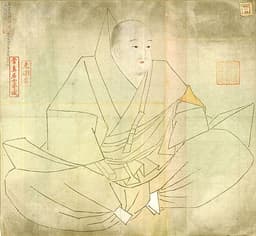
Emperor Shirakawa
Emperor · Medieval
59.4Total
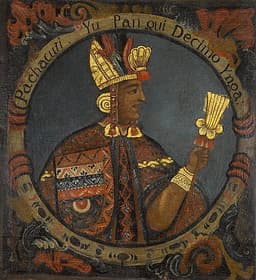
Pachacuti
Emperor · Medieval
69.4Total
Basic Information
Born
1053
1418
Died
1129
1472
Era
Medieval
Medieval
Nationality
Japan
Inca Empire
Occupation
Emperor
Emperor
Civilization
Eastern
Other
Score Comparison
Military (10%)
51.4
78.5
Political (20%)
65.0
58.1
Influence (20%)
61.0
65.0
Legacy (20%)
52.0
72.0
Leadership (15%)
62.0
78.0
Strategy (15%)
70.0
69.2
TOTAL
59.4
69.4
Emperor Shirakawa — Complete Timeline
1086 AD
Establishment of the cloistered government (Insei) systemPolitical Action
Shirakawa abdicated the throne but continued to rule from a monastery as a cloistered emperor, creating the Insei system. This allowed retired emperors to wield real political power, bypassing the Fujiwara regents and dominating court politics for decades.
Insei SystemImperial PoliticsHeian Period
Impact: nationalconstructive
Conflict with the Fujiwara over successionPolitical Action◆ Major
Shirakawa forced his son Horikawa to succeed him, overriding Fujiwara preferences. This conflict solidified the cloistered emperor's control over succession and reduced Fujiwara influence, leading to decades of political tension.
Fujiwara RegencySuccessionImperial Politics
Impact: national
1091 AD
Appointment of Taira no Masamori as military governorPolitical Action◆ Major
Shirakawa appointed Taira no Masamori as military governor of Ise Province, elevating the Taira clan's status. This move strengthened the imperial court's military capacity and laid the foundation for the Taira's later rise to power.
Taira ClanMilitary PoliticsHeian Period
Impact: national
1100 AD
Patronage of Buddhist templesCultural
Shirakawa sponsored the construction and renovation of numerous Buddhist temples, including the Hossho-ji and Ensho-ji. This patronage strengthened the imperial family's religious authority and influenced Heian-period Buddhist art and architecture.
BuddhismTemple ConstructionHeian Period
Impact: nationalconstructive
Pachacuti — Complete Timeline
1438 AD
Conquest of the Chanka KingdomWar
Pachacuti led the Inca army to defeat the Chanka, a powerful rival, in a decisive battle near Cusco. This victory secured his position as Sapa Inca and initiated a period of rapid expansion, transforming the Inca from a small kingdom into a vast empire.
ConquestInca ExpansionChanka
Impact: regional
1440 AD
Reconstruction of CuscoCultural◆ Major
Pachacuti rebuilt Cusco as the imperial capital, designing it in the shape of a puma and constructing massive stone structures like Sacsayhuam
Urban PlanningArchitectureInca Empire
Impact: regionalconstructive
1450 AD
Initiation of Machu Picchu's ConstructionCultural◆ Major
Pachacuti ordered the construction of Machu Picchu, a royal estate and ceremonial site high in the Andes. The complex featured sophisticated dry-stone masonry and terraced agriculture, serving as a symbol of Inca engineering and a retreat for the emperor.
ArchitectureRoyal EstateInca Engineering
Impact: regionalconstructive
Expert Analysis
Pachacuti vs Emperor Shirakawa
### The Emperor and the Builder: Two Paths to Power in a Medieval World
In the high Andes, a warrior-king reshapes mountains into a capital shaped like a sacred puma. In the misty valleys of Kyoto, a sovereign steps down from the Chrysanthemum Throne only to rule more absolutely from a monastery. They never met, these two medieval rulers—Pachacuti of the Inca and Emperor Shirakawa of Japan—yet both grappled with the same eternal question: how to seize and sustain power in a world of rivals. Their answers, forged in radically different landscapes and cultures, produced two of history’s most distinctive models of leadership. One built an empire of stone; the other, a system of shadows.
### Origins
Pachacuti was born in 1418 into a world of small, warring kingdoms in the Cusco valley. The Inca were then merely one tribe among many, and his father, Viracocha, ruled a domain no larger than a modern city. Young Yupanqui—he would later take the name Pachacuti, meaning “earth-shaker”—grew up watching his people struggle for survival against the powerful Chanka confederation. He was not the heir apparent; that was his brother Urco. But when the Chanka attacked Cusco in 1438, the royal family fled. Only Pachacuti stayed, rallying the city’s defenders. His era had chosen him before he chose it.
Shirakawa, born in 1053, inherited a world already ancient. Japan’s imperial court had ruled for centuries, but real power had long since slipped into the hands of the Fujiwara clan, who managed the throne as regents for child emperors. Shirakawa ascended at age nineteen, a puppet in silk robes. He saw how the Fujiwara married their daughters to emperors, then governed through them. The system was elegant, suffocating, and designed to make the emperor a figurehead. Shirakawa was a patient man, but he was not content to be a symbol.
### Rise to Power
Pachacuti’s rise came through blood and fire. After his victory over the Chanka in 1438, he executed his cowardly brother Urco and forced his father into exile. He then spent the next three decades leading his armies across the Andes, conquering the Quechua, the Colla, and the Lupaca. Each victory was a turning point: he did not simply raid but absorbed, incorporating conquered peoples into the Inca system by imposing the Quechua language, the worship of Inti the sun god, and a network of roads and storehouses that bound the empire together. By 1460, he had transformed a city-state into an empire stretching from modern Ecuador to Chile.
Shirakawa’s path was quieter but no less ruthless. In 1086, after just fourteen years on the throne, he abdicated in favor of his seven-year-old son Horikawa. To the Fujiwara, this seemed like business as usual—another child emperor they could control. But Shirakawa had not retired; he had simply moved his court to a Buddhist monastery, where he continued to issue orders as a “cloistered emperor.” He controlled the imperial treasury, appointed his own ministers, and used his son as a seal for his decrees. The Fujiwara found themselves outmaneuvered: they could not fight a ghost.
### Leadership & Governance
Pachacuti governed through a blend of terror and brilliance. He divided his empire into four quarters, each ruled by a governor loyal to Cusco. He built storehouses along the royal road to feed armies in times of war and the poor in times of famine. He ordered the reconstruction of Cusco as a stone masterpiece, its walls fitting so precisely that a knife blade could not slide between them. And high in the mountains, he commissioned Machu Picchu—not a fortress, but a royal estate where the sun could be worshipped in solitude. His leadership was personal, charismatic, and absolute. When he spoke, stones moved.
Shirakawa’s genius was institutional. He did not destroy the Fujiwara; he rendered them irrelevant. By controlling the succession—forcing his own son onto the throne and then his grandson after that—he made the imperial family the center of power once more. He also cultivated the rising warrior clans, particularly the Taira, appointing Taira no Masamori as military governor of Ise Province in 1091. This was a calculated move: the Fujiwara had relied on civilian authority, but Shirakawa understood that in a changing world, the sword would soon decide. He sponsored Buddhist temples not out of piety alone but to build a network of loyal abbots who could influence the court. Power, in his hands, became a web of favors, marriages, and appointments.
### Triumph & Tragedy
Pachacuti’s greatest triumph was the conquest of the Chanka, a victory that saved his people and launched an empire. But his tragedy was that he could not see its fragility. He built a system so centralized that when the Spanish arrived in 1532—sixty years after his death—a single blow to the emperor’s head shattered the entire edifice. His empire, for all its stone and roads, rested on one man.
Shirakawa’s triumph was the Insei system itself, which allowed retired emperors to rule for nearly a century. But his tragedy was that he solved one problem only to create another. By empowering the Taira and other warrior clans, he set the stage for the Genpei War (1180-1185), which would destroy the imperial court’s power forever. The cloistered emperor had unleashed forces he could not control.
### Character & Destiny
Pachacuti was a builder in every sense: of walls, of roads, of an empire. His character was that of a visionary who saw order in chaos and imposed it with an iron will. He believed that the Inca were destined to rule, and he shaped history to fit that belief. Shirakawa was a strategist, a chess player who thought in generations. He did not seek glory but control. “The three things that do not obey me,” he once said, “are the waters of the Kamo River, the dice of the backgammon board, and the monks of Mount Hiei.” He was wry, patient, and ultimately aware that even emperors cannot command everything.
### Legacy
Pachacuti’s legacy is visible today in the stones of Machu Picchu and the terraced mountainsides of Peru. He is remembered as the father of the Inca Empire, a figure of mythic proportions whose name means “earth-shaker.” Shirakawa’s legacy is less tangible but equally profound: the Insei system he created shaped Japanese politics for centuries and proved that the most powerful ruler is sometimes the one who appears to have stepped aside.
### Conclusion
One moved mountains; the other moved men. Pachacuti and Shirakawa both understood that power is never given—it must be taken, shaped, and held. But they lived in different worlds: one where strength was measured in stone and blood, and another where it was measured in patience and perception. In the end, both succeeded beyond their dreams, and both left empires that outlasted them. The difference is that one built a kingdom of stone, and the other built a kingdom of shadows. And shadows, as Shirakawa knew, are harder to destroy.
Rankings
🥇
PachacutiLeader
Mil: 78.5Pol: 58.1Inf: 65.0
69.4
🥈
Emperor Shirakawa
Mil: 51.4Pol: 65.0Inf: 61.0
59.4
+10.0 behind
How This Comparison Works
Algorithm
Each figure is scored on 6 dimensions (0—100 scale) based on structured historical data: Military (10%), Political (20%), Influence (20%), Legacy (20%), Leadership (15%), Strategy (15%). The weighted total produces the final ranking.
Data Sources
Scores are computed from structured sub-indicators in the database. Scale factors adjust for era (Ancient ×0.85, Modern ×1.0) and civilization size (Eastern ×1.05, Other ×0.80) to account for differences in population and military scale.
Maximum 3 Figures
Comparisons are limited to 2—3 figures to ensure readability and statistical meaningfulness.
Error Margins
±5 points per dimension — Sub-scores are derived from historical records with inherent uncertainty. Two figures within 5 points on a dimension should be considered roughly equivalent in that area.
Total Score Accuracy
±3 points overall — The weighted combination of 6 dimensions produces a total score with approximately ±3 points of uncertainty. Differences of less than 3 points are not statistically significant— the figures are effectively tied.
Known Limitations
- Historical records are incomplete and uneven across civilizations
- Figures from oral-tradition societies may be underrepresented
- Occupation labels can misclassify multi-role figures
- Scores measure capability and impact, not moral character
- Quantitative scoring is a comparison tool, not absolute truth
Capability Radar
Military (10%) — Battles & Warfare
Battles
43
85
Win Rate
51
90
Expansion
54
90
Political (20%) — Governance & Reform
Reform
85
92
Diplomacy
70
75
Economy
50
80
Influence (20%) — Cultural & Global Reach
Cultural
55
85
Global
40
65
Legacy (20%) — Historical Impact
Historical
70
80
Longevity
65
70
Leadership (15%) — Power & Stability
Tenure
60
85
Stability
65
82
Strategy (15%) — Tactics & Innovation
Strategy
54
88
Tactics
58
80
Reform
59
85
Similar Comparisons
Comments & Discussion
PUMA KING6/16/2026
Pachacuti didn't just build Machu Picchu; he invented an entirely new model of imperial control—religious architecture as propaganda. While Shirakawa played shadow games from a monastery, Pachacuti literally reshaped the Andes. His terraces at Ollantaytambo are still producing crops 500 years later. That's not just power; that's permanence. Shirakawa's cloistered rule? Just sophisticated court drama with better calligraphy.
禅让皇帝6/16/2026
白河天皇的院政制度简直是权力游戏的巅峰之作。他表面上退位出家,实际上把天皇、摄关、武士三股势力玩得团团转。而帕查库蒂只会用石头和鲜血征服。一个懂得用《法曹至要抄》这样的法律条文操控朝局,一个只会在地图上画圈圈。真正的权力不是建金字塔,而是让所有人跪着求你回来。
DIGITAL SHRINE6/16/2026
People romanticize Pachacuti's "earth-shaker" narrative, but let's look at real evidence. The Inca didn't invent terrace farming; they copied it from earlier cultures. Shirakawa's system of cloistered rule actually produced measurable stability—1086-1156 saw no major civil wars in Japan. That's seventy years of peace. Pachacuti's conquests? Constant warfare. Who's the better administrator here?
玛雅不是他们6/16/2026
别被西方史观洗脑了!帕查库蒂建库斯科城用了整整20万人搬石头,就为了弄个美洲狮形状的城市。拜托,白河天皇随便在京都建个净土寺,就能吸引全日本的贵族来朝圣。一个靠苦力堆砌的野蛮工程,一个用美学和文化凝聚人心。谁是文明人,一目了然。
CLASSICS NERD6/16/2026
Let's talk about succession, the true test of any ruler's system. Pachacuti appointed his son Topa Inca as co-ruler—smart, practical, imperial. Shirakawa abdicated to his four-year-old son, then ruled from the shadows for 43 years. One built a dynasty through visible power transfer; the other created a constitutional paradox that would haunt Japan for centuries. I know which model I'd bet on.
丝路考古家6/16/2026
最讽刺的是,帕查库蒂把征服的每个民族都强制迁移到陌生地区,美其名曰“垂直群岛”——其实就是种族清洗前的文化隔离。而白河天皇呢?他退位后还给各地神社写诗,搜集《源氏物语》版本。一个用恐惧统治,一个用文化绑架。要我说,这两位都是独裁者,差别只在于石头和和纸。