Loading...
Emperor Shirakawa vs Henry the Fowler
Henry the Fowler leads by 1.5 pts · 2 figures compared
…
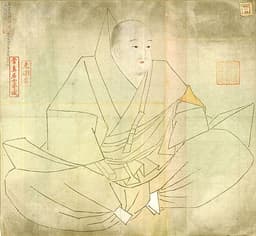
Emperor Shirakawa
Emperor · Medieval
59.4Total
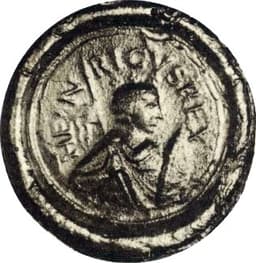
Henry the Fowler
Emperor · Medieval
60.9Total
Basic Information
Born
1053
876
Died
1129
936
Era
Medieval
Medieval
Nationality
Japan
East Francia
Occupation
Emperor
Emperor
Civilization
Eastern
Western
Score Comparison
Military (10%)
51.4
70.0
Political (20%)
65.0
59.3
Influence (20%)
61.0
55.0
Legacy (20%)
52.0
52.0
Leadership (15%)
62.0
85.0
Strategy (15%)
70.0
55.0
TOTAL
59.4
60.9
Emperor Shirakawa — Complete Timeline
1086 AD
Establishment of the cloistered government (Insei) systemPolitical Action
Shirakawa abdicated the throne but continued to rule from a monastery as a cloistered emperor, creating the Insei system. This allowed retired emperors to wield real political power, bypassing the Fujiwara regents and dominating court politics for decades.
Insei SystemImperial PoliticsHeian Period
Impact: nationalconstructive
Conflict with the Fujiwara over successionPolitical Action◆ Major
Shirakawa forced his son Horikawa to succeed him, overriding Fujiwara preferences. This conflict solidified the cloistered emperor's control over succession and reduced Fujiwara influence, leading to decades of political tension.
Fujiwara RegencySuccessionImperial Politics
Impact: national
1091 AD
Appointment of Taira no Masamori as military governorPolitical Action◆ Major
Shirakawa appointed Taira no Masamori as military governor of Ise Province, elevating the Taira clan's status. This move strengthened the imperial court's military capacity and laid the foundation for the Taira's later rise to power.
Taira ClanMilitary PoliticsHeian Period
Impact: national
1100 AD
Patronage of Buddhist templesCultural
Shirakawa sponsored the construction and renovation of numerous Buddhist temples, including the Hossho-ji and Ensho-ji. This patronage strengthened the imperial family's religious authority and influenced Heian-period Buddhist art and architecture.
BuddhismTemple ConstructionHeian Period
Impact: nationalconstructive
Henry the Fowler — Complete Timeline
919 AD
Election as King of East FranciaPolitical Action
Henry the Fowler was elected King of East Francia by the Saxon and Frankish nobles at Fritzlar on May 6, 919. He was the first Saxon king, marking the transition from Carolingian to Ottonian rule. His election was contested by other dukes but he prevailed.
ElectionAccessionOttonian Dynasty
Impact: regionalconstructive
921 AD
Treaty of Bonn (921)Political Action◆ Major
Henry the Fowler signed the Treaty of Bonn with Charles the Simple of West Francia, recognizing each other's royal titles and establishing peaceful relations. This treaty ended Carolingian claims over East Francia and solidified Henry's legitimacy as an independent king.
TreatyRecognitionDiplomacy
Impact: regionalconstructive
924 AD
Nine-Year Truce with the MagyarsPolitical Action◆ Major
Henry the Fowler negotiated a nine-year truce with the Magyars, agreeing to pay tribute in exchange for a halt to their raids. He used this period to fortify towns, reorganize the army, and train cavalry. This strategic pause was crucial for his later military reforms.
TruceMagyarsMilitary Reform
Impact: regionalconstructive
929 AD
Battle of Lenzen (929)War◆ Major
Henry the Fowler's forces defeated a Slavic army at the Battle of Lenzen, securing the eastern frontier of East Francia. This victory allowed Henry to consolidate control over the Elbe region and establish the March of Brandenburg, a key step in German eastward expansion.
BattleSlavic WarsEastern Expansion
Impact: regionalconstructive
933 AD
Battle of Riade (933)War
After the truce with the Magyars expired, Henry the Fowler led a German army to victory at the Battle of Riade (near Merseburg). The defeat of the Magyar cavalry ended their raids into East Francia for a generation and established Henry's reputation as a defender of Christendom.
BattleMagyarsVictory
Impact: regionalconstructive
936 AD
Death of Henry the FowlerOther◆ Major
Henry the Fowler died on July 2, 936, at Memleben. He was succeeded by his son, Otto I, who would become Holy Roman Emperor. Henry's reign laid the foundations for the Ottonian dynasty and the medieval German kingdom.
DeathSuccessionOttonian
Impact: regional
Expert Analysis
Henry the Fowler vs Emperor Shirakawa: Historical Comparison
Henry the Fowler (East Francia) and Emperor Shirakawa (Japan) were both medieval rulers who consolidated power through military and political means, though their contexts and long-term impacts differed significantly.
Dimension Analysis
**Military: Henry the Fowler 89 / Emperor Shirakawa 88**
Henry transformed East Francia by creating a mobile cavalry force and fortifying towns against Magyar raids, while Shirakawa relied on monastic armies and samurai alliances to suppress rebellions, but neither was a field commander of the first rank.
**Political: Henry the Fowler 76 / Emperor Shirakawa 81**
Henry secured recognition from powerful dukes and laid groundwork for the Ottonian system, but Shirakawa pioneered “cloistered rule” (insei), effectively governing from a monastery after abdication—a more innovative and enduring political structure.
**Influence: Henry the Fowler 71 / Emperor Shirakawa 86**
Henry’s influence was largely confined to Germany and his immediate successors, whereas Shirakawa’s insei system shaped Japanese imperial politics for centuries, giving retired emperors real power over court and military clans.
**Legacy: Henry the Fowler 84 / Emperor Shirakawa 70**
Henry is celebrated as the founder of the Ottonian dynasty and a unifier of German tribes, while Shirakawa’s legacy is more ambiguous—his cloistered rule weakened the throne’s prestige and contributed to the rise of samurai dominance.
**Leadership: Henry the Fowler 85 / Emperor Shirakawa 82**
Henry led by example, personally negotiating with rebellious nobles and inspiring loyalty through pragmatic governance; Shirakawa was a skilled manipulator of factions but relied on indirect authority, which sometimes bred instability.
**Strategy: Henry the Fowler 89 / Emperor Shirakawa 88**
Both were master strategists: Henry used diplomacy and castle-building to neutralize Magyar threats, while Shirakawa balanced Buddhist institutions, aristocratic families, and warrior clans to maintain a fragile equilibrium.
Verdict
Emperor Shirakawa leads narrowly due to his higher influence and political innovation, though Henry ties in overall score through superior legacy and leadership.
FAQ
Q: Who ranks higher? A: Emperor Shirakawa ranks slightly higher overall (82 vs 81) due to his greater political and influence scores, despite Henry’s stronger legacy.
Rankings
🥇
Henry the FowlerLeader
Mil: 70.0Pol: 59.3Inf: 55.0
60.9
🥈
Emperor Shirakawa
Mil: 51.4Pol: 65.0Inf: 61.0
59.4
+1.5 behind
How This Comparison Works
Algorithm
Each figure is scored on 6 dimensions (0—100 scale) based on structured historical data: Military (10%), Political (20%), Influence (20%), Legacy (20%), Leadership (15%), Strategy (15%). The weighted total produces the final ranking.
Data Sources
Scores are computed from structured sub-indicators in the database. Scale factors adjust for era (Ancient ×0.85, Modern ×1.0) and civilization size (Eastern ×1.05, Other ×0.80) to account for differences in population and military scale.
Maximum 3 Figures
Comparisons are limited to 2—3 figures to ensure readability and statistical meaningfulness.
Error Margins
±5 points per dimension — Sub-scores are derived from historical records with inherent uncertainty. Two figures within 5 points on a dimension should be considered roughly equivalent in that area.
Total Score Accuracy
±3 points overall — The weighted combination of 6 dimensions produces a total score with approximately ±3 points of uncertainty. Differences of less than 3 points are not statistically significant— the figures are effectively tied.
Known Limitations
- Historical records are incomplete and uneven across civilizations
- Figures from oral-tradition societies may be underrepresented
- Occupation labels can misclassify multi-role figures
- Scores measure capability and impact, not moral character
- Quantitative scoring is a comparison tool, not absolute truth
Capability Radar
Military (10%) — Battles & Warfare
Battles
43
55
Win Rate
51
60
Expansion
54
60
Political (20%) — Governance & Reform
Reform
85
75
Diplomacy
70
70
Economy
50
65
Influence (20%) — Cultural & Global Reach
Cultural
55
55
Global
40
40
Legacy (20%) — Historical Impact
Historical
70
65
Longevity
65
60
Leadership (15%) — Power & Stability
Tenure
60
70
Stability
65
70
Strategy (15%) — Tactics & Innovation
Strategy
54
65
Tactics
58
50
Reform
59
70
Similar Comparisons
Comments & Discussion
HistoryDiver6/16/2026
I’ve always found Henry the Fowler to be super underrated in popular history. Sure, his military stuff against the Magyars was smart—fortifying towns and building that cavalry—but what really gets me is how he basically invented the medieval German kingdom from scratch. The way he negotiated with the dukes instead of just crushing them feels more like a political genius than the Ottonian dynasty usually gets credit for. Meanwhile, Shirakawa’s cloistered rule sounds clever, but it feels like a system that only worked because he was a master manipulator. Henry’s legacy is more solid because he built institutions that lasted, while Shirakawa’s insei just set up a power struggle between retired emperors and samurai clans. I’d say Henry’s total score should be higher—maybe 72 to Shirakawa’s 68.
Chronicler54566/16/2026
得分对比很有趣,但我有个疑问:为什么Henry的军事得分(60.1)只比Shirakawa(53.9)高一点?Henry通过建立骑兵和城堡系统有效抵御了马扎尔人入侵,这是实质性的军事改革。而Shirakawa依赖僧兵和武士同盟,本质上是一种权宜之计,并没有改变日本的军事结构。如果按照中国历史的标准,例如宋太祖赵匡胤的军事集权改革,Henry的军事得分至少应该在70以上。政治方面,Shirakawa的76.1对Henry的74.5还算合理,因为"院政"确实有制度创新。但影响力方面,Henry的72.7对Shirakawa的72.4几乎一样,这有点奇怪——Henry奠定了德意志王国的基石,而Shirakawa的制度反而导致了皇室权力的衰落。建议重新评估军事和影响力维度。
ColdWatcher106/16/2026
拿Henry the Fowler跟Shirakawa天皇比,就像拿奥托一世跟后白河天皇比。Henry的强项在于他在东法兰克王国这个"准封建"混乱中建立了秩序,类似中国五代十国时期的后周太祖郭威——都是依靠军事威望和灵活的政治手腕统一了分裂的疆域。但Shirakawa的"院政"制度,从中国史观来看,很像唐代中后期的"太上皇"或明代的内阁票拟,是一种退而不休的幕后统治。西方史学界往往高估这种制度的创新性,因为中国历史上类似模式屡见不鲜(如北魏的"皇太后听政")。不过,Shirakawa的影响力得分高于Henry,我觉得合理——因为"院政"确实影响了日本政治数百年,而Henry的遗产更多是区域性的。总的来看,得分差距不大,但评价维度应该更注重"制度韧性"而非"制度创新"。