Loading...
This comparison has not been analyzed yet.
One-time AI generation (~1 minute). Scores and timeline are already available below.
Emperor Saga vs Hojo Soun
Emperor Saga leads by 0.1 pts · 2 figures compared
…
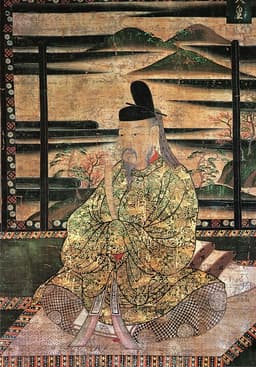
Emperor Saga
Emperor · Medieval
58.2Total
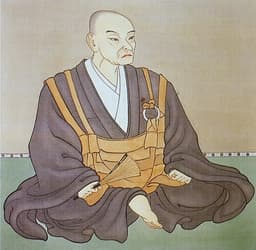
Hojo Soun
Emperor · Medieval
58.1Total
Basic Information
Born
786
1432
Died
842
1519
Era
Medieval
Medieval
Nationality
Japan
Japan
Occupation
Emperor
Emperor
Civilization
Eastern
Eastern
Score Comparison
Military (10%)
52.4
50.0
Political (20%)
68.0
68.0
Influence (20%)
58.3
53.3
Legacy (20%)
54.0
50.0
Leadership (15%)
53.2
74.0
Strategy (15%)
67.5
60.0
TOTAL
58.2
58.1
Emperor Saga — Complete Timeline
810 AD
Establishment of the Kurodo-dokoroReform◆ Major
Emperor Saga established the Kurodo-dokoro (Chamberlains' Office), a new administrative body that handled imperial documents and communications. This office bypassed the traditional bureaucracy and increased the emperor's direct control over government affairs.
Kurodo-dokoroAdministrationImperial Power
Impact: nationalconstructive
Promotion of Chinese Culture and CalligraphyCultural◆ Major
Emperor Saga was a noted patron of Chinese Tang dynasty culture, particularly calligraphy. He studied under the master Kukai and developed the Japanese style of calligraphy. His patronage helped establish calligraphy as a respected art form in the Japanese court.
CalligraphyChinese CultureArt
Impact: nationalconstructive
815 AD
Compilation of the Kojiki and Nihon Shoki CommentariesCultural
Emperor Saga ordered the compilation of the 'Shoku Nihongi', a continuation of the official history. He also sponsored commentaries on the Kojiki and Nihon Shoki, promoting the study of Japanese mythology and history in a Chinese scholarly framework.
HistoriographyShoku NihongiScholarship
Impact: nationalconstructive
Hojo Soun — Complete Timeline
1491 AD
Became a Ronin and Founded the Later Hojo ClanPolitical Action
Hojo Soun, originally a samurai of the Imagawa clan, became a ronin after his lord's death. He seized control of Izu Province in 1491, establishing the Later Hojo clan and beginning his rise to power.
RoninLater HojoIzu
Impact: regional
1495 AD
Captured Odawara CastleWar◆ Major
Hojo Soun captured Odawara Castle from the Omori clan through a combination of military force and deception. Odawara became the Later Hojo clan's stronghold and a symbol of their power in the Kanto region.
CastleKantoMilitary
Impact: regional
1512 AD
Expanded Hojo Control Over Sagami ProvinceWar◆ Major
Hojo Soun expanded his territory by conquering Sagami Province, defeating local lords and the Uesugi clan. This established the Later Hojo as a major power in the Kanto region, controlling key trade routes.
ExpansionSagamiKanto
Impact: regional
This comparison has not been analyzed yet.
One-time AI generation (~1 minute). Scores and timeline are already available below.
Rankings
🥇
Emperor SagaLeader
Mil: 52.4Pol: 68.0Inf: 58.3
58.2
🥈
Hojo Soun
Mil: 50.0Pol: 68.0Inf: 53.3
58.1
+0.1 behind
How This Comparison Works
Algorithm
Each figure is scored on 6 dimensions (0—100 scale) based on structured historical data: Military (10%), Political (20%), Influence (20%), Legacy (20%), Leadership (15%), Strategy (15%). The weighted total produces the final ranking.
Data Sources
Scores are computed from structured sub-indicators in the database. Scale factors adjust for era (Ancient ×0.85, Modern ×1.0) and civilization size (Eastern ×1.05, Other ×0.80) to account for differences in population and military scale.
Maximum 3 Figures
Comparisons are limited to 2—3 figures to ensure readability and statistical meaningfulness.
Error Margins
±5 points per dimension — Sub-scores are derived from historical records with inherent uncertainty. Two figures within 5 points on a dimension should be considered roughly equivalent in that area.
Total Score Accuracy
±3 points overall — The weighted combination of 6 dimensions produces a total score with approximately ±3 points of uncertainty. Differences of less than 3 points are not statistically significant— the figures are effectively tied.
Known Limitations
- Historical records are incomplete and uneven across civilizations
- Figures from oral-tradition societies may be underrepresented
- Occupation labels can misclassify multi-role figures
- Scores measure capability and impact, not moral character
- Quantitative scoring is a comparison tool, not absolute truth
Capability Radar
Military (10%) — Battles & Warfare
Battles
47
40
Win Rate
46
45
Expansion
53
55
Political (20%) — Governance & Reform
Reform
55
50
Diplomacy
50
55
Economy
50
50
Influence (20%) — Cultural & Global Reach
Cultural
60
40
Global
30
20
Legacy (20%) — Historical Impact
Historical
55
55
Longevity
50
50
Leadership (15%) — Power & Stability
Tenure
60
60
Stability
60
45
Strategy (15%) — Tactics & Innovation
Strategy
57
55
Tactics
60
50
Reform
57
30
Similar Comparisons
Comments & Discussion
No comments yet. Be the first to share your thoughts!