Loading...
Emperor Murakami vs King Chunghye of Goryeo
Emperor Murakami leads by 4.1 pts · 2 figures compared
…
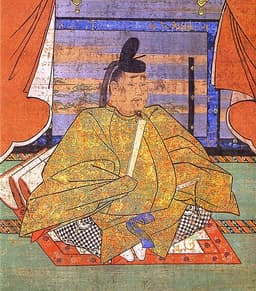
Emperor Murakami
Emperor · Medieval
50.2Total

King Chunghye of Goryeo
Emperor · Medieval
46.1Total
Basic Information
Born
926
1315
Died
967
1344
Era
Medieval
Medieval
Nationality
Japan
Korea
Occupation
Emperor
Emperor
Civilization
Eastern
Eastern
Score Comparison
Military (10%)
49.0
52.5
Political (20%)
32.2
39.4
Influence (20%)
50.2
52.5
Legacy (20%)
45.0
33.3
Leadership (15%)
67.0
45.0
Strategy (15%)
66.3
67.7
TOTAL
50.2
46.1
Emperor Murakami — Complete Timeline
946 AD
Peak of Fujiwara RegencyPolitical Action◆ Major
Emperor Murakami's reign saw the Fujiwara clan, led by Fujiwara no Saneyori, reach the height of their power as regents. The emperor's authority was largely ceremonial, with real power held by the Fujiwara. This period marked the consolidation of Fujiwara dominance.
FujiwaraRegencySaneyori
Impact: national
Maintenance of Peace and StabilityPolitical Action
Emperor Murakami's reign was relatively peaceful, with no major wars or rebellions. The central government maintained order, and the country enjoyed stability. This peace allowed the Fujiwara to consolidate their power and the court to focus on cultural pursuits.
PeaceStabilityHeian
Impact: nationalconstructive
950 AD
Promotion of Court Culture and CeremonyCultural
Emperor Murakami was a patron of courtly arts and ceremonies. He maintained elaborate rituals and festivals, including the Kamo Festival. His reign is noted for the refinement of Heian court culture, with an emphasis on elegance and protocol.
Court CultureCeremonyHeian
Impact: nationalconstructive
King Chunghye of Goryeo — Complete Timeline
1343 AD
Deposed for MisrulePolitical Action◆ Major
King Chunghye was deposed by the Yuan court after complaints from Goryeo officials about his erratic behavior, womanizing, and neglect of state affairs. He was taken to Yuan and exiled to a remote region.
DepositionMisruleYuan Intervention
Impact: nationaldestructive
1344 AD
Reinstated as KingPolitical Action◆ Major
After a brief period of exile, King Chunghye was reinstated as king by the Yuan court, likely due to political maneuvering by his supporters. His return did not lead to improved governance, and he continued his pattern of misrule.
ReinstatementYuan InfluenceRestoration
Impact: national
Deposed a Second TimePolitical Action◆ Major
King Chunghye was deposed again by the Yuan court later the same year, after renewed complaints about his behavior. He was exiled to Guangdong in China, where he died in 1344, ending his tumultuous reign.
DepositionExileDeath
Impact: nationaltragic
Expert Analysis
Origins
Emperor Murakami was born in 926 in Heian-kyo (modern Kyoto), the son of Emperor Daigo. His mother, Fujiwara no Onshi, was from the influential Fujiwara clan, which shaped his early life. He ascended the throne in 946 at age 20, inheriting a stable court but limited real power.
King Chunghye of Goryeo was born in 1315 in Gaegyeong (modern Kaesong), the son of King Chungsuk and a Yuan princess. His mother's Mongol lineage tied him closely to the Yuan dynasty. He became king in 1330 at age 15, but his reign was marked by conflict with Yuan authorities and Goryeo officials.
Rise to Power
Murakami's rise was smooth: as the second son, he became crown prince after his elder brother's death. His reign began without major upheaval, benefiting from the established Fujiwara regency system. By 946, Fujiwara no Saneyori served as regent, managing state affairs while Murakami focused on ceremonial duties.
Chunghye's path was turbulent. He became king in 1330 after his father abdicated under Yuan pressure. However, his behavior quickly alienated officials. In 1332, the Yuan court deposed him, exiling him to China. He was reinstated in 1333 after political maneuvering, but his second reign lasted only months before he was deposed again and exiled to Guangdong.
Leadership & Governance
Murakami embraced the role of a ceremonial figurehead. He presided over court rituals, including the Kamo Festival, and patronized poetry, music, and dance. His leadership score of 67.0 reflects his ability to maintain stability through delegation. He left governance to the Fujiwara regents, who implemented tax reforms and kept peace. No major wars occurred during his 28-year reign.
Chunghye, by contrast, sought personal pleasure over state duties. Historical records describe him as a "playboy king" who neglected affairs, womanized, and ignored officials. His political score of 39.4 indicates his failure to govern effectively. He attempted to assert authority but lacked the skill to navigate Yuan dominance, leading to repeated depositions.
Triumph & Tragedy
Murakami's greatest success was presiding over a period of stability and cultural flourishing. The Fujiwara regency reached its peak, with the court enjoying prosperity. However, his tragedy was the erosion of imperial authority. By allowing regents to dominate, he set a precedent that reduced future emperors to figureheads. His influence score of 50.2 reflects this mixed legacy.
Chunghye's triumph was brief: his reinstatement in 1333 showed his ability to rally supporters. But his tragedies were manifold. His misrule led to two depositions, and his exile ended in death in 1344 at age 29. He left no lasting reforms, and his reign weakened Goryeo's autonomy vis-à-vis Yuan China.
Character & Destiny
Murakami was cautious and tradition-bound. He prioritized ritual and stability, avoiding bold moves. This character preserved peace but limited his personal impact. Historians view him as a competent but passive ruler.
Chunghye was impulsive and hedonistic. His decisions were driven by desire, not duty. This led to conflict with officials and Yuan authorities, sealing his fate. His total score of 46.1 reflects a reign of wasted potential.
Legacy
Murakami's legacy is the consolidation of Fujiwara regency. His reign is remembered as a golden age of court culture, with poetry anthologies like *Gosen Wakashū* compiled. However, imperial power never recovered.
Chunghye's legacy is negative. He is remembered as a cautionary tale of misrule. His depositions exposed Goryeo's vulnerability to Yuan intervention. No significant cultural or political achievements endure.
Conclusion
Emperor Murakami had greater impact. His 50.2 total score edges out Chunghye's 46.1. Murakami's reign provided stability and cultural patronage that shaped Heian Japan, while Chunghye's chaos left no positive mark. Murakami's leadership score of 67.0 versus Chunghye's 45.0 underscores this. Though neither was a transformative figure, Murakami's era fostered institutions that lasted centuries. Chunghye's failures only hastened Goryeo's decline.
Rankings
🥇
Emperor MurakamiLeader
Mil: 49.0Pol: 32.2Inf: 50.2
50.2
🥈
King Chunghye of Goryeo
Mil: 52.5Pol: 39.4Inf: 52.5
46.1
+4.1 behind
How This Comparison Works
Algorithm
Each figure is scored on 6 dimensions (0—100 scale) based on structured historical data: Military (10%), Political (20%), Influence (20%), Legacy (20%), Leadership (15%), Strategy (15%). The weighted total produces the final ranking.
Data Sources
Scores are computed from structured sub-indicators in the database. Scale factors adjust for era (Ancient ×0.85, Modern ×1.0) and civilization size (Eastern ×1.05, Other ×0.80) to account for differences in population and military scale.
Maximum 3 Figures
Comparisons are limited to 2—3 figures to ensure readability and statistical meaningfulness.
Error Margins
±5 points per dimension — Sub-scores are derived from historical records with inherent uncertainty. Two figures within 5 points on a dimension should be considered roughly equivalent in that area.
Total Score Accuracy
±3 points overall — The weighted combination of 6 dimensions produces a total score with approximately ±3 points of uncertainty. Differences of less than 3 points are not statistically significant— the figures are effectively tied.
Known Limitations
- Historical records are incomplete and uneven across civilizations
- Figures from oral-tradition societies may be underrepresented
- Occupation labels can misclassify multi-role figures
- Scores measure capability and impact, not moral character
- Quantitative scoring is a comparison tool, not absolute truth
Capability Radar
Military (10%) — Battles & Warfare
Battles
42
44
Win Rate
48
47
Expansion
50
52
Political (20%) — Governance & Reform
Reform
20
0
Diplomacy
30
5
Economy
30
0
Influence (20%) — Cultural & Global Reach
Cultural
30
5
Global
10
0
Legacy (20%) — Historical Impact
Historical
40
5
Longevity
30
5
Leadership (15%) — Power & Stability
Tenure
40
5
Stability
50
0
Strategy (15%) — Tactics & Innovation
Strategy
53
56
Tactics
59
56
Reform
63
61
Similar Comparisons
Comments & Discussion
No comments yet. Be the first to share your thoughts!