Loading...
Emperor Murakami vs Emperor Taizu of Liao
Emperor Taizu of Liao leads by 16.6 pts · 2 figures compared
…
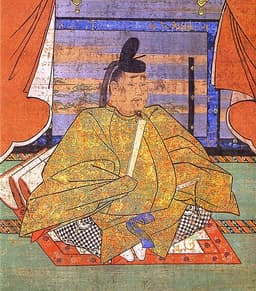
Emperor Murakami
Emperor · Medieval
50.2Total
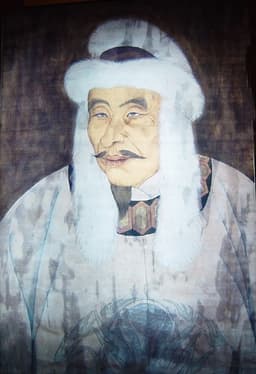
Emperor Taizu of Liao
Emperor · Medieval
66.8Total
Basic Information
Born
926
872
Died
967
926
Era
Medieval
Medieval
Nationality
Japan
China
Occupation
Emperor
Emperor
Civilization
Eastern
Eastern
Score Comparison
Military (10%)
49.0
76.0
Political (20%)
32.2
78.0
Influence (20%)
50.2
72.0
Legacy (20%)
45.0
40.0
Leadership (15%)
67.0
80.0
Strategy (15%)
66.3
75.0
TOTAL
50.2
66.8
Emperor Murakami — Complete Timeline
946 AD
Peak of Fujiwara RegencyPolitical Action◆ Major
Emperor Murakami's reign saw the Fujiwara clan, led by Fujiwara no Saneyori, reach the height of their power as regents. The emperor's authority was largely ceremonial, with real power held by the Fujiwara. This period marked the consolidation of Fujiwara dominance.
FujiwaraRegencySaneyori
Impact: national
Maintenance of Peace and StabilityPolitical Action
Emperor Murakami's reign was relatively peaceful, with no major wars or rebellions. The central government maintained order, and the country enjoyed stability. This peace allowed the Fujiwara to consolidate their power and the court to focus on cultural pursuits.
PeaceStabilityHeian
Impact: nationalconstructive
950 AD
Promotion of Court Culture and CeremonyCultural
Emperor Murakami was a patron of courtly arts and ceremonies. He maintained elaborate rituals and festivals, including the Kamo Festival. His reign is noted for the refinement of Heian court culture, with an emphasis on elegance and protocol.
Court CultureCeremonyHeian
Impact: nationalconstructive
Emperor Taizu of Liao — Complete Timeline
907 AD
Founding of the Liao DynastyPolitical Action
Abaoji, a Khitan chieftain, unified the Khitan tribes and proclaimed himself emperor, founding the Liao dynasty. This established the first major steppe-based dynasty to rule parts of northern China.
Dynasty FoundingUnification
Impact: regionalconstructive
916 AD
Establishment of the Dual Administration SystemReform◆ Major
Emperor Taizu established a dual administration system, with separate institutions for Khitan and Chinese subjects. This allowed the Liao to effectively govern both nomadic and agricultural populations, a model later adopted by other conquest dynasties.
Government ReformAdministration
Impact: regionalconstructive
920 AD
Creation of the Khitan ScriptCultural◆ Major
Emperor Taizu ordered the creation of a Khitan script, based on Chinese characters, to write the Khitan language. This script was used for official documents and inscriptions, promoting Khitan culture and administration.
Writing SystemCultural Development
Impact: regionalconstructive
926 AD
Conquest of the Bohai KingdomWar◆ Major
Emperor Taizu led a campaign that conquered the Bohai Kingdom in Manchuria. This victory expanded Liao territory eastward and eliminated a rival state, securing the Liao's eastern frontier.
ConquestExpansion
Impact: regionalconstructive
Death of Emperor TaizuPolitical Action
Emperor Taizu died during a campaign against the Bohai Kingdom. His death led to a succession struggle among his sons, but his son Yel
DeathSuccession
Impact: national
Expert Analysis
Origins
Emperor Murakami (born 926, reigned 946–967) was the 62nd emperor of Japan, ascending the throne during the Heian period. He was the son of Emperor Suzaku and descended from the Yamato line. His early life was steeped in courtly traditions, and he received a classical education in Chinese literature and Japanese poetry. The Fujiwara clan, particularly Fujiwara no Saneyori, dominated his reign, shaping him into a ceremonial figurehead.
Emperor Taizu of Liao (born 872, died 926), originally named Yelü Abaoji, was a Khitan chieftain from the steppes of Manchuria. He rose from a tribal leader to unify the Khitan tribes. His early experiences included warfare and diplomacy with neighboring Chinese states and nomadic groups. He was literate and adopted Chinese administrative practices while maintaining Khitan identity.
Rise to Power
Murakami became emperor at age 20 after his father's abdication. His rise was largely passive, as the Fujiwara regents controlled succession. He was a puppet, but his reign marked the zenith of Fujiwara power. In 967, he died of illness, leaving no major political mark.
Taizu's rise was active and military-driven. In 907, he unified the Khitan tribes and proclaimed himself emperor, founding the Liao dynasty. He then conquered the Bohai Kingdom in 926, expanding Liao territory. His leadership scored 80.0 in leadership, reflecting his ability to command and organize.
Leadership & Governance
Murakami's governance was ceremonial. He presided over court rituals, such as the Kamo Festival, and promoted poetry and music. Political power rested with Fujiwara no Saneyori, who made decisions. Murakami's political score of 32.2 reflects his limited authority.
Taizu established a dual administration system: one for Khitan subjects (tribal laws) and one for Chinese subjects (Confucian bureaucracy). He created a Khitan script (large and small characters) to record the Khitan language. His political score of 78.0 indicates effective state-building.
Triumph & Tragedy
Murakami's triumph was maintaining peace and stability; no major wars occurred. His reign saw the peak of Fujiwara regency, but that also was his tragedy: he was a figurehead, unable to assert imperial power. His legacy score of 45.0 reflects his limited impact.
Taizu's triumph was founding the Liao dynasty and conquering Bohai. His tragedy was dying during a campaign (926), leading to a succession crisis. His military score of 76.0 and strategic score of 75.0 highlight his capabilities, but his legacy score of 40.0 is lower due to the dynasty's eventual decline.
Character & Destiny
Murakami was cultured and passive, content with ceremonial roles. His character fit the Heian ideal of a refined emperor, but it sealed his political irrelevance. He scored 67.0 in leadership, but that likely reflects personal conduct, not governance.
Taizu was ambitious, pragmatic, and ruthless. He adopted Chinese systems selectively to strengthen his state. His character drove him to unify tribes and build an empire. His destiny was to die at the peak of his conquests.
Legacy
Murakami's legacy is tied to the Fujiwara regency's cultural peak. He is remembered for poetry and courtly elegance. However, his reign did not alter Japan's political structure.
Taizu's legacy is the Liao dynasty, which lasted until 1125. His dual administration system influenced later Chinese dynasties. The Khitan script preserved Khitan language for a time. His influence score of 72.0 reflects his broad impact.
Conclusion
Emperor Taizu of Liao had greater impact. His total score of 66.8 far exceeds Murakami's 50.2. Taizu founded a dynasty, created a script, and established governance systems that shaped North China. Murakami, while culturally significant, was a passive ruler who did not change Japan's trajectory. Taizu's active leadership and state-building outweigh Murakami's ceremonial reign.
Rankings
🥇
Emperor Taizu of LiaoLeader
Mil: 76.0Pol: 78.0Inf: 72.0
66.8
🥈
Emperor Murakami
Mil: 49.0Pol: 32.2Inf: 50.2
50.2
+16.6 behind
How This Comparison Works
Algorithm
Each figure is scored on 6 dimensions (0—100 scale) based on structured historical data: Military (10%), Political (20%), Influence (20%), Legacy (20%), Leadership (15%), Strategy (15%). The weighted total produces the final ranking.
Data Sources
Scores are computed from structured sub-indicators in the database. Scale factors adjust for era (Ancient ×0.85, Modern ×1.0) and civilization size (Eastern ×1.05, Other ×0.80) to account for differences in population and military scale.
Maximum 3 Figures
Comparisons are limited to 2—3 figures to ensure readability and statistical meaningfulness.
Error Margins
±5 points per dimension — Sub-scores are derived from historical records with inherent uncertainty. Two figures within 5 points on a dimension should be considered roughly equivalent in that area.
Total Score Accuracy
±3 points overall — The weighted combination of 6 dimensions produces a total score with approximately ±3 points of uncertainty. Differences of less than 3 points are not statistically significant— the figures are effectively tied.
Known Limitations
- Historical records are incomplete and uneven across civilizations
- Figures from oral-tradition societies may be underrepresented
- Occupation labels can misclassify multi-role figures
- Scores measure capability and impact, not moral character
- Quantitative scoring is a comparison tool, not absolute truth
Capability Radar
Military (10%) — Battles & Warfare
Battles
42
75
Win Rate
48
80
Expansion
50
85
Political (20%) — Governance & Reform
Reform
20
90
Diplomacy
30
80
Economy
30
75
Influence (20%) — Cultural & Global Reach
Cultural
30
65
Global
10
60
Legacy (20%) — Historical Impact
Historical
40
75
Longevity
30
70
Leadership (15%) — Power & Stability
Tenure
40
85
Stability
50
70
Strategy (15%) — Tactics & Innovation
Strategy
53
85
Tactics
59
70
Reform
63
90
Similar Comparisons
Comments & Discussion
No comments yet. Be the first to share your thoughts!