Loading...
This comparison has not been analyzed yet.
One-time AI generation (~1 minute). Scores and timeline are already available below.
Emperor Kosho vs King Kang of Zhou
King Kang of Zhou leads by 12.1 pts · 2 figures compared
…

Emperor Kosho
Emperor · Ancient
44.6Total
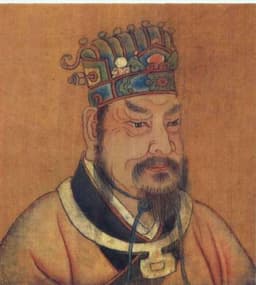
King Kang of Zhou
Emperor · Ancient
56.7Total
Basic Information
Born
-506
-1040
Died
-393
-996
Era
Ancient
Ancient
Nationality
Japan
Zhou China
Occupation
Emperor
Emperor
Civilization
Eastern
Eastern
Score Comparison
Military (10%)
27.4
74.7
Political (20%)
32.1
45.0
Influence (20%)
43.2
56.4
Legacy (20%)
33.3
48.3
Leadership (15%)
79.8
72.0
Strategy (15%)
60.0
55.0
TOTAL
44.6
56.7
Emperor Kosho — Complete Timeline
475 BC
Accession as Emperor of JapanPolitical Action◆ Major
Emperor Kōshō became the fifth emperor of Japan, according to the traditional order of succession. His reign is recorded in the Nihon Shoki and Kojiki, but historical details are sparse and largely legendary.
AccessionImperial Lineage
470 BC
Construction of the imperial palace at Waki-no-kamiOther
According to tradition, Emperor K
Palace ConstructionYamato Period
King Kang of Zhou — Complete Timeline
1000 BC
Campaigns Against the DongyiWar◆ Major
King Kang launched military expeditions against the Dongyi peoples in the east. These campaigns expanded Zhou territory and secured the eastern frontiers, bringing new regions under Zhou control.
Military ExpansionDongyiZhou Dynasty
Impact: regional
Consolidation of the Zhou Legal CodeReform
King Kang continued the work of the Duke of Zhou in codifying laws and punishments. This legal framework reinforced the social hierarchy and the authority of the Zhou king over the feudal lords.
Legal ReformZhou DynastyGovernance
Impact: nationalconstructive
Golden Age of Western ZhouCultural◆ Major
The reigns of King Cheng and King Kang were later idealized as a golden age of peace and prosperity. The period saw stable governance, cultural flourishing, and the consolidation of Zhou rituals and institutions.
Golden AgeCultural FlourishingZhou Dynasty
Impact: nationalconstructive
This comparison has not been analyzed yet.
One-time AI generation (~1 minute). Scores and timeline are already available below.
Rankings
🥇
King Kang of ZhouLeader
Mil: 74.7Pol: 45.0Inf: 56.4
56.7
🥈
Emperor Kosho
Mil: 27.4Pol: 32.1Inf: 43.2
44.6
+12.1 behind
How This Comparison Works
Algorithm
Each figure is scored on 6 dimensions (0—100 scale) based on structured historical data: Military (10%), Political (20%), Influence (20%), Legacy (20%), Leadership (15%), Strategy (15%). The weighted total produces the final ranking.
Data Sources
Scores are computed from structured sub-indicators in the database. Scale factors adjust for era (Ancient ×0.85, Modern ×1.0) and civilization size (Eastern ×1.05, Other ×0.80) to account for differences in population and military scale.
Maximum 3 Figures
Comparisons are limited to 2—3 figures to ensure readability and statistical meaningfulness.
Error Margins
±5 points per dimension — Sub-scores are derived from historical records with inherent uncertainty. Two figures within 5 points on a dimension should be considered roughly equivalent in that area.
Total Score Accuracy
±3 points overall — The weighted combination of 6 dimensions produces a total score with approximately ±3 points of uncertainty. Differences of less than 3 points are not statistically significant— the figures are effectively tied.
Known Limitations
- Historical records are incomplete and uneven across civilizations
- Figures from oral-tradition societies may be underrepresented
- Occupation labels can misclassify multi-role figures
- Scores measure capability and impact, not moral character
- Quantitative scoring is a comparison tool, not absolute truth
Capability Radar
Military (10%) — Battles & Warfare
Battles
31
65
Win Rate
36
70
Expansion
38
75
Political (20%) — Governance & Reform
Reform
10
60
Diplomacy
10
65
Economy
10
70
Influence (20%) — Cultural & Global Reach
Cultural
10
55
Global
5
45
Legacy (20%) — Historical Impact
Historical
10
60
Longevity
10
50
Leadership (15%) — Power & Stability
Tenure
80
70
Stability
70
75
Strategy (15%) — Tactics & Innovation
Strategy
41
70
Tactics
42
60
Reform
48
55
Similar Comparisons
Comments & Discussion
No comments yet. Be the first to share your thoughts!