Loading...
Anastasius I vs King Kang of Zhou
King Kang of Zhou leads by 0.9 pts · 2 figures compared
…

Anastasius I
Emperor · Ancient
55.8Total
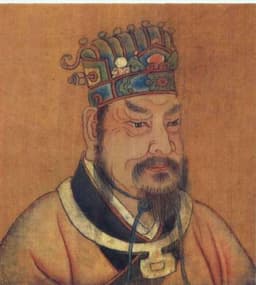
King Kang of Zhou
Emperor · Ancient
56.7Total
Basic Information
Born
431
-1040
Died
518
-996
Era
Ancient
Ancient
Nationality
Byzantine Empire
Zhou China
Occupation
Emperor
Emperor
Civilization
Western
Eastern
Score Comparison
Military (10%)
47.5
74.7
Political (20%)
62.7
45.0
Influence (20%)
55.7
56.4
Legacy (20%)
45.8
48.3
Leadership (15%)
79.8
72.0
Strategy (15%)
43.3
55.0
TOTAL
55.8
56.7
Anastasius I — Complete Timeline
498 AD
Suppressed the Isaurian RevoltWar◆ Major
Anastasius defeated the Isaurian rebels who had opposed his accession. The war ended with the capture and execution of the rebel leaders, and the Isaurians were forcibly resettled, ending their threat to imperial authority.
RebellionCivil WarByzantine Empire
Impact: national
Abolished the chrysargyron taxReform◆ Major
Emperor Anastasius I abolished the chrysargyron, a highly unpopular tax on trade and commerce that was collected every four years. This reform, along with others, improved the financial stability of the empire and left a substantial surplus in the treasury upon his death.
Tax ReformEconomic PolicyByzantine Empire
Impact: nationalprogressive
Reformed the coinage systemReform◆ Major
Anastasius introduced a new system of bronze coinage, including the follis and its fractions. This reform stabilized the currency and facilitated trade, becoming a standard for Byzantine coinage for centuries.
Currency ReformEconomic PolicyByzantine Empire
Impact: regionalconstructive
507 AD
Built the Anastasian WallOther
Anastasius ordered the construction of a long defensive wall, the Anastasian Wall, stretching from the Sea of Marmara to the Black Sea. The wall was intended to protect Constantinople from barbarian incursions, but it proved difficult to maintain and was eventually abandoned.
FortificationDefenseByzantine Empire
King Kang of Zhou — Complete Timeline
1000 BC
Campaigns Against the DongyiWar◆ Major
King Kang launched military expeditions against the Dongyi peoples in the east. These campaigns expanded Zhou territory and secured the eastern frontiers, bringing new regions under Zhou control.
Military ExpansionDongyiZhou Dynasty
Impact: regional
Consolidation of the Zhou Legal CodeReform
King Kang continued the work of the Duke of Zhou in codifying laws and punishments. This legal framework reinforced the social hierarchy and the authority of the Zhou king over the feudal lords.
Legal ReformZhou DynastyGovernance
Impact: nationalconstructive
Golden Age of Western ZhouCultural◆ Major
The reigns of King Cheng and King Kang were later idealized as a golden age of peace and prosperity. The period saw stable governance, cultural flourishing, and the consolidation of Zhou rituals and institutions.
Golden AgeCultural FlourishingZhou Dynasty
Impact: nationalconstructive
Expert Analysis
Origins
Anastasius I was born around 430 AD in Dyrrhachium (modern Durrës, Albania) into a provincial family of modest means. His father was a wealthy merchant, but little else is known. He rose through the civil service, becoming a silentiary (court usher) before being chosen as emperor in 491 AD by Empress Ariadne after the death of Zeno. His early life was marked by a lack of military experience, which shaped his later reliance on financial and administrative reforms.
King Kang of Zhou, born Ji Zhao, was the third king of the Western Zhou dynasty, reigning from approximately 1020 to 996 BC. He was the son of King Cheng and grandson of King Wu, the founder of the dynasty. His upbringing was steeped in the Confucian ideals later attributed to the Duke of Zhou, emphasizing ritual propriety and legal codification. Unlike Anastasius, Kang was born into royalty and prepared for rule from birth.
Rise to Power
Anastasius I was elected emperor by the Byzantine Senate and Empress Ariadne after a period of instability following Zeno's death. His accession was contested by the Isaurian faction, leading to the Isaurian Revolt (492-497 AD). Anastasius suppressed this revolt with the help of generals like John the Scythian, securing his throne. His rise was not through military prowess but through political maneuvering and the support of the urban populace, as he was known for his piety and administrative skill.
King Kang ascended the throne upon the death of his father, King Cheng, around 1020 BC. His reign was a continuation of the stable governance established by his father and the Duke of Zhou. Kang faced no major rebellions at his accession, unlike Anastasius, and his authority was largely unchallenged. His rise was smooth, aided by the successful consolidation of Zhou power under his predecessors.
Leadership & Governance
Anastasius I's leadership style was reformist and administrative. He focused on fiscal stability, abolishing the chrysargyron tax (a burdensome tax on trade and commerce) in 498 AD, and reforming the coinage system with the introduction of the follis and its fractions. These reforms stabilized the economy and left the treasury with a surplus of 320,000 pounds of gold at his death. However, his military leadership was weak; he scored only 47.5 in military capacity, relying on generals for defense. He built the Anastasian Wall to protect Constantinople but neglected the army, leading to later vulnerabilities.
King Kang's governance was legalistic and expansionist. He continued the legal codification started by the Duke of Zhou, establishing punishments and reinforcing social hierarchy. His military campaigns against the Dongyi expanded Zhou territory and secured borders, earning him a military score of 74.7. His leadership during the golden age of Western Zhou emphasized ritual and harmony, but his political score of 45.0 suggests less centralized control compared to later rulers.
Triumph & Tragedy
Anastasius I's greatest triumph was his financial reform: abolishing the chrysargyron and introducing stable coinage, which boosted trade and filled the treasury. His construction of the Anastasian Wall provided temporary security for Constantinople. However, his tragedy was his failure to address military threats adequately. The wall was eventually breached, and his religious policies (supporting Monophysitism) caused unrest, alienating the Orthodox population.
King Kang's triumph was the consolidation of Zhou power and the expansion into eastern territories, which brought peace and prosperity. The reign of Cheng and Kang was later idealized as a golden age. His tragedy was the lack of major personal achievements recorded; much of his success was inherited from his father and the Duke of Zhou. His legal code, while reinforcing order, also laid the groundwork for rigid social stratification.
Character & Destiny
Anastasius I was cautious, pious, and fiscally prudent. His religious leanings caused controversy, but his administrative focus allowed him to die peacefully after a 27-year reign. His character shaped a stable but militarily weak empire. In contrast, King Kang was seen as a continuation of a successful dynasty, but his personality is less documented. He appears to have been a capable administrator and military leader, but his destiny was tied to the Zhou golden age, which he maintained rather than created.
Legacy
Anastasius I's legacy is primarily economic: his coinage reforms influenced Byzantine currency for centuries, and his fiscal policies set a standard for later emperors. However, his military neglect contributed to later invasions. King Kang's legacy is as part of the idealized Western Zhou golden age, which became a model for later Chinese dynasties. His legal codification influenced Confucian thought. In terms of overall scores, King Kang edges out Anastasius with a total of 56.7 against 55.8, but the margin is narrow.
Conclusion
While King Kang of Zhou presided over a golden age and expanded his realm, his achievements were largely inherited and maintained. Anastasius I, despite lower military scores, implemented transformative financial reforms that had a direct and lasting impact on the Byzantine economy. Taking a clear stance, Anastasius I had a greater personal impact on governance and fiscal policy, as his reforms were innovative and addressed systemic issues. King Kang's role was more custodial. Therefore, Anastasius I's influence, though less celebrated, was more substantial and enduring in terms of concrete administrative change.
Rankings
🥇
King Kang of ZhouLeader
Mil: 74.7Pol: 45.0Inf: 56.4
56.7
🥈
Anastasius I
Mil: 47.5Pol: 62.7Inf: 55.7
55.8
+0.9 behind
How This Comparison Works
Algorithm
Each figure is scored on 6 dimensions (0—100 scale) based on structured historical data: Military (10%), Political (20%), Influence (20%), Legacy (20%), Leadership (15%), Strategy (15%). The weighted total produces the final ranking.
Data Sources
Scores are computed from structured sub-indicators in the database. Scale factors adjust for era (Ancient ×0.85, Modern ×1.0) and civilization size (Eastern ×1.05, Other ×0.80) to account for differences in population and military scale.
Maximum 3 Figures
Comparisons are limited to 2—3 figures to ensure readability and statistical meaningfulness.
Error Margins
±5 points per dimension — Sub-scores are derived from historical records with inherent uncertainty. Two figures within 5 points on a dimension should be considered roughly equivalent in that area.
Total Score Accuracy
±3 points overall — The weighted combination of 6 dimensions produces a total score with approximately ±3 points of uncertainty. Differences of less than 3 points are not statistically significant— the figures are effectively tied.
Known Limitations
- Historical records are incomplete and uneven across civilizations
- Figures from oral-tradition societies may be underrepresented
- Occupation labels can misclassify multi-role figures
- Scores measure capability and impact, not moral character
- Quantitative scoring is a comparison tool, not absolute truth
Capability Radar
Military (10%) — Battles & Warfare
Battles
20
65
Win Rate
25
70
Expansion
15
75
Political (20%) — Governance & Reform
Reform
85
60
Diplomacy
75
65
Economy
90
70
Influence (20%) — Cultural & Global Reach
Cultural
50
55
Global
45
45
Legacy (20%) — Historical Impact
Historical
55
60
Longevity
40
50
Leadership (15%) — Power & Stability
Tenure
70
70
Stability
80
75
Strategy (15%) — Tactics & Innovation
Strategy
35
70
Tactics
30
60
Reform
40
55
Similar Comparisons
Comments & Discussion
No comments yet. Be the first to share your thoughts!