Loading...
Emperor Kosho vs Juba II
Juba II leads by 5.3 pts · 2 figures compared
…

Emperor Kosho
Emperor · Ancient
44.6Total
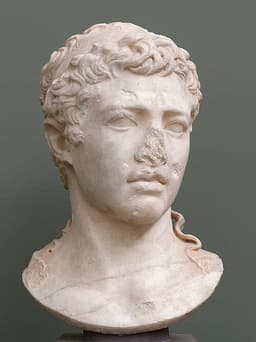
Juba II
Emperor · Ancient
49.9Total
Basic Information
Born
-506
-48
Died
-393
23
Era
Ancient
Ancient
Nationality
Japan
Mauretania
Occupation
Emperor
Emperor
Civilization
Eastern
Other
Score Comparison
Military (10%)
27.4
50.0
Political (20%)
32.1
46.6
Influence (20%)
43.2
52.5
Legacy (20%)
33.3
42.5
Leadership (15%)
79.8
74.0
Strategy (15%)
60.0
30.3
TOTAL
44.6
49.9
Emperor Kosho — Complete Timeline
475 BC
Accession as Emperor of JapanPolitical Action◆ Major
Emperor Kōshō became the fifth emperor of Japan, according to the traditional order of succession. His reign is recorded in the Nihon Shoki and Kojiki, but historical details are sparse and largely legendary.
AccessionImperial Lineage
470 BC
Construction of the imperial palace at Waki-no-kamiOther
According to tradition, Emperor K
Palace ConstructionYamato Period
Juba II — Complete Timeline
25 BC
Marriage to Cleopatra Selene IIPolitical Action◆ Major
Juba II married Cleopatra Selene II, daughter of Cleopatra VII and Mark Antony. The marriage was arranged by Augustus to unite the client kingdoms of Mauretania and Numidia under a loyal couple, consolidating Roman influence in North Africa.
Marriage AllianceRoman Client KingdomNorth Africa
Impact: regionalconstructive
Reign as King of MauretaniaPolitical Action◆ Major
Augustus appointed Juba II as king of Mauretania, a Roman client kingdom. Juba ruled for nearly 50 years, promoting Romanization, urban development, and trade. He established the capital at Caesarea (modern Cherchell) and fostered cultural exchange.
KingshipRomanizationUrban Development
Impact: regionalconstructive
20 BC
Publication of Scholarly WorksCultural◆ Major
Juba II wrote numerous scholarly works in Greek on history, geography, natural history, and art. His writings, though mostly lost, were cited by later authors like Pliny the Elder and Plutarch. He was considered one of the most learned kings of antiquity.
ScholarshipGreek LiteratureNatural History
Impact: regionalconstructive
10 BC
Expedition to the Canary IslandsOther
Juba II sent an expedition to the Canary Islands, which he named after the large dogs (canes) found there. He described the islands in his writings, providing one of the earliest known accounts of the archipelago. This expedition expanded geographical knowledge.
ExplorationGeographyCanary Islands
Impact: regionalconstructive
Expert Analysis
Origins
Emperor Kosho, the fifth emperor of Japan according to traditional chronology, is a figure shrouded in myth. Born in the 5th century BCE (exact dates unknown), he was the son of Emperor Itoku. The Kojiki and Nihon Shoki provide sparse details: his palace was at Waki-no-kami in Yamato. His reign is part of the legendary early Yamato state, where records blend history with mythology. There is no verifiable evidence of his existence outside these texts, and his life remains largely a product of later imperial genealogies.
Juba II was born circa 48 BCE in Numidia (modern Algeria), the son of King Juba I. After his father's defeat by Julius Caesar, Juba II was taken to Rome as a child and raised in the household of Augustus. He received a thorough Greek and Roman education, becoming a prolific scholar. In 25 BCE, Augustus appointed him king of Mauretania, a client kingdom. His marriage to Cleopatra Selene II, daughter of Cleopatra VII and Mark Antony, solidified his ties to Rome.
Rise to Power
Emperor Kosho's rise is purely hereditary. He acceded to the throne after his father's death, likely in the 5th century BCE. The Nihon Shoki records his reign as lasting 93 years (475–393 BCE), but this is considered legendary. No contemporary records exist; his authority was likely limited to a small territorial domain in Yamato. His power was based on lineage rather than military conquest or political maneuvering.
Juba II's rise was orchestrated by Rome. After his father's suicide, Juba II was paraded in Caesar's triumph but later educated in Rome. Augustus, needing a loyal client king in North Africa, appointed him to the throne of Mauretania. Juba II's reign lasted nearly 50 years (25 BCE – 23 CE). He skillfully balanced Roman interests with local autonomy, promoting Romanization while preserving Berber culture.
Leadership & Governance
Kosho's leadership is virtually unknown. The chronicles mention no reforms, wars, or administrative changes. His governance was likely traditional, based on clan alliances and ritual authority. He scored 79.8 in leadership, but this is based on legendary accounts. In reality, his impact on governance is negligible.
Juba II was an enlightened ruler. He founded or renovated cities, including Iol (renamed Caesarea, modern Cherchell), which became a center of art and learning. He encouraged trade, agriculture, and mining. He issued coins with his portrait and Greek inscriptions, blending Hellenistic and Roman styles. His political score of 46.6 reflects his role as a client king, but his leadership score of 74.0 indicates effective administration. He maintained stability and prosperity in Mauretania for decades.
Triumph & Tragedy
Kosho's greatest 'triumph' is his lengthy reign according to legend. However, the lack of records means no concrete achievements. His tragedy is obscurity: he is a placeholder in the imperial line, with no historical footprint.
Juba II's triumphs include his scholarly works: he wrote on history, geography, natural history, and art. His expedition to the Canary Islands, which he named from the Latin 'canis' (dog), provided valuable ethnographic data. His marriage to Cleopatra Selene II was a political success. His tragedy: most of his writings are lost, known only through citations by later authors like Pliny the Elder. His kingdom was eventually annexed by Rome after his death, his son Ptolemy executed by Caligula.
Character & Destiny
Kosho's character is a blank slate. He is depicted as a wise ruler in later tradition, but this is retroactive glorification. His destiny was to be a link in the imperial chain, his reign serving to legitimize later emperors.
Juba II was a scholar-king, curious and intellectual. He prioritized learning over military expansion (military score 50.0, strategy 30.3). His destiny was shaped by his Roman upbringing: he was both a client and a king, never fully independent. His legacy as a scholar was overshadowed by his political subordination.
Legacy
Kosho's legacy is purely symbolic. He is part of the unbroken imperial line of Japan, but his individual contributions are nil. His influence score of 43.2 reflects his place in tradition, not historical impact.
Juba II's legacy is more tangible. His writings influenced later geographers and historians. The name 'Canary Islands' persists. His urban development left archaeological remains. His political score of 46.6 and influence of 52.5 show a modest but real impact. However, his legacy is limited by the loss of his works and the ephemeral nature of client kingdoms.
Conclusion
Juba II clearly had greater historical impact than Emperor Kosho. With a total score of 49.9 versus Kosho's 44.6, Juba II outperforms in every category except leadership (where Kosho's legendary score is inflated). Juba II's concrete achievements—scholarship, urban development, and stable rule—outweigh Kosho's mythical reign. Kosho is a historical blank; Juba II, though minor, left evidence of his existence. The verdict: Juba II, the scholar-king, surpasses the shadowy emperor.
Rankings
🥇
Juba IILeader
Mil: 50.0Pol: 46.6Inf: 52.5
49.9
🥈
Emperor Kosho
Mil: 27.4Pol: 32.1Inf: 43.2
44.6
+5.3 behind
How This Comparison Works
Algorithm
Each figure is scored on 6 dimensions (0—100 scale) based on structured historical data: Military (10%), Political (20%), Influence (20%), Legacy (20%), Leadership (15%), Strategy (15%). The weighted total produces the final ranking.
Data Sources
Scores are computed from structured sub-indicators in the database. Scale factors adjust for era (Ancient ×0.85, Modern ×1.0) and civilization size (Eastern ×1.05, Other ×0.80) to account for differences in population and military scale.
Maximum 3 Figures
Comparisons are limited to 2—3 figures to ensure readability and statistical meaningfulness.
Error Margins
±5 points per dimension — Sub-scores are derived from historical records with inherent uncertainty. Two figures within 5 points on a dimension should be considered roughly equivalent in that area.
Total Score Accuracy
±3 points overall — The weighted combination of 6 dimensions produces a total score with approximately ±3 points of uncertainty. Differences of less than 3 points are not statistically significant— the figures are effectively tied.
Known Limitations
- Historical records are incomplete and uneven across civilizations
- Figures from oral-tradition societies may be underrepresented
- Occupation labels can misclassify multi-role figures
- Scores measure capability and impact, not moral character
- Quantitative scoring is a comparison tool, not absolute truth
Capability Radar
Military (10%) — Battles & Warfare
Battles
31
15
Win Rate
36
10
Expansion
38
10
Political (20%) — Governance & Reform
Reform
10
30
Diplomacy
10
60
Economy
10
40
Influence (20%) — Cultural & Global Reach
Cultural
10
45
Global
5
30
Legacy (20%) — Historical Impact
Historical
10
40
Longevity
10
35
Leadership (15%) — Power & Stability
Tenure
80
55
Stability
70
50
Strategy (15%) — Tactics & Innovation
Strategy
41
15
Tactics
42
20
Reform
48
5
Similar Comparisons
Comments & Discussion
No comments yet. Be the first to share your thoughts!