Loading...
Emperor Jito vs Fa Ngum
Fa Ngum leads by 13.5 pts · 2 figures compared
…
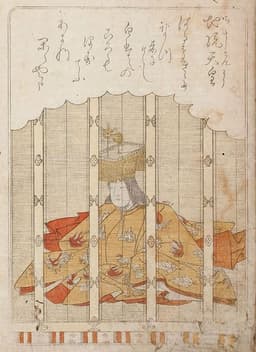
Emperor Jito
Emperor · Medieval
48.8Total
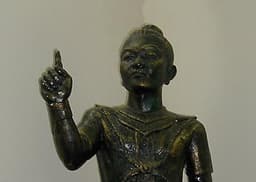
Fa Ngum
Emperor · Medieval
62.3Total
Basic Information
Born
645
1316
Died
703
1393
Era
Medieval
Medieval
Nationality
Japan
Laos
Occupation
Emperor
Emperor
Civilization
Eastern
Eastern
Score Comparison
Military (10%)
54.3
70.0
Political (20%)
46.6
68.0
Influence (20%)
51.8
61.0
Legacy (20%)
48.3
54.0
Leadership (15%)
42.2
74.0
Strategy (15%)
50.0
52.5
TOTAL
48.8
62.3
Emperor Jito — Complete Timeline
694 AD
Establishment of the Fujiwara CapitalPolitical Action◆ Major
Empress Jito moved the imperial capital to Fujiwara-kyo in Yamato Province. This was Japan's first capital built on a Chinese grid pattern. The move symbolized the centralization of power and the adoption of Chinese-style governance.
CapitalFujiwara-kyoUrban Planning
Impact: nationalconstructive
697 AD
Abdication in Favor of Emperor MonmuPolitical Action
Empress Jito abdicated the throne in favor of her grandson, Emperor Monmu. She continued to wield influence as a retired emperor (daijo tenno). This set a precedent for retired emperors to maintain power behind the scenes.
AbdicationSuccessionMonmu
Impact: national
701 AD
Completion of the Taiho CodeReform◆ Major
Empress Jito oversaw the completion and promulgation of the Taiho Code, a comprehensive legal code that systematized the ritsuryo system. It defined administrative structure, penal laws, and court ranks. The code remained the basis of Japanese law for centuries.
Taiho CodeLegal SystemRitsuryo
Impact: nationalconstructive
Fa Ngum — Complete Timeline
1353 AD
Founded the Kingdom of Lan XangPolitical Action
Fa Ngum unified the Lao principalities of Muang Sua and Vieng Chan under his rule, founding the Kingdom of Lan Xang (Million Elephants). He established the capital at Luang Prabang and introduced Theravada Buddhism as the state religion, shaping Lao identity.
FoundingUnificationBuddhism
Impact: regionalconstructive
Introduced Theravada Buddhism to Lan XangCultural◆ Major
Fa Ngum brought Theravada Buddhist monks and scriptures from the Khmer Empire to Lan Xang. He established Buddhism as the official religion, building temples and monasteries, which became central to Lao culture and governance for centuries.
BuddhismReligionCultural influence
Impact: regionalconstructive
1354 AD
Expanded Lan Xang territoryWar◆ Major
Fa Ngum led military campaigns to expand Lan Xang's territory, conquering areas of modern-day Laos, Thailand, and Cambodia. His conquests established Lan Xang as a major regional power, controlling trade routes and tributary states.
ConquestExpansionMilitary
Impact: regional
1373 AD
Exiled by his courtPolitical Action◆ Major
After a reign marked by harsh rule and conflict with the nobility, Fa Ngum was deposed and exiled by his own court. He died in exile in 1393, leaving his son Samsenethai to succeed him. His exile ended the founding era of Lan Xang.
ExileDepositionCourt conflict
Impact: regionaltragic
Expert Analysis
Origins
**Emperor Jito** (645–703) was born as Princess Uno-no-sarara, daughter of Emperor Tenji. Her early life was shaped by the court intrigues of the Asuka period. She married her uncle, Emperor Tenmu, and was educated in Chinese classics and governance. After Tenmu's death, she ascended the throne in 690, becoming Japan's third empress regnant.
**Fa Ngum** (1316–1393) was born into the royal family of Muang Sua (modern Luang Prabang), a Lao principality. As a child, he was exiled to the Khmer Empire, where he received military training and exposure to Theravada Buddhism. He grew up in Angkor, learning Khmer politics and warfare, which later shaped his ambition to unify the Lao territories.
Rise to Power
Jito's path to power came through her husband's death. Emperor Tenmu died in 686, and Jito acted as regent for their son, Prince Kusakabe, who died shortly after. To prevent a succession crisis, she took the throne herself in 690, ruling for seven years until abdicating in 697 in favor of her grandson, Emperor Monmu. Her rise was smooth, leveraging her lineage and experience.
Fa Ngum's rise was military. In 1349, he returned to Muang Sua with a Khmer army, conquering the city and unifying the surrounding principalities. By 1353, he had founded the Kingdom of Lan Xang, consolidating control over modern-day Laos. His key ally was the Khmer king, who provided troops and Buddhist missionaries. His opponents were local Lao chiefs who resisted centralization.
Leadership & Governance
Jito's governance focused on legal codification. She oversaw the completion of the Taiho Code (701), a comprehensive legal system based on Chinese Tang models. This code defined the ritsuryo system, establishing a centralized bureaucracy, tax system, and penal code. She also moved the capital to Fujiwara-kyo (694), Japan's first grid-patterned capital, symbolizing centralized rule. Her leadership score of 42.2 reflects a cautious, administrative style rather than military expansion.
Fa Ngum ruled through military conquest and religious integration. He introduced Theravada Buddhism as the state religion, importing monks and scriptures from Angkor. He built temples and used Buddhism to legitimize his rule. His governance was authoritarian, demanding tribute and suppressing dissent. His political score of 68.0 reflects his ability to unify diverse groups, but his harshness led to conflict with the nobility.
Triumph & Tragedy
Jito's greatest success was the completion of the Taiho Code, which provided Japan with a legal framework that lasted for centuries. She also successfully transitioned power to her grandson, ensuring stability. Her failure was limited military expansion; Japan's borders remained static. Her military score of 54.3 reflects defensive capability but no major campaigns.
Fa Ngum's triumph was founding Lan Xang, which lasted until the 18th century. He expanded territory across Laos, Thailand, and Cambodia, scoring 70.0 in military. His tragedy came from his own rule: his harsh policies and conflicts with nobles led to his deposition and exile in 1373. He died in exile in 1393, his kingdom fractured after his fall.
Character & Destiny
Jito was pragmatic and cautious. She chose to abdicate rather than cling to power, allowing a smooth succession. Her strategic score of 50.0 indicates a balanced approach. Historians see her as a consolidator, not a conqueror.
Fa Ngum was ambitious and ruthless. His military campaigns succeeded, but his inability to build lasting political institutions led to his downfall. His leadership score of 74.0 reflects his capability, but his character—pride and inflexibility—sowed the seeds of his exile. His destiny was to be a founder who could not sustain his creation.
Legacy
Jito's legacy is the Taiho Code, which influenced Japanese law and governance for over a millennium. The Fujiwara capital set a precedent for later capitals like Heian-kyo. Her influence score of 51.8 reflects her role in shaping Japan's administrative structure.
Fa Ngum's legacy is Lan Xang, the first unified Lao kingdom. He established Theravada Buddhism as the national religion, which remains dominant. His legacy score of 54.0 acknowledges his founding role, but the kingdom's later fragmentation limits his long-term impact.
Conclusion
Fa Ngum scores higher overall (62.3 vs 48.8), driven by military and leadership scores. He created a kingdom that defined Lao identity. However, Jito's legal code had a more enduring impact on Japanese civilization, influencing governance for centuries. Taking a stance: Fa Ngum had greater immediate impact as a founder, but Jito's legal legacy was more profound in shaping a stable state. Therefore, Jito's contribution to institutional continuity surpasses Fa Ngum's military achievements.
Rankings
🥇
Fa NgumLeader
Mil: 70.0Pol: 68.0Inf: 61.0
62.3
🥈
Emperor Jito
Mil: 54.3Pol: 46.6Inf: 51.8
48.8
+13.5 behind
How This Comparison Works
Algorithm
Each figure is scored on 6 dimensions (0—100 scale) based on structured historical data: Military (10%), Political (20%), Influence (20%), Legacy (20%), Leadership (15%), Strategy (15%). The weighted total produces the final ranking.
Data Sources
Scores are computed from structured sub-indicators in the database. Scale factors adjust for era (Ancient ×0.85, Modern ×1.0) and civilization size (Eastern ×1.05, Other ×0.80) to account for differences in population and military scale.
Maximum 3 Figures
Comparisons are limited to 2—3 figures to ensure readability and statistical meaningfulness.
Error Margins
±5 points per dimension — Sub-scores are derived from historical records with inherent uncertainty. Two figures within 5 points on a dimension should be considered roughly equivalent in that area.
Total Score Accuracy
±3 points overall — The weighted combination of 6 dimensions produces a total score with approximately ±3 points of uncertainty. Differences of less than 3 points are not statistically significant— the figures are effectively tied.
Known Limitations
- Historical records are incomplete and uneven across civilizations
- Figures from oral-tradition societies may be underrepresented
- Occupation labels can misclassify multi-role figures
- Scores measure capability and impact, not moral character
- Quantitative scoring is a comparison tool, not absolute truth
Capability Radar
Military (10%) — Battles & Warfare
Battles
45
55
Win Rate
50
60
Expansion
50
70
Political (20%) — Governance & Reform
Reform
70
55
Diplomacy
30
60
Economy
30
50
Influence (20%) — Cultural & Global Reach
Cultural
30
55
Global
20
40
Legacy (20%) — Historical Impact
Historical
50
60
Longevity
40
55
Leadership (15%) — Power & Stability
Tenure
11
60
Stability
40
45
Strategy (15%) — Tactics & Innovation
Strategy
52
65
Tactics
57
50
Reform
60
40
Similar Comparisons
Comments & Discussion
No comments yet. Be the first to share your thoughts!