Loading...
Amoghavarsha vs Li Chen
Amoghavarsha leads by 0.9 pts · 2 figures compared
…
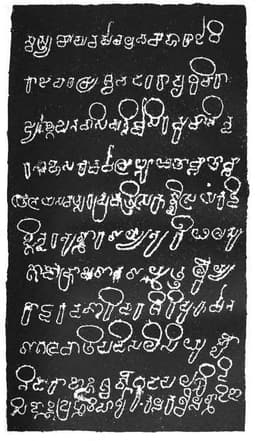
Amoghavarsha
Emperor · Medieval
60.3Total

Li Chen
Emperor · Medieval
59.4Total
Basic Information
Born
800
810
Died
878
859
Era
Medieval
Medieval
Nationality
India
China
Occupation
Emperor
Emperor
Civilization
Indian
Eastern
Score Comparison
Military (10%)
55.0
70.0
Political (20%)
59.3
59.3
Influence (20%)
62.0
55.0
Legacy (20%)
58.0
55.0
Leadership (15%)
78.0
66.0
Strategy (15%)
41.7
60.7
TOTAL
60.3
59.4
Amoghavarsha — Complete Timeline
820 AD
Conversion to JainismCultural◆ Major
Amoghavarsha converted from Hinduism to Jainism under the influence of the Jain acharya Jinasena. He became a devout patron of Jainism, building temples and supporting Jain monasteries. This shaped his policies of religious tolerance.
Religious ConversionJainismPatronage
Impact: nationalconstructive
850 AD
Composition of the KavirajamargaCultural◆ Major
Amoghavarsha, with assistance from the scholar Srivijaya, composed the Kavirajamarga, the earliest extant work on Kannada poetics. This text standardized Kannada literary conventions and promoted the language as a medium for high culture.
LiteratureKannada LanguagePoetics
Impact: regionalconstructive
860 AD
Construction of the Jain Basadi at ShravanabelagolaCultural
Amoghavarsha commissioned the construction of Jain temples (basadi) at Shravanabelagola, a major Jain pilgrimage site. He also erected a statue of the Jain tirthankara Mahavira. This solidified his legacy as a Jain patron.
Temple BuildingJain PilgrimageArchitecture
constructive
878 AD
Abdication and AsceticismPolitical Action◆ Major
Amoghavarsha abdicated the throne in favor of his son Krishna II. He then adopted the life of a Jain ascetic, practicing sallekhana (fasting unto death) at Shravanabelagola. This act reflected his deep religious devotion.
AbdicationAsceticismJain Practice
Impact: national
Li Chen — Complete Timeline
846 AD
Restoration of Central AuthorityPolitical Action◆ Major
Li Chen ascended the throne after the death of his nephew, Li Yan. He immediately reversed the anti-Buddhist policies and began a series of reforms to restore central authority. He appointed capable chancellors and reduced the power of eunuchs.
ReformCentralizationEunuch Power Reduction
Impact: nationalconstructive
847 AD
Reform of the Salt MonopolyReform◆ Major
Li Chen reformed the state salt monopoly to increase revenue and reduce corruption. He lowered salt prices to curb smuggling and improved the efficiency of the monopoly system, which became a major source of Tang fiscal stability.
Salt MonopolyFiscal ReformEconomic Policy
Impact: nationalconstructive
849 AD
Reconquest of the Hexi CorridorWar◆ Major
Li Chen's forces launched a campaign to recapture the Hexi Corridor from the Tibetan Empire. Tang armies achieved several victories, regaining control of key cities and restoring Chinese authority over the Silk Road route.
Hexi CorridorTibetTerritorial Recovery
Impact: regionalconstructive
859 AD
Death of Li ChenOther
Li Chen died in 859 after a reign that briefly revived Tang fortunes. He was posthumously called the 'Little Taizong' for his capable rule. His death marked the end of the last period of Tang stability before the dynasty's final decline.
DeathEnd of RevivalTang Decline
Impact: nationaltragic
Expert Analysis
Origins
Amoghavarsha I (born c. 800 CE) was the son of Rashtrakuta king Govinda III. He ascended the throne as a child in 814 CE, facing rebellions from feudatories. His early life was shaped by the Jain acharya Jinasena, who influenced his conversion to Jainism. Li Chen (born 810 CE) was the 13th son of Tang Emperor Xianzong. He spent his early years in obscurity, often feigning incompetence to avoid political intrigue, until he was placed on the throne by eunuchs in 846 CE after the death of his nephew.
Rise to Power
Amoghavarsha's reign began with a series of revolts by his own ministers and vassals, including the Chalukyas of Vengi and the Gangas. He gradually consolidated power through diplomacy and strategic marriages, eventually establishing a stable rule. His rise was not military but political, as he focused on patronage of arts and religion. Li Chen's rise was abrupt: after the death of Emperor Wuzong, the eunuchs chose him as a puppet emperor, expecting him to be weak. Instead, Li Chen immediately asserted authority, purging corrupt officials and reversing Wuzong's anti-Buddhist persecutions.
Leadership & Governance
Amoghavarsha ruled for 64 years, the longest among Rashtrakuta kings. He was a scholar-king, co-authoring the Kavirajamarga, a seminal work on Kannada poetics. His governance emphasized cultural development, religious tolerance, and patronage of Jainism. He built Jain basadis at Shravanabelagola and supported education. However, his military score of 55.0 reflects limited expansion. Li Chen, scoring 70.0 in military, launched campaigns to recapture the Hexi Corridor from Tibet, restoring Tang control over key trade routes. He reformed the salt monopoly, lowering prices to curb smuggling and increase revenue. His political score of 59.3 matches Amoghavarsha's 59.3, but his leadership score of 66.0 is lower than Amoghavarsha's 78.0.
Triumph & Tragedy
Amoghavarsha's greatest triumph was his cultural legacy: the Kavirajamarga standardized Kannada poetry and influenced subsequent literature. He also converted to Jainism and promoted non-violence. His tragedy was the abdication in 878 CE to become a Jain ascetic, practicing sallekhana (fasting to death). This act, while spiritually significant, left the empire to his son Krishna II, who faced decline. Li Chen's triumph was the brief restoration of Tang authority, earning him the title 'Little Taizong'. He recaptured the Hexi Corridor and stabilized finances. His tragedy was that his reforms were short-lived; after his death in 859 CE, the Tang dynasty quickly deteriorated into rebellion and fragmentation.
Character & Destiny
Amoghavarsha was a devout, scholarly ruler, prioritizing culture over conquest. His character led to a peaceful reign but limited territorial expansion. His total score of 60.3 reflects a balanced but not dominant legacy. Li Chen, in contrast, was cunning and decisive, but his reign was too short to cement lasting change. His total score of 59.4 is slightly lower, indicating a slightly less impactful overall contribution. Both rulers faced the destiny of their empires' declines after their deaths.
Legacy
Amoghavarsha's legacy is enduring in Kannada literature and Jain architecture. The Kavirajamarga remains a foundational text, and Shravanabelagola became a major Jain pilgrimage site. His influence score of 62.0 and legacy score of 58.0 reflect this cultural impact. Li Chen's legacy is more political: he temporarily revived Tang power, but his reforms did not outlast him. His influence score of 55.0 and legacy score of 55.0 are lower, as his efforts were eclipsed by Tang decline.
Conclusion
While Li Chen scored higher in military (70.0 vs 55.0) and strategy (60.7 vs 41.7), Amoghavarsha's overall total of 60.3 surpasses Li Chen's 59.4. Amoghavarsha's cultural contributions—the Kavirajamarga and Jain patronage—had a lasting impact that transcended his reign, whereas Li Chen's political restoration was ephemeral. Therefore, Amoghavarsha had greater historical impact due to his enduring cultural legacy.
Rankings
🥇
AmoghavarshaLeader
Mil: 55.0Pol: 59.3Inf: 62.0
60.3
🥈
Li Chen
Mil: 70.0Pol: 59.3Inf: 55.0
59.4
+0.9 behind
How This Comparison Works
Algorithm
Each figure is scored on 6 dimensions (0—100 scale) based on structured historical data: Military (10%), Political (20%), Influence (20%), Legacy (20%), Leadership (15%), Strategy (15%). The weighted total produces the final ranking.
Data Sources
Scores are computed from structured sub-indicators in the database. Scale factors adjust for era (Ancient ×0.85, Modern ×1.0) and civilization size (Eastern ×1.05, Other ×0.80) to account for differences in population and military scale.
Maximum 3 Figures
Comparisons are limited to 2—3 figures to ensure readability and statistical meaningfulness.
Error Margins
±5 points per dimension — Sub-scores are derived from historical records with inherent uncertainty. Two figures within 5 points on a dimension should be considered roughly equivalent in that area.
Total Score Accuracy
±3 points overall — The weighted combination of 6 dimensions produces a total score with approximately ±3 points of uncertainty. Differences of less than 3 points are not statistically significant— the figures are effectively tied.
Known Limitations
- Historical records are incomplete and uneven across civilizations
- Figures from oral-tradition societies may be underrepresented
- Occupation labels can misclassify multi-role figures
- Scores measure capability and impact, not moral character
- Quantitative scoring is a comparison tool, not absolute truth
Capability Radar
Military (10%) — Battles & Warfare
Battles
30
65
Win Rate
35
70
Expansion
25
50
Political (20%) — Governance & Reform
Reform
70
80
Diplomacy
75
70
Economy
80
75
Influence (20%) — Cultural & Global Reach
Cultural
70
70
Global
40
60
Legacy (20%) — Historical Impact
Historical
65
75
Longevity
60
65
Leadership (15%) — Power & Stability
Tenure
80
75
Stability
85
60
Strategy (15%) — Tactics & Innovation
Strategy
30
65
Tactics
25
60
Reform
20
55
Similar Comparisons
Comments & Discussion
No comments yet. Be the first to share your thoughts!