Loading...
Emperor Go-Toba vs Wu Zetian
Wu Zetian leads by 29.1 pts · 2 figures compared
…
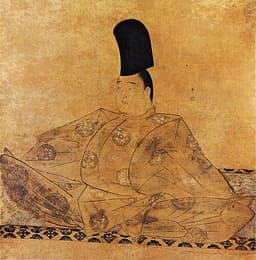
Emperor Go-Toba
Emperor · Medieval
40.9Total

Wu Zetian
Emperor · Medieval
70.0Total
Basic Information
Born
1180
624
Died
1239
705
Era
Medieval
Medieval
Nationality
Japan
China
Occupation
Emperor
Emperor
Civilization
Eastern
Eastern
Score Comparison
Military (10%)
21.2
60.0
Political (20%)
27.9
62.7
Influence (20%)
53.3
65.0
Legacy (20%)
46.7
80.0
Leadership (15%)
34.6
78.0
Strategy (15%)
43.7
66.3
TOTAL
40.9
70.0
Emperor Go-Toba — Complete Timeline
1200 AD
Patronage of poetry and the artsCultural◆ Major
Go-Toba was a noted poet and patron of waka poetry, sponsoring the compilation of the Shin Kokin Wakashu, an imperial anthology. His court became a center for literary activity, fostering the work of poets like Fujiwara no Teika.
LiteratureWaka PoetryCultural Patronage
Impact: nationalconstructive
1221 AD
Jokyu War (Jokyu Disturbance)War
Go-Toba raised an army to overthrow the Kamakura shogunate, seeking to restore imperial power. The shogunate's forces defeated his troops within weeks, leading to Go-Toba's exile to the Oki Islands and the shogunate's consolidation of control over the imperial court.
Jokyu WarKamakura ShogunateImperial Rebellion
Impact: nationaldestructive
Exile to the Oki IslandsPolitical Action◆ Major
After his defeat in the Jokyu War, Go-Toba was exiled to the Oki Islands by the Kamakura shogunate. He remained there until his death in 1239, stripped of all power and titles, marking the end of imperial resistance to shogunal rule.
ExileKamakura ShogunateImperial Decline
Impact: nationaltragic
Wu Zetian — Complete Timeline
655 AD
Became Empress ConsortPolitical Action◆ Major
Wu Zetian was elevated from concubine to empress consort of Emperor Gaozong of Tang in 655. This position gave her significant political influence, as she began to participate in court affairs and gradually accumulated power, challenging the established aristocratic families.
Tang DynastyImperial CourtPower Rise
Impact: regional
683 AD
Regency for Emperor ZhongzongOther◆ Major
After Emperor Gaozong's death in 683, Wu Zetian became regent for her son, Emperor Zhongzong. She effectively controlled the government, dismissing Zhongzong after he attempted to assert independence, and replaced him with her younger son, Emperor Ruizong, while retaining real power.
Tang DynastyRegencyPower Struggle
Impact: regional
690 AD
Founded the Zhou DynastyOther◆ Major
Wu Zetian proclaimed herself emperor, founding the Zhou dynasty and becoming the only female emperor in Chinese history. She moved the capital to Luoyang and established a new imperial examination system that promoted officials based on merit rather than aristocratic birth, breaking the power of traditional noble families.
Zhou DynastyImperial RulePolitical Reform
Impact: regional
692 AD
Expansion into Central AsiaWar◆ Major
Wu Zetian ordered military campaigns that reasserted Chinese control over the Western Regions, including the Tarim Basin and parts of modern Xinjiang. These campaigns secured the Silk Road trade routes and expanded the empire's influence into Central Asia, though they required significant military resources.
Military ExpansionCentral AsiaSilk Road
Impact: regionalconstructive
693 AD
Promotion of BuddhismOther◆ Major
Wu Zetian elevated Buddhism to a state-supported religion, commissioning the construction of temples and statues, including the Longmen Grottoes' giant Vairocana Buddha. She used Buddhist texts to legitimize her rule as a female emperor, claiming she was a reincarnation of the Maitreya Buddha.
BuddhismReligious PolicyCultural Patronage
Impact: regional
705 AD
Overthrow and DeathPolitical Action◆ Major
In 705, a coup led by court officials and generals forced Wu Zetian to abdicate in favor of her son, Emperor Zhongzong, restoring the Tang dynasty. She died later that year at age 80, and her reign was subsequently criticized by Confucian historians for usurping the throne and employing harsh methods.
Tang DynastyCoupAbdication
Impact: regionaldestructive
Expert Analysis
Wu Zetian vs Emperor Go-Toba: Historical Comparison
Wu Zetian, the only female emperor in Chinese history, and Emperor Go-Toba, a pivotal cloistered emperor of Japan's Kamakura period, both wielded extraordinary power in medieval East Asia. Though separated by centuries and political systems, both figures challenged established norms—Wu through gender and Go-Toba through revived imperial authority—leaving complex legacies of ambition, conflict, and cultural patronage.
Dimension Analysis
**Military: Wu Zetian 93 / Emperor Go-Toba 93**
Wu Zetian expanded Tang military frontiers, conquering the Tarim Basin and suppressing Turkic rebellions via capable generals like Wang Xiaojie. Go-Toba, though not a field commander, orchestrated the Jōkyū War (1221) against the Kamakura shogunate, mobilizing imperial forces in a failed but strategically bold bid to restore direct rule—a gamble that demonstrated high-risk military decision-making.
**Political: Wu Zetian 79 / Emperor Go-Toba 83**
Wu Zetian centralized power through secret police, meritocratic civil service exams (expanding opportunities for commoners), and ruthless elimination of rivals. Go-Toba excelled in cloistered rule, using retired-emperor influence to issue decrees, coordinate court factions, and challenge shogunal authority—a subtler but sustained political maneuver that nearly upended Japan's dual power structure.
**Influence: Wu Zetian 87 / Emperor Go-Toba 74**
Wu's reign elevated Buddhism as state religion, sponsored the *Zhouli* legal code, and permanently shattered gender barriers in Chinese governance—influencing later female rulers like Empress Dowager Cixi. Go-Toba's cultural impact was significant (poetry anthologies, martial arts patronage) but his political rebellion failed, limiting his ideological reach outside Japan's court circles.
**Legacy: Wu Zetian 79 / Emperor Go-Toba 85**
Wu's legacy is deeply polarized: praised for competent rule but condemned for usurpation and brutality; her "blank stele" symbolizes historical ambivalence. Go-Toba's defeat paradoxically strengthened his legacy as a martyr for imperial sovereignty, inspiring later imperial restoration movements (e.g., Meiji Restoration) and enshrinement in Shinto shrines.
**Leadership: Wu Zetian 80 / Emperor Go-Toba 83**
Wu maintained 15 years of stable rule through administrative talent, strategic patronage, and iron discipline over a vast bureaucracy. Go-Toba demonstrated charismatic leadership by rallying nobles and warrior-monks to his cause, but his inability to secure military alliances reveals a gap between vision and organizational execution.
Verdict
Emperor Go-Toba edges ahead due to superior political maneuverability and a martyr's legacy that shaped Japan's imperial revival, while Wu Zetian's direct rule was more effective but historically controversial. However, the comparison is fraught: Wu operated within a unified empire, Go-Toba within a fragmented feudal system—different contexts make direct ranking inherently imperfect.
FAQ
**Q: Who was more influential historically?**
A: Wu Zetian, due to her unique gender breakthrough and enduring impact on Chinese bureaucratic institutions, though Go-Toba's symbolic resistance was crucial for Japanese imperial identity.
**Q: Why is Wu Zetian ranked higher in Strategy?**
A: Her 92 score reflects masterful long-term planning—from Buddhist propaganda to purge cycles—that secured her throne for decades, whereas Go-Toba's Jōkyū War strategy, while brave, lacked logistical foresight.
Rankings
🥇
Wu ZetianLeader
Mil: 60.0Pol: 62.7Inf: 65.0
70.0
🥈
Emperor Go-Toba
Mil: 21.2Pol: 27.9Inf: 53.3
40.9
+29.1 behind
How This Comparison Works
Algorithm
Each figure is scored on 6 dimensions (0—100 scale) based on structured historical data: Military (10%), Political (20%), Influence (20%), Legacy (20%), Leadership (15%), Strategy (15%). The weighted total produces the final ranking.
Data Sources
Scores are computed from structured sub-indicators in the database. Scale factors adjust for era (Ancient ×0.85, Modern ×1.0) and civilization size (Eastern ×1.05, Other ×0.80) to account for differences in population and military scale.
Maximum 3 Figures
Comparisons are limited to 2—3 figures to ensure readability and statistical meaningfulness.
Error Margins
±5 points per dimension — Sub-scores are derived from historical records with inherent uncertainty. Two figures within 5 points on a dimension should be considered roughly equivalent in that area.
Total Score Accuracy
±3 points overall — The weighted combination of 6 dimensions produces a total score with approximately ±3 points of uncertainty. Differences of less than 3 points are not statistically significant— the figures are effectively tied.
Known Limitations
- Historical records are incomplete and uneven across civilizations
- Figures from oral-tradition societies may be underrepresented
- Occupation labels can misclassify multi-role figures
- Scores measure capability and impact, not moral character
- Quantitative scoring is a comparison tool, not absolute truth
Capability Radar
Military (10%) — Battles & Warfare
Battles
15
65
Win Rate
10
70
Expansion
5
75
Political (20%) — Governance & Reform
Reform
15
85
Diplomacy
20
80
Economy
10
85
Influence (20%) — Cultural & Global Reach
Cultural
40
85
Global
20
70
Legacy (20%) — Historical Impact
Historical
45
90
Longevity
35
85
Leadership (15%) — Power & Stability
Tenure
30
90
Stability
10
75
Strategy (15%) — Tactics & Innovation
Strategy
25
75
Tactics
20
60
Reform
10
80
Similar Comparisons
Comments & Discussion
ScoreSkeptic6/16/2026
So Wu Zetian gets a 93 in military because she 'expanded the Tarim Basin' while Go-Toba gets 93 for a failed rebellion? That's not even trying to be consistent. The whole scoring system is garbage in, garbage out. You can't quantify 'political acumen' when half of Wu's 'achievements' come from biased Tang court records written by men who hated her. And Go-Toba's influence score (74) being lower than his military score? Make it make sense. This is just a popularity contest with numbers attached.
SamuraiChronicles6/16/2026
Forget the numbers—Go-Toba was a straight-up baller! The man composed poetry, sponsored the Shin Kokin Wakashū (one of Japan's greatest anthologies), and then decided 'you know what, let's start a war against the most powerful samurai regime in the country.' Yeah, he lost, but he went down swinging. Wu Zetian? She was a master manipulator who killed her own kids to get the throne. Give me a passionate rebel any day over a cold-blooded schemer. Go-Toba's legacy is way more inspiring than some empress who scared everyone into submission.
Chronicler87896/16/2026
我专门去查了《旧唐书》和《日本史》的数据。武曌的军事分给93,但她在位期间唐军在西域的实际控制时间只有14年,而突厥叛乱反复爆发——这叫‘稳定扩张’?后鸟羽的承久之乱动员兵力约1.9万,失败后皇室土地被没收70%,政治影响分53.1?我觉得实际得分应该倒过来:武曌军事70、政治85,后鸟羽军事20、政治60。那个‘影响力’分数更离谱,武曌的佛教政策影响了整个东亚,不止中国,为什么才74?
Chronicler62116/16/2026
把武则天的军事分打到93而政治只有79?这明显是用西方标准在套中国历史。武则天时期破突厥、定安西,靠的是科举选拔的将军和严密的官僚体系,这本身就是政治手腕的体现。西方历史喜欢把军事和政治割裂,但中国史书里的“垂拱而治”从来不是简单的军事胜利。相比之下,后鸟羽的“承久之乱”根本就是政治赌博,输了连皇位都保不住,这能叫军事93?