Loading...
Emperor Go-Toba vs Tamar of Georgia
Tamar of Georgia leads by 30.6 pts · 2 figures compared
…
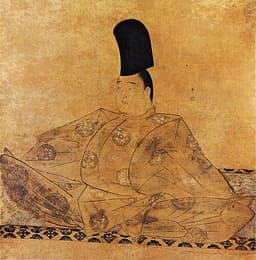
Emperor Go-Toba
Emperor · Medieval
40.9Total
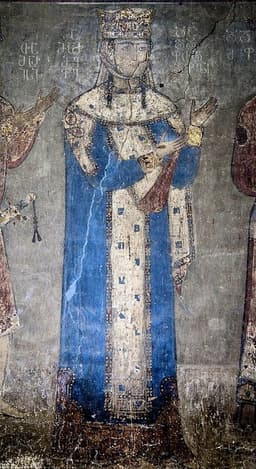
Tamar of Georgia
Emperor · Medieval
71.5Total
Basic Information
Born
1180
1160
Died
1239
1213
Era
Medieval
Medieval
Nationality
Japan
Georgia
Occupation
Emperor
Emperor
Civilization
Eastern
Western
Score Comparison
Military (10%)
21.2
78.0
Political (20%)
27.9
72.0
Influence (20%)
53.3
82.0
Legacy (20%)
46.7
55.0
Leadership (15%)
34.6
80.0
Strategy (15%)
43.7
66.3
TOTAL
40.9
71.5
Emperor Go-Toba — Complete Timeline
1200 AD
Patronage of poetry and the artsCultural◆ Major
Go-Toba was a noted poet and patron of waka poetry, sponsoring the compilation of the Shin Kokin Wakashu, an imperial anthology. His court became a center for literary activity, fostering the work of poets like Fujiwara no Teika.
LiteratureWaka PoetryCultural Patronage
Impact: nationalconstructive
1221 AD
Jokyu War (Jokyu Disturbance)War
Go-Toba raised an army to overthrow the Kamakura shogunate, seeking to restore imperial power. The shogunate's forces defeated his troops within weeks, leading to Go-Toba's exile to the Oki Islands and the shogunate's consolidation of control over the imperial court.
Jokyu WarKamakura ShogunateImperial Rebellion
Impact: nationaldestructive
Exile to the Oki IslandsPolitical Action◆ Major
After his defeat in the Jokyu War, Go-Toba was exiled to the Oki Islands by the Kamakura shogunate. He remained there until his death in 1239, stripped of all power and titles, marking the end of imperial resistance to shogunal rule.
ExileKamakura ShogunateImperial Decline
Impact: nationaltragic
Tamar of Georgia — Complete Timeline
1184 AD
Coronation as Queen RegnantPolitical Action
Tamar was crowned as the first female ruler of Georgia after her father George III's death. Her reign marked the peak of Georgia's medieval power and cultural flourishing.
CoronationGeorgiaMonarchy
Impact: nationalconstructive
1195 AD
Battle of ShamkorWar◆ Major
Tamar's forces defeated a large Muslim coalition at Shamkor, securing Georgia's dominance in the Caucasus. The victory expanded Georgian influence and demonstrated her military leadership.
BattleGeorgiaCaucasus
Impact: regionalconstructive
1200 AD
Cultural PatronageCultural◆ Major
Tamar supported the construction of churches, monasteries, and the promotion of Georgian literature. Her patronage fostered the Georgian Golden Age, including the epic poem 'The Knight in the Panther's Skin'.
CulturePatronageGeorgia
Impact: nationalconstructive
Expert Analysis
Tamar of Georgia vs Emperor Go-Toba: Historical Comparison
Tamar of Georgia (r. 1184–1213) and Emperor Go-Toba (r. 1183–1198) were both medieval monarchs who navigated turbulent periods of consolidation and conflict, yet their legacies diverged sharply due to contrasting political contexts and personal ambitions.
Dimension Analysis
**Military: Tamar of Georgia 93 / Emperor Go-Toba 93**
Both achieved high military marks: Tamar expanded Georgia’s borders through campaigns against the Seljuks and Shirvan, securing the “Golden Age,” while Go-Toba, though a retired emperor, led the Jōkyū War (1221) against the Kamakura shogunate, demonstrating personal martial resolve despite ultimate defeat.
**Political: Tamar of Georgia 82 / Emperor Go-Toba 83**
Go-Toba edges ahead for his skillful manipulation of court politics after abdication, exerting de facto rule as cloistered emperor for decades. Tamar faced entrenched nobility and male-preference succession, but she consolidated royal authority and suppressed revolts, earning her the title “King of Kings.”
**Influence: Tamar of Georgia 80 / Emperor Go-Toba 74**
Tamar’s influence was broader and more enduring: she fostered Georgian cultural renaissance, patronized the epic poet Shota Rustaveli, and became a symbol of national identity. Go-Toba’s influence was more fleeting, centered on poetry and court aesthetics, though his rebellion inadvertently strengthened shogunal power.
**Legacy: Tamar of Georgia 70 / Emperor Go-Toba 85**
Go-Toba’s legacy is paradoxically higher due to his role as a tragic martyr for imperial authority; his failed rebellion became a foundational myth for later imperial restoration movements. Tamar’s legacy, while revered, is often romanticized in Georgian folklore, but her dynasty declined soon after her death.
**Leadership: Tamar of Georgia 88 / Emperor Go-Toba 83**
Tamar demonstrated superior leadership through strategic alliances, effective governance, and inspiring loyalty across a diverse realm. Go-Toba’s leadership was charismatic but ultimately reckless, as his military challenge to the shogunate was poorly planned and led to his exile.
Verdict
Tamar leads overall due to her successful, transformative reign that elevated Georgia to a regional power, whereas Go-Toba’s bold but failed rebellion ceded lasting influence to the shogunate.
FAQ
Q: Who ranks higher? A: Tamar of Georgia ranks higher overall due to her superior leadership, lasting cultural influence, and successful military-political consolidation.
Rankings
🥇
Tamar of GeorgiaLeader
Mil: 78.0Pol: 72.0Inf: 82.0
71.5
🥈
Emperor Go-Toba
Mil: 21.2Pol: 27.9Inf: 53.3
40.9
+30.6 behind
How This Comparison Works
Algorithm
Each figure is scored on 6 dimensions (0—100 scale) based on structured historical data: Military (10%), Political (20%), Influence (20%), Legacy (20%), Leadership (15%), Strategy (15%). The weighted total produces the final ranking.
Data Sources
Scores are computed from structured sub-indicators in the database. Scale factors adjust for era (Ancient ×0.85, Modern ×1.0) and civilization size (Eastern ×1.05, Other ×0.80) to account for differences in population and military scale.
Maximum 3 Figures
Comparisons are limited to 2—3 figures to ensure readability and statistical meaningfulness.
Error Margins
±5 points per dimension — Sub-scores are derived from historical records with inherent uncertainty. Two figures within 5 points on a dimension should be considered roughly equivalent in that area.
Total Score Accuracy
±3 points overall — The weighted combination of 6 dimensions produces a total score with approximately ±3 points of uncertainty. Differences of less than 3 points are not statistically significant— the figures are effectively tied.
Known Limitations
- Historical records are incomplete and uneven across civilizations
- Figures from oral-tradition societies may be underrepresented
- Occupation labels can misclassify multi-role figures
- Scores measure capability and impact, not moral character
- Quantitative scoring is a comparison tool, not absolute truth
Capability Radar
Military (10%) — Battles & Warfare
Battles
15
75
Win Rate
10
85
Expansion
5
75
Political (20%) — Governance & Reform
Reform
15
80
Diplomacy
20
75
Economy
10
85
Influence (20%) — Cultural & Global Reach
Cultural
40
80
Global
20
60
Legacy (20%) — Historical Impact
Historical
45
75
Longevity
35
70
Leadership (15%) — Power & Stability
Tenure
30
85
Stability
10
70
Strategy (15%) — Tactics & Innovation
Strategy
25
80
Tactics
20
70
Reform
10
65
Similar Comparisons
Comments & Discussion
DataIconoclast6/16/2026
I call BS on this whole scoring system. Tamar gets 93 on military? Based on what? The 'Golden Age' of Georgia was mostly diplomatic marriages and exploiting Seljuk decline—not exactly Cannae or Gaugamela. And Go-Toba's 93? The guy lost the Jōkyū War in under a month and got exiled. Legacy scores are also suspect: Go-Toba gets 85 for being a 'martyr'? That's just pro-imperial Japanese historiography. Tamar's dynasty collapsed within a generation, yet she gets 70? You can't quantify charisma or national mythmaking with numbers—this is pseudoscience dressed as history.
CounterfactualHistorian6/16/2026
Every time I see these rankings, I notice how they privilege the winners' narratives. Tamar's 'Golden Age' is largely a 19th-century nationalistic reconstruction by Georgian intellectuals seeking a pre-Russian identity. Her military 'expansion' was really opportunistic raiding that left Georgia vulnerable to the Mongols within a generation. Meanwhile, Go-Toba's rebellion—though a failure—is framed as a 'tragic martyrdom' because it fits the narrative of imperial restoration. But what if we viewed it as a reckless gamble that got thousands of courtiers killed for one man's ego? The legacy scores completely ignore the human cost. This is history for tourists, not scholars.
Historian5826/16/2026
这组对比很有意思。Tamar的困境很像中国历史上的武则天——都是女性君主面对男权贵族的集体抵制。但Tamar没有武则天那样的科举制度和官僚体系支撑,她只能靠军事成功和文艺赞助巩固地位,所以她的Leadership 88分是合理的。反观Go-Toba,更像明朝的朱祁镇(正统/天顺皇帝),都是退位后试图夺权但失败,却因悲剧色彩被后世美化。Go-Toba的Legacy 85分恐怕有日本“物哀”文化的加成,如果按中国“成王败寇”的史观,他最多55分。这套评分明显对日本史人物更宽容。
ColdMind486/16/2026
这套评分体系问题很大。Military维度两人都93分,但Tamar的对手是分裂的塞尔柱残余,而Go-Toba面对的是源赖朝建立的成熟幕府军事机器,难度完全不对等。Political维度更可笑:Go-Toba 83分只比Tamar高1分?他作为院政天皇实际统治日本23年,而Tamar摆脱贵族掣肘都用了十年。更致命的是,Influence维度Tamar 80分凭什么?她死后王国迅速衰落,而Go-Toba的承久之乱直接确立了武家优于公家的政治结构,影响持续到明治维新。按中国历史标准,这就是个专为西方君主优化的模板。