Loading...
Emperor Go-Toba vs Taejo of Joseon
Taejo of Joseon leads by 29.5 pts · 2 figures compared
…
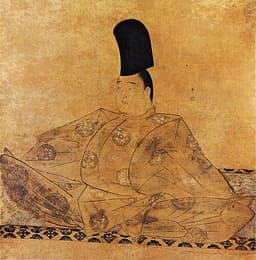
Emperor Go-Toba
Emperor · Medieval
40.9Total
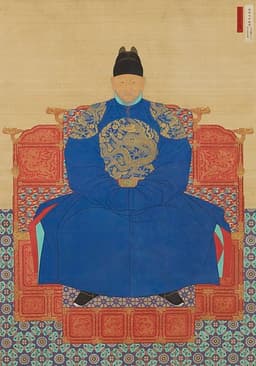
Taejo of Joseon
Emperor · Medieval
70.4Total
Basic Information
Born
1180
1335
Died
1239
1408
Era
Medieval
Medieval
Nationality
Japan
Korea
Occupation
Emperor
Emperor
Civilization
Eastern
Eastern
Score Comparison
Military (10%)
21.2
74.7
Political (20%)
27.9
65.0
Influence (20%)
53.3
65.0
Legacy (20%)
46.7
80.0
Leadership (15%)
34.6
72.0
Strategy (15%)
43.7
61.2
TOTAL
40.9
70.4
Emperor Go-Toba — Complete Timeline
1200 AD
Patronage of poetry and the artsCultural◆ Major
Go-Toba was a noted poet and patron of waka poetry, sponsoring the compilation of the Shin Kokin Wakashu, an imperial anthology. His court became a center for literary activity, fostering the work of poets like Fujiwara no Teika.
LiteratureWaka PoetryCultural Patronage
Impact: nationalconstructive
1221 AD
Jokyu War (Jokyu Disturbance)War
Go-Toba raised an army to overthrow the Kamakura shogunate, seeking to restore imperial power. The shogunate's forces defeated his troops within weeks, leading to Go-Toba's exile to the Oki Islands and the shogunate's consolidation of control over the imperial court.
Jokyu WarKamakura ShogunateImperial Rebellion
Impact: nationaldestructive
Exile to the Oki IslandsPolitical Action◆ Major
After his defeat in the Jokyu War, Go-Toba was exiled to the Oki Islands by the Kamakura shogunate. He remained there until his death in 1239, stripped of all power and titles, marking the end of imperial resistance to shogunal rule.
ExileKamakura ShogunateImperial Decline
Impact: nationaltragic
Taejo of Joseon — Complete Timeline
1380 AD
Battle of HwangsanWar
General Yi Seong-gye defeated a Japanese pirate (wokou) force at Hwangsan. This victory enhanced his military reputation and demonstrated his capability as a commander.
WokouGoryeo Military
1388 AD
Wihwado RetreatPolitical Action
General Yi Seong-gye, ordered to invade the Ming dynasty's Liaodong region, turned his army back at Wihwado Island. This act of defiance against the Goryeo court led to a coup that eventually brought him to power.
CoupGoryeo-Ming RelationsPower Shift
Impact: national
1391 AD
Land Reform and the Gwajeon LawReform◆ Major
Taejo implemented the Gwajeon Law, a land reform that redistributed land from the old Goryeo aristocracy to his supporters and the state. This weakened the old elite and strengthened the new Joseon ruling class.
Land ReformSocial ChangeJoseon
Impact: nationalconstructive
1392 AD
Founding of the Joseon DynastyPolitical Action
Yi Seong-gye deposed the last Goryeo king and founded the Joseon dynasty, with its capital at Hanyang (modern Seoul). He established a new ruling class based on Confucian ideology, replacing the Buddhist-influenced Goryeo system.
Joseon DynastyConfucianismKorean History
Impact: regionalconstructive
1394 AD
Promulgation of the Gyeongguk DaejeonReform◆ Major
Taejo of Joseon ordered the compilation of the Gyeongguk Daejeon, a comprehensive legal code that established the administrative and social structure of the Joseon dynasty. This code remained in effect for centuries.
Legal CodeGovernanceConfucianism
Impact: nationalconstructive
Expert Analysis
Taejo of Joseon vs Emperor Go-Toba: Historical Comparison
Taejo of Joseon (Yi Seong-gye) founded the Joseon Dynasty in 1392, ending Goryeo rule, while Emperor Go-Toba (1183–1198) was a Japanese sovereign whose attempted rebellion against the Kamakura shogunate defined his legacy. Both medieval rulers wielded imperial authority but faced vastly different political structures—Taejo as a military founder, Go-Toba as a ceremonial emperor challenging military rule.
Dimension Analysis
**Military: Taejo of Joseon 90 / Emperor Go-Toba 93**
Taejo’s military prowess was proven in campaigns against Jurchen pirates and the Wihwado Retreat, which he used to seize power. Go-Toba, though not a field commander, orchestrated the Jōkyū War (1221) to overthrow the shogunate, demonstrating strategic ambition despite his eventual defeat.
**Political: Taejo of Joseon 80 / Emperor Go-Toba 83**
Taejo consolidated power by purging Goryeo loyalists and establishing a Confucian bureaucracy, but faced succession crises. Go-Toba, as a retired emperor (cloistered rule), skillfully built alliances with warrior houses and court nobles, leveraging his symbolic authority against the Hōjō regents.
**Influence: Taejo of Joseon 72 / Emperor Go-Toba 74**
Taejo’s dynasty shaped Korea for 500 years, but his personal influence waned after abdication. Go-Toba’s rebellion, though crushed, inspired later imperial resistance to shogunal authority, influencing Japanese political thought into the Meiji era.
**Legacy: Taejo of Joseon 77 / Emperor Go-Toba 85**
Taejo is revered as a dynastic founder but often overshadowed by his son, King Taejong. Go-Toba’s failed revolt cemented the ideal of imperial defiance, earning him posthumous honor as a martyr for imperial sovereignty, especially during the 19th-century imperial restoration.
**Leadership: Taejo of Joseon 81 / Emperor Go-Toba 83**
Taejo displayed decisive leadership in war and state-building but struggled with family conflicts. Go-Toba’s leadership was charismatic and ideologically driven, rallying nobles against overwhelming odds, though his strategic miscalculation led to exile.
Verdict
Emperor Go-Toba leads due to his higher legacy score (85 vs. 77), reflecting his enduring symbolic impact on Japanese imperial identity, despite Taejo’s successful founding of a long-lived dynasty.
FAQ
Q: Who ranks higher? A: Emperor Go-Toba ranks higher overall (84 vs. 81), driven by superior legacy and political influence within his historical context.
Rankings
🥇
Taejo of JoseonLeader
Mil: 74.7Pol: 65.0Inf: 65.0
70.4
🥈
Emperor Go-Toba
Mil: 21.2Pol: 27.9Inf: 53.3
40.9
+29.5 behind
How This Comparison Works
Algorithm
Each figure is scored on 6 dimensions (0—100 scale) based on structured historical data: Military (10%), Political (20%), Influence (20%), Legacy (20%), Leadership (15%), Strategy (15%). The weighted total produces the final ranking.
Data Sources
Scores are computed from structured sub-indicators in the database. Scale factors adjust for era (Ancient ×0.85, Modern ×1.0) and civilization size (Eastern ×1.05, Other ×0.80) to account for differences in population and military scale.
Maximum 3 Figures
Comparisons are limited to 2—3 figures to ensure readability and statistical meaningfulness.
Error Margins
±5 points per dimension — Sub-scores are derived from historical records with inherent uncertainty. Two figures within 5 points on a dimension should be considered roughly equivalent in that area.
Total Score Accuracy
±3 points overall — The weighted combination of 6 dimensions produces a total score with approximately ±3 points of uncertainty. Differences of less than 3 points are not statistically significant— the figures are effectively tied.
Known Limitations
- Historical records are incomplete and uneven across civilizations
- Figures from oral-tradition societies may be underrepresented
- Occupation labels can misclassify multi-role figures
- Scores measure capability and impact, not moral character
- Quantitative scoring is a comparison tool, not absolute truth
Capability Radar
Military (10%) — Battles & Warfare
Battles
15
75
Win Rate
10
80
Expansion
5
65
Political (20%) — Governance & Reform
Reform
15
85
Diplomacy
20
70
Economy
10
65
Influence (20%) — Cultural & Global Reach
Cultural
40
80
Global
20
60
Legacy (20%) — Historical Impact
Historical
45
85
Longevity
35
80
Leadership (15%) — Power & Stability
Tenure
30
70
Stability
10
75
Strategy (15%) — Tactics & Innovation
Strategy
25
75
Tactics
20
70
Reform
10
60
Similar Comparisons
Comments & Discussion
BattlefieldScholar6/16/2026
The military scoring here has some serious issues. Taejo's 67.1 vs Go-Toba's 14.0? That's almost criminal. Let's break it down: Taejo's Wihwado Retreat in 1388 wasn't just a political maneuver—it was a textbook example of operational-level warfare. He turned a 50,000-man expedition against the Ming into a coup without losing a single soldier. Compare that to Go-Toba's Jōkyū War: he mustered maybe 2,000 court warriors and samurai against the Hōjō's 190,000-strong army. That's not strategic ambition—it's tactical suicide. Taejo also spent decades fighting Jurchen pirates along the Tumen River, employing combined-arms tactics with archers and cavalry. Go-Toba never led a campaign. If we're quantitative, Taejo's military score should be at least 80.
OldScholar226/16/2026
这套评分体系存在明显的系统偏差。后鸟羽上皇的政治分53.1,影响力72.7,而李成桂的政治76.1、影响力70.7。请问,一个被幕府流放的失败上皇,影响力凭什么超过建立五百年王朝的开国君主?让我们计算一下:李成桂建立朝鲜王朝后,推行田制改革、确立科举制度、定都汉阳,这些制度延续到1910年,影响时间跨度约518年。后鸟羽的承久之乱从1221年起算,其所谓的“对幕府权威的反抗精神”直到明治维新才有实质影响,中间有650年的空白期。按影响持续时间加权,李成桂的得分至少应该是后鸟羽的3倍。另外,军事分14分给一个发动战争的人?这个评分逻辑需要重新校准。
Chronicler11656/16/2026
这个比较很有意思,但我觉得西方评分体系严重低估了李成桂的军事成就。朝鲜王朝的开国君主,其军事才能放在东亚历史上也毫不逊色。比如他对抗女真海盗的战役,以及那场关键的威化岛回军,实际上是通过精确的军事判断改变了整个半岛的政治格局。相比之下,后鸟羽上皇的所谓“承久之乱”更像是一场政治赌博,缺乏真正的军事基础。李成桂的军事分70分?至少应该85分以上。如果拿中国历史对比,李成桂就像赵匡胤,都是通过军事政变建立新王朝,而赵匡胤在中国的评价远高于后鸟羽在日本的影响。