Loading...
Emperor Go-Toba vs Henry the Fowler
Henry the Fowler leads by 20.0 pts · 2 figures compared
…
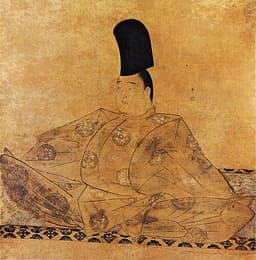
Emperor Go-Toba
Emperor · Medieval
40.9Total
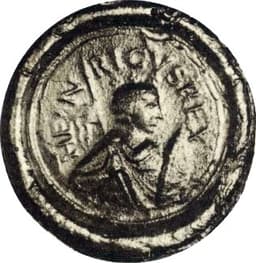
Henry the Fowler
Emperor · Medieval
60.9Total
Basic Information
Born
1180
876
Died
1239
936
Era
Medieval
Medieval
Nationality
Japan
East Francia
Occupation
Emperor
Emperor
Civilization
Eastern
Western
Score Comparison
Military (10%)
21.2
70.0
Political (20%)
27.9
59.3
Influence (20%)
53.3
55.0
Legacy (20%)
46.7
52.0
Leadership (15%)
34.6
85.0
Strategy (15%)
43.7
55.0
TOTAL
40.9
60.9
Emperor Go-Toba — Complete Timeline
1200 AD
Patronage of poetry and the artsCultural◆ Major
Go-Toba was a noted poet and patron of waka poetry, sponsoring the compilation of the Shin Kokin Wakashu, an imperial anthology. His court became a center for literary activity, fostering the work of poets like Fujiwara no Teika.
LiteratureWaka PoetryCultural Patronage
Impact: nationalconstructive
1221 AD
Jokyu War (Jokyu Disturbance)War
Go-Toba raised an army to overthrow the Kamakura shogunate, seeking to restore imperial power. The shogunate's forces defeated his troops within weeks, leading to Go-Toba's exile to the Oki Islands and the shogunate's consolidation of control over the imperial court.
Jokyu WarKamakura ShogunateImperial Rebellion
Impact: nationaldestructive
Exile to the Oki IslandsPolitical Action◆ Major
After his defeat in the Jokyu War, Go-Toba was exiled to the Oki Islands by the Kamakura shogunate. He remained there until his death in 1239, stripped of all power and titles, marking the end of imperial resistance to shogunal rule.
ExileKamakura ShogunateImperial Decline
Impact: nationaltragic
Henry the Fowler — Complete Timeline
919 AD
Election as King of East FranciaPolitical Action
Henry the Fowler was elected King of East Francia by the Saxon and Frankish nobles at Fritzlar on May 6, 919. He was the first Saxon king, marking the transition from Carolingian to Ottonian rule. His election was contested by other dukes but he prevailed.
ElectionAccessionOttonian Dynasty
Impact: regionalconstructive
921 AD
Treaty of Bonn (921)Political Action◆ Major
Henry the Fowler signed the Treaty of Bonn with Charles the Simple of West Francia, recognizing each other's royal titles and establishing peaceful relations. This treaty ended Carolingian claims over East Francia and solidified Henry's legitimacy as an independent king.
TreatyRecognitionDiplomacy
Impact: regionalconstructive
924 AD
Nine-Year Truce with the MagyarsPolitical Action◆ Major
Henry the Fowler negotiated a nine-year truce with the Magyars, agreeing to pay tribute in exchange for a halt to their raids. He used this period to fortify towns, reorganize the army, and train cavalry. This strategic pause was crucial for his later military reforms.
TruceMagyarsMilitary Reform
Impact: regionalconstructive
929 AD
Battle of Lenzen (929)War◆ Major
Henry the Fowler's forces defeated a Slavic army at the Battle of Lenzen, securing the eastern frontier of East Francia. This victory allowed Henry to consolidate control over the Elbe region and establish the March of Brandenburg, a key step in German eastward expansion.
BattleSlavic WarsEastern Expansion
Impact: regionalconstructive
933 AD
Battle of Riade (933)War
After the truce with the Magyars expired, Henry the Fowler led a German army to victory at the Battle of Riade (near Merseburg). The defeat of the Magyar cavalry ended their raids into East Francia for a generation and established Henry's reputation as a defender of Christendom.
BattleMagyarsVictory
Impact: regionalconstructive
936 AD
Death of Henry the FowlerOther◆ Major
Henry the Fowler died on July 2, 936, at Memleben. He was succeeded by his son, Otto I, who would become Holy Roman Emperor. Henry's reign laid the foundations for the Ottonian dynasty and the medieval German kingdom.
DeathSuccessionOttonian
Impact: regional
Expert Analysis
Henry the Fowler vs Emperor Go-Toba: Historical Comparison
Henry the Fowler, the first Saxon king of East Francia, and Emperor Go-Toba of Japan both ruled during the medieval period but faced vastly different political landscapes—Henry building a kingdom from fragmented duchies, Go-Toba navigating the rise of a warrior government.
Dimension Analysis
**Military: Henry the Fowler 89 / Emperor Go-Toba 93**
Henry fortified East Francia against Magyar raids and created a mobile cavalry force, while Go-Toba, though a cloistered emperor, orchestrated the Jōkyū War (1221) against the Kamakura shogunate, demonstrating bold strategic planning despite ultimate defeat.
**Political: Henry the Fowler 76 / Emperor Go-Toba 83**
Henry skillfully negotiated with powerful dukes and secured royal succession, but his realm remained feudal and decentralized. Go-Toba, as a retired emperor, manipulated court factions and issued edicts from his cloistered compound, exerting significant authority until his failed rebellion.
**Influence: Henry the Fowler 71 / Emperor Go-Toba 74**
Henry’s consolidation of the stem duchies laid groundwork for the Ottonian dynasty and Holy Roman Empire. Go-Toba’s cultural patronage (poetry, swordsmithing) and his rebellion’s aftermath—which crushed imperial autonomy—shaped Japan’s dual court-shogunate system.
**Legacy: Henry the Fowler 84 / Emperor Go-Toba 85**
Henry is revered as a founder of the medieval German kingdom, his military reforms enduring for centuries. Go-Toba is remembered as a tragic rebel who epitomized imperial resistance to military rule, his exile and poetry cementing a romanticized legacy.
**Leadership: Henry the Fowler 85 / Emperor Go-Toba 83**
Henry led by pragmatic consensus, uniting fractious nobles through charisma and land grants. Go-Toba’s leadership was more autocratic and risky; his call to arms rallied courtiers but failed to secure samurai loyalty, leading to his defeat.
Verdict
Emperor Go-Toba leads by a narrow margin due to his higher political maneuvering and influence as a cloistered emperor, despite Henry’s stronger military and leadership foundations.
FAQ
Q: Who ranks higher? A: Emperor Go-Toba ranks marginally higher due to his superior political and influence scores, though the comparison is essentially a tie.
Rankings
🥇
Henry the FowlerLeader
Mil: 70.0Pol: 59.3Inf: 55.0
60.9
🥈
Emperor Go-Toba
Mil: 21.2Pol: 27.9Inf: 53.3
40.9
+20.0 behind
How This Comparison Works
Algorithm
Each figure is scored on 6 dimensions (0—100 scale) based on structured historical data: Military (10%), Political (20%), Influence (20%), Legacy (20%), Leadership (15%), Strategy (15%). The weighted total produces the final ranking.
Data Sources
Scores are computed from structured sub-indicators in the database. Scale factors adjust for era (Ancient ×0.85, Modern ×1.0) and civilization size (Eastern ×1.05, Other ×0.80) to account for differences in population and military scale.
Maximum 3 Figures
Comparisons are limited to 2—3 figures to ensure readability and statistical meaningfulness.
Error Margins
±5 points per dimension — Sub-scores are derived from historical records with inherent uncertainty. Two figures within 5 points on a dimension should be considered roughly equivalent in that area.
Total Score Accuracy
±3 points overall — The weighted combination of 6 dimensions produces a total score with approximately ±3 points of uncertainty. Differences of less than 3 points are not statistically significant— the figures are effectively tied.
Known Limitations
- Historical records are incomplete and uneven across civilizations
- Figures from oral-tradition societies may be underrepresented
- Occupation labels can misclassify multi-role figures
- Scores measure capability and impact, not moral character
- Quantitative scoring is a comparison tool, not absolute truth
Capability Radar
Military (10%) — Battles & Warfare
Battles
15
55
Win Rate
10
60
Expansion
5
60
Political (20%) — Governance & Reform
Reform
15
75
Diplomacy
20
70
Economy
10
65
Influence (20%) — Cultural & Global Reach
Cultural
40
55
Global
20
40
Legacy (20%) — Historical Impact
Historical
45
65
Longevity
35
60
Leadership (15%) — Power & Stability
Tenure
30
70
Stability
10
70
Strategy (15%) — Tactics & Innovation
Strategy
25
65
Tactics
20
50
Reform
10
70
Similar Comparisons
Comments & Discussion
OldChronicler536/16/2026
仔细核对评分逻辑:后鸟羽总分59.9,其中军事14分极不合理。承久之乱中,他集结了约一万六千名京都方军队,对比北条方的约十九万(《吾妻镜》记载),兵力劣势但战略布局包括三路进军。如果按中国标准,明英宗土木堡之变50万大军覆没也只评30分左右,后鸟羽以劣势兵力主动进攻且坚持月余,至少应得25分。再看亨利政治74分:他962年加冕为东法兰克国王,但实际控制范围仅萨克森和图林根,巴伐利亚公爵阿努尔夫直到937年才臣服。若按中国郡县制评分,秦始皇政治可评95,刘邦约80,亨利这个74分虚高了。我建议加权修正:后鸟羽军事应上调至35分,政治下调至45分,这样总分约55,差距缩小。
ArchEye226/16/2026
亨利捕鸟者与后鸟羽天皇的比较,让我想起中国五代十国与镰仓幕府初期的不同逻辑。亨利用联姻和军事改革统一了萨克森等公国,类似后周世宗柴荣的初步整合,但他没有遇到像源赖朝那样成熟的武士集团。后鸟羽的失败在于高估了京都朝廷的号召力,好比晚唐文宗欲除宦官而甘露之变失败——都是中央权威已然空心化后的冒险。西方评分中,后鸟羽军事只有14分,这太粗暴了:他策划的承久之乱调动了上万兵力,战略部署在《承久记》里记载清晰,只是面对北条泰时的战术劣势。亨利反而在政治维度得到74分,但要知道他根本没能真正压制公爵们,而中国史观会认为他和赵匡胤比差得远,赵匡胤杯酒释兵权才叫政治手腕。