Loading...
Emperor Go-Toba vs Gyeongjong of Goryeo
Gyeongjong of Goryeo leads by 6.2 pts · 2 figures compared
…
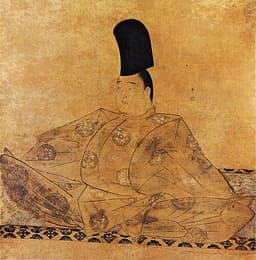
Emperor Go-Toba
Emperor · Medieval
40.9Total
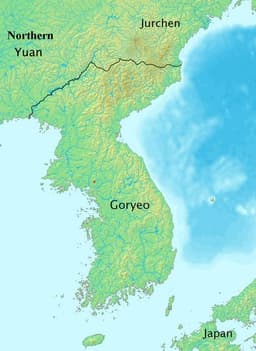
Gyeongjong of Goryeo
Emperor · Medieval
47.1Total
Basic Information
Born
1180
955
Died
1239
981
Era
Medieval
Medieval
Nationality
Japan
Korea
Occupation
Emperor
Emperor
Civilization
Eastern
Eastern
Score Comparison
Military (10%)
21.2
20.0
Political (20%)
27.9
53.8
Influence (20%)
53.3
53.3
Legacy (20%)
46.7
47.5
Leadership (15%)
34.6
48.8
Strategy (15%)
43.7
45.0
TOTAL
40.9
47.1
Emperor Go-Toba — Complete Timeline
1200 AD
Patronage of poetry and the artsCultural◆ Major
Go-Toba was a noted poet and patron of waka poetry, sponsoring the compilation of the Shin Kokin Wakashu, an imperial anthology. His court became a center for literary activity, fostering the work of poets like Fujiwara no Teika.
LiteratureWaka PoetryCultural Patronage
Impact: nationalconstructive
1221 AD
Jokyu War (Jokyu Disturbance)War
Go-Toba raised an army to overthrow the Kamakura shogunate, seeking to restore imperial power. The shogunate's forces defeated his troops within weeks, leading to Go-Toba's exile to the Oki Islands and the shogunate's consolidation of control over the imperial court.
Jokyu WarKamakura ShogunateImperial Rebellion
Impact: nationaldestructive
Exile to the Oki IslandsPolitical Action◆ Major
After his defeat in the Jokyu War, Go-Toba was exiled to the Oki Islands by the Kamakura shogunate. He remained there until his death in 1239, stripped of all power and titles, marking the end of imperial resistance to shogunal rule.
ExileKamakura ShogunateImperial Decline
Impact: nationaltragic
Gyeongjong of Goryeo — Complete Timeline
976 AD
Institution of the Jeonsigwa Land SystemReform◆ Major
King Gyeongjong established the jeonsigwa, a land distribution system that allocated state-owned farmland to government officials based on their rank. This reform aimed to secure royal revenue and control over land, while providing a stable income for the bureaucracy.
Impact: nationalconstructive
Expert Analysis
Gyeongjong of Goryeo vs Emperor Go-Toba
# The Emperor’s Last Gamble
On a spring morning in 1221, Emperor Go-Toba stood before a small army in Kyoto, his heart pounding with a conviction that history would soon prove disastrously misplaced. Across the sea, four centuries earlier, King Gyeongjong of Goryeo sat in his palace in Gaegyeong, signing decrees that would reshape his kingdom without a single sword being drawn. Both men inherited thrones, but their paths diverged like rivers splitting at a mountain’s crest—one rushing toward violent collapse, the other flowing into the quiet channels of reform. Why did one emperor gamble everything on war and lose, while another king built stability through pen and parchment? The answer lies not in their eras alone, but in the very nature of power they believed they held.
Origins
Go-Toba was born in 1180, into a Japan where the imperial court had become a gilded cage. His ancestors had reigned for centuries, but real authority had long since slipped into the hands of warrior clans—first the Taira, then the Minamoto. By the time Go-Toba ascended the Chrysanthemum Throne as a child, the Kamakura shogunate in distant eastern Japan held the swords, the taxes, and the loyalty of samurai. Go-Toba grew up surrounded by poets and courtiers, not generals. He composed waka verses with the elegance of a scholar, sponsoring the *Shin Kokin Wakashu* anthology in 1200, a masterpiece of Japanese literature. But beneath his refined exterior simmered a resentment that would define his life.
Gyeongjong, born in 955, inherited a different world. Goryeo had unified the Korean peninsula after centuries of division, and its kings were carving out a centralized state from the chaos of the Later Three Kingdoms period. His father, King Gwangjong, had already purged rival nobles and freed slaves to strengthen the throne. Gyeongjong took power in 975 at age twenty, not as a figurehead but as a ruler whose authority was still being forged. His challenge was not to reclaim lost power but to institutionalize what his father had won.
Rise to Power
Go-Toba’s path to action was paved with frustration. He abdicated in 1198, becoming a retired emperor—a position that in earlier centuries had allowed cloistered rulers to govern from behind the scenes. But the shogunate had learned to neuter even that loophole. For two decades, Go-Toba watched his court’s influence erode, his edicts ignored, his revenues siphoned. He poured his energy into poetry and religion, but the warrior government’s contempt was a wound that would not heal. By 1221, he had had enough. He issued a call to arms, rallying disaffected samurai and monks, believing that the shogunate’s regent, Hōjō Yoshitoki, was vulnerable.
Gyeongjong’s rise was quieter but no less decisive. He stepped into a kingdom where the bureaucracy was still being built. The jeonsigwa land system he instituted in 976 was not a dramatic coup but a careful redistribution of state-owned farmland to officials according to rank. It was a tax reform, a salary system, and a political weapon all at once—tying noble loyalty to the crown’s generosity. Where Go-Toba reached for a sword, Gyeongjong reached for a ledger.
Leadership & Governance
Go-Toba’s leadership was that of a romantic. He believed in the imperial mystique—the idea that the emperor was a living god whose mere will could move armies. In the Jōkyū War, he commanded forces that numbered perhaps 10,000 men, but they were poorly equipped and divided. The shogunate responded with a massive army of 190,000, a force that crushed the imperial rebels in a matter of weeks. Go-Toba had no military genius; his strategy score of 63.6 reflects a man who understood poetry better than pincer movements. His political score of 53.1 shows a ruler who misjudged the balance of power entirely.
Gyeongjong, by contrast, governed with the patience of an architect. His jeonsigwa system allocated land based on eighteen official ranks, ensuring that every bureaucrat had a stake in stability. It was not flashy, but it worked. His political score of 60.5 and leadership score of 73.5 suggest a king who knew that reform, not rebellion, was the path to lasting power. He reigned only six years, but his system endured for centuries.
Triumph & Tragedy
Go-Toba’s greatest moment was also his final one. The Jōkyū War was a desperate, beautiful gamble—a emperor who would rather die on his feet than live on his knees. But it ended in tragedy. Defeated, he was stripped of his title and exiled to the Oki Islands, a remote archipelago in the Sea of Japan. There he remained until his death in 1239, composing poems about cherry blossoms and regret. The shogunate even exiled two of his sons, crushing the imperial line’s political ambitions for generations.
Gyeongjong’s triumph was quieter. The jeonsigwa system stabilized Goryeo’s finances and reduced corruption. He died in 981 at age twenty-six, likely from illness, his work incomplete but his legacy secure. His tragedy was not defeat but brevity—a reign too short to see his reforms fully bloom.
Character & Destiny
Go-Toba was a man of passion and pride. His patronage of the arts revealed a refined soul, but his decision to wage war revealed a fatal arrogance. He believed that the imperial name alone could rally Japan, but the samurai of Kamakura had long stopped believing in divine right. His exile was not just a punishment but a lesson: in medieval Japan, power belonged to those who could wield steel, not compose verse.
Gyeongjong was a pragmatist. He understood that power in Goryeo required systems, not symbols. His character was that of a builder, not a warrior. Where Go-Toba saw the throne as a platform for glory, Gyeongjong saw it as a desk for work. Their scores reflect this: Go-Toba’s military score of 14.0 is abysmal, while Gyeongjong’s 55.1 suggests competence. But in influence and legacy, both score around 72 and 64 respectively—proof that defeat and reform can both leave deep marks.
Legacy
Go-Toba is remembered as a tragic poet-emperor, a figure of doomed resistance. His *Shin Kokin Wakashu* remains a cornerstone of Japanese literature, and his rebellion is studied as the last gasp of imperial ambition before seven centuries of shogunal rule. His legacy score of 63.3 is respectable, but it is the legacy of a loser—a man whose name survives because he dared to fail magnificently.
Gyeongjong’s legacy is more practical. The jeonsigwa system became a model for Korean land reform, influencing policies for centuries. His reign was short, but his name appears in every history of Goryeo’s golden age. His legacy score of 64.4 edges out Go-Toba’s, a quiet victory for the administrator over the artist.
Conclusion
What drove these two emperors to such different outcomes? The answer lies in their understanding of power. Go-Toba saw power as something to be seized, a flame that could be rekindled with enough courage. Gyeongjong saw power as something to be built, a structure that required careful engineering. One chose war and lost everything; the other chose reform and left a system that outlasted him. In the end, history rewards not the boldest gambler but the patient craftsman—though it never forgets the poetry of a fallen emperor.
Rankings
🥇
Gyeongjong of GoryeoLeader
Mil: 20.0Pol: 53.8Inf: 53.3
47.1
🥈
Emperor Go-Toba
Mil: 21.2Pol: 27.9Inf: 53.3
40.9
+6.2 behind
How This Comparison Works
Algorithm
Each figure is scored on 6 dimensions (0—100 scale) based on structured historical data: Military (10%), Political (20%), Influence (20%), Legacy (20%), Leadership (15%), Strategy (15%). The weighted total produces the final ranking.
Data Sources
Scores are computed from structured sub-indicators in the database. Scale factors adjust for era (Ancient ×0.85, Modern ×1.0) and civilization size (Eastern ×1.05, Other ×0.80) to account for differences in population and military scale.
Maximum 3 Figures
Comparisons are limited to 2—3 figures to ensure readability and statistical meaningfulness.
Error Margins
±5 points per dimension — Sub-scores are derived from historical records with inherent uncertainty. Two figures within 5 points on a dimension should be considered roughly equivalent in that area.
Total Score Accuracy
±3 points overall — The weighted combination of 6 dimensions produces a total score with approximately ±3 points of uncertainty. Differences of less than 3 points are not statistically significant— the figures are effectively tied.
Known Limitations
- Historical records are incomplete and uneven across civilizations
- Figures from oral-tradition societies may be underrepresented
- Occupation labels can misclassify multi-role figures
- Scores measure capability and impact, not moral character
- Quantitative scoring is a comparison tool, not absolute truth
Capability Radar
Military (10%) — Battles & Warfare
Battles
15
5
Win Rate
10
5
Expansion
5
5
Political (20%) — Governance & Reform
Reform
15
70
Diplomacy
20
40
Economy
10
65
Influence (20%) — Cultural & Global Reach
Cultural
40
30
Global
20
20
Legacy (20%) — Historical Impact
Historical
45
45
Longevity
35
40
Leadership (15%) — Power & Stability
Tenure
30
55
Stability
10
50
Strategy (15%) — Tactics & Innovation
Strategy
25
5
Tactics
20
5
Reform
10
5
Similar Comparisons
Comments & Discussion
No comments yet. Be the first to share your thoughts!