Loading...
Emperor Gaozong of Tang vs Frederick V of Austria
Emperor Gaozong of Tang leads by 9.8 pts · 2 figures compared
…
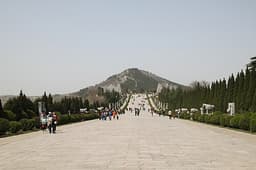
Emperor Gaozong of Tang
Emperor · Medieval
60.4Total
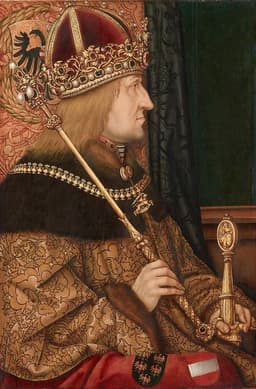
Frederick V of Austria
Emperor · Medieval
50.6Total
Basic Information
Born
628
1415
Died
683
1493
Era
Medieval
Medieval
Nationality
China
Austria
Occupation
Emperor
Emperor
Civilization
Eastern
Western
Score Comparison
Military (10%)
72.5
50.0
Political (20%)
62.7
45.1
Influence (20%)
61.0
51.8
Legacy (20%)
50.0
49.2
Leadership (15%)
68.0
74.0
Strategy (15%)
57.5
25.0
TOTAL
60.4
50.6
Emperor Gaozong of Tang — Complete Timeline
657 AD
Conquest of the Western TurksWar◆ Major
Emperor Gaozong's general Su Dingfang defeated the Western Turkic Khaganate, bringing Central Asia under Tang control. This established Tang hegemony over the Silk Road and extended the empire's influence to the Caspian Sea.
ConquestExpansion
Impact: globalconstructive
660 AD
Illness and Regency of Wu ZetianPolitical Action
Emperor Gaozong suffered a stroke that left him partially incapacitated. His wife, Empress Wu Zetian, began to take an active role in governance, eventually becoming the de facto ruler. This marked the beginning of Wu Zetian's rise to power.
SuccessionRegency
Impact: regional
663 AD
Battle of BaekgangWar◆ Major
Tang and Silla forces defeated a combined Baekje-Yamato Japanese fleet at the Battle of Baekgang in Korea. This victory secured Tang control over the Korean peninsula and ended Japanese ambitions in Korea for centuries.
Naval BattleConquest
Impact: regionalconstructive
668 AD
Conquest of GoguryeoWar◆ Major
Emperor Gaozong, with the help of the Silla kingdom, conquered the Korean kingdom of Goguryeo. This victory expanded Tang territory into Manchuria and Korea, establishing a Tang protectorate over the region.
ConquestExpansion
Impact: regionalconstructive
Frederick V of Austria — Complete Timeline
1440 AD
Election as King of the RomansPolitical Action◆ Major
Frederick was elected King of the Romans in Frankfurt, succeeding his cousin Albert II. This election placed him at the head of the Holy Roman Empire, beginning his long reign as Frederick III.
ElectionHoly Roman EmpireKingship
Impact: regional
Adoption of the AEIOU MottoCultural
Frederick III adopted the cryptic motto AEIOU, which he used on his personal belongings and buildings. The meaning remains debated, but it symbolized his claim to universal rule and Habsburg destiny.
MottoSymbolismHabsburg
1452 AD
Coronation as Holy Roman EmperorPolitical Action◆ Major
Frederick III was crowned Holy Roman Emperor by Pope Nicholas V in Rome. This was the last imperial coronation to take place in Rome, and it solidified his authority over the empire.
CoronationHoly Roman EmpirePapacy
Impact: regional
1477 AD
Marriage of Maximilian I and Mary of BurgundyPolitical Action◆ Major
Frederick III arranged the marriage of his son Maximilian to Mary of Burgundy, heiress of the Burgundian state. This union brought the Burgundian Netherlands into the Habsburg domain, greatly expanding Habsburg power.
Marriage AllianceHabsburg ExpansionBurgundy
Impact: regionalconstructive
1485 AD
Siege of Vienna (Austrian-Hungarian War)War◆ Major
Frederick III lost Vienna to the Hungarian king Matthias Corvinus after a prolonged siege. The city remained under Hungarian control until 1490, marking a significant territorial loss for Frederick.
SiegeTerritorial LossHungary
Impact: regionaldestructive
Expert Analysis
Origins
Emperor Gaozong of Tang (born 628 CE) was the ninth son of Emperor Taizong, raised in the imperial palace of Chang'an. He received a Confucian education and was appointed heir after his two elder brothers were disgraced. His mother, Empress Zhangsun, came from a powerful aristocratic clan. In contrast, Frederick V of Austria (born 1415 CE) was a Habsburg, the son of Duke Ernest the Iron of Inner Austria. He grew up in the Duchy of Styria, inheriting a fragmented family domain. Frederick's early life was marked by the Habsburg tradition of dynastic struggle and the need to consolidate territories.
Rise to Power
Gaozong ascended the throne in 649 CE at age 21, following his father's death. He inherited a stable empire and capable generals. His early reign saw continued expansion, but his health declined after 660 CE, leading to the regency of his wife Wu Zetian. Frederick V's path was more contested: he was elected King of the Romans in 1440, succeeding his cousin Albert II. He was crowned Holy Roman Emperor by Pope Nicholas V in 1452, the last such coronation in Rome. Frederick's power was limited by the princely electors and his own financial constraints.
Leadership & Governance
Gaozong governed through delegation to his civil service and generals, scoring 62.7 in political ability. He supported the conquest of the Western Turks (657 CE) and Goguryeo (668 CE), expanding Tang control over the Silk Road. However, his illness allowed Wu Zetian to accumulate power, eventually leading to her sole rule. Frederick V, with a political score of 45.1, was more passive. He adopted the motto AEIOU (Austriae Est Imperare Orbi Universo? — "Austria is destined to rule the world"), but his reign saw territorial losses. He lost Vienna to Matthias Corvinus in 1485, though he secured the Burgundian inheritance for his son Maximilian through marriage.
Triumph & Tragedy
Gaozong's greatest triumph was the conquest of Goguryeo, which eliminated a long-standing rival and extended Tang influence into Manchuria. His generals also crushed the Western Turks, making Tang the dominant power in Central Asia. His tragedy was his physical decline and the subsequent rise of Wu Zetian, who later usurped the throne. Frederick V's triumph was the marriage of his son Maximilian to Mary of Burgundy in 1477, bringing the Burgundian Netherlands to the Habsburgs. His tragedy was the loss of Vienna to Hungary, a humiliating blow to his prestige.
Character & Destiny
Gaozong was described as filial and diligent early in his reign, but his indecisiveness during illness allowed his wife to seize control. Historians note his military score of 72.5 reflects successful campaigns directed by his generals. Frederick V was known for his cautious, frugal nature, earning him the nickname "Frederick the Peaceful." His leadership score of 74.0 indicates personal resilience, but his strategy score of 25.0 shows poor tactical decisions. His motto AEIOU symbolized ambition, yet his reign achieved little territorial expansion.
Legacy
Gaozong's legacy is mixed: his military expansions are overshadowed by Wu Zetian's usurpation. He scores 50.0 in legacy, reflecting this ambiguity. Frederick V's legacy lies in the Habsburg's rise through dynastic marriages, encapsulated in the phrase "Let others wage war; you, happy Austria, marry." His influence score of 51.8 is modest, but the Burgundian inheritance set the stage for the Habsburg Empire. Gaozong's overall score of 60.4 exceeds Frederick's 50.6 by 9.8 points.
Conclusion
Emperor Gaozong of Tang had greater impact than Frederick V of Austria. Despite his illness, Gaozong's reign saw the consolidation of Tang power in East and Central Asia, with military achievements that scored 72.5. Frederick's leadership score of 74.0 could not compensate for a strategic score of 25.0 and the loss of Vienna. Gaozong's conquests reshaped the geopolitical map, while Frederick's main contribution was dynastic. The score gap of 9.8 points reflects this difference. Gaozong's Tang empire influenced Asia for centuries, whereas Frederick's Holy Roman Empire remained fragmented.
Rankings
🥇
Emperor Gaozong of TangLeader
Mil: 72.5Pol: 62.7Inf: 61.0
60.4
🥈
Frederick V of Austria
Mil: 50.0Pol: 45.1Inf: 51.8
50.6
+9.8 behind
How This Comparison Works
Algorithm
Each figure is scored on 6 dimensions (0—100 scale) based on structured historical data: Military (10%), Political (20%), Influence (20%), Legacy (20%), Leadership (15%), Strategy (15%). The weighted total produces the final ranking.
Data Sources
Scores are computed from structured sub-indicators in the database. Scale factors adjust for era (Ancient ×0.85, Modern ×1.0) and civilization size (Eastern ×1.05, Other ×0.80) to account for differences in population and military scale.
Maximum 3 Figures
Comparisons are limited to 2—3 figures to ensure readability and statistical meaningfulness.
Error Margins
±5 points per dimension — Sub-scores are derived from historical records with inherent uncertainty. Two figures within 5 points on a dimension should be considered roughly equivalent in that area.
Total Score Accuracy
±3 points overall — The weighted combination of 6 dimensions produces a total score with approximately ±3 points of uncertainty. Differences of less than 3 points are not statistically significant— the figures are effectively tied.
Known Limitations
- Historical records are incomplete and uneven across civilizations
- Figures from oral-tradition societies may be underrepresented
- Occupation labels can misclassify multi-role figures
- Scores measure capability and impact, not moral character
- Quantitative scoring is a comparison tool, not absolute truth
Capability Radar
Military (10%) — Battles & Warfare
Battles
55
15
Win Rate
60
20
Expansion
65
10
Political (20%) — Governance & Reform
Reform
60
40
Diplomacy
65
55
Economy
60
30
Influence (20%) — Cultural & Global Reach
Cultural
50
30
Global
45
20
Legacy (20%) — Historical Impact
Historical
55
50
Longevity
50
45
Leadership (15%) — Power & Stability
Tenure
70
70
Stability
55
35
Strategy (15%) — Tactics & Innovation
Strategy
55
15
Tactics
50
10
Reform
40
10
Similar Comparisons
Comments & Discussion
No comments yet. Be the first to share your thoughts!