Loading...
Emperor Gaozong of Tang vs Qin Shi Huang
Qin Shi Huang leads by 24.8 pts · 2 figures compared
…
Emperor Gaozong of Tang
Emperor · Medieval
60.4Total
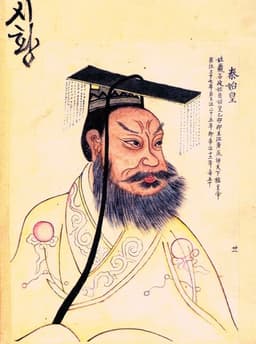
Qin Shi Huang
Emperor · Ancient
85.2Total
Basic Information
Born
628
-259
Died
683
-210
Era
Medieval
Ancient
Nationality
China
China
Occupation
Emperor
Emperor
Civilization
Eastern
Eastern
Score Comparison
Military (10%)
72.5
80.0
Political (20%)
62.7
90.0
Influence (20%)
61.0
85.0
Legacy (20%)
50.0
90.0
Leadership (15%)
68.0
78.0
Strategy (15%)
57.5
82.0
TOTAL
60.4
85.2
Emperor Gaozong of Tang — Complete Timeline
657 AD
Conquest of the Western TurksWar◆ Major
Emperor Gaozong's general Su Dingfang defeated the Western Turkic Khaganate, bringing Central Asia under Tang control. This established Tang hegemony over the Silk Road and extended the empire's influence to the Caspian Sea.
ConquestExpansion
Impact: globalconstructive
660 AD
Illness and Regency of Wu ZetianPolitical Action
Emperor Gaozong suffered a stroke that left him partially incapacitated. His wife, Empress Wu Zetian, began to take an active role in governance, eventually becoming the de facto ruler. This marked the beginning of Wu Zetian's rise to power.
SuccessionRegency
Impact: regional
663 AD
Battle of BaekgangWar◆ Major
Tang and Silla forces defeated a combined Baekje-Yamato Japanese fleet at the Battle of Baekgang in Korea. This victory secured Tang control over the Korean peninsula and ended Japanese ambitions in Korea for centuries.
Naval BattleConquest
Impact: regionalconstructive
668 AD
Conquest of GoguryeoWar◆ Major
Emperor Gaozong, with the help of the Silla kingdom, conquered the Korean kingdom of Goguryeo. This victory expanded Tang territory into Manchuria and Korea, establishing a Tang protectorate over the region.
ConquestExpansion
Impact: regionalconstructive
Qin Shi Huang — Complete Timeline
246 BC
Construction of the Mausoleum and Terracotta ArmyOther◆ Major
Qin Shi Huang commissioned a vast mausoleum complex near Xi'an, guarded by thousands of life-sized terracotta soldiers, horses, and chariots. The project employed hundreds of thousands of workers and reflected his obsession with immortality and imperial power.
Impact: global
230 BC
Conquest of the Six Warring StatesWar
From 230 to 221 BCE, Ying Zheng led the Qin state in a series of campaigns that conquered the Han, Zhao, Wei, Chu, Yan, and Qi states. This unified China under a single ruler for the first time, ending the Warring States period.
Impact: global
221 BC
Standardization of Writing, Currency, and MeasurementsReform◆ Major
Qin Shi Huang ordered the standardization of Chinese script, currency, and weights and measures across the unified empire. This facilitated administration, trade, and cultural integration, laying a foundation for future dynasties.
Impact: globalconstructive
Proclamation of the Qin DynastyPolitical Action
After conquering the last independent state, Ying Zheng declared himself Shi Huangdi (First Emperor), founding the Qin Dynasty. He adopted a new title to signify his supreme authority and initiated centralized imperial rule.
Impact: global
214 BC
Initiation of the Great Wall ConstructionOther◆ Major
Qin Shi Huang ordered the connection and extension of existing northern fortifications to create a unified defensive wall against nomadic Xiongnu raids. This project involved massive conscripted labor and became the precursor to the later Great Wall.
Impact: regional
213 BC
Burning of Books and Burying of ScholarsPolitical Action◆ Major
On the advice of Li Si, Qin Shi Huang ordered the burning of historical records and philosophical texts not aligned with Legalist doctrine. He also had 460 Confucian scholars buried alive to suppress dissent and consolidate ideological control.
Impact: nationaldestructive
Expert Analysis
emperor-gaozong-of-tang-vs-qin-shi-huang
# The First Emperor and the Shadow Emperor
On a summer day in 210 BC, Qin Shi Huang lay dying in a carriage rattling through the dusty plains of eastern China, his grand vision of eternal rule collapsing with his breath. He was fifty years old, a tyrant who had unified a continent, burned its books, and buried its scholars alive. Eight hundred years later, in 660 AD, another Chinese emperor—Emperor Gaozong of Tang—suffered a stroke that left him incapacitated, handing the reins of his vast empire to his ambitious wife, Wu Zetian. One emperor died with his dynasty crumbling around him; the other lived on as a figurehead while a woman reshaped Chinese history. What drove these two rulers down such divergent paths? The answer lies not merely in their choices, but in the eras that forged them.
Origins
Qin Shi Huang was born into chaos. The Warring States period had torn China apart for centuries, and his father’s kingdom of Qin was a brutal frontier state hardened by constant conflict. Ying Zheng—his birth name—ascended the throne at thirteen, surrounded by scheming regents and treacherous ministers. His childhood was a crucible of violence and paranoia, teaching him that trust was a weakness and power the only currency that mattered. When he came of age, he crushed his rivals with cold efficiency, executing his own stepmother’s lover and exiling his mother. He was a product of war: ruthless, calculating, and convinced that only absolute control could impose order on a fractured world.
Emperor Gaozong, born Li Zhi, inherited a very different China. His father, Emperor Taizong, had already unified the empire and ushered in the golden age of the Tang Dynasty. Gaozong grew up in the resplendent court of Chang’an, surrounded by poets, scholars, and generals who had tamed the Silk Road. He was the ninth son, not expected to rule, and his early life was marked by gentle study rather than bloody struggle. When his elder brothers were purged in a succession crisis, he ascended the throne at twenty-two—not as a conqueror, but as a caretaker of an established empire. His era had already solved the problem of unification; his task was to maintain it.
Rise to Power
Qin Shi Huang’s rise was a military conquest. From 230 to 221 BC, he led his armies in a relentless campaign against the six rival states—Han, Zhao, Wei, Chu, Yan, and Qi—each defeat feeding his ambition. He did not negotiate; he annihilated. When the last king surrendered, Ying Zheng proclaimed himself *Shi Huangdi*—“First Emperor”—and declared that his dynasty would last ten thousand generations. His power was absolute, born from the sword and sealed with blood.
Gaozong’s ascent was quieter. He inherited a throne already stable, but his path was shadowed by his father’s towering legacy. For the first decade of his reign, he ruled competently, relying on the generals and ministers Taizong had left behind. His turning point came not from conquest, but from love: he fell deeply for Wu Zetian, a former concubine of his father’s. Against all court protocol, he raised her to empress, and she became his most trusted advisor. When Gaozong’s stroke struck in 660, it was Wu who stepped into the vacuum, not as a usurper, but as a regent. Gaozong’s rise was less a seizure of power than a gradual surrender of it.
Leadership & Governance
Qin Shi Huang governed through iron uniformity. He standardized writing, currency, and measurements across his empire, forcing a chaotic collection of states into a single system. He ordered the burning of all historical records and philosophical texts not aligned with Legalist doctrine, and he buried 460 Confucian scholars alive—not out of madness, but out of a cold calculation that diversity of thought threatened his unity. His military genius was blunt: he conquered through overwhelming force, building roads and canals to move his armies faster than any enemy. The Great Wall, initiated in 214 BC, was a monument not just to defense, but to his belief that China could be walled off from the world.
Emperor Gaozong’s leadership was softer, more diplomatic. He expanded Tang territory to its greatest extent, but through his generals rather than personal command. In 657, his general Su Dingfang crushed the Western Turkic Khaganate, bringing Central Asia under Chinese control. In 668, Tang and Silla forces conquered the Korean kingdom of Goguryeo. Yet these victories were the work of others; Gaozong’s genius lay in delegation. He reformed the civil service, promoted merit over birth, and allowed Wu Zetian to manage the bureaucracy. Where Qin Shi Huang centralized power by destroying alternatives, Gaozong centralized it by absorbing talent.
Triumph & Tragedy
Qin Shi Huang’s greatest triumph was also his greatest tragedy. He unified China—a feat that would define the nation for millennia—but his methods were so brutal that rebellion simmered beneath the surface. His mausoleum, guarded by the Terracotta Army of thousands of life-sized soldiers, was a masterpiece of engineering and ego, designed to serve him in the afterlife. Yet his obsession with immortality led him to consume mercury pills, likely hastening his death. Within four years of his passing, the Qin Dynasty collapsed, torn apart by revolts. His dream of ten thousand generations lasted just fifteen years.
Gaozong’s triumph was territorial: he pushed Tang borders farther than any emperor before him, securing the Silk Road and dominating East Asia. His tragedy was personal. His illness stripped him of agency, and history remembers him as the husband of Wu Zetian, not as a ruler in his own right. When he died in 683, his empire was stable, but his legacy was already being rewritten by the woman who had governed beside him.
Character & Destiny
Qin Shi Huang was a man of absolute will. His paranoia and perfectionism drove him to unify China, but they also made him incapable of compromise. He trusted no one, not even his own sons, and his empire crumbled because he built it on fear rather than loyalty. His destiny was to be the first—a founder whose flaws were as colossal as his achievements.
Gaozong was a man of quiet endurance. He was not weak, but he was gentle in an age that rewarded gentleness. His stroke was a cruel twist of fate, but his willingness to share power with Wu Zetian was not a failure—it was a choice. He understood that an emperor could rule by letting others govern. His destiny was to be a bridge, connecting the golden age of his father to the unprecedented reign of his wife.
Legacy
Qin Shi Huang is remembered as both the father of China and its first tyrant. His standardization of script and currency created the cultural DNA of a nation, but his book burnings and scholar burials haunt his memory. The Terracotta Army stands as a symbol of his ambition and his mortality.
Emperor Gaozong is overshadowed. His military conquests are footnotes in Tang history, and his name is often invoked only to introduce Wu Zetian. Yet he ruled for thirty-four years, expanded the empire, and maintained peace. His legacy is the stability that allowed Chinese civilization to flourish.
Conclusion
These two emperors faced the same fundamental question: how to hold a vast, diverse empire together. Qin Shi Huang answered with fire and iron, building a nation that burned out as quickly as it flared. Gaozong answered with patience and partnership, building a dynasty that endured for three centuries. One was a destroyer who created; the other was a steward who faded. Their differences were not merely personal—they were the products of their times, each responding to the particular chaos or order they inherited. In the end, perhaps the lesson is that power, like history, is not always won by the strongest hand, but sometimes by the one that knows when to let go.
Rankings
🥇
Qin Shi HuangLeader
Mil: 80.0Pol: 90.0Inf: 85.0
85.2
🥈
Emperor Gaozong of Tang
Mil: 72.5Pol: 62.7Inf: 61.0
60.4
+24.8 behind
How This Comparison Works
Algorithm
Each figure is scored on 6 dimensions (0—100 scale) based on structured historical data: Military (10%), Political (20%), Influence (20%), Legacy (20%), Leadership (15%), Strategy (15%). The weighted total produces the final ranking.
Data Sources
Scores are computed from structured sub-indicators in the database. Scale factors adjust for era (Ancient ×0.85, Modern ×1.0) and civilization size (Eastern ×1.05, Other ×0.80) to account for differences in population and military scale.
Maximum 3 Figures
Comparisons are limited to 2—3 figures to ensure readability and statistical meaningfulness.
Error Margins
±5 points per dimension — Sub-scores are derived from historical records with inherent uncertainty. Two figures within 5 points on a dimension should be considered roughly equivalent in that area.
Total Score Accuracy
±3 points overall — The weighted combination of 6 dimensions produces a total score with approximately ±3 points of uncertainty. Differences of less than 3 points are not statistically significant— the figures are effectively tied.
Known Limitations
- Historical records are incomplete and uneven across civilizations
- Figures from oral-tradition societies may be underrepresented
- Occupation labels can misclassify multi-role figures
- Scores measure capability and impact, not moral character
- Quantitative scoring is a comparison tool, not absolute truth
Capability Radar
Military (10%) — Battles & Warfare
Battles
55
85
Win Rate
60
90
Expansion
65
90
Political (20%) — Governance & Reform
Reform
60
95
Diplomacy
65
75
Economy
60
90
Influence (20%) — Cultural & Global Reach
Cultural
50
95
Global
45
85
Legacy (20%) — Historical Impact
Historical
55
95
Longevity
50
95
Leadership (15%) — Power & Stability
Tenure
70
70
Stability
55
65
Strategy (15%) — Tactics & Innovation
Strategy
55
85
Tactics
50
80
Reform
40
95
Similar Comparisons
Comments & Discussion
QIN’S GHOST6/17/2026
Gaozong was a caretaker emperor, nothing more. Qin Shi Huang personally conquered six warring states through blood and iron, while Gaozong let his wife Wu Zetian run the empire from behind a curtain. One built the Great Wall, standardized writing, and forged a unified China from chaos; the other handed the keys to a woman who later buried his own sons alive. Call me old-fashioned, but emperors should rule, not delegate.|
史学铁铲6/17/2026
秦始皇焚书坑儒是为了统一思想,这确实残酷,但高宗的软弱让武后夺权,结果她清洗了那么多官宦家族。两者都有人命,但目标不同:一个在铸国,一个在毁族。我更敬重始皇的野心,半吊子皇帝是对历史的侮辱。|
DATA OR IT DIDN’T HAPPEN6/17/2026
Everyone gushes over Qin’s “unification,” but let’s check the numbers. His brutal conscription policies—700,000 workers for his mausoleum alone—caused a population crash that historians now estimate at 15 million dead over his reign, about 30% of China’s population then. Gaozong’s Tang, by contrast, saw tax reforms and census growth from 3.5 million to 8 million households. More people alive means better governance, period. Tyranny isn’t efficiency—it’s statistical failure.|
古书贩子6/17/2026
《唐会要》里写高宗中风后“不能视朝”,可武则天批阅奏折时仍用他的玉玺盖章,这算垂帘听政的祖师爷了。但回头看始皇,司马迁说他“衡石量书”,每天看一百二十斤竹简公文。一个靠妻子干活,一个加班到死——谁更称职?暗弱之国,也是国之不幸。|
REVISIONIST DIG6/17/2026
Calling Gaozong “weak” is a Confucian smear job. He conquered Goguryeo, expanded Tang borders to their peak, and his decrees reformed land distribution more equitably than Qin’s draconian levies. Wu Zetian’s rise was his conscious choice—he picked the smartest person in the room to rule after his stroke. Qin Shi Huang was a paranoid megalomaniac who killed his own heir presumptive (Fusu) via forged letters. Strength isn’t tyranny; it’s delegation with foresight. Gaozong wins by a landslide.|
山海关老鬼6/17/2026
你拿两千年后的尺子量两千年前的人?始皇修驰道直道,车同轨书同文,这些硬骨头工程让后世基业长青。高宗呢?靠的是老爹李世民的贞观余晖,自己倒在病榻上只会哼唧。一个开创了文明框架,一个糊