Loading...
Emperor Daigo vs Henry IV of HRE
Henry IV of HRE leads by 7.3 pts · 2 figures compared
…
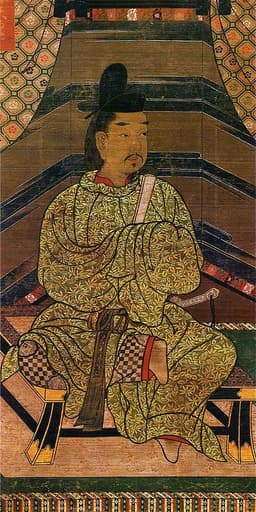
Emperor Daigo
Emperor · Medieval
58.0Total
Henry IV of HRE
Emperor · Medieval
65.3Total
Basic Information
Born
885
1050
Died
930
1106
Era
Medieval
Medieval
Nationality
Japan
Holy Roman Empire
Occupation
Emperor
Emperor
Civilization
Eastern
Western
Score Comparison
Military (10%)
54.1
50.0
Political (20%)
45.0
54.7
Influence (20%)
59.0
72.0
Legacy (20%)
54.0
72.0
Leadership (15%)
72.0
67.0
Strategy (15%)
67.7
60.0
TOTAL
58.0
65.3
Emperor Daigo — Complete Timeline
897 AD
Reign as a Strong EmperorPolitical Action◆ Major
Emperor Daigo ruled directly without a Fujiwara regent for much of his reign. He maintained imperial authority and is remembered as a capable ruler. His reign is often idealized as a period of strong imperial rule in the Heian period.
Imperial RuleHeianAuthority
Impact: nationalconstructive
905 AD
Patronage of Poetry and LiteratureCultural◆ Major
Emperor Daigo sponsored the compilation of the 'Kokin Wakashu', the first imperial anthology of Japanese poetry. He commissioned Ki no Tsurayuki and others to collect poems. This anthology set the standard for waka poetry and influenced Japanese literature for centuries.
Kokin WakashuPoetryAnthology
Impact: nationalconstructive
927 AD
Compilation of the EngishikiReform◆ Major
Emperor Daigo ordered the compilation of the Engishiki, a detailed legal code that expanded on the Taiho and Yoro codes. It contained regulations for government administration, ceremonies, and rituals. The Engishiki became a foundational text for Japanese law and Shinto practice.
EngishikiLegal CodeRitsuryo
Impact: nationalconstructive
Henry IV of HRE — Complete Timeline
1075 AD
Battle of LangensalzaWar◆ Major
Henry IV defeated Saxon rebels at Langensalza in Thuringia. The victory temporarily ended the Saxon Rebellion, but the conflict resumed later. The battle demonstrated Henry's military capability early in his reign.
Saxon RebellionBattle
Impact: regional
1076 AD
Excommunication by Pope Gregory VIIPolitical Action◆ Major
Pope Gregory VII excommunicated Henry IV after Henry attempted to depose the Pope. The excommunication freed Henry's subjects from their oaths of loyalty, leading to a rebellion by German princes. This forced Henry to seek reconciliation at Canossa.
Investiture ControversyPapacyRebellion
Impact: globaldestructive
1077 AD
Walk to CanossaPolitical Action
Henry IV traveled to Canossa Castle in northern Italy to seek absolution from Pope Gregory VII. He stood barefoot in the snow for three days before the Pope lifted his excommunication. This event symbolized the power struggle between secular and religious authority.
Investiture ControversyPapacyPenance
Impact: global
1084 AD
Siege of RomeWar◆ Major
Henry IV besieged Rome and captured the city. He was crowned Holy Roman Emperor by Antipope Clement III. Pope Gregory VII took refuge in the Castel Sant'Angelo and was rescued by Norman forces under Robert Guiscard, who sacked Rome.
Investiture ControversyRomeCrowning
Impact: regionaldestructive
Expert Analysis
Origins
Emperor Daigo (born 885, reigned 897-930) was the 60th emperor of Japan, son of Emperor Uda. He belonged to the Yamato dynasty and was raised in the Heian court, steeped in Chinese-style Confucian governance and native Shinto traditions. His education emphasized classical literature and legal scholarship, preparing him for direct rule without Fujiwara regents. Daigo's early life was marked by the decline of the Fujiwara clan's dominance, allowing him to exercise personal authority.
Henry IV of the Holy Roman Empire (born 1050, reigned 1056-1105) was the son of Emperor Henry III and Agnes of Poitou. He grew up under the regency of his mother and later Archbishop Anno II of Cologne, who kidnapped him in 1062 to seize control. Henry's childhood was turbulent, with power struggles among nobles and churchmen. He was crowned King of Germany at age six and later Holy Roman Emperor. His upbringing was martial and political, focused on asserting royal authority against the papacy and rebellious dukes.
Rise to Power
Daigo ascended the throne at age 12 after his father abdicated. Unlike many earlier emperors, he ruled without a Fujiwara regent for most of his reign (897-930). He relied on capable ministers like Sugawara no Michizane, though he later exiled Michizane due to political intrigue. Daigo's rise was smooth, backed by the imperial court and his father's abdication, but he faced challenges from powerful aristocratic families. His key turning point was the compilation of the Engishiki (927), a legal code that systematized government regulations and ceremonies, cementing his reputation as a lawgiver.
Henry IV's rise was fraught with conflict. He became king at age six, but real power was contested by regents. In 1069, he began asserting personal rule, suppressing a Saxon rebellion in 1073-1075. His major turning point came in 1076 when he attempted to depose Pope Gregory VII, leading to his excommunication. To regain authority, Henry performed the Walk to Canossa in 1077, standing barefoot in the snow for three days to receive absolution. This act temporarily restored his power but weakened his position relative to the papacy.
Leadership & Governance
Daigo governed through the existing ritsuryō system, emphasizing legal codification and cultural patronage. He ordered the compilation of the Engishiki, a 50-volume code covering court rituals, administrative procedures, and penal laws. He also sponsored the Kokin Wakashu (905), the first imperial poetry anthology, which shaped Japanese literary aesthetics. Daigo's leadership was bureaucratic and ceremonial, focusing on stability and cultural refinement. He scored 72.0 in leadership, reflecting his ability to maintain imperial authority without military force (military score 54.1). His political score of 45.0 indicates limited power due to aristocratic constraints.
Henry IV governed through military force and political maneuvering. He fought the Investiture Controversy against the papacy, asserting the emperor's right to appoint bishops. He defeated Saxon rebels at the Battle of Langensalza (1075) and later besieged Rome (1084), installing Antipope Clement III. His governance was confrontational, often clashing with the church and nobles. Henry scored 67.0 in leadership and 54.7 in political, reflecting his aggressive but often reactive style. His military score of 50.0 shows mixed success; he won battles but failed to secure lasting peace.
Triumph & Tragedy
Daigo's greatest triumph was the compilation of the Engishiki, which standardized Japanese law and administration for centuries. His patronage of the Kokin Wakashu elevated Japanese poetry and cultural identity. However, his reign saw the rise of Fujiwara power after his death, undermining imperial authority. His exile of Sugawara no Michizane, a loyal minister, was a tragic misjudgment that led to Michizane's posthumous deification as a vengeful spirit. Daigo's failure to curb aristocratic influence allowed the Fujiwara to dominate subsequent emperors.
Henry IV's triumph was surviving the Investiture Controversy and reasserting imperial power temporarily. His Walk to Canossa is a iconic symbol of medieval church-state conflict. He captured Rome in 1084 and was crowned emperor. However, his tragedies included multiple excommunications, rebellions by his sons, and eventual deposition in 1105. His conflict with the papacy weakened the empire and empowered German princes. His military campaigns against Saxons and Italians drained resources without decisive victory.
Character & Destiny
Daigo was cautious, learned, and ritualistic. He prioritized legal order and cultural prestige over military expansion. His character shaped a reign of relative peace and cultural flowering, but his passivity allowed aristocratic families to regain power. Historical assessments view him as a capable but ultimately transitional figure, unable to reverse the decline of imperial authority. His scores: leadership 72.0, strategy 67.7, political 45.0.
Henry IV was stubborn, ambitious, and combative. His willingness to defy the pope and fight multiple wars reflected a warrior-king mentality. However, his inflexibility led to repeated crises, including excommunication and civil war. His character drove him to Canossa, a dramatic act of repentance, but also to continued conflict that exhausted his realm. Historians see him as a pivotal figure in the Investiture Controversy, but his legacy is mixed due to his failures. His scores: leadership 67.0, strategy 60.0, political 54.7.
Legacy
Daigo's legacy is primarily cultural and legal. The Engishiki remained a key legal text until the Meiji period, and the Kokin Wakashu influenced Japanese poetry for centuries. He is remembered as a wise ruler who upheld classical traditions, but his political impact was limited. His total score of 58.0 reflects moderate influence (59.0) and legacy (54.0).
Henry IV's legacy is deeply tied to the Investiture Controversy, which reshaped church-state relations in Europe. The conflict established papal supremacy over secular rulers in spiritual matters, a principle that lasted until the Reformation. Henry's struggle also strengthened the German princes, leading to a decentralized empire. He scored 72.0 in both influence and legacy, reflecting his central role in a transformative historical event.
Conclusion
Henry IV had greater impact on world history than Emperor Daigo. While Daigo's Engishiki and Kokin Wakashu were important for Japanese culture, they did not alter the course of global events. Henry's conflict with Pope Gregory VII defined the medieval papacy's power and the balance between church and state, influencing European politics for centuries. Henry's total score of 65.3 exceeds Daigo's 58.0 by 7.3 points, a significant gap. In influence and legacy, Henry scored 72.0 versus Daigo's 59.0 and 54.0. Although Daigo's leadership score was higher (72.0 vs 67.0), Henry's strategic and political actions had wider repercussions. Therefore, Henry IV is the more consequential figure.
Rankings
🥇
Henry IV of HRELeader
Mil: 50.0Pol: 54.7Inf: 72.0
65.3
🥈
Emperor Daigo
Mil: 54.1Pol: 45.0Inf: 59.0
58.0
+7.3 behind
How This Comparison Works
Algorithm
Each figure is scored on 6 dimensions (0—100 scale) based on structured historical data: Military (10%), Political (20%), Influence (20%), Legacy (20%), Leadership (15%), Strategy (15%). The weighted total produces the final ranking.
Data Sources
Scores are computed from structured sub-indicators in the database. Scale factors adjust for era (Ancient ×0.85, Modern ×1.0) and civilization size (Eastern ×1.05, Other ×0.80) to account for differences in population and military scale.
Maximum 3 Figures
Comparisons are limited to 2—3 figures to ensure readability and statistical meaningfulness.
Error Margins
±5 points per dimension — Sub-scores are derived from historical records with inherent uncertainty. Two figures within 5 points on a dimension should be considered roughly equivalent in that area.
Total Score Accuracy
±3 points overall — The weighted combination of 6 dimensions produces a total score with approximately ±3 points of uncertainty. Differences of less than 3 points are not statistically significant— the figures are effectively tied.
Known Limitations
- Historical records are incomplete and uneven across civilizations
- Figures from oral-tradition societies may be underrepresented
- Occupation labels can misclassify multi-role figures
- Scores measure capability and impact, not moral character
- Quantitative scoring is a comparison tool, not absolute truth
Capability Radar
Military (10%) — Battles & Warfare
Battles
45
55
Win Rate
50
50
Expansion
49
35
Political (20%) — Governance & Reform
Reform
65
40
Diplomacy
55
70
Economy
60
30
Influence (20%) — Cultural & Global Reach
Cultural
55
60
Global
30
55
Legacy (20%) — Historical Impact
Historical
60
75
Longevity
55
65
Leadership (15%) — Power & Stability
Tenure
60
65
Stability
65
25
Strategy (15%) — Tactics & Innovation
Strategy
57
45
Tactics
59
40
Reform
59
30
Similar Comparisons
Comments & Discussion
No comments yet. Be the first to share your thoughts!